


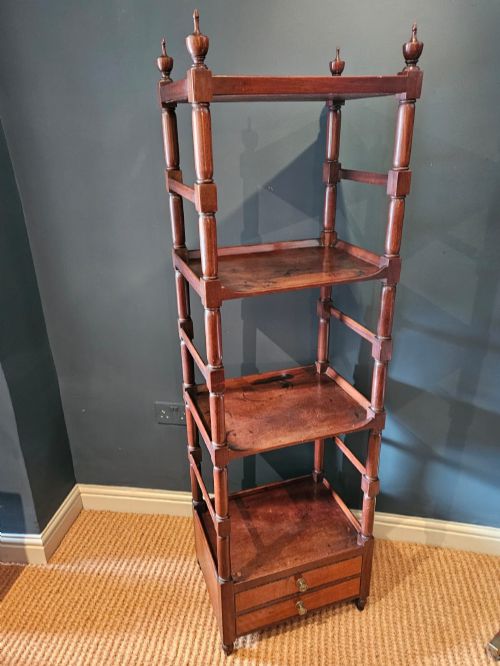

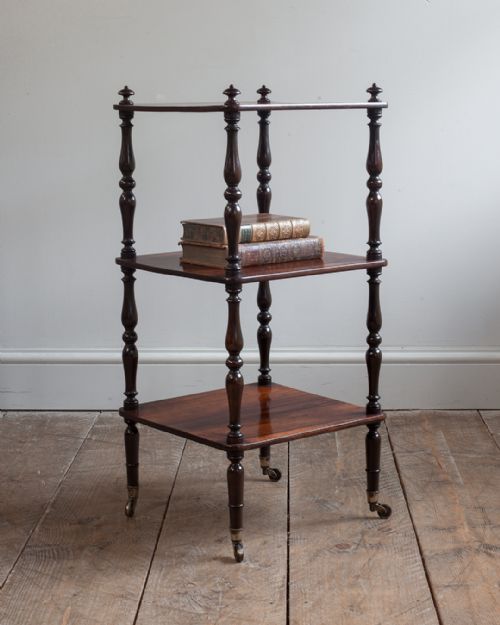

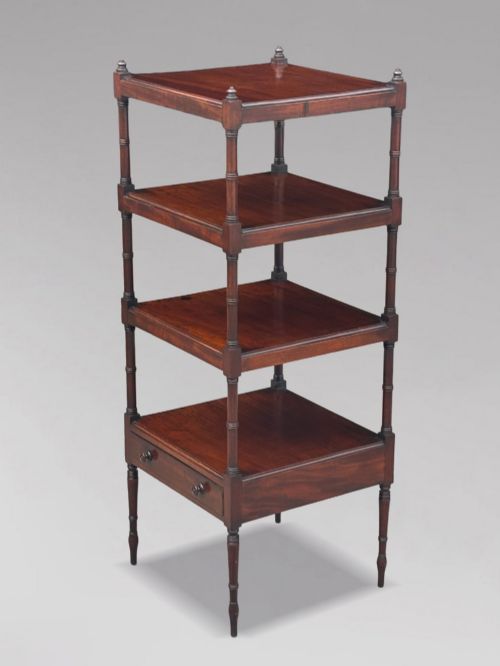
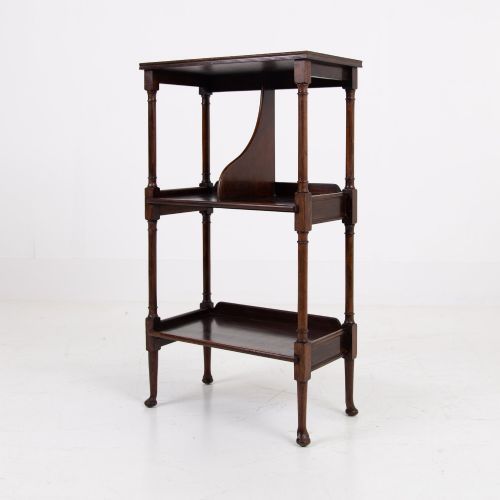
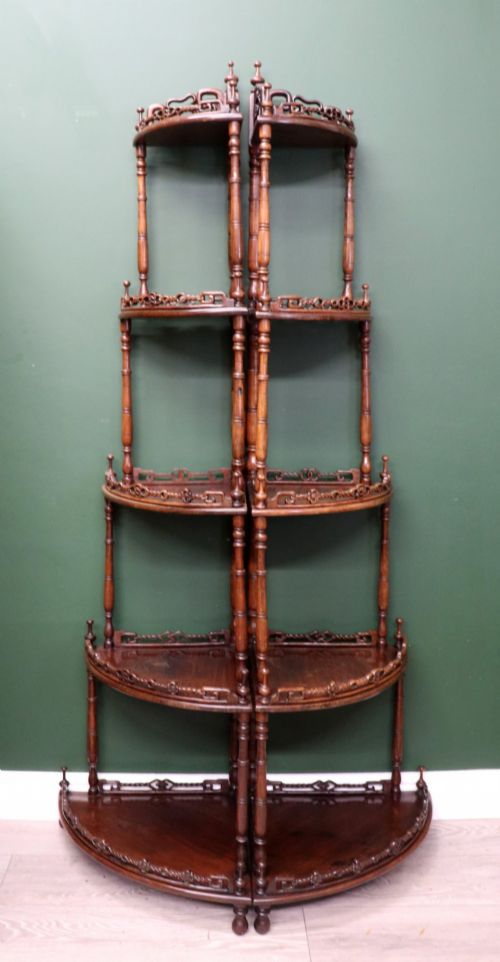
Dark Wood Whatnot Shelf
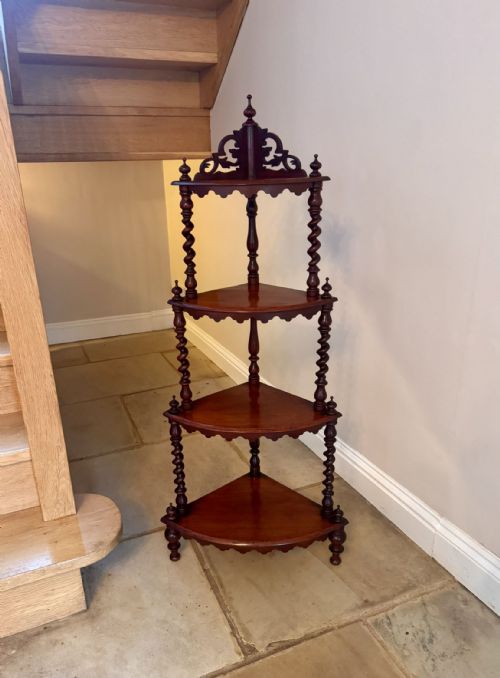
Dark wood whatnot shelf designs range from compact corner units to multi-tiered display stands, offering practical open storage in rich mahogany and rosewood.
Dark Wood Whatnot Shelf
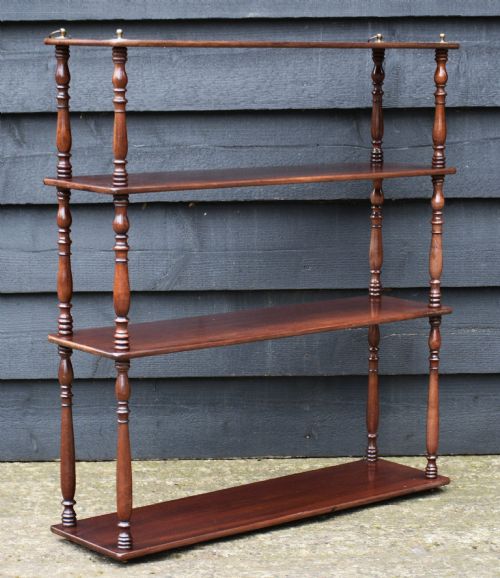
A dark wood whatnot shelf provides tiered open storage designed for displaying books, ornaments and curiosities across multiple levels. When searching for a dark wood whatnot shelf, buyers encounter freestanding multi-tier towers, corner units and wall-hanging variations.
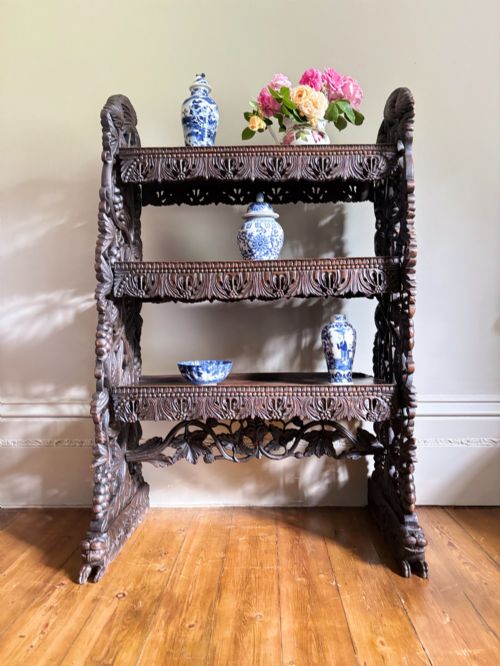
The pieces on this page span the Georgian, Regency, William IV and Victorian eras, alongside Anglo-Indian colonial examples. Mahogany and rosewood form the backbone of these selections, supplemented by teak, walnut and padauk.
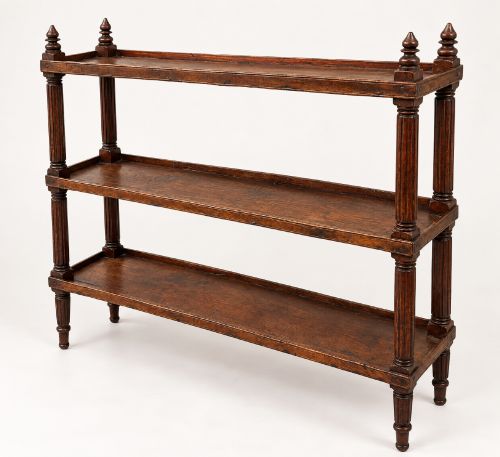
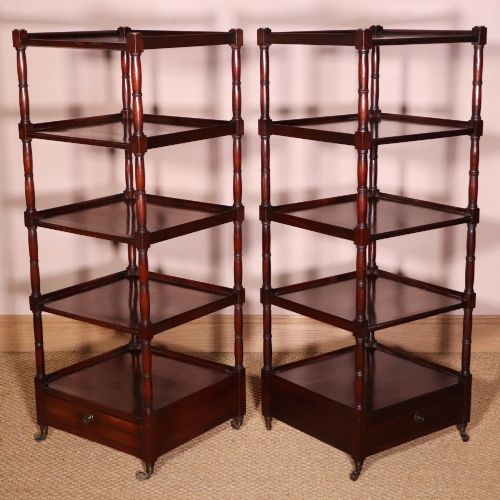
Most items function as display stands or etagères, utilising turned supports and fretwork galleries. Formats range from modest three-tier tables to tall six-tier stands and integrated music or canterbury combinations.
Materials and construction methods
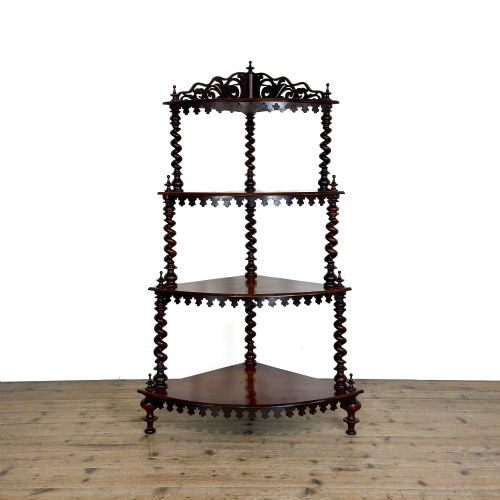
Cabinet makers utilised dense imported hardwoods like mahogany, rosewood and padauk to build rigid upright frameworks that could support stacked tiers without warping. Turning lathes shaped upright pillars and barley twist columns, while hand saws cut intricate fretwork panels for pierced galleries.
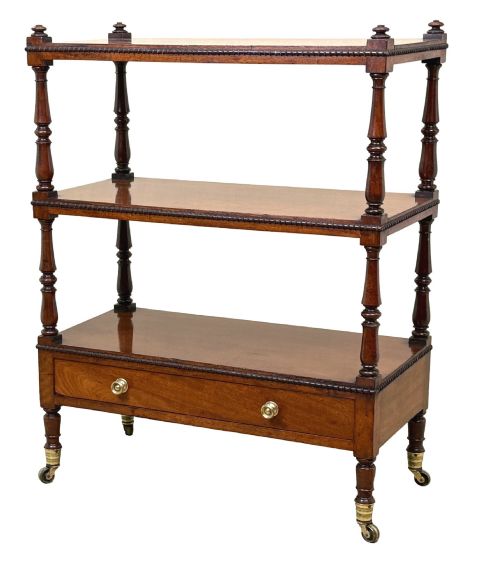
Joinery relied on traditional mortise and tenon joints to secure shelves to upright supports, often reinforced with brass screws or internal brackets. Selected pieces incorporate brass castors on the feet to allow mobility across carpets and floorboards.
Dark Wood Whatnot Shelf Retail Price Guide 2026
Typical asking prices for dark wood whatnot shelf among the pieces listed under this phrase on Sellingantiques today, from the lower quarter to the upper quarter. They describe what is for sale here now, not the wider market.
Listings feature 19th-century timber furniture constructed from mahogany, rosewood, walnut, teak and padauk.
Distinguishing quality in tiered shelving
The standard of a dark wood whatnot shelf rests on the choice of timber grain, the crispness of turned supports and the delicacy of fretwork. Superior examples employ highly figured rosewood or dense mahogany with uniform colour and careful book-matching across the tiers.
Execution of detail separates workshop production from standard output. Hand-carved finials, precise joints, integrated drawer construction and original brass hardware elevate certain tier stands above simpler utilitarian shelving.
Samson and Son London
The Dark Wood Whatnot Shelf Glossary
- Whatnot
- A piece of furniture consisting of a set of open shelves for displaying small objects. It originated in the late 18th century and gained popularity throughout the Victorian period.
- Étagère
- A piece of furniture with a set of open shelves for holding ornaments or books. This French term is frequently used interchangeably with whatnot.
- Fretwork
- Ornamental design worked in wood with a fretsaw, creating pierced patterns. It appears frequently on the galleries of Victorian and Regency display shelves.
- Barley twist
- A type of turned column resembling a twisted rope, common in furniture supports during the 19th century. This decorative turning adds structural rhythm to upright posts.
- Canterbury
- A low stand with partitioned sections for sheet music, books or portfolios, often combined with a whatnot top tier. It provides dual-purpose storage for drawing rooms.
Dark Wood Whatnot Shelf: Frequently Asked Questions
What is a dark wood whatnot shelf used for?
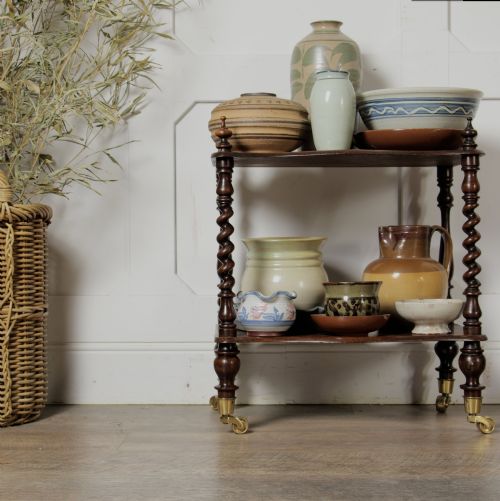
These open-tiered units served historically to hold ornaments, books and decorative ceramics in drawing rooms and parlours. They allow owners to display collections visibly while keeping items accessible.
Today, they function well in living spaces or hallways for plants, books and small sculptures without closing off light or space.
How do I identify a Victorian whatnot?
Victorian examples frequently feature rosewood or mahogany construction, often incorporating turned barley twist supports or pierced fretwork galleries. They range from compact corner units to tall six-tier stands.
Earlier pieces from the Regency or Georgian periods tend to display crisper architectural proportions and simpler linear turned columns.
Are these shelves sturdy enough for heavy books?
Most pieces were built to hold decorative objects, ceramics and lightweight volumes rather than heavy encyclopaedias. The upright columns and shelf joints provide stable support for everyday display items.
Heavier loads should be distributed on the lowest tier to maintain balance, particularly on tall multi-tier stands.
What is an Anglo-Indian whatnot?
Anglo-Indian pieces were made in India by local craftsmen using native dense hardwoods like padauk, often destined for export to British homes. They combine traditional British furniture forms with intricate regional carving techniques.
These items stand out through their deep timber colour and heavy, durable construction.