
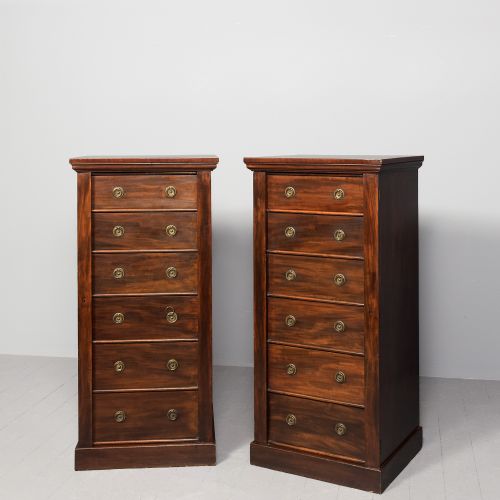
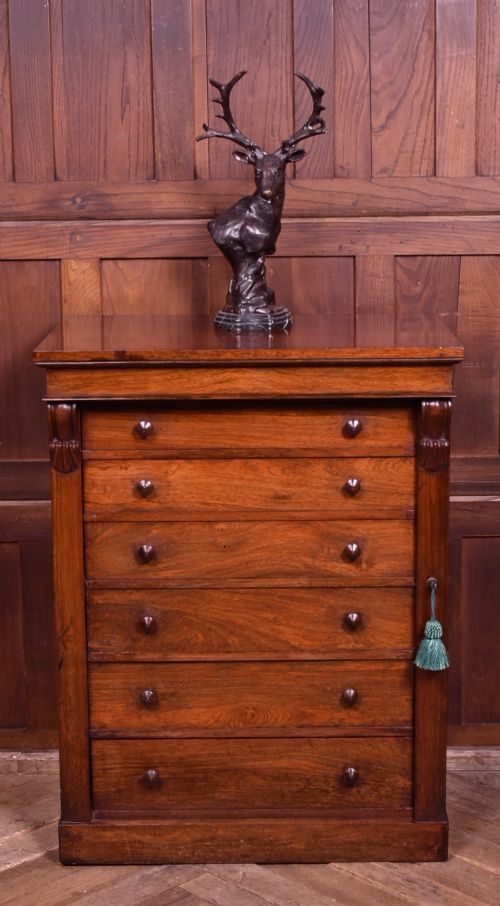


Dark Wood Wellington Chest
A dark wood wellington chest is a tall, slender drawer unit with a side-locking bar, prized for holding papers or small valuables in tight spaces.
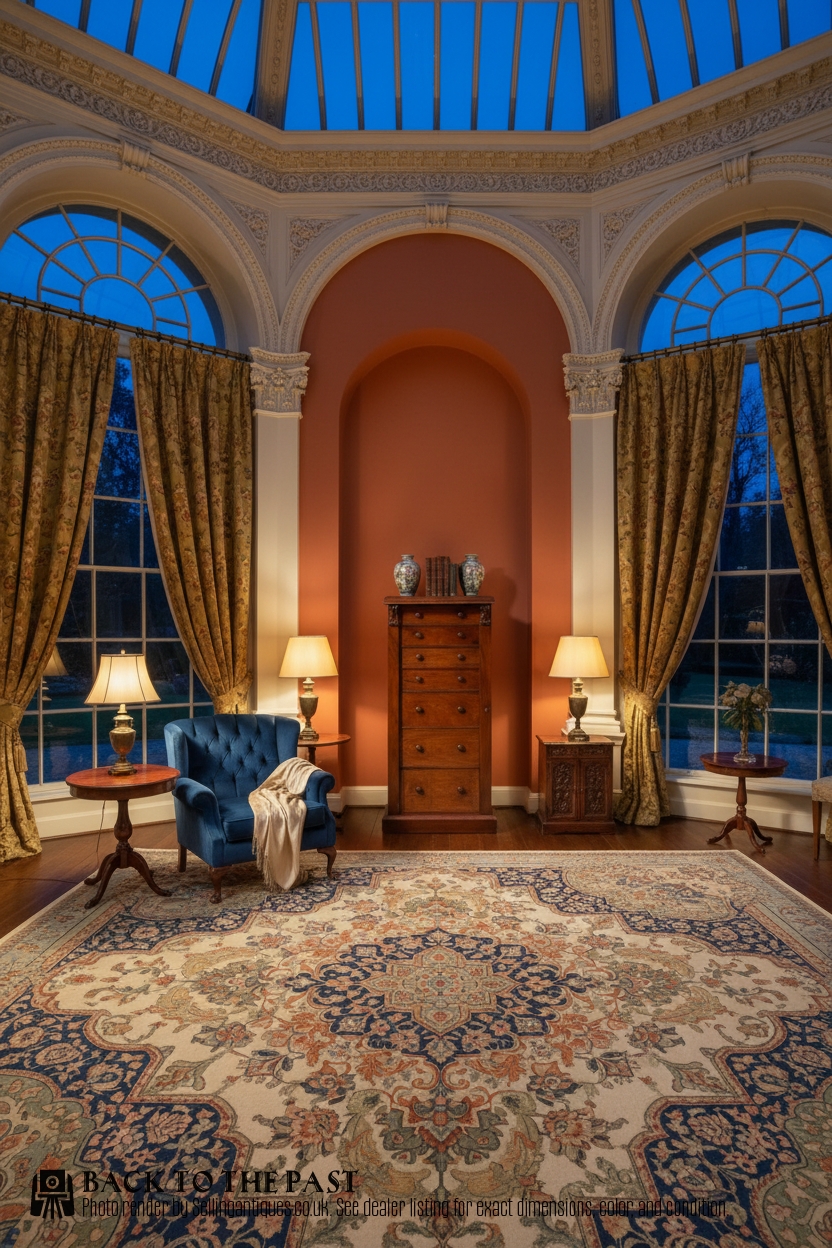
Dark Wood Wellington Chest
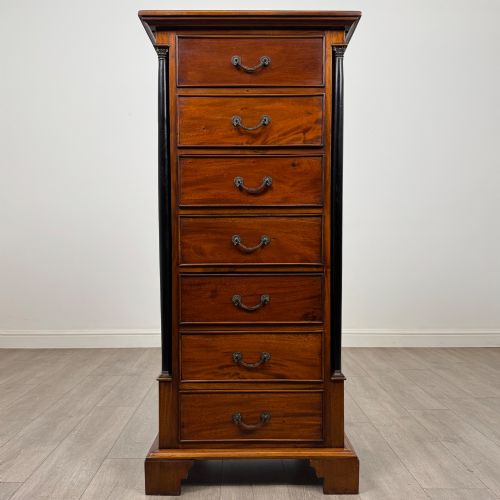
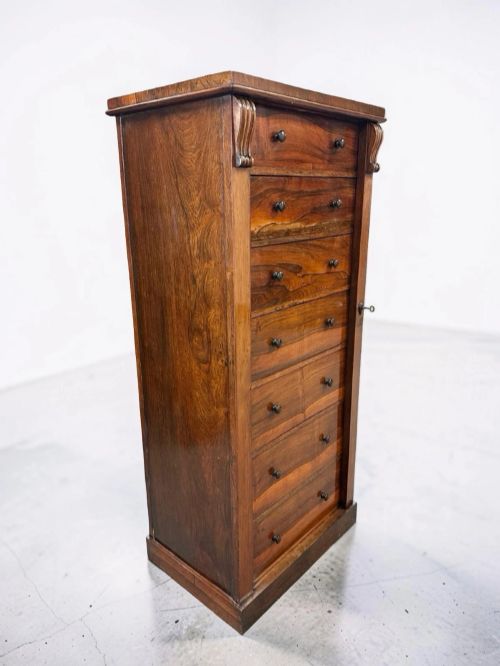
A dark wood wellington chest is fundamentally a narrow chest of drawers designed to make the most of limited floor space without sacrificing storage capacity. These pieces stand tall and upright, characteristically featuring seven or more stacked drawers enclosed by a hinged locking stile on one side.
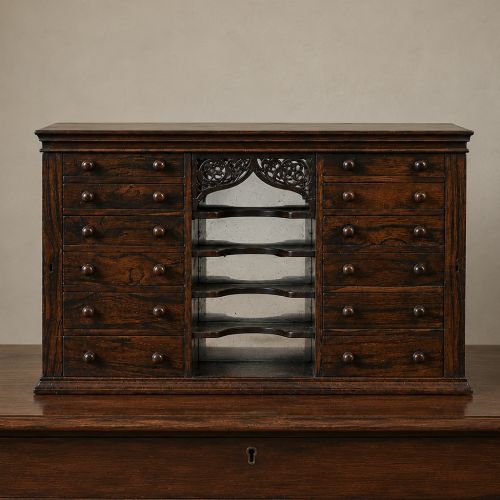
The versions most commonly met on this page span the Regency, Victorian, and Edwardian periods, stretching from the early nineteenth century into the early twentieth century. These examples frequently take the form of traditional chests of drawers, writing cabinets, or collector cabinets.
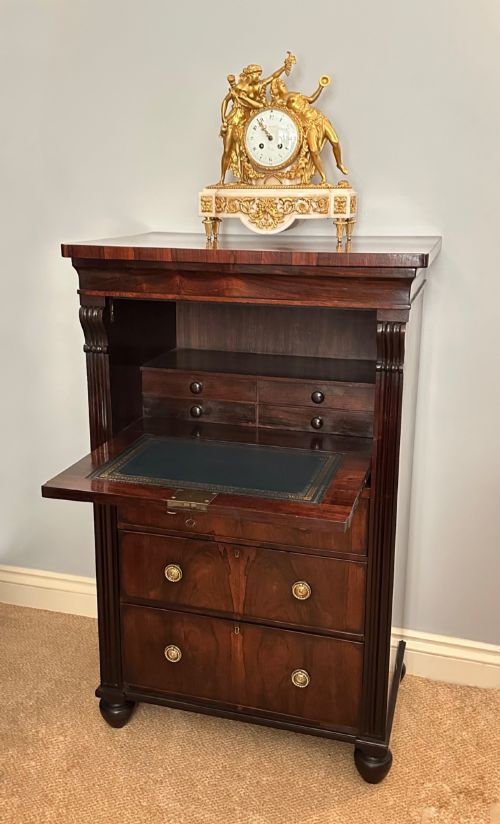
Makers produced these tall narrow chests of drawers in distinct stylistic revivals, including Georgian Revival and Regency Revival alongside their original nineteenth-century periods. Buyers will also encounter specialised variants featuring integrated writing surfaces and mirrored doors designed for domestic utility.
How they were made
Cabinet makers constructed these pieces primarily using dense timbers such as mahogany, rosewood, and walnut, frequently enhancing the surfaces with satinwood or ebonised wood details. Structural stability for such tall, narrow proportions relied upon tightly joined carcasses and heavy side-locking stiles.
Metalwork played a critical role in both the mechanics and appearance, utilising brass for drawer handles, locks, and the hinges of the security bar. Selected pieces also incorporated leather writing inserts and mirror glass panels to serve specialised cabinet functions.
Selected nineteenth-century models hide a secret locking mechanism behind the swinging side bar, keeping morning correspondence entirely out of sight.
What varies in quality
The standard of a dark wood wellington chest depends heavily upon the selection of timber grain and the precision of the cabinet work in the drawer linings. Superior examples display carefully matched veneers and smooth, uniform movement across all seven or more drawers.
The integrity and originality of the locking mechanism and its corresponding key separate standard execution from finer workshop production. Pieces that retain their original brass hardware, internal secret locks, and secondary woods demonstrate a higher grade of original craftsmanship.
The Dark Wood Wellington Chest Glossary
- Wellington chest
- A tall, narrow chest of drawers secured by a hinged locking stile on one side that fastens over the drawer edges. This specific furniture form emerged in the early nineteenth century and remained popular through the Victorian era.
- Secretaire
- A cabinet or chest containing a pull-down writing drawer fitted with small compartments and pigeonholes. This hybrid form combines desk functionality with standard drawer storage.
- Stile
- A vertical framing member of a door or panel assembly that provides structural support and houses hinges or locks. In these chests, the locking stile acts as the security bar for the entire stack of drawers.
- Ebonised wood
- Timber treated with a dark finish to imitate expensive ebony. Makers utilised this technique to create sharp visual contrast against lighter inlaid woods.
- Collector's cabinet
- A specialised storage unit designed to house small specimens, coins, or curiosities within shallow, graduated drawers. These pieces often feature glass doors or locking mechanisms to protect fragile contents.
Dark Wood Wellington Chest: Frequently Asked Questions
What is a wellington chest?
A wellington chest is a tall, narrow set of drawers distinguished by a hinged wooden bar on one side that locks the entire column of drawers simultaneously. This vertical locking design provided secure storage for documents and valuables in nineteenth-century homes.
Most examples feature around seven graduated drawers within a compact footprint. This configuration allowed the furniture to fit into tight bedroom or study spaces while offering considerable storage capacity.
How were they used originally?
These chests served primarily as private repositories for personal papers, journals, and valuable trinkets in studies and bedrooms. The side-locking bar ensured that confidential documents remained secure while the cabinet was locked.
Certain variations incorporated pull-down writing flaps to function as compact desks. Others served specialised roles as collector cabinets for housing small artefacts and specimens.
How do I date a wellington chest?
Dating relies upon observing timber choices, construction methods, and stylistic details associated with periods like the Regency or Victorian eras. Earlier nineteenth-century pieces often display solid mahogany or rosewood construction with hand-cut dovetails on the drawer boxes.
Later Victorian and Edwardian examples may introduce mechanical variations, machine-cut elements, or inlay work typical of the late nineteenth century. Comparing the hardware style and secondary woods helps narrow the manufacturing period.
How do I live with one today?
A dark wood wellington chest functions exceptionally well in modern rooms as a tall storage chest that occupies minimal floor space. Their narrow proportions make them ideal for bedrooms, hallways, or compact studies requiring vertical storage.
Maintenance involves keeping the timber away from direct heat sources and treating the wood surfaces with appropriate natural waxes. The locking mechanism should be handled with care to preserve the original nineteenth-century brass components.