
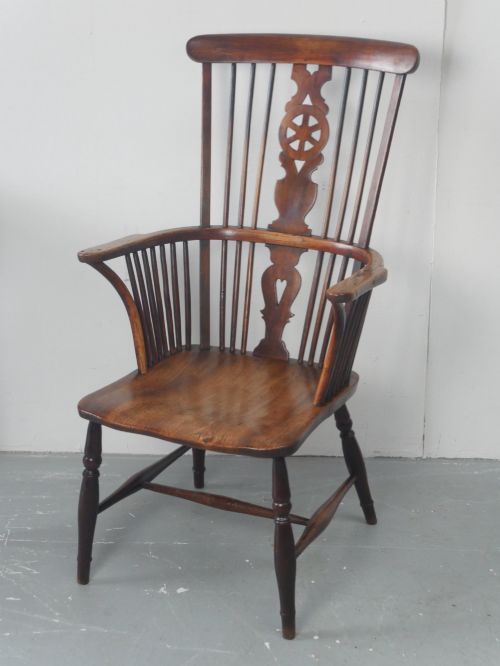
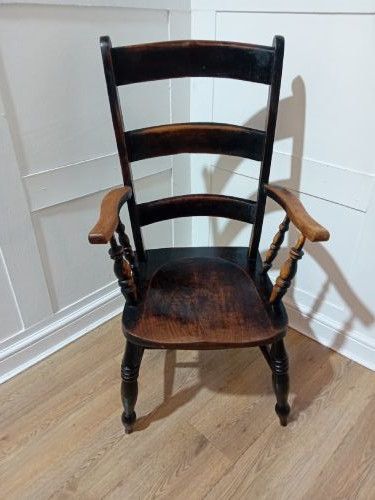

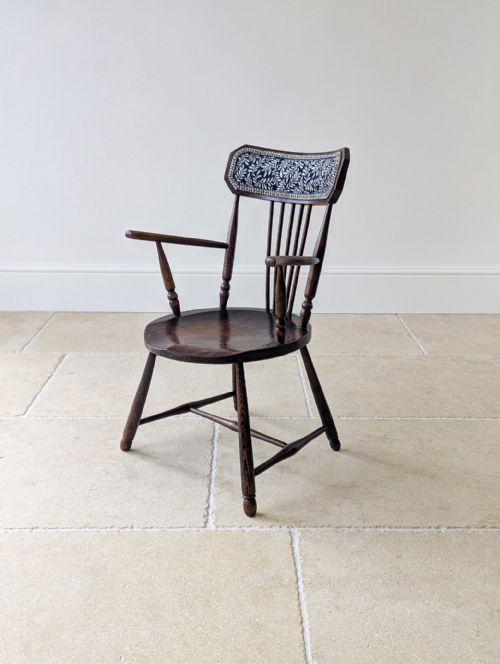
Dark Wood Victorian Armchair
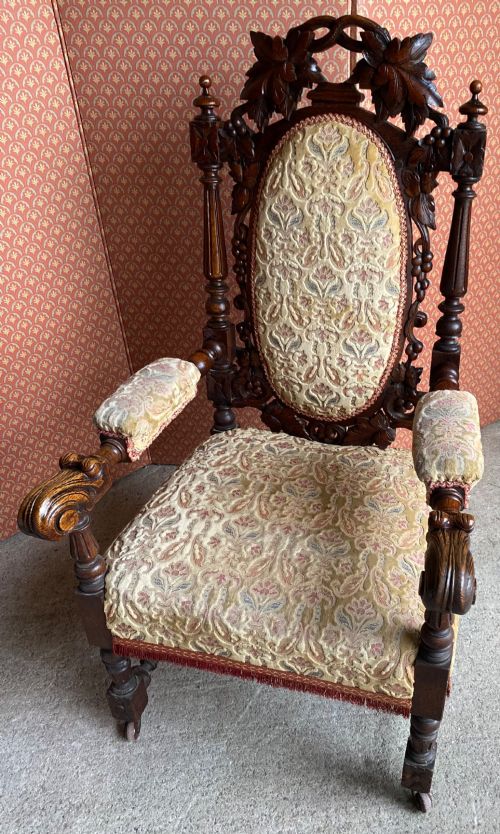
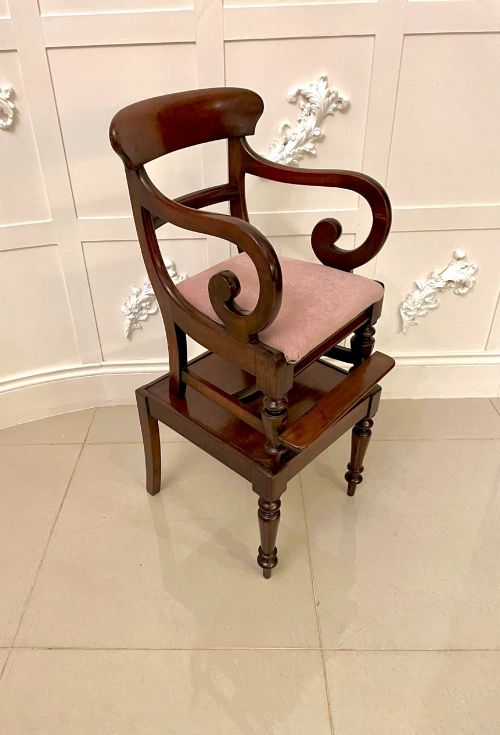
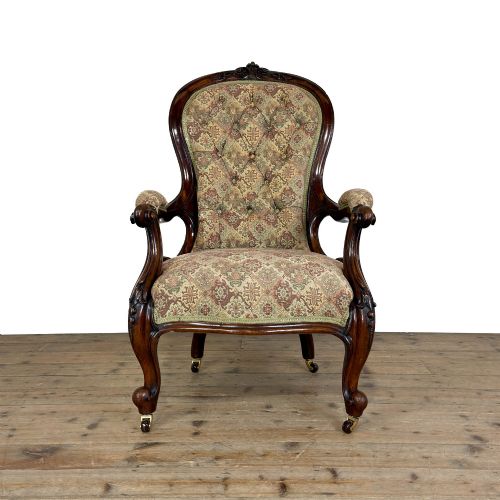
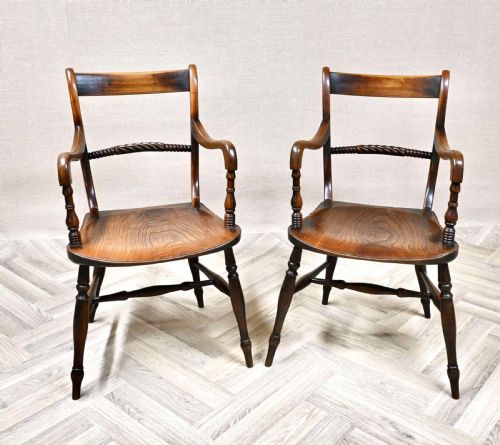
A dark wood victorian armchair provides substantial seating, uniting nineteenth century timber framing with practical comfort for daily use.
Dark Wood Victorian Armchair
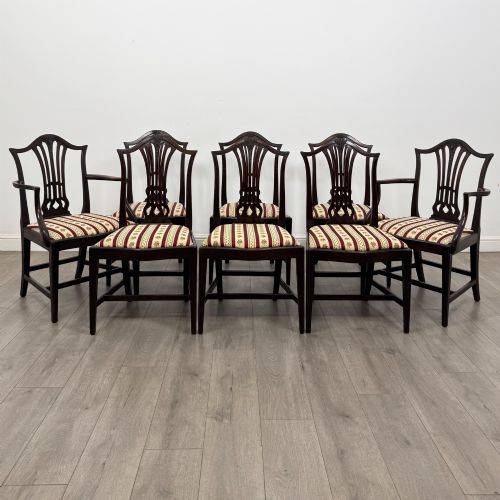
The selection here draws heavily from nineteenth century workshops producing sturdy country seating and formal mahogany library chairs. Most pieces rely on substantial domestic hardwoods, displaying the deep patination acquired over generations of regular use.
What varies in quality
Construction rigidity separates superior examples from lesser pieces, with tight joinery and well-balanced frames ensuring lasting stability during daily use. The choice of timber also dictates grade, where dense yew or figured mahogany commands greater regard than stained softer woods.
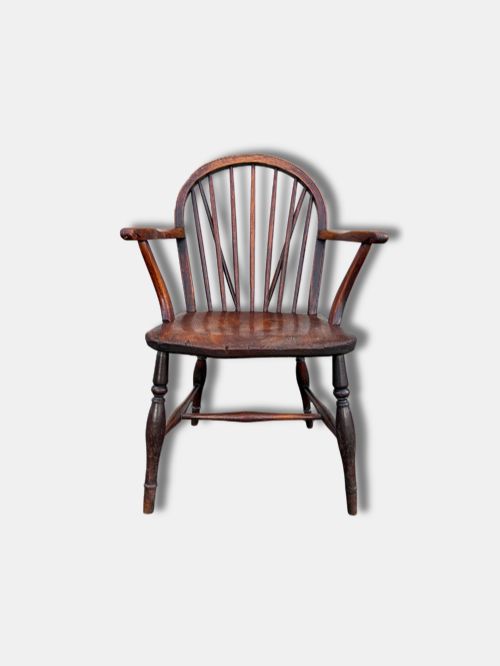
Carved detail depth and proportion define the upper tier of formal library and desk chairs, whilst country Windsors depend on the harmonious taper of spindles and the grain configuration of solid elm seats.
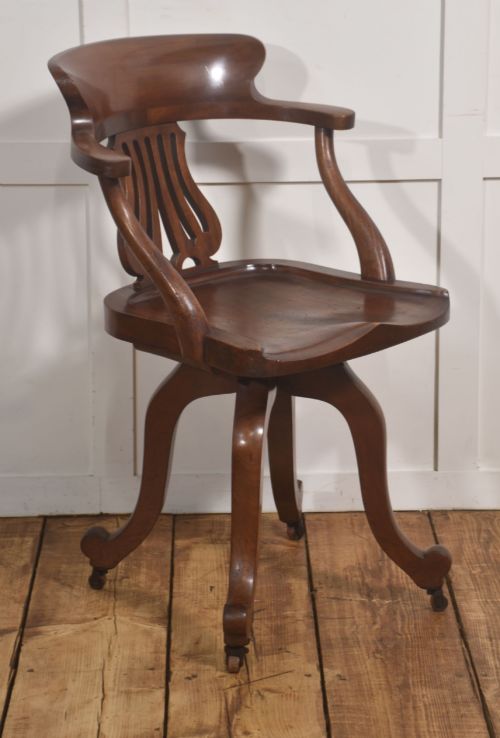
The selection includes revolving office swivel mechanisms alongside traditional rocking chairs framed with bobbin turnings.
Philip Clissett·Howard and Sons·Mellier and Co
The Dark Wood Victorian Armchair Glossary
- Windsor chair
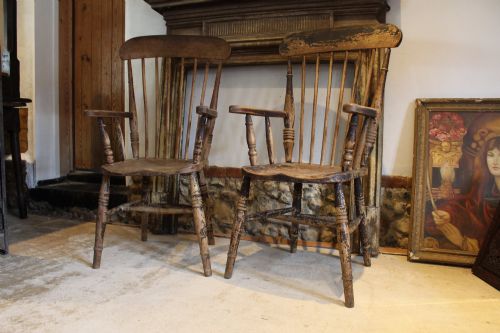
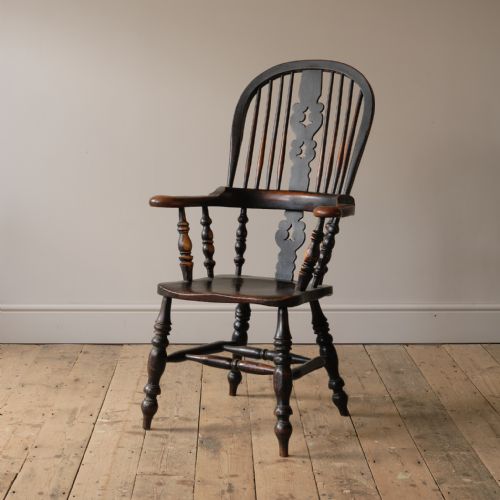
- A wooden chair constructed with a solid timber saddle seat into which the back and legs are wedged directly. These seating forms often combine elm seats with ash or beech spindles.
- Captain's chair
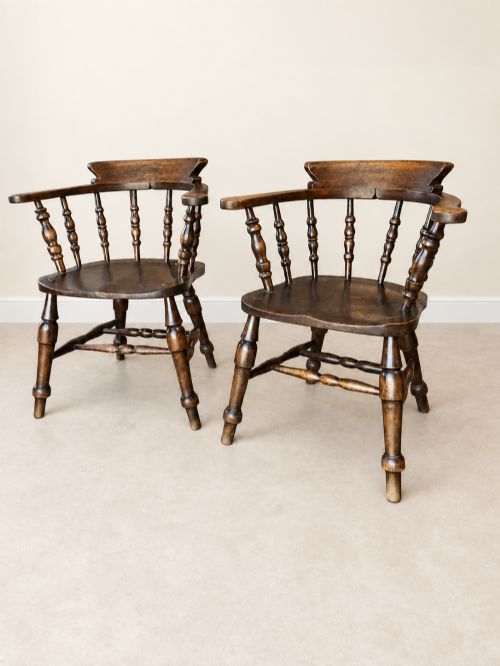
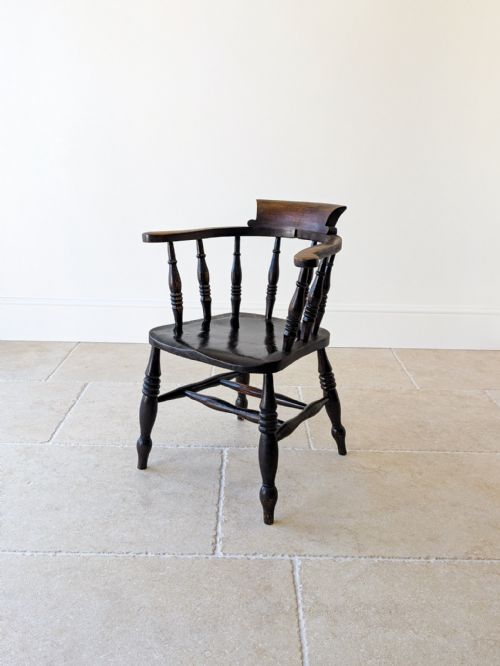
- A low-backed wooden armchair designed for office or library use, featuring a rounded top rail supported by numerous spindles. They frequently incorporate sturdy elbow rests for extended seated work.
- Bobbin turning
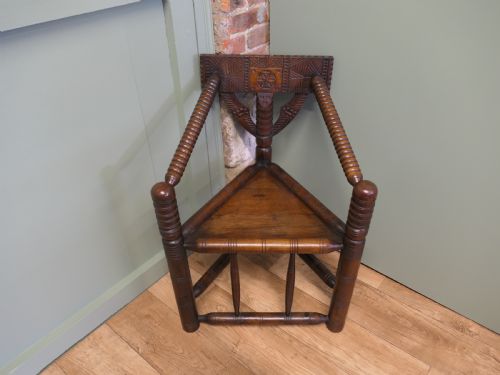
- A form of woodturning characterised by a series of rounded, spool-like swellings carved along the length of a furniture leg or stretcher. This decorative technique appears widely on nineteenth century vernacular frames.
- Comb back
- A Windsor chair variation where the tall spindle back is topped by a horizontal headpiece resembling a hair comb. This extension provides enhanced head support for the sitter.
Dark Wood Victorian Armchair: Frequently Asked Questions
What defines a Victorian armchair?
A Victorian armchair originates from the nineteenth century, encompassing diverse styles from heavy mahogany office swivels to country ash and elm Windsors.
These pieces reflect the manufacturing shifts of the era, combining hand-carved details with evolving mechanical seating patents.
How are elm and ash used?
Elm typically forms the solid, carved seats of country armchairs due to its interlocking grain resisting split formations.
Ash and beech provide the flexible strength needed for turned spindles, legs, and steam-bent curved back rails.
Where were these chairs placed?
Formal mahogany models served in libraries, studies, and drawing rooms as desk or salon seating.
Sturdier vernacular designs in elm and beech stood in farmhouses, cottages, and country kitchen dining spaces.
How do I care for dark wood?
Maintain the timber surfaces by applying quality beeswax periodically, avoiding direct sunlight and excessive heat fluctuations.
Gentle dusting with a soft cloth preserves the natural patination built up over the nineteenth century.