


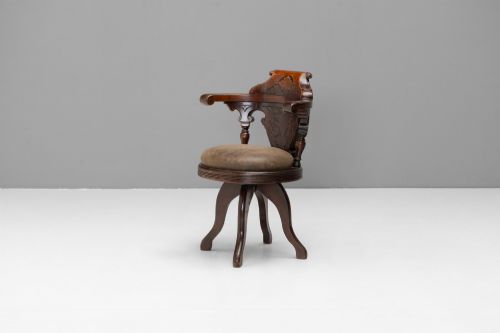


Dark Wood Swivel Chair
A dark wood swivel chair offers practical rotation and rich timber tones, spanning desk seats and piano stools from the Victorian, Edwardian and Georgian eras.
Dark Wood Swivel Chair
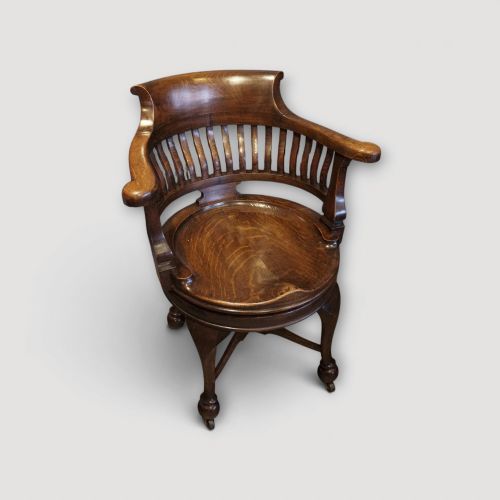
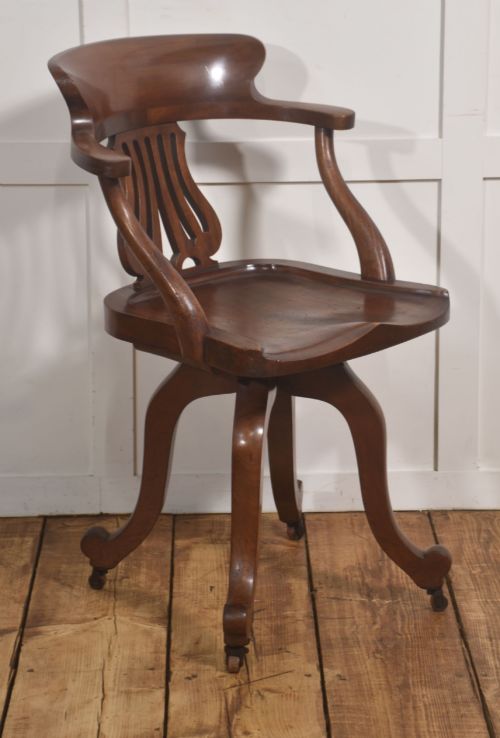
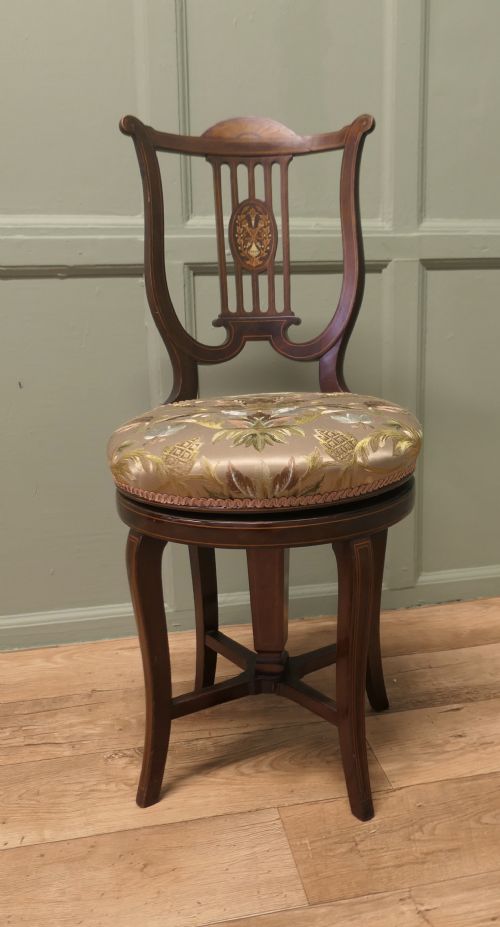
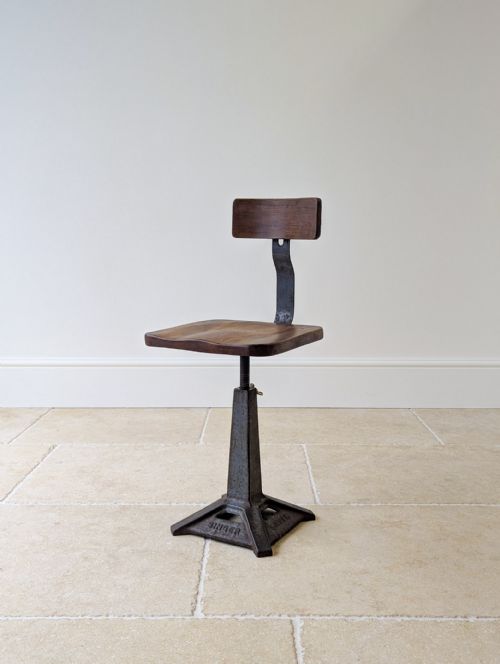
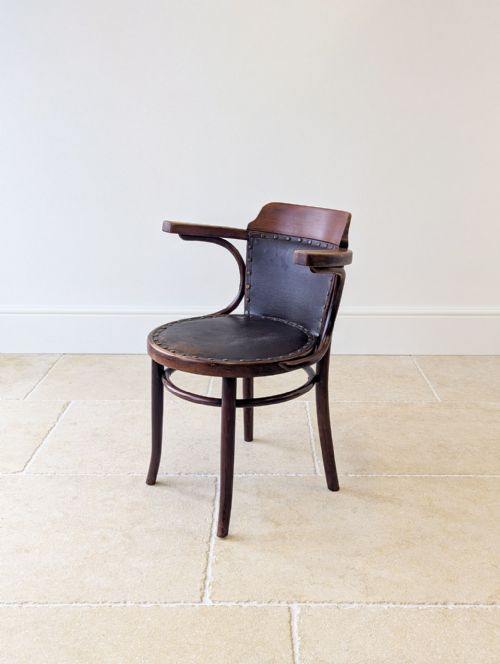
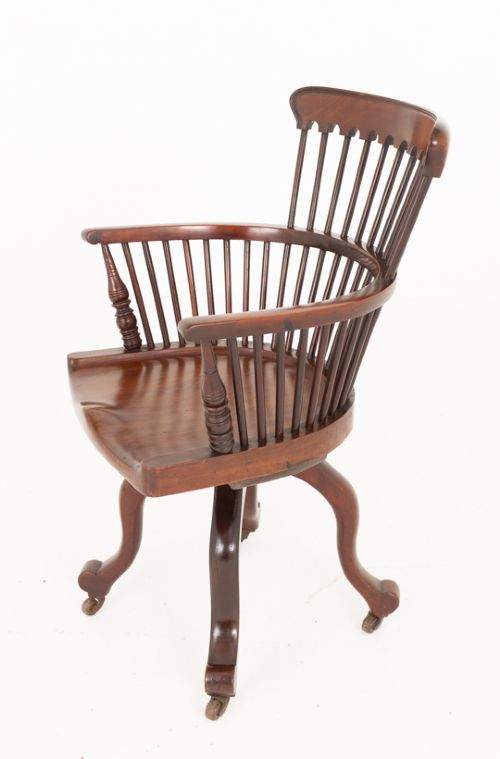
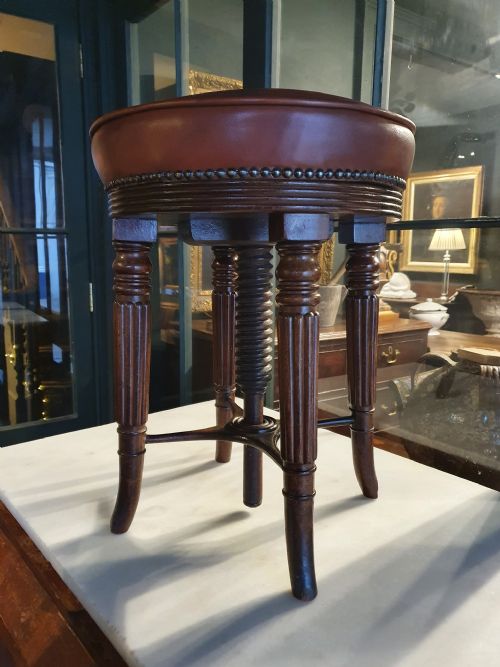
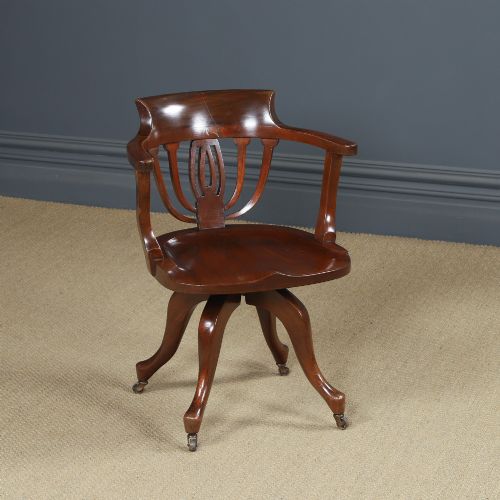
A dark wood swivel chair encompasses a varied selection of rotating seats, primarily functioning as office desk chairs, piano stools and music seats. These pieces emerge from the nineteenth and early twentieth centuries, spanning Victorian, Edwardian, Georgian and Regency periods.
The most common formats on this page are revolving piano stools and mahogany desk chairs. Makers utilised dark timbers such as mahogany, rosewood and oak to construct these functional rotating seats.
How they were made
Craftsmen built these rotating seats using dense timbers like mahogany, rosewood and oak, often paired with structural metals. Brass and iron mechanisms enabled the swivel and height-adjustable functions found in desk chairs and piano stools.
Upholstery materials such as leather, fabric and velvet frequently cover the seats of desk chairs and music stools. Wooden components display carving, bentwood techniques or papier-mâché finishes depending on the period and style.
Dark Wood Swivel Chair Retail Price Guide 2026
Typical asking prices for dark wood swivel chair among the pieces listed under this phrase on Sellingantiques today, from the lower quarter to the upper quarter. They describe what is for sale here now, not the wider market.
Musicians relied on revolving stools to hit the right note without leaving their seats.
What varies in quality
The sophistication of the revolving mechanism and adjustment hardware distinguishes standard models from superior examples. Smooth rotation and sturdy height adjustment indicate careful engineering in desk chairs and piano stools.
Timber selection and decorative carving depth define the upper tier of these pieces. Carved details, quality rosewood or mahogany grain, and maker attribution separate basic utility seating from finer workshop production.
Jennens and Bettridge·Thonet·Gillows·James Shoolbred·E W Godwin
The Dark Wood Swivel Chair Glossary
- Swivel chair
- A seat mounted on a central axis that allows the top to rotate. This mechanism appears on office desk chairs and music stools.
- Revolving
- Turning around a central point or axis. Many piano stools and desk chairs utilise this action for adjustable seating.
- Rise and fall
- An adjustable mechanism that alters the height of a piano stool or music chair. This movement relies on a threaded screw spindle.
- Bentwood
- Wood steamed and curved into rounded shapes. Thonet utilised this technique for early twentieth-century desk chairs.
Dark Wood Swivel Chair: Frequently Asked Questions
How do I adjust the height on these chairs?
Many piano stools and music chairs utilise a central wooden or metal screw mechanism that raises the seat when turned. Desk chairs often employ iron spindles hidden beneath the seat to permit height adjustment.
Turning the seat clockwise or anticlockwise alters the vertical position. Users should support the mechanism during adjustment to protect the threaded components.
Were these chairs used for offices or music rooms?
The selection includes both heavy mahogany office desk chairs and revolving piano or music stools. Office variants provide backrests and sometimes arms for prolonged seating at a desk.
Music stools feature smaller circular tops designed for harpists, cellists and pianists who require freedom of movement. Both types share the central rotating axis characteristic of this seating.
How can I tell a Victorian chair from an Edwardian one?
Victorian pieces frequently display heavier proportions, rich mahogany or rosewood timbers and detailed carving. Edwardian examples often exhibit lighter construction, simpler lines or oak framing.
Stylistic cues such as Sheraton Revival motifs point to the late nineteenth or early twentieth century. Construction methods and timber choices align with the prevailing tastes of each period.
What maintenance do swivel mechanisms require?
Metal and wooden swivel screws benefit from periodic inspection to ensure smooth rotation. Light lubrication on iron or brass spindles prevents binding during height adjustment.
Users should avoid forcing stuck mechanisms and instead check the central column for accumulated dust or dry lubricant. Careful handling preserves the original rotating function.