



Dark Wood Supper Table
A dark wood supper table is a sturdy timber surface designed for dining and easily tilted away when the meal ends.
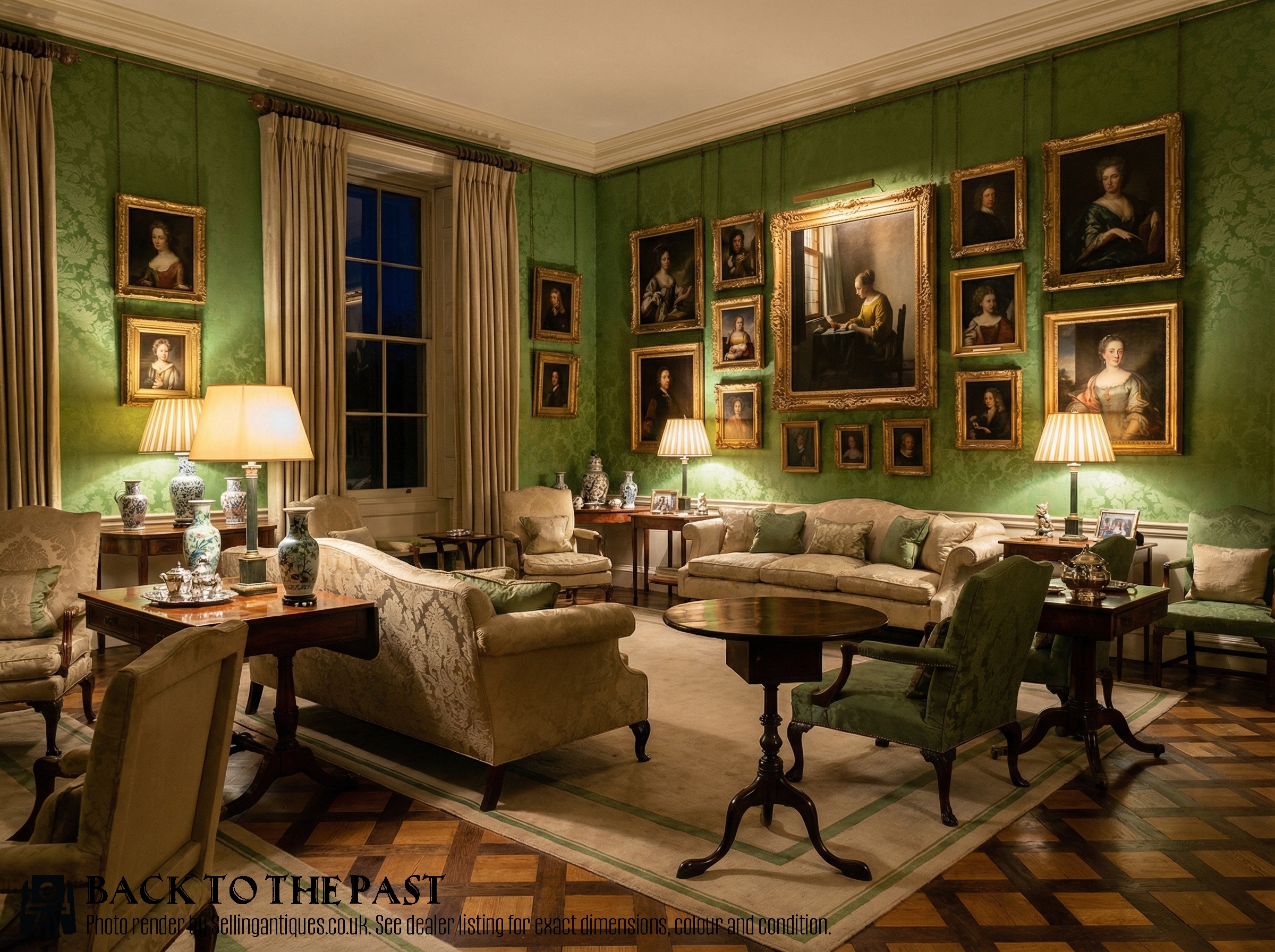
Dark Wood Supper Table
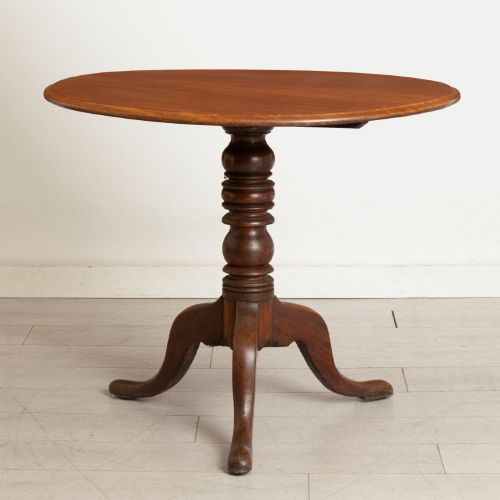
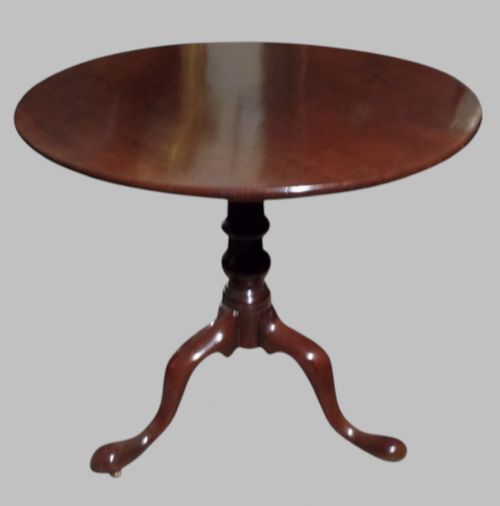
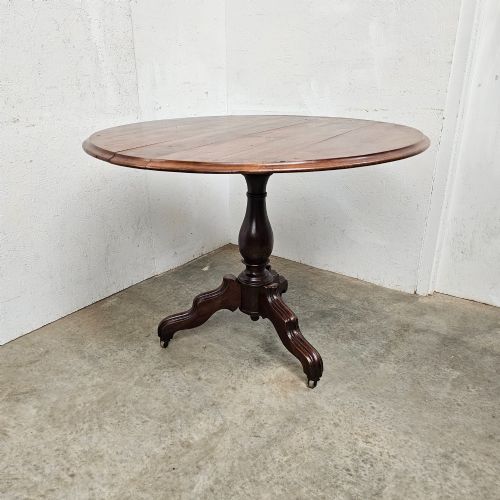
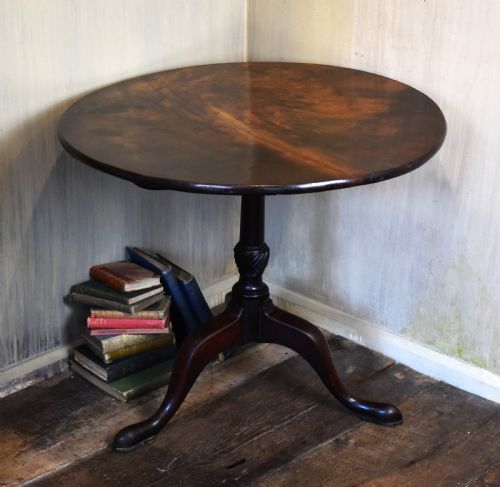
A dark wood supper table primarily appears in Georgian, Regency and Victorian periods, often taking the form of a tilt-top or tripod table used for dining or evening meals. These tables were built to serve a practical function in the home, moving easily between social rooms.
The versions most commonly met on this page include Georgian mahogany tilt-top tables and nineteenth century examples featuring circular tops. Makers constructed these pieces from rich timbers such as mahogany and walnut, often incorporating clever tilting mechanisms.
Buyers seeking a dark wood supper table will find formats ranging from pedestal tripod bases to larger extending dining tables. Each piece reflects the domestic habits of past centuries, when versatile furniture saved valuable floor space in reception rooms.
How they were made
Cabinetmakers utilised dense timbers like mahogany, Cuban mahogany and walnut, selecting boards with strong grain patterns for the main surfaces. They frequently combined these woods with brass hardware for tilting mechanisms and birdcage actions.
Construction techniques focused on stability and movement, pairing solid timber tops with robust tripod or pedestal bases. Joinery included turned pillars and fitted catches that allowed the top to snap or tilt into a vertical position when not in use.
Listings feature mahogany, walnut and oak across Georgian, Regency and Victorian periods, with tilt-top and tripod forms dominating the selection.
What varies in quality
Quality rests upon the selection of timber, particularly where single-piece mahogany tops or figured Cuban mahogany are present. Superior examples display careful matching of wood grains and refined turning on the central pedestals and legs.
The precision of the tilting mechanism distinguishes finer tables from simpler utilitarian pieces. Smooth operation of the birdcage action and tight fitting joints indicate the skill of the original cabinetmaker.
James Mein·John Bivins
The Dark Wood Supper Table Glossary
- Tilt-top table
- A table with a hinged top that rotates to a vertical position for storage against a wall. This design allowed dining and occasional tables to clear floor space when not in use.
- Birdcage action
- A rotating wooden framework beneath a table top that allows the surface to both pivot and tilt. It represents a refined piece of engineering found on better tripod tables.
- Tripod table
- A freestanding table supported by a single central pillar resting on three legs. This construction prevents wobbling on uneven floorboards.
- Cuban mahogany
- A dense, dark timber harvested in the Caribbean and prized for its rich colour and fine grain. Cabinetmakers utilised it extensively in high quality eighteenth and nineteenth century furniture.
- Snap top
- A spring-loaded mechanism that locks a tilt-top table securely into its horizontal position. It prevents the top from tipping accidentally during use.
Dark Wood Supper Table: Frequently Asked Questions
What is a dark wood supper table used for?
These tables served primarily for evening dining and social gatherings in domestic interiors. Their tilt-top design allowed them to be stored flat against a wall when the meal concluded.
Today, they function well as occasional surfaces in reception rooms or hallways while retaining their traditional character.
Which woods were used for these tables?
Makers predominantly employed mahogany, including dense Cuban mahogany varieties, alongside walnut and oak. These dark timbers provided both structural strength and deep colour.
Secondary materials such as brass often appear in the catches, hinges and fittings that secure the tilting mechanism.
Are these tables suitable for everyday dining?
Tripod supper tables provide sturdy surfaces for meals, though their central pillar designs require careful placement of seating. Smaller occasional versions suit light dining or tea service.
Larger extending or pedestal formats accommodate multiple diners more comfortably in modern dining spaces.