



Dark Wood Stick Rack
A dark wood stick rack keeps hallways tidy, holding umbrellas, canes and whips in timber frames shaped by Victorian and Edwardian hands.
Dark Wood Stick Rack
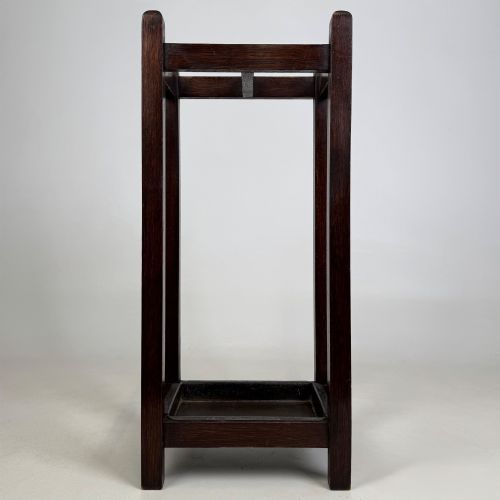
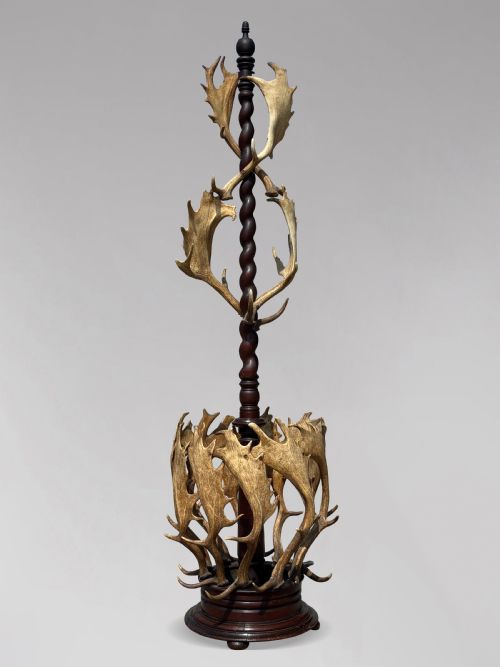
A dark wood stick rack serves as a purposeful piece of hallway furniture designed to store walking sticks, umbrellas and whips. These items appear across periods spanning the nineteenth century through the early twentieth century, taking forms such as dedicated umbrella stands, hall stands and whip racks.
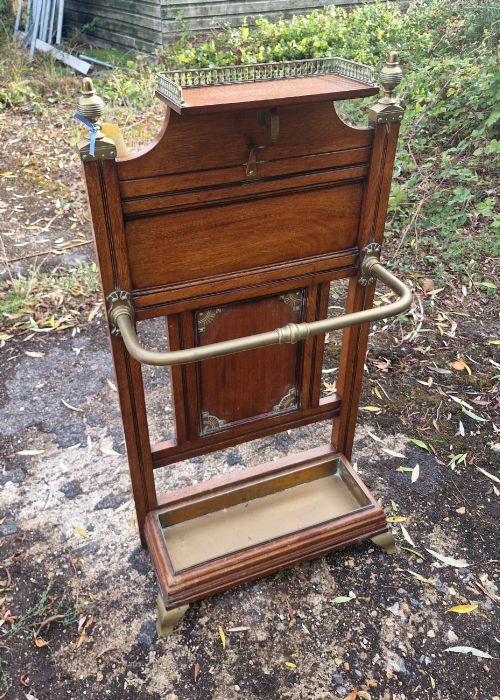
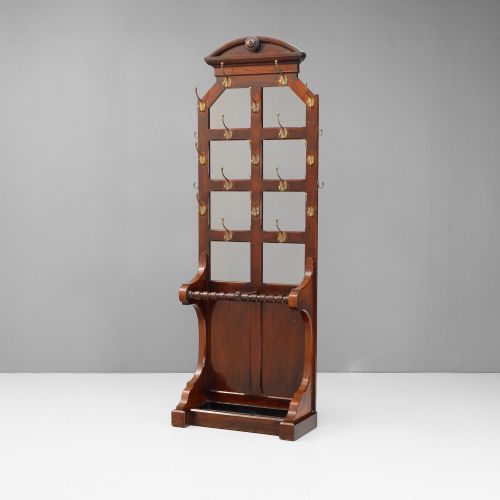
The versions most commonly met on this page include Victorian and Edwardian examples made from mahogany or oak. Many incorporate practical additions like mirrors, marble shelves and brass mounts for drip collection.
Makers and workshops produced these pieces to manage wet weather gear and outdoor accessories close to the front entrance of the house. Their construction reflects the domestic needs of period country houses and town residences.
Materials and construction
Makers utilised dense timbers such as mahogany, oak and walnut for the primary structure of a dark wood stick rack. These hardwoods provided the necessary weight and durability to support damp umbrellas and heavy walking canes without tipping.
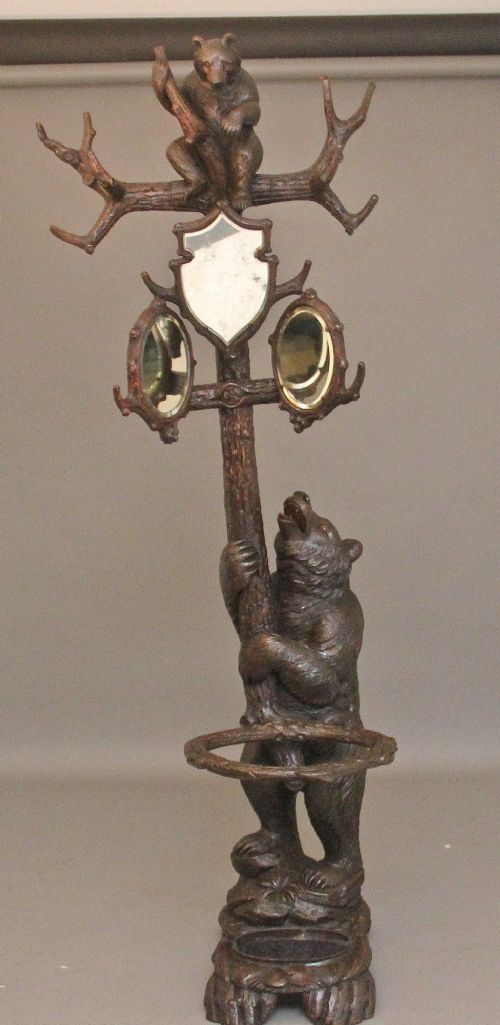
Brass mounts, cast iron liners and metal drip pans protected the timber bases from water damage left by wet items. Carved wood details, including Black Forest bear motifs and Greenman masks, appeared on more elaborate examples alongside bentwood techniques.
Listings feature mahogany, oak and walnut alongside brass and cast iron components across the Victorian and Edwardian periods.
What separates the fine examples
The standard of a dark wood stick rack rests upon the depth of the carving and the selection of the timber grain. Pieces showing detailed hand-carved animal figures or architectural panels stand apart from plain utility frames.
Original hardware, including integrated brass trays and bevelled mirrors, elevates the execution. The integrity of the joints and the preservation of the polished surface determine the survival of the piece over time.
J. Parker of Woodstock·Shoolbred
The Dark Wood Stick Rack Glossary
- Hall stand
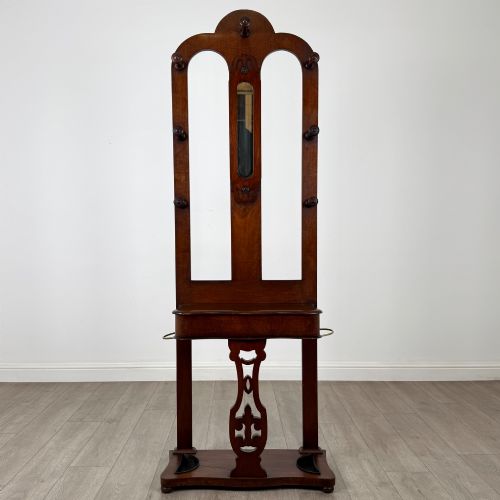
- A large piece of hall furniture combining a dark wood stick rack with hooks for coats and hats, often featuring a central mirror and marble shelf.
- Black Forest
- A style of wood carving originating from central Europe, characterised by realistic bears and naturalistic foliage applied to hall furniture.
- Drip tray
- A metal or brass pan placed at the base of a stick rack to catch water from wet umbrellas and protect the wooden floor.
- Bentwood
- A technique of steaming timber until pliable and bending it into curved shapes, commonly utilised for lightweight coat and hat stands.
- Whip stand
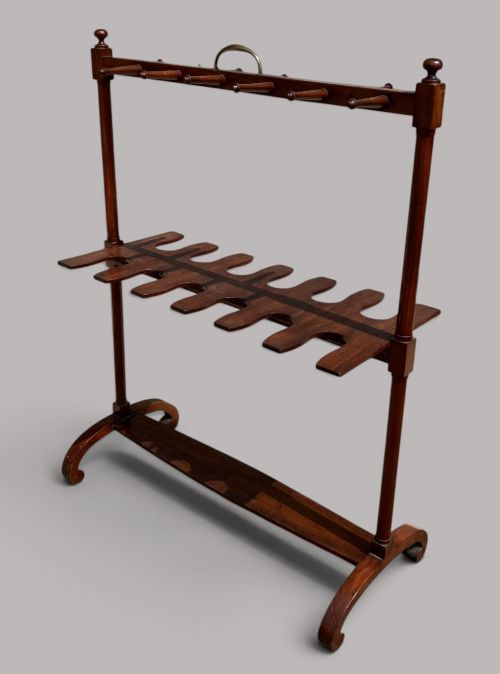
- A specialist rack designed specifically for the neat storage of riding crops and whips in country houses and tack rooms.
Dark Wood Stick Rack: Frequently Asked Questions
Where were these placed in the home?
These pieces sat directly inside the entrance hall or vestibule of a house. This placement ensured family members and visitors could immediately store wet umbrellas, walking sticks and heavy coats upon entering from the outdoors.
In larger country houses, specialised tack room stands were kept closer to the stables for riding equipment. The proximity to the front door made outdoor gear accessible as people left the house.
How do I care for the wood?
Maintain the timber by keeping the piece away from direct heat sources and sudden temperature shifts that cause wood to crack. Regular dusting with a dry cloth preserves the polished surface.
Empty and dry the metal drip pans frequently to prevent rust transfer and moisture damage to the surrounding timber base.
How do I distinguish Victorian from Edwardian pieces?
Victorian examples often display heavier proportions, dense carvings, and darker finishes, sometimes incorporating elaborate Gothic Revival or Black Forest motifs. Mahogany and dark oak dominate this era.
Edwardian pieces generally present a lighter appearance with simpler lines and softer proportions. The timber choice remains predominantly oak and mahogany, but with restrained decorative detailing.
What is the purpose of the brass tray?
The removable brass or metal tray catches rainwater dripping from wet umbrellas and walking sticks. This catches moisture before it reaches the floor or rots the wooden base of the rack.
Many trays lift out independently to allow for easy emptying and cleaning after wet weather.