

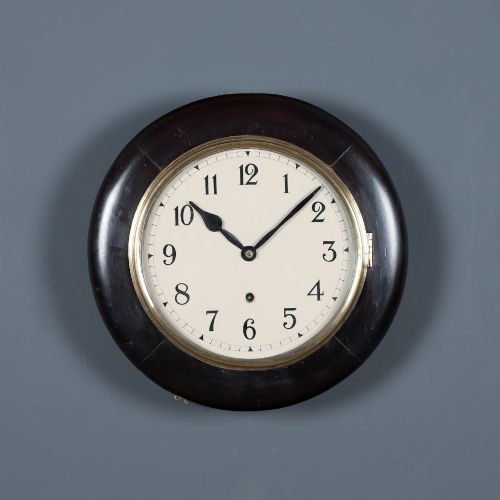
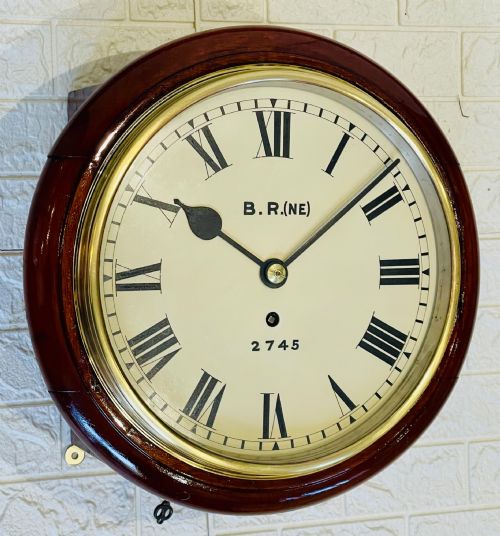
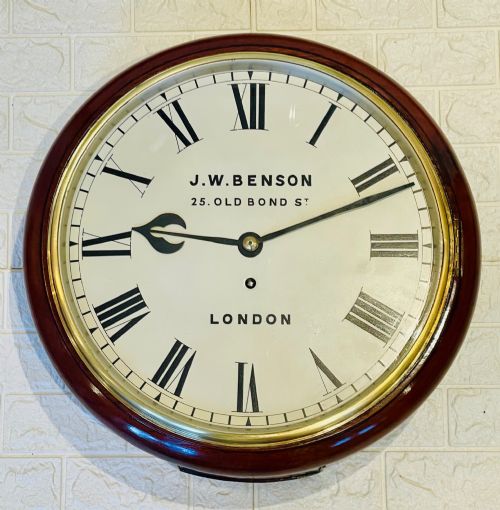
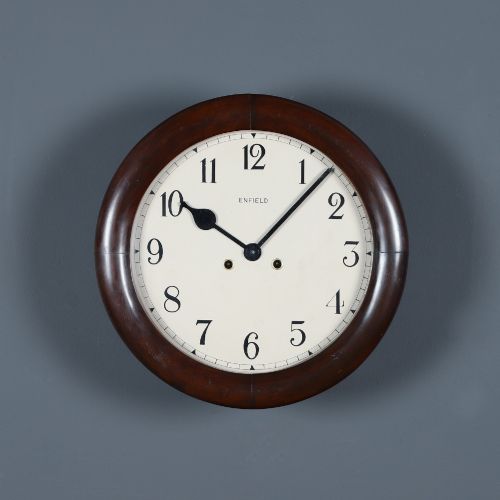


Dark Wood Station Clock
A dark wood station clock brings the precise rhythm of the railway or schoolroom directly onto your wall.
Dark Wood Station Clock
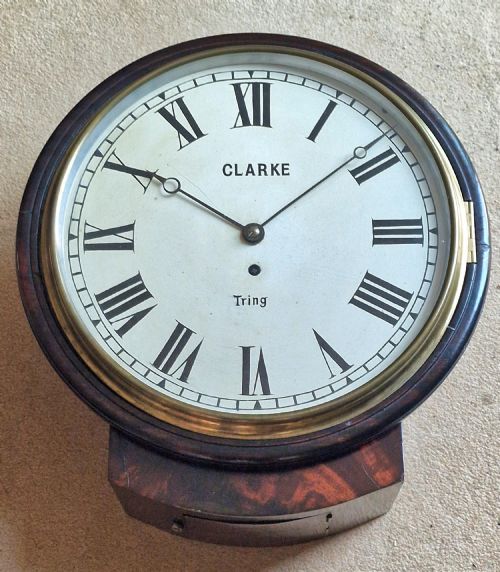
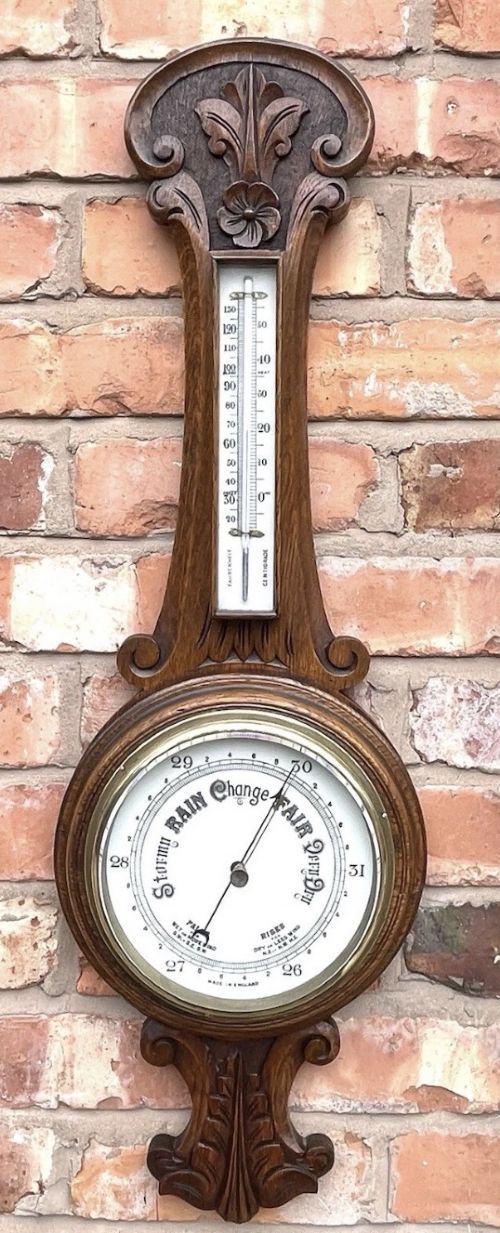
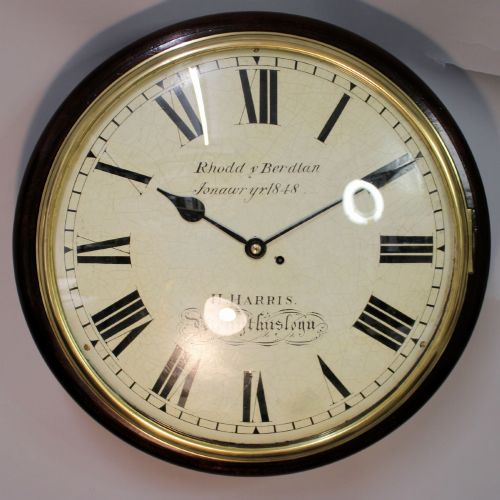
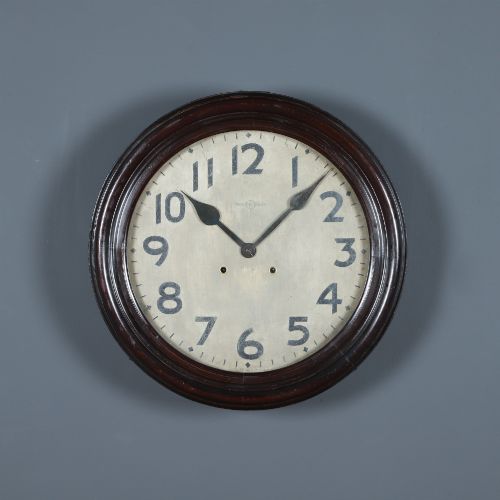
When you search for a dark wood station clock, you encounter round dial wall timepieces and banjo barometers housed in substantial timber frames. These objects originated to keep accurate time in public buildings, stations, and offices during the nineteenth and early twentieth centuries.
The versions you meet most frequently on this page feature mahogany, oak, or walnut surrounds with clear white enamel or painted dials behind protective glass. They range from compact eight-inch dial timepieces to much larger railway models designed for high walls.
Makers inscribed their names directly onto the dial face or movement, connecting individual pieces to regional English towns or international markets like Japan.
Materials and construction
Clockmakers utilised dense timbers such as mahogany, oak, and walnut to turn and carve durable surrounds that protected the delicate movements within. Brass and iron formed the mechanical gears, fusee chains, and bezels, whilst painted metal and glass created the visible dial face.
Fusee movements governed the power delivery using a conical pulley and cord or chain to ensure even tension as the mainspring unwound. Carved details on the wooden frames reflect Victorian and Edwardian joinery traditions.
Dark Wood Station Clock Retail Price Guide 2026
Typical asking prices for dark wood station clock among the pieces listed under this phrase on Sellingantiques today, from the lower quarter to the upper quarter. They describe what is for sale here now, not the wider market.
Distinctions in quality
Quality rests in the precision of the fusee movement and the crispness of the original dial lettering rather than mere decorative carving. Finer examples retain their original brass bezels, glass covers, and matching wooden cases without extensive timber replacement.
The reputation of the maker inscribed on the dial also elevates a piece, as does the complexity of the mechanism, such as chiming or striking trains alongside standard timekeeping.
George Clarke Tring·Henry Harris·Anglo Swiss Watch Co·Atkins of Warwick·Sly Weymouth·J Beckett of London
The Dark Wood Station Clock Glossary
- Fusee
- A conical pulley used in better quality clocks to equalise the torque of the mainspring as it runs down. This mechanism ensures consistent timekeeping from the first hour to the last.
- Dial clock
- A wall-mounted clock featuring a prominent circular face and a short wooden case or trunk below. They were standard fixtures in railway stations and municipal buildings.
- Aneroid barometer
- An instrument measuring atmospheric pressure without liquid mercury, using a small flexible metal box. These are frequently combined with thermometers in carved wooden banjo frames.
- Drop dial
- A clock case where the circular dial extends downward into a trunk, often with a glazed viewing window at the base. This shape accommodated the pendulum swing in a compact wall format.
- Bezel
- The brass or metal ring that holds the glass protecting the dial face. It often hinges open to allow hand-setting.
Dark Wood Station Clock: Frequently Asked Questions
Where were these clocks originally hung?
Railway platforms, school assembly halls, town offices, and municipal institutions relied on these large dials for public timekeeping.
Their robust timber surrounds and legible faces ensured visibility across busy rooms.
How do I tell a Victorian clock from an Edwardian one?
Victorian models often display heavier mahogany surrounds with simpler utility forms, whilst Edwardian pieces frequently incorporate lighter oak with carved banjo barometer combinations.
Examining the dial lettering and backplate construction also helps establish the era of manufacture.
Can I hang a station clock on any wall?
These clocks are heavy due to their solid timber frames and brass movements, requiring secure fixing directly into wall studs or masonry.
Proper weight support prevents the case from leaning and keeps the pendulum swinging evenly.