


Dark Wood Sheet Stand
A dark wood sheet stand holds your folios and papers in order, bringing both utility and fine grain to the room.
Dark Wood Sheet Stand
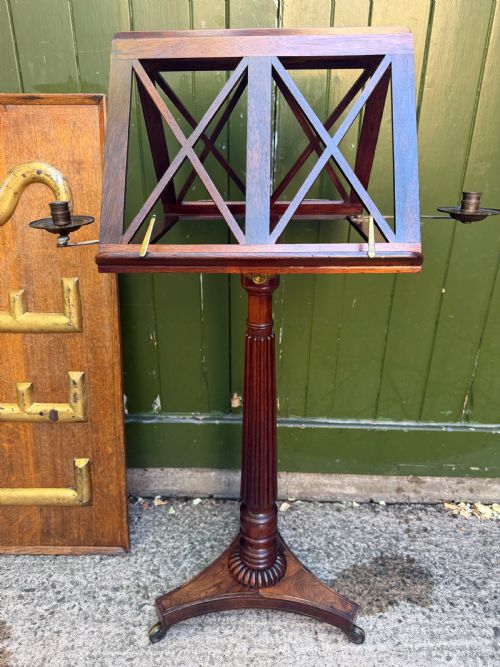
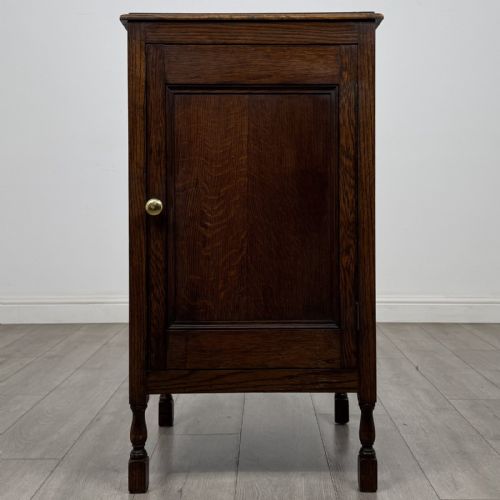
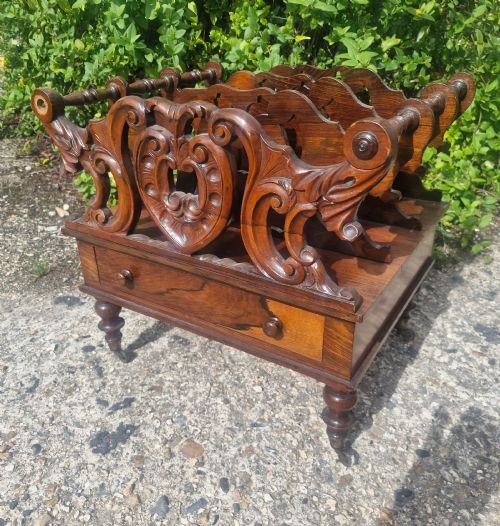
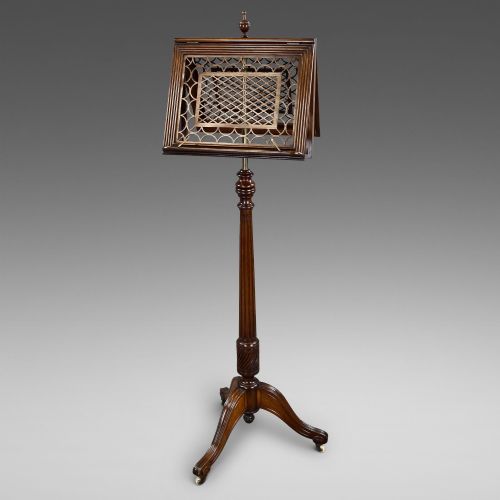
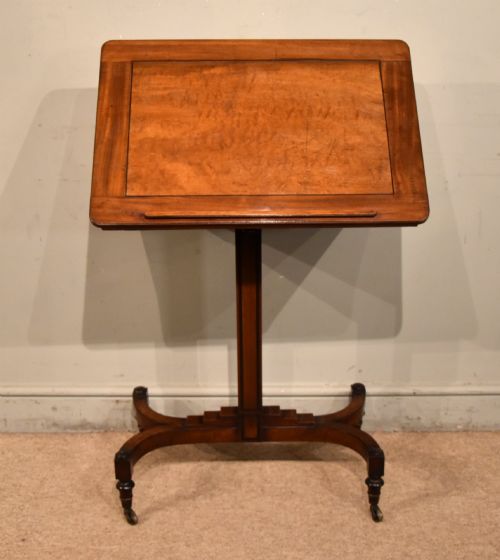
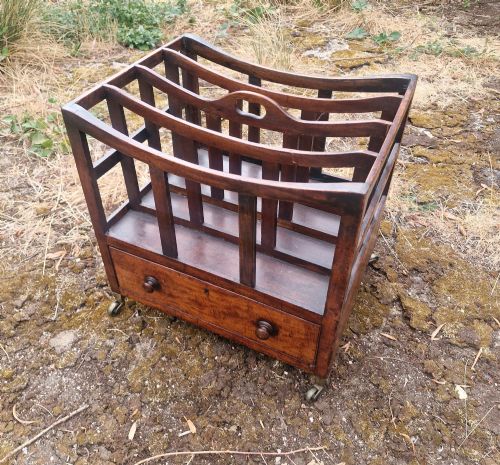
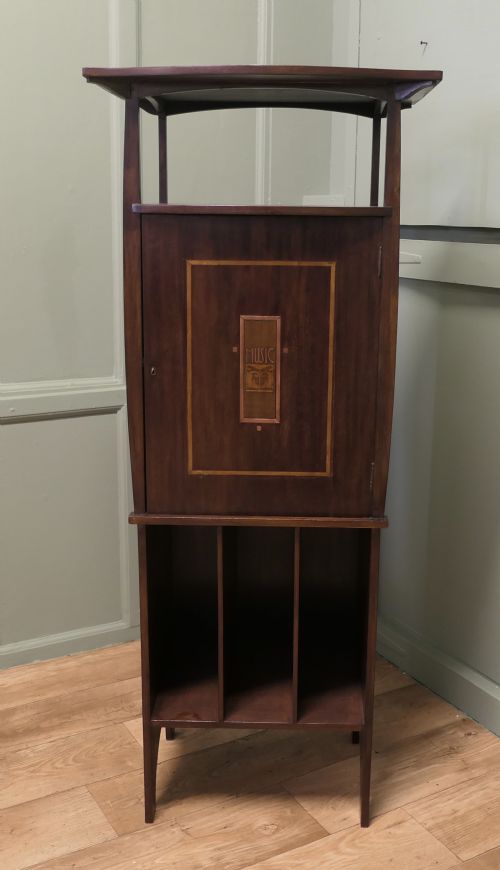
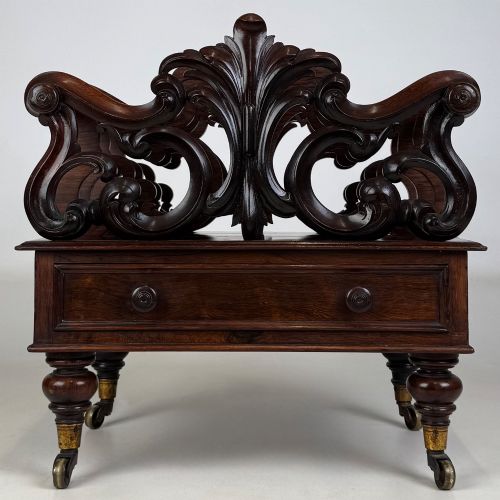
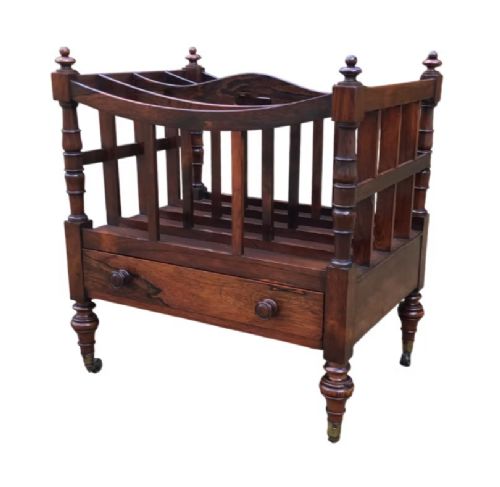
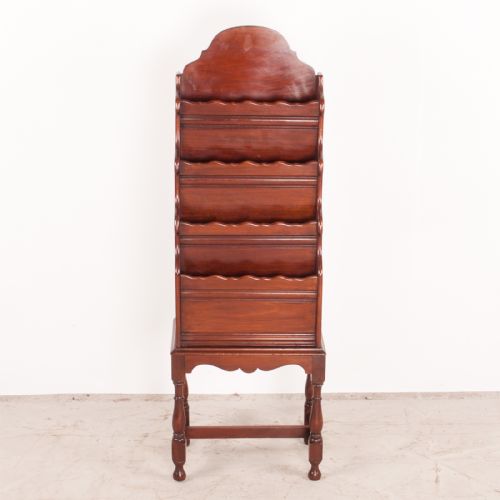
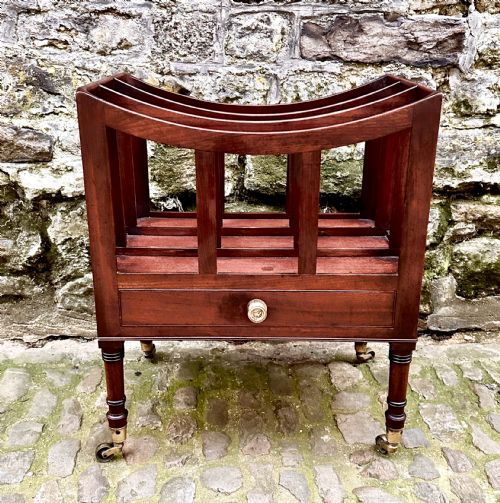
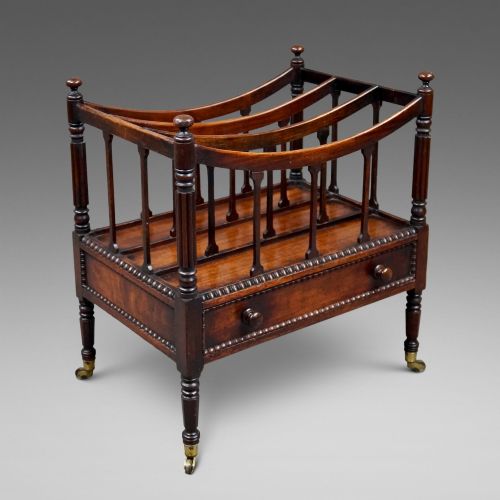
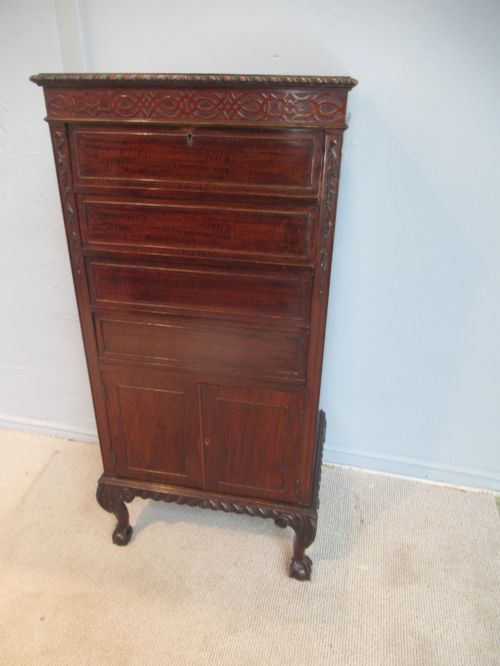
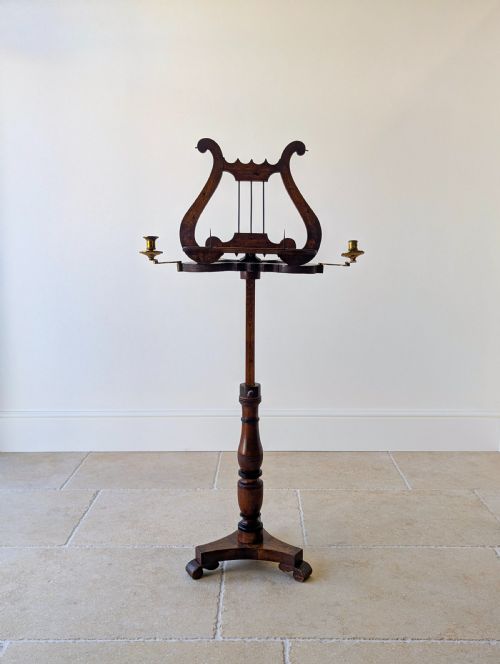
A dark wood sheet stand typically takes the form of a mahogany or rosewood canterbury, music stand, or cabinet designed to hold folios and paper. These pieces span the Georgian, Regency, William IV, and Victorian periods, along with later examples up to the 1920s.
Materials and Technique
Cabinet makers utilised dense tropical hardwoods such as mahogany and rosewood, frequently incorporating delicate wood inlay, brass mounts, and gilt bronze details. These timbers provided the structural strength required for slender lyre-form music stands and multi-tiered canterburys.
Joinery techniques included fine dovetailing for drawers and turned or carved supports for adjustable reading desks and tripod bases. Surfaces were finished to highlight the natural grain, sometimes augmented by fretwork and carved motifs like the Prince of Wales feathers.
Dark Wood Sheet Stand Retail Price Guide 2026
Typical asking prices for dark wood sheet stand among the pieces listed under this phrase on Sellingantiques today, from the lower quarter to the upper quarter. They describe what is for sale here now, not the wider market.
Early nineteenth-century musicians relied on these stands to keep their duets from sliding off into the drawing room rug.
Craftsmanship and Proportion
Quality rests in the crispness of the timber carving, the choice of well-figured mahogany or rosewood veneer, and the integrity of moving brass adjustment mechanisms. Superior examples exhibit balanced proportions and robust internal joinery that withstands daily use.
Lesser pieces show simpler turnings and standard secondary woods, whereas finer items display intricate fretwork, inlaid wood decoration, and specialised hardware. The distinction lies in the deliberate attention paid to both decorative embellishment and structural stability.
GM Elwood·JS Henry·Gabriel Viardot·Gillows
The Dark Wood Sheet Stand Glossary
- Canterbury
- A low stand with slatted or divided sections used originally for sheet music and now frequently for magazines and papers. It often incorporates a single drawer beneath the main tier.
- Duet Music Stand
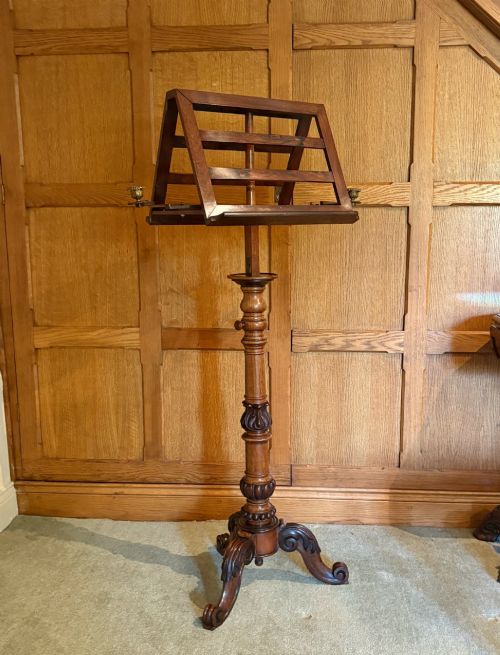
- A larger reading stand designed to hold scores for two musicians to read simultaneously. These often feature adjustable heights and pivoting desks.
- Gonçalo Alves
- A dense, highly figured exotic hardwood occasionally utilised for premium nineteenth-century furniture. It yields striking contrasting patterns.
- Lyre-Form
- A structural motif shaped like an ancient musical instrument, commonly seen supporting the desk of a nineteenth-century music stand.
- Whatnot
- A multi-shelved open cabinet used for displaying or holding small items, sometimes combined with a canterbury base.
Dark Wood Sheet Stand: Frequently Asked Questions
What is a canterbury used for?
A canterbury serves to organise sheet music, folios, periodicals, and newspapers near a piano or seating area. Its vertical dividers keep soft-covered items upright and accessible.
Historically, they were wheeled about drawing rooms to hold evening reading and musical scores. Today, they function equally well for modern magazines and daily papers.
How do I adjust a music stand?
Many nineteenth-century stands utilise brass screw keys or ratchets concealed within the central column to alter the height and angle of the reading desk.
Care should be taken when turning these metal fittings to avoid straining the aged hardwood threads. Gentle handling preserves the original adjustment mechanisms.
Are these stands sturdy enough for daily use?
Most pieces are constructed from durable tropical hardwoods like mahogany and rosewood, built to endure regular handling of heavy folios and books.
Checking the stability of tripod legs or caster attachments ensures safe placement in a modern room. Their robust joinery allows them to continue serving practical roles.
How can I tell a Regency piece from a Victorian one?
Regency items generally display cleaner classical lines, boat-shaped trays, and restrained brass or wood inlay. Victorian pieces often introduce heavier carved ornamentation and more complex multi-functional designs.
Examining the secondary timbers and the style of the turning provides further clues to the manufacturing date. Each period reflects the prevailing taste of its era.