

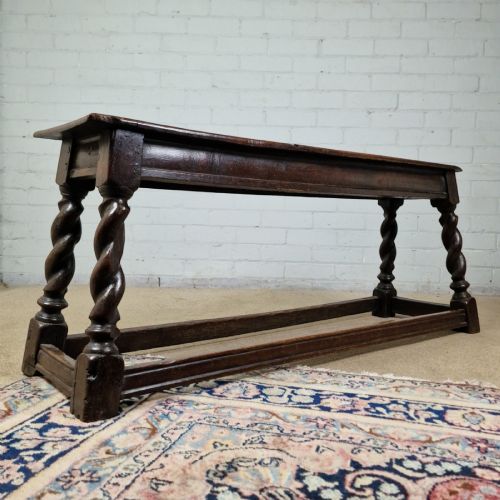
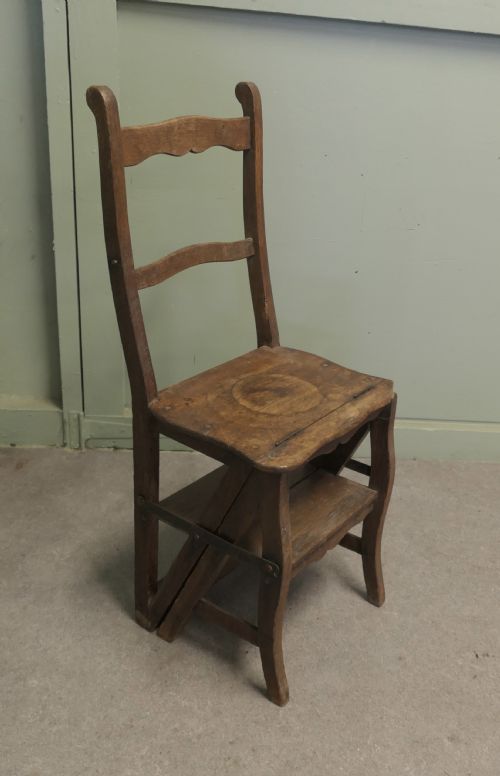
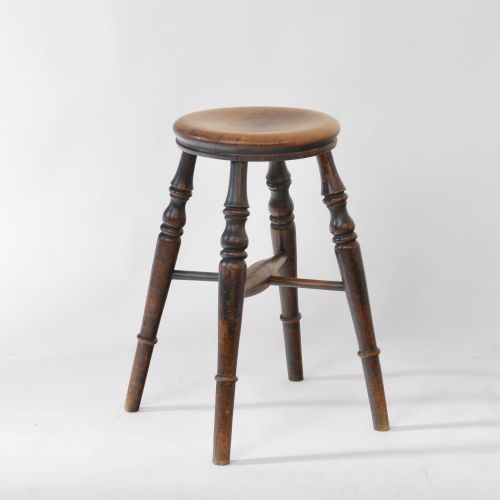
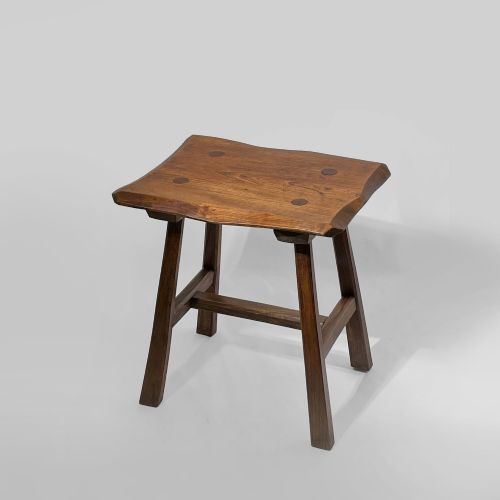
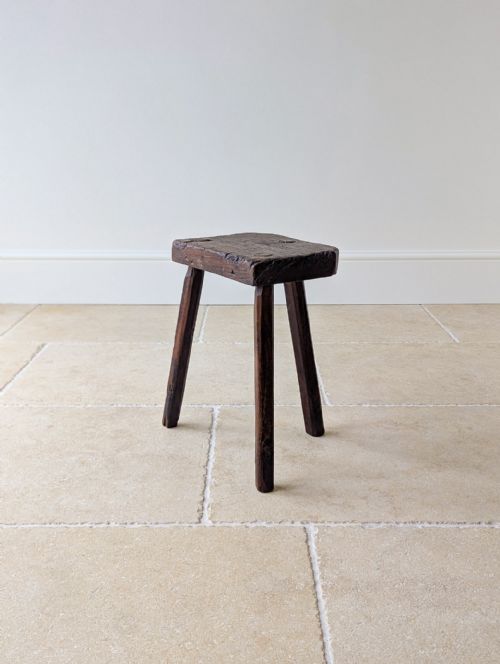
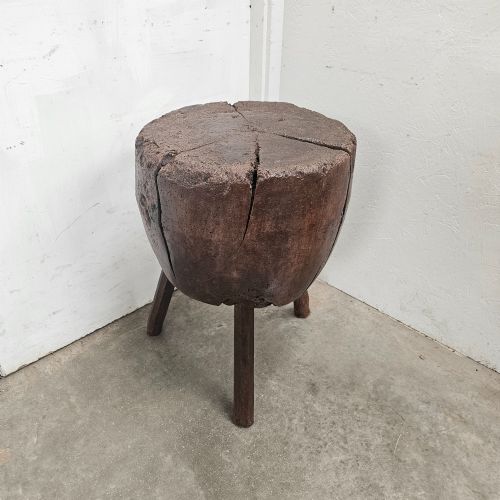
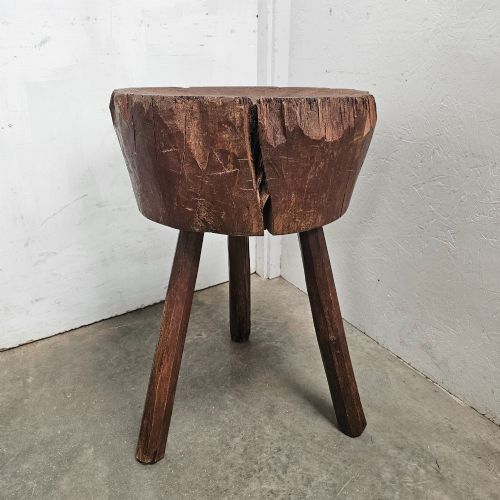
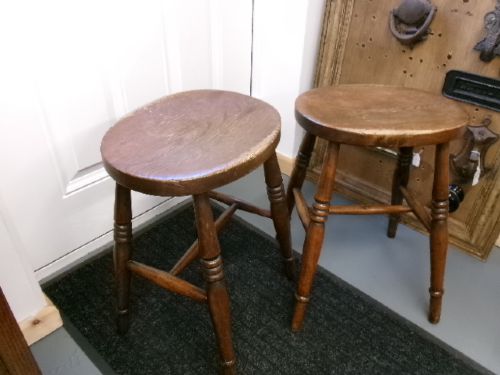
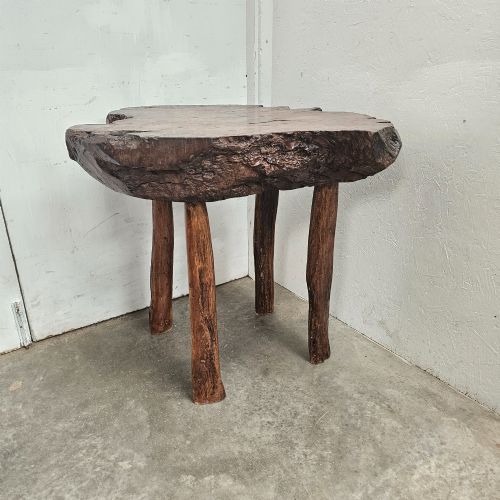
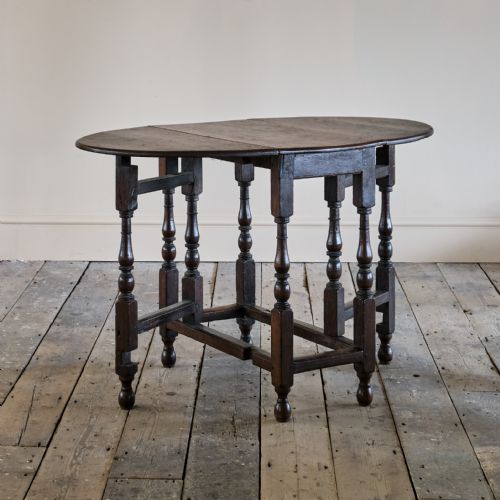


Dark Wood Rustic Stool
A dark wood rustic stool brings tangible historical character into a room through honest timber and vernacular design.
Dark Wood Rustic Stool
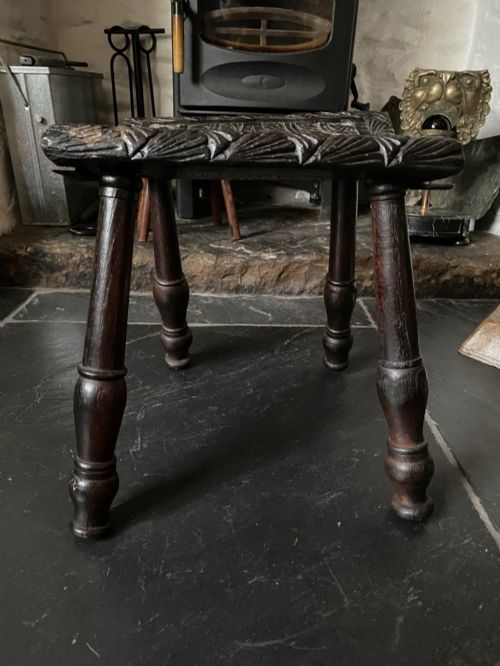
A dark wood rustic stool represents utilitarian seating shaped by regional traditions and everyday domestic or workshop use. These pieces span the eighteenth, nineteenth and early twentieth centuries, drawing on English, French, Swiss and wider country styles.
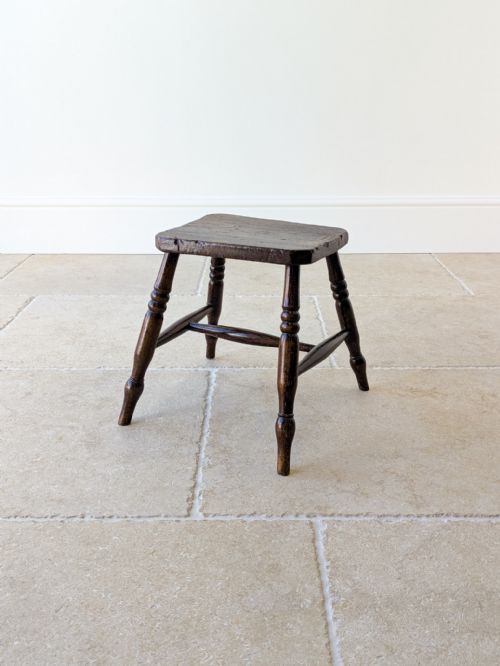
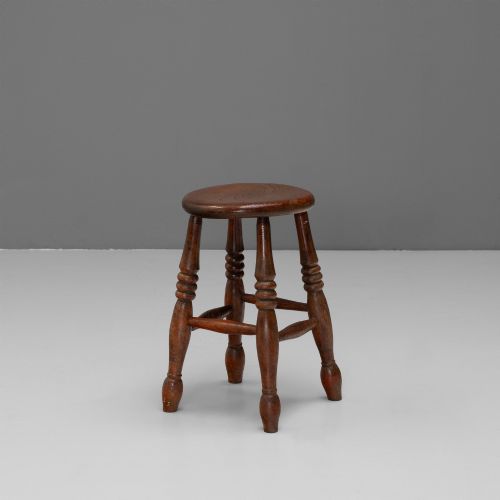
The selection here ranges from simple pegged oak forms and elm tavern seating to specialised workshop pieces like jeweler's and cutter's stools. Buyers frequently encounter low saddle seats, round-topped milking styles and heavy game blocks utilised for seating.
Makers focused on practical utility rather than ornate display, employing solid timbers that developed rich patination through decades of handling. The resulting objects function as robust low seats, occasional side tables or architectural accents.
Materials and Construction Techniques
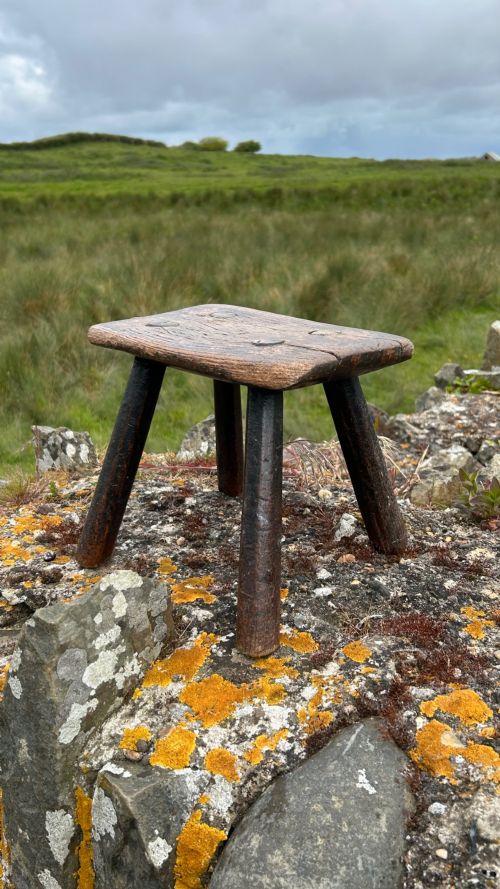
Constructed primarily from native hardwoods such as oak, elm, beech, sycamore and ash, these pieces rely on the inherent strength of local timber. Craftsmen often utilised solid live-edge slabs or thick plank tops joined to turned or splayed legs.
Traditional joinery methods define the build quality, featuring pegged construction, wedged tenons and stretcher frames designed to withstand heavy daily loads. Many examples showcase primitive scratch-built approaches or turned components shaped on simple lathes.
Dark Wood Rustic Stool Retail Price Guide 2026
Typical asking prices for dark wood rustic stool among the pieces listed under this phrase on Sellingantiques today, from the lower quarter to the upper quarter. They describe what is for sale here now, not the wider market.
Listings feature oak, elm, beech, sycamore and ash across nineteenth-century tavern, workshop and farmhouse forms.
Assessing Quality and Character
Quality in a dark wood rustic stool rests upon the integrity of the timber, the depth of patination accumulated over centuries and the survival of original surfaces. Pieces retaining honest tool marks, distinct grain patterns and undisturbed structural pins command greater attention from collectors.
Proportion and form dictate desirability, separating standard utilitarian seating from rarer regional variants like carved hearth stools or specialised trade furniture. The balance between sturdy construction and the softening effects of age establishes the standing of each piece.
The Dark Wood Rustic Stool Glossary
- Apotropaic mark
- Carved symbols placed on furniture to ward off evil spirits and witchcraft. These markings appear on select early hearth stools.
- Pegged construction
- A method of joining wooden components using dowels instead of metal fasteners. This traditional technique accommodates seasonal wood movement.
- Saddle seat
- A wooden seat scooped or dished out to resemble a horse saddle. It provides ergonomic comfort on nineteenth-century bar and Windsor stools.
- Game block
- A heavy section of tree trunk or thick timber utilised in butchery or game preparation. These sturdy blocks double as primitive low seating.
- Patina
- The surface sheen and darkening developed by wood through age, handling and light exposure. Genuine patination indicates long historical use.
Dark Wood Rustic Stool: Frequently Asked Questions
How are these stools best used at home?
These pieces function easily as flexible extra seating around a living space or kitchen table. They also serve well as bedside stands or low side surfaces for books and lamps.
Placing them in hallways or corners introduces organic texture without overwhelming a room's layout. Their compact footprint allows them to move between spaces as needed.
What woods appear most often in these items?
Elm, oak and beech dominate the selection, chosen for their resilience and availability in local woodlands. Sycamore and ash also appear frequently in turned legs and solid tops.
These dense hardwoods absorb daily wear effectively, developing deeper colour and tone over generations of touch.
How do I date an antique wooden stool?
Dating relies on examining tool marks, timber shrinkage, construction methods and wear patterns around the footrests and seat edges. Pegged joinery and hand-turned spindles point toward eighteenth and nineteenth-century workshop practices.
Comparing the specific form against regional vernacular traditions helps narrow the manufacturing period further.
Are these stools comfortable for daily sitting?
Many examples feature dished or saddle-shaped wooden tops designed to contour naturally to the body. While lacking upholstery, their ergonomic carving provides surprising support for short periods.
Their primary design prioritized utility in workshops, taverns and farmhouses rather than lounging comfort.