



Dark Wood Religious Carving
A dark wood religious carving brings devotional focus into a room, spanning medieval saints to baroque panels.
Dark Wood Religious Carving
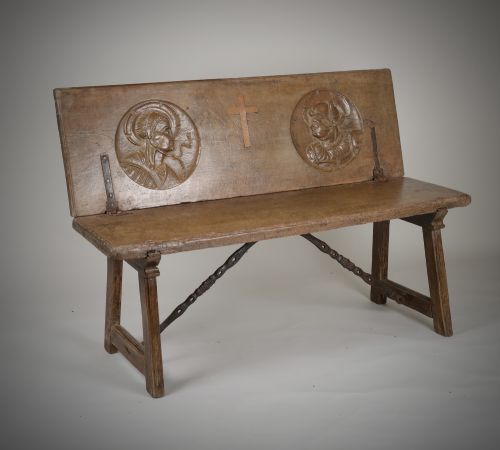
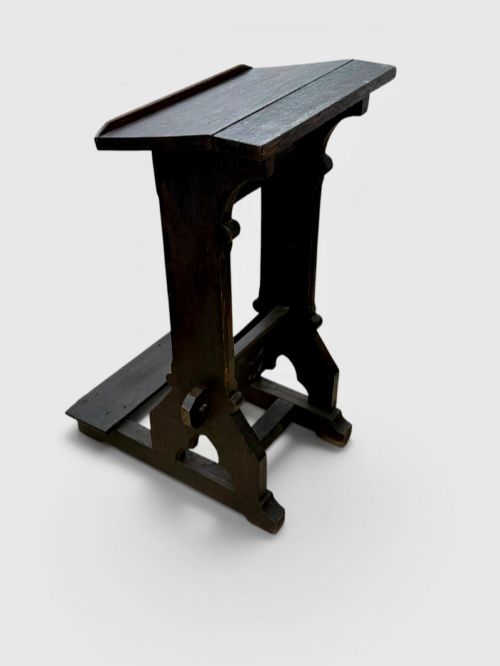
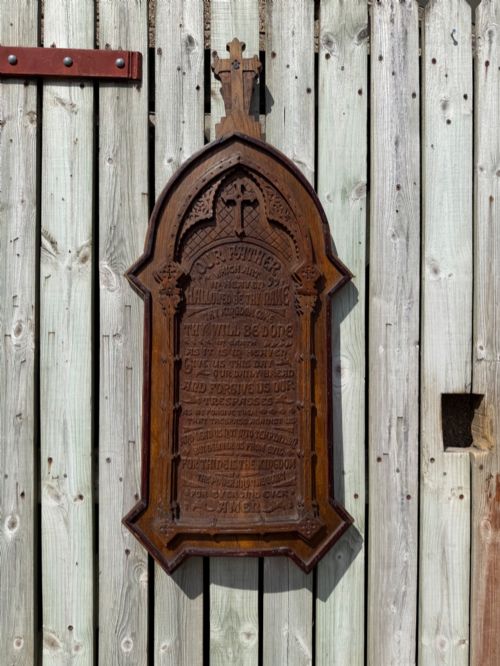
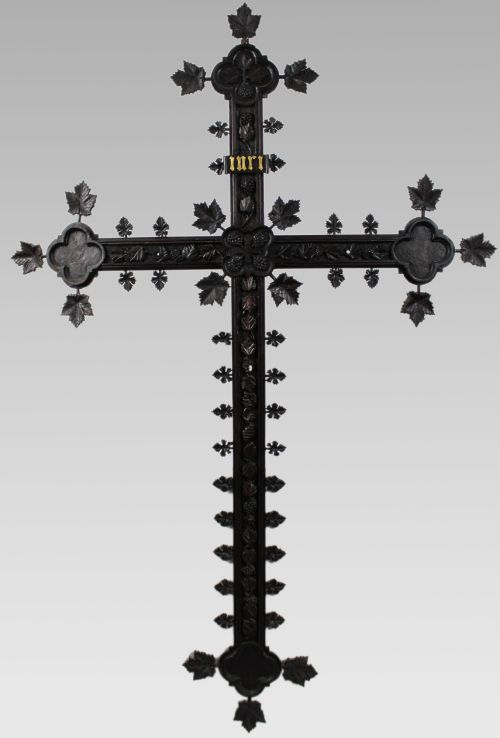
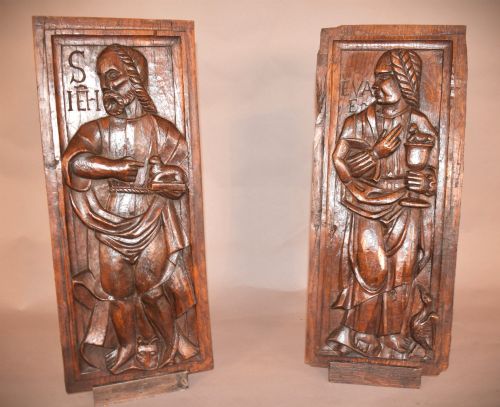
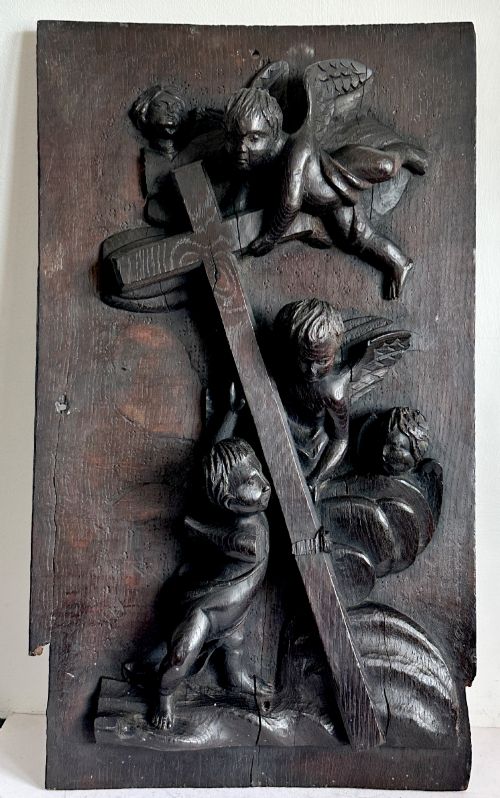
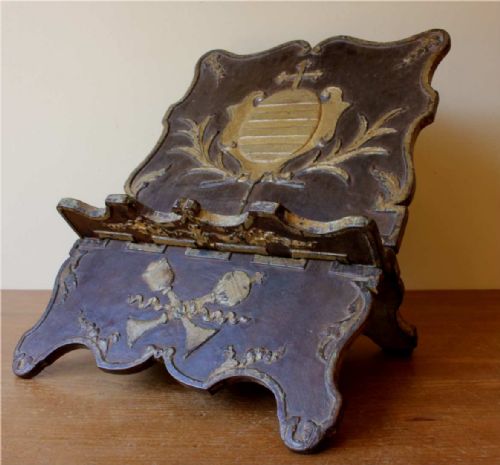
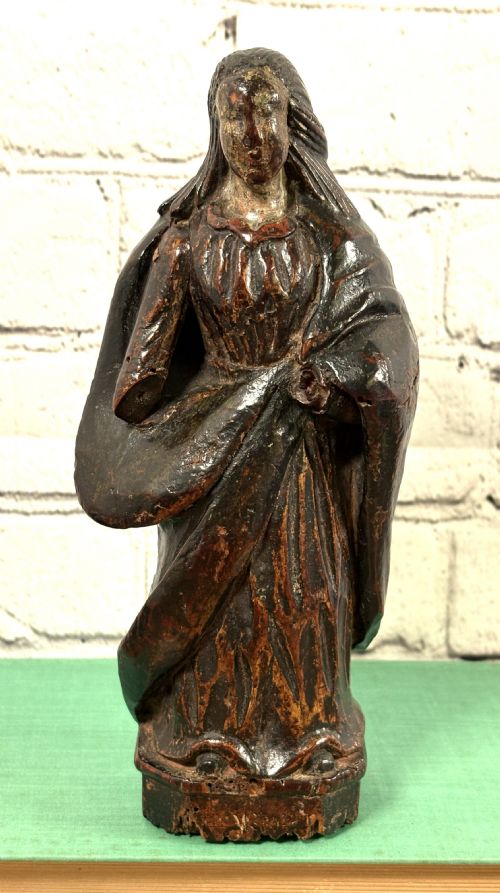
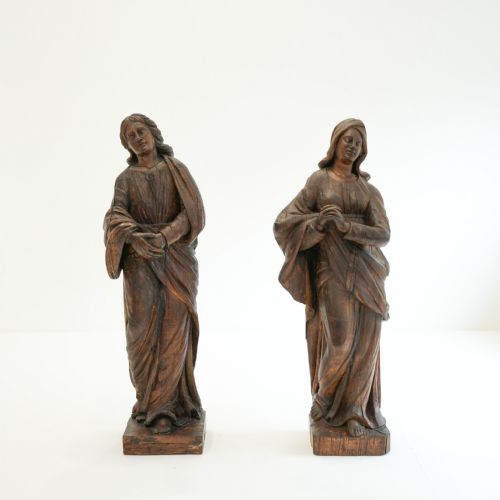
A dark wood religious carving encompasses devotional figures, wall reliefs, crucifixes, and ecclesiastical furniture originating from European workshops. Pieces range from pre-sixteenth century medieval fragments and sixteenth-century oak panels to seventeenth-century saints and nineteenth-century prayer furniture. The selection centres heavily on oak and walnut figures, altarpiece panels, and corpus Christi crosses.
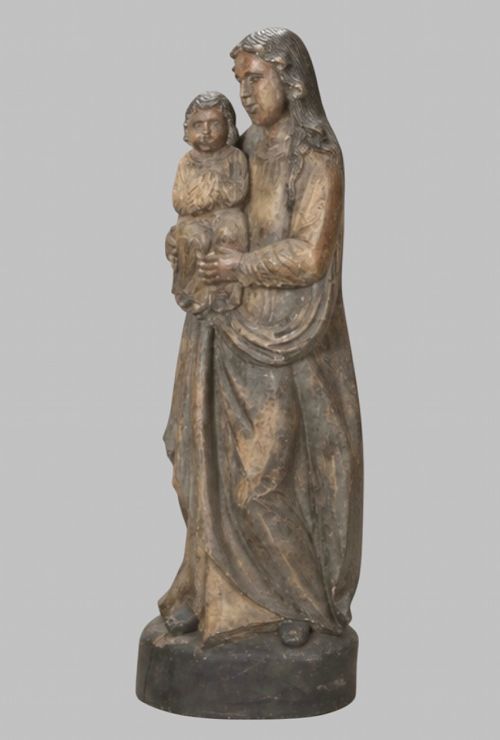
Buyers frequently encounter Flemish, German, French, and Spanish liturgical works reflecting Gothic, Renaissance, and Baroque styles. Figures of saints, the Madonna and child, and biblical scenes dominate the material record, often salvaged from larger altarpieces or church interiors.
Materials and Technique
Carvers predominantly utilised dense timbers such as oak, walnut, limewood, and boxwood, allowing for intricate detail and durable structural integrity. Surfaces frequently display remnants of gesso, polychrome pigment, gilding, or gold leaf applied to enhance devotional impact.
Execution involves direct hand carving with gouges and chisels, transforming solid timber logs or thick boards into high-relief panels and freestanding sculptures. Grain direction and timber selection dictated the depth of undercut drapery and facial expression.
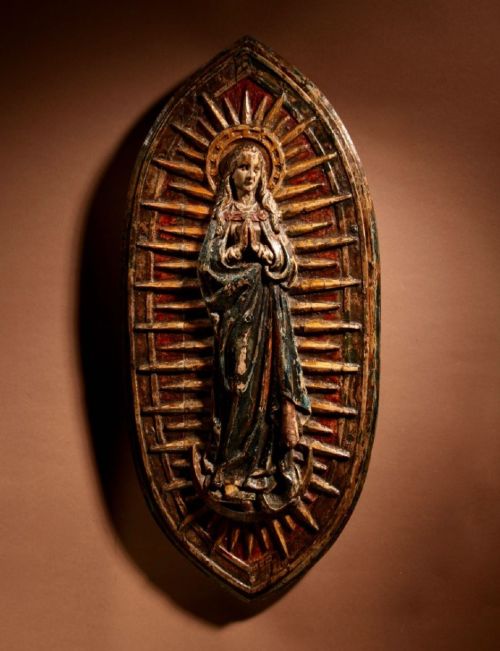
A sixteenth-century altarpiece panel preserves the unexpected image of the Virgin standing atop a crescent moon accompanied by a snake.
Assessing Quality
Survival of original surface treatments, such as early polychrome paint or gold leaf, elevates a piece alongside structural integrity. Alterations, heavy later varnishes, and the loss of stabilizing backing boards distinguish workshop-level output from provincial church furnishings.
The Dark Wood Religious Carving Glossary
- Corpus Christi
- The body of Jesus Christ depicted on a cross. This Latin term specifically denotes sculptural representations of the crucified figure.
- Altarpiece
- A structured artwork designed to stand above or behind an altar. Panels and figures were frequently carved separately before integration into larger architectural frames.
- Polychrome
- Decorated in several colours. This surface treatment involved applying gesso and paint directly to the carved wood.
- Prie Dieu
- A French prayer desk or kneeling chair. These devotional furnishings often incorporate carved panels and upholstered rests.
- Relief sculpture
- Carving where figures project from a flat background. Works range from shallow low relief to deep high relief on wall panels.
Dark Wood Religious Carving: Frequently Asked Questions
How do I date a wooden religious carving?
Dating relies on stylistic markers such as Gothic drapery folds, Renaissance proportions, or Baroque theatricality, combined with timber analysis. Tool marks and the presence of original gesso or polychrome pigments further anchor pieces to specific centuries.
Examining the back of panels and the wear patterns on contact points reveals handling history and helps distinguish genuine period surfaces from later interpretations.
Where should I place these carvings at home?
These sculptures suit locations with stable humidity and minimal direct sunlight, which protects vulnerable timber and historic surface finishes. Wall reliefs mount securely on plain walls to highlight depth, while freestanding figures anchor console tables or bookcases.
Avoid positioning wood carvings near direct heat sources like radiators to prevent timber shrinkage and cracking.
How do I care for antique wood carvings?
Maintenance requires dusting gently with a dry, soft bristle brush rather than using wet cloths or modern cleaning sprays. Historic surfaces, especially those with gesso or gold leaf, absorb moisture readily.
Keeping room temperature stable prevents the wood from expanding and contracting, which preserves fragile joints and prevents surface flaking.
What is a corpus Christi figure?
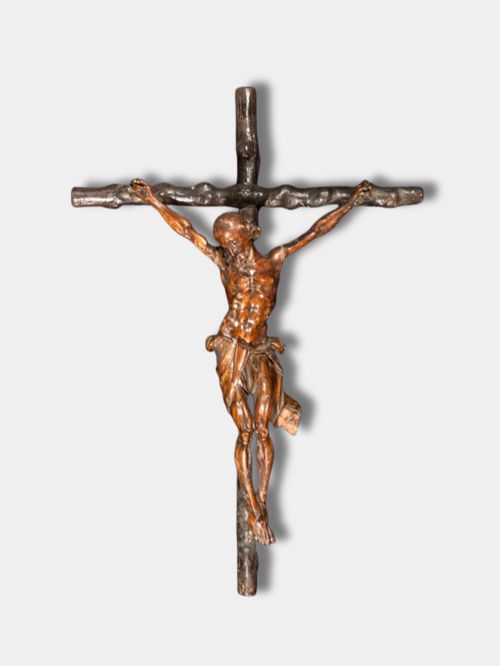
A corpus Christi is a sculptural representation of Christ on the cross, detached from architectural altars or mounted on independent wooden crosses. These figures vary in scale from small devotional boxwood items to monumental church crosses.
Details like the crown of thorns and facial expression convey the emotional intensity typical of Spanish and Northern European workshops.