




Dark Wood Poles
Dark wood poles are adjustable household implements and supports, offering period presence and functional ingenuity for the discerning interior.
Dark Wood Poles
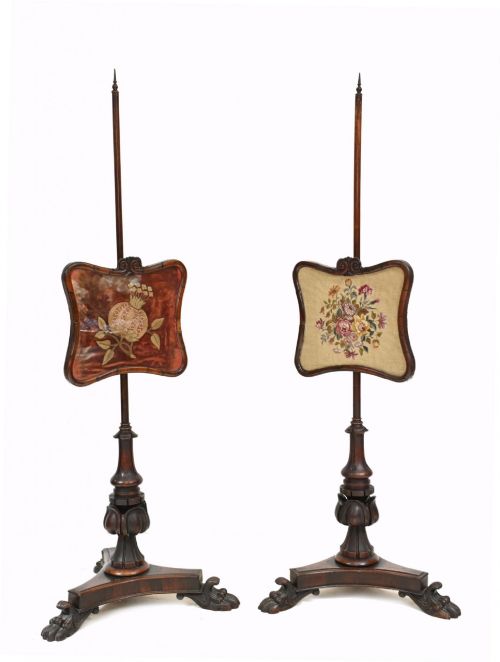
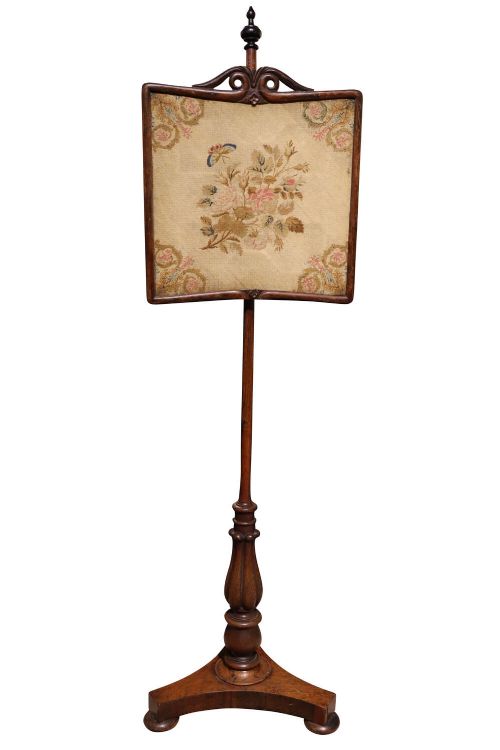
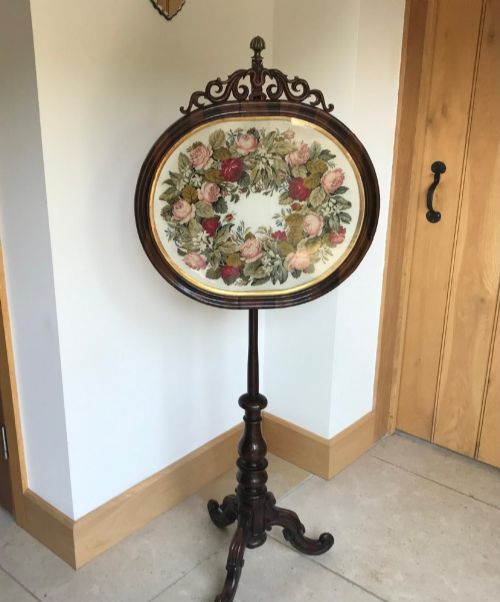
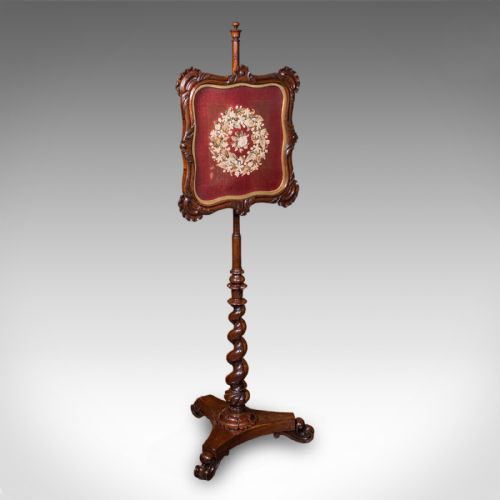
Dark wood poles primarily encompass adjustable fireside pole screens designed to deflect hearth heat, alongside functional elements like curtain rods and sporting items. When searching for dark wood poles, buyers most frequently encounter Victorian and Regency examples featuring upright wooden shafts supported by tripod or pedestal bases.
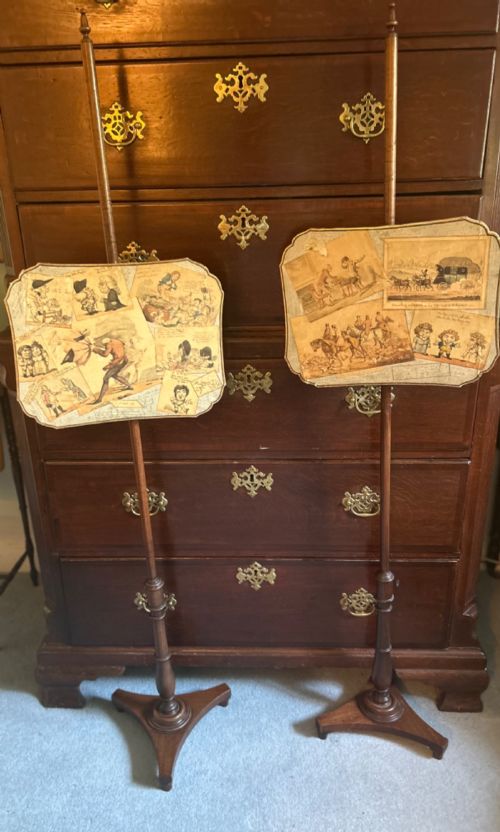
These pieces originate from various nineteenth-century periods, spanning Georgian, William IV, and Victorian eras. The form typically combines a vertical timber shaft with an adjustable needlework panel, tapestry, or satirical print mounted near the top.
Beyond fireside accessories, the selection extends to related wooden supports and equipment from the nineteenth and early twentieth centuries. Each variant demonstrates the characteristic dark timber tones favoured by makers during these periods.
Materials and construction methods
The construction relies heavily on rich timbers such as mahogany and rosewood, often shaped into slender upright poles and sturdy support bases. Cabinet makers utilised these dense woods for their strength and deep grain patterns.
Metal components like brass frequently feature in the adjustment mechanisms, allowing the screens or fittings to slide and lock securely along the vertical shaft. Textile elements including wool, silk, and tapestry panels are integrated into the framed faces of fireside screens.
Dark Wood Poles Retail Price Guide 2026
Typical asking prices for dark wood poles among the pieces listed under this phrase on Sellingantiques today, from the lower quarter to the upper quarter. They describe what is for sale here now, not the wider market.
Listings span the Georgian, Regency, William IV, and Victorian periods, alongside early twentieth-century items.
Assessing craftsmanship and proportion
Quality in these pieces is dictated by the fineness of the timber turning, the stability of the tripod or weighted base, and the precision of the brass adjustment mechanism. Superior examples display crisp carved details on the rosewood or mahogany shaft rather than plain turned surfaces.
The artistry and condition of the mounted needlework, tapestry, or print greatly influence the distinction between standard items and exceptional pieces. Proportion and balance across the tripod base ensure the tall upright structure remains stable during daily use.
L.H. Hagen and Co.
The Dark Wood Poles Glossary
- Pole screen
- A vertical fireside accessory featuring an adjustable sliding panel mounted on a central wooden pole to block radiant heat from the hearth.
- Tripod base
- A three-legged support structure commonly utilised at the bottom of pole screens to provide balance and stability.
- Needlework panel
- A decorative textile face worked in thread, frequently framed and suspended on a fireside screen.
- Goncalo Alves
- A dense, highly figured tropical hardwood occasionally utilised in Regency furniture and furnishings for its striking dark grain.
- William IV
- A British design period spanning the 1830s, characterised by robust proportions and classical revival motifs.
Dark Wood Poles: Frequently Asked Questions
What is a dark wood pole used for?
These pieces primarily served as adjustable fireside screens designed to shield the face from the intense heat of an open coal fire. Users adjusted the height of the mounted panel along the wooden shaft depending on their distance from the hearth.
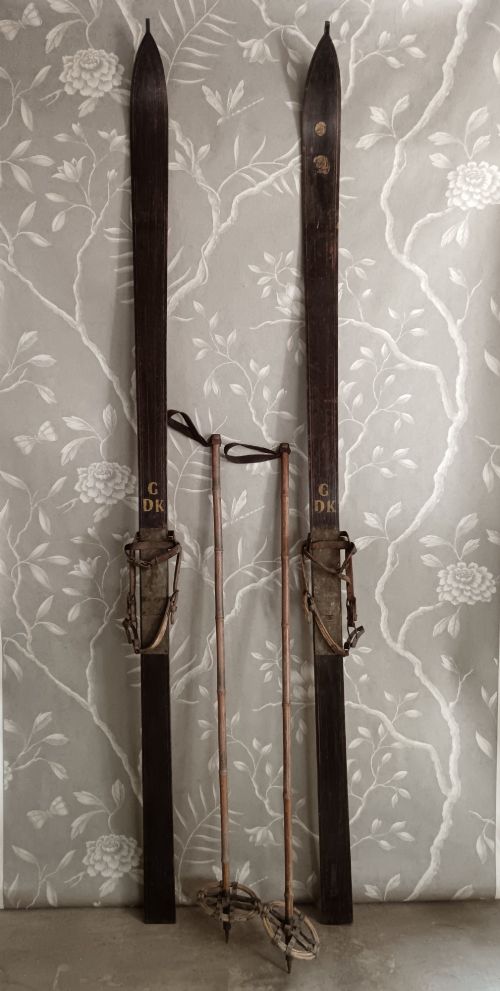
Other variants include curtain poles and sporting equipment, demonstrating the diverse application of turned timber poles in period interiors.
How do you adjust the screen height?
The central panel typically connects to the vertical pole via a brass collar or sliding mechanism that holds the screen at the desired elevation. Friction or a thumbscrew secures the panel in place along the timber upright.
Careful handling of the brass mechanism ensures the wooden shaft remains undamaged during adjustment.
Which woods are most common?
Mahogany and rosewood dominate the selection, prized for their deep natural colour and ability to take a fine polish. These dense timbers provided the necessary structural rigidity for tall, slender upright poles.
Occasional exotic hardwoods like goncalo Alves also appear in grander nineteenth-century examples.
How do I date a pole screen?
Stylistic details in the base turning, the shape of the feet, and the framing of the panel point toward specific nineteenth-century periods. Regency and William IV pieces often display distinct classical motifs compared to later Victorian iterations.
The materials used in the accompanying tapestry or print provide further chronological clues.