
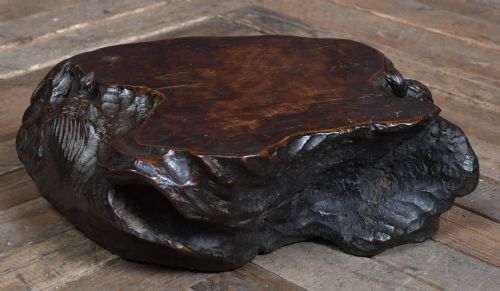


Dark Wood Plinth
A dark wood plinth elevates sculpture and ceramics, anchoring display items with rich timber tones and solid architectural weight.
Dark Wood Plinth
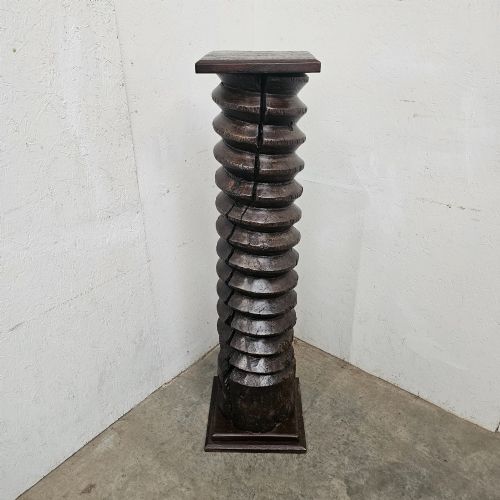
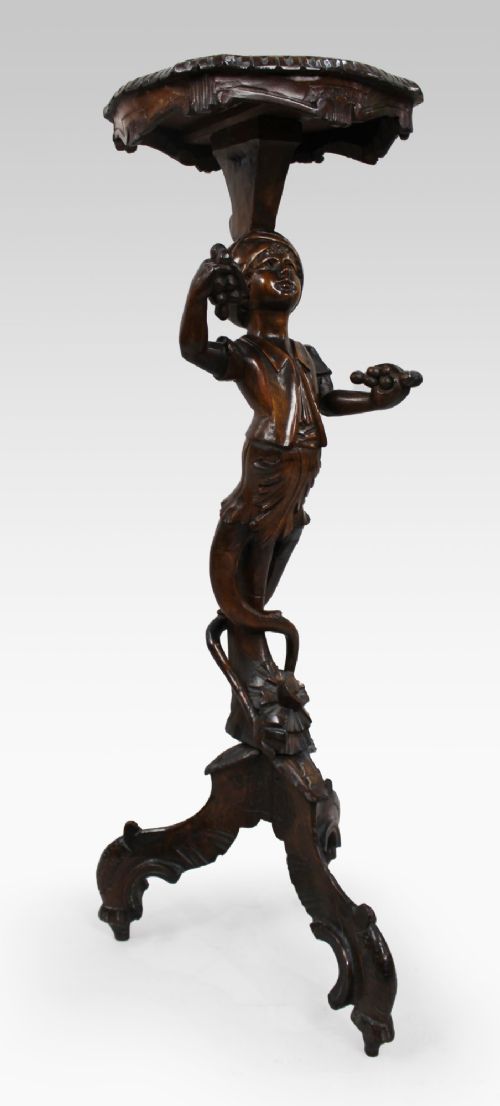
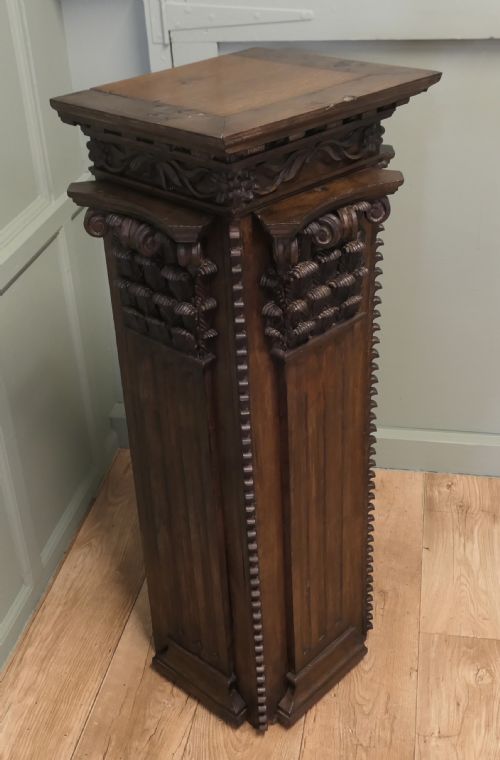
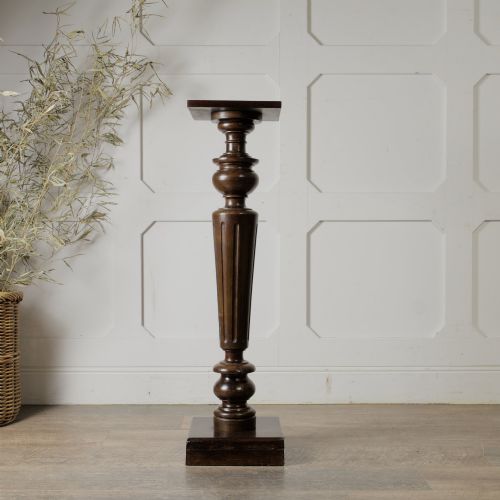
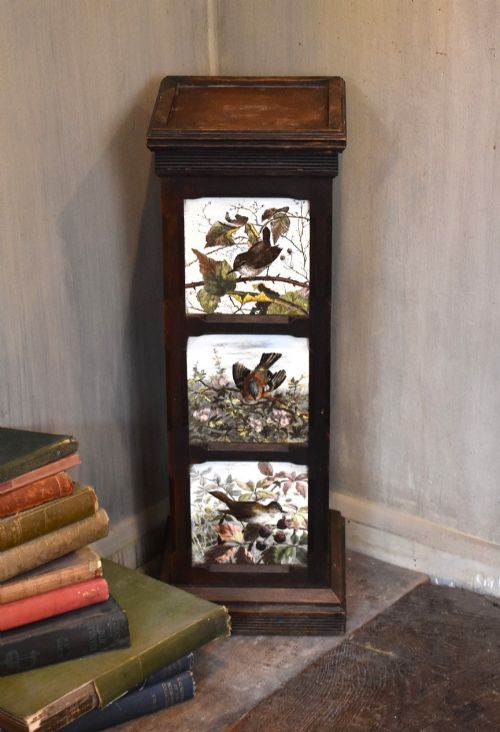
When you search for a dark wood plinth, you are looking at substantial display stands, pedestals, and column supports designed to elevate figures, urns, and decorative objects. The pieces listed now span from the seventeenth century through the Victorian and Edwardian eras, incorporating forms like carved columns, columnar pedestals, and statue stands.
You are most likely to meet nineteenth-century and Victorian iterations in solid mahogany, oak, or rosewood. These range from plain turned stands to finely carved architectural columns intended to display sculpture or decorative pieces at eye level.
How they were made
Construction relies heavily on dense timbers such as mahogany, oak, and rosewood, often shaped on a lathe into turned columns or hand-carved with architectural details. Joinery is robust to support heavy marble, bronze, or wood sculptures placed atop the surface.
Surface treatments include polished mahogany finishes, flame veneers, stained birch, and carved detailing that reflects periods from Gothic Revival to French Renaissance Revival and Venetian Baroque.
What varies in quality
Quality separates simple utility stands from monumental display pieces through the depth of hand-carving and the choice of timber figure. Solid mahogany or rosewood with rich grain patterns and substantial proportions sits at the top of the range.
Refinement in turning, architectural proportion, and the integration of decorative elements like brass mounts or inlaid wood determine the distinction between basic workshop items and high-status nineteenth-century display furniture.
The Dark Wood Plinth Glossary
- Pedestal
- A structural support or base for a column, statue, or vase. It elevates display objects to a prominent viewing height.
- Plinth
- The lowest horizontal member of a base or column. In display terms, it denotes the flat standing platform for a sculpture or decorative object.
- Flame mahogany
- Timber veneer sliced from the fork of the mahogany tree where branches meet the trunk. This creates a distinctive, fiery feather-like grain pattern.
- Rosewood
- A dense, heavily figured dark timber with characteristic dark brown and black grain lines. It was favoured for high-quality nineteenth-century display furniture.
Dark Wood Plinth: Frequently Asked Questions
What is a dark wood plinth used for?
These pieces function primarily as elevated display surfaces for sculptures, vases, figures, and decorative works of art. They place objects at a deliberate height to command attention within a room.
Historically, they also served as architectural column stands and display furniture in grand interiors to showcase fine arts.
How do I date a wooden pedestal?
Dating relies on timber selection, construction methods, and stylistic details such as turnings and carved ornament. Evidence on this page includes seventeenth-century carved figures up to Edwardian and early twentieth-century turned stands.
Periods like the Victorian and Regency eras introduce specific revival motifs, including Gothic and French Renaissance styles, which help pin down the decade of manufacture.
Are these stands strong enough for heavy marble?
Many of these pieces are built from solid mahogany, oak, or rosewood with robust internal construction designed to bear heavy weight. Monumental proportions and solid timber bases provide the necessary stability for stone and bronze.
Checking the specific construction, whether solid timber or reinforced column, ensures suitability for heavier display objects.
What woods are typical for these stands?
The primary timbers recorded are mahogany, oak, and rosewood, often selected for their density and rich dark colour. Stained birch and other hardwoods also appear across nineteenth-century examples.
Finishes range from plain polished surfaces to flame mahogany veneers and inlaid decorative woodwork.