

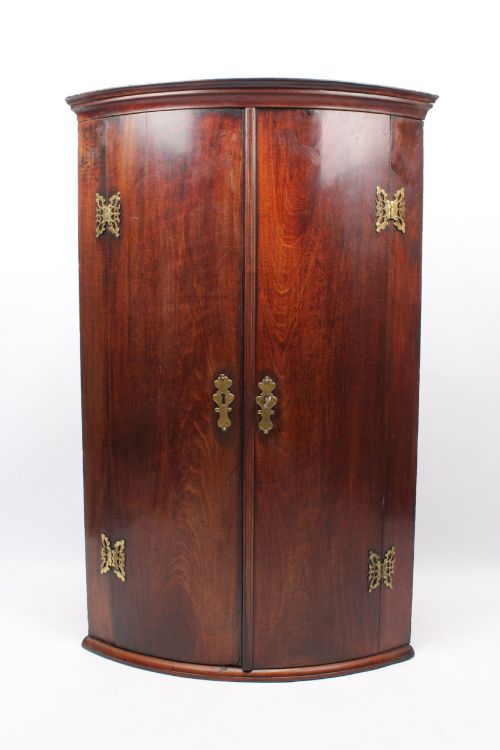
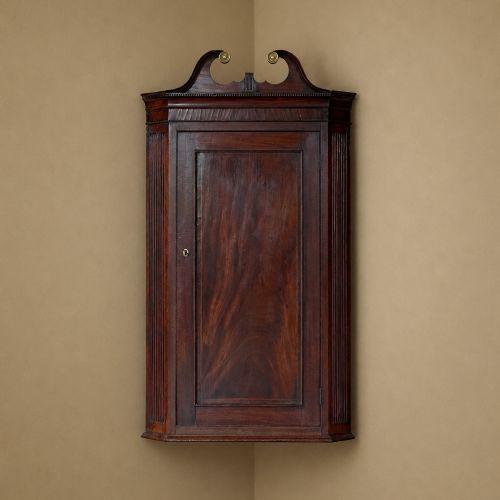
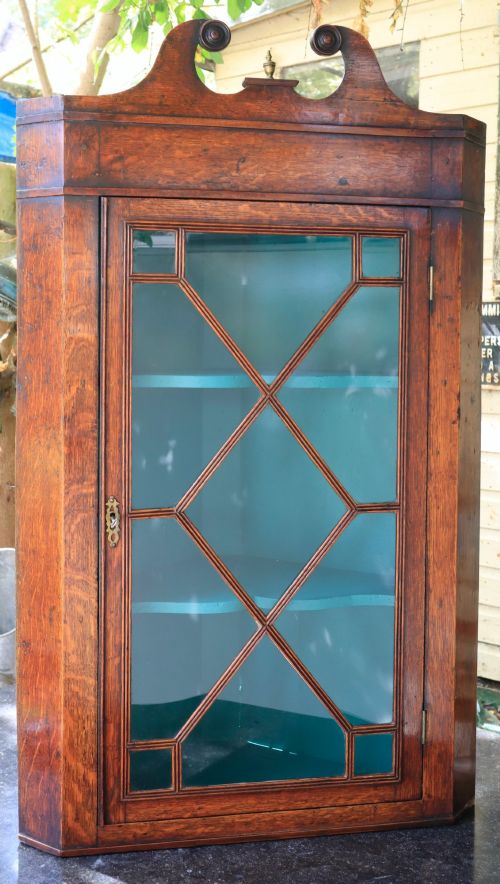
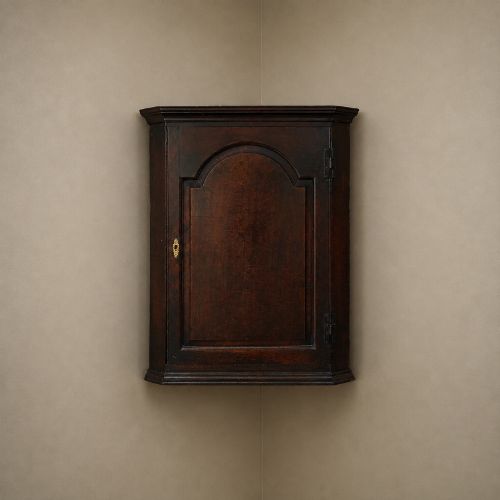


Dark Wood Hanging Cabinet
These dark wood hanging cabinet pieces mount straight to the wall to hold everything from kitchen provisions to cherished books.
Dark Wood Hanging Cabinet
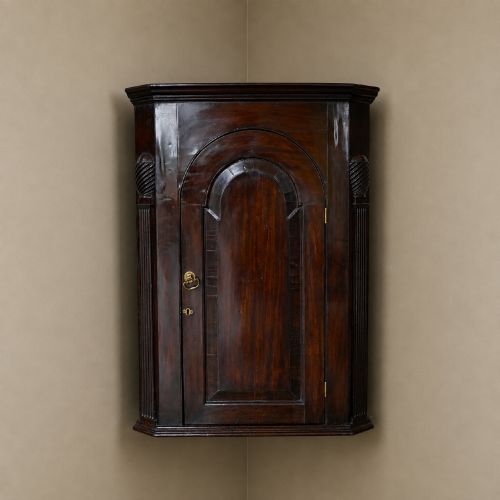
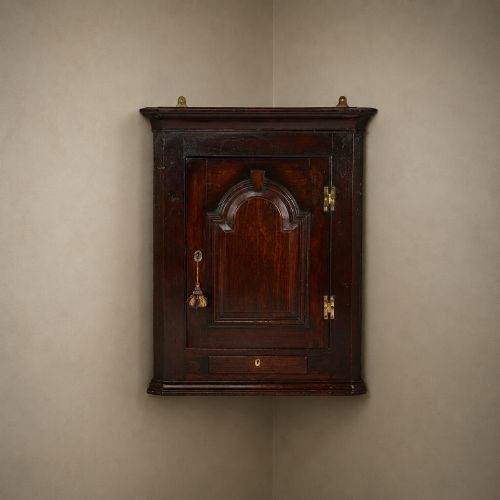
A dark wood hanging cabinet brings practical wall storage into domestic spaces, drawing on forms made across the eighteenth and nineteenth centuries. Buyers searching for a dark wood hanging cabinet will encounter many corner cupboards and wall-mounted shelves alongside flat-fronted wall cupboards.
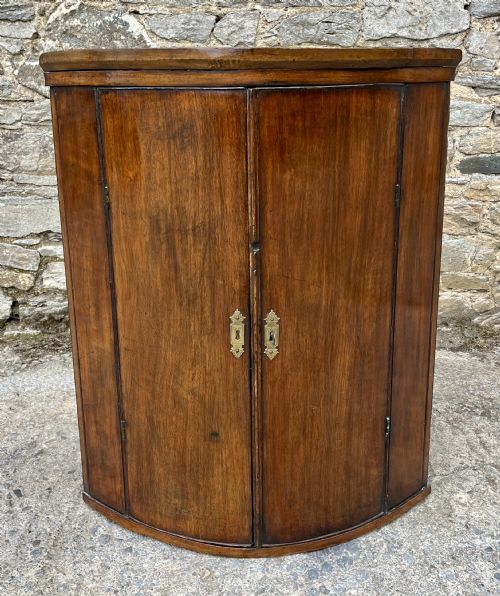
The materials span oak, mahogany, walnut, and rosewood, reflecting the preferences of Georgian, Victorian, and Edwardian makers. Corner variations dominate the selection, designed to utilise empty room junctions while keeping floor space entirely clear.
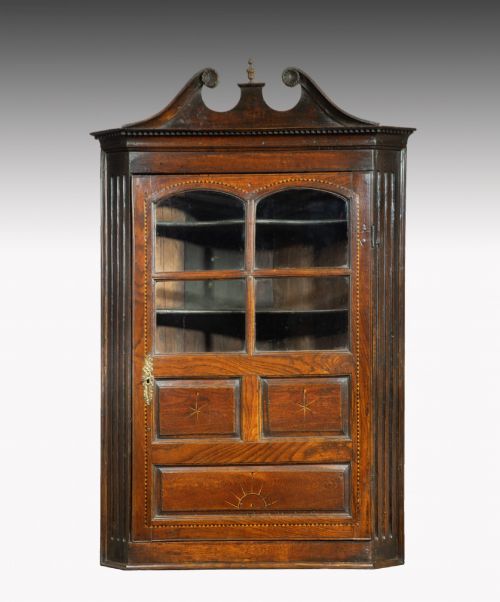
Makers produced these pieces in various depths and heights, some featuring glazed doors for display while others relied on solid wood panels. Simpler country versions sit alongside formal revival pieces finished with inlaid details or architectural pediments.
What varies in quality
The distinction between standard utility cupboards and finer examples lies in the choice of timber and the precision of the joinery. Superior pieces utilise well-figured mahogany or quarter-sawn oak with careful attention paid to grain continuity across doors and frames.
Decorative elements introduce further separation in standard, ranging from simple fielded panels to broken arch pediments, delicate stringing inlays, and original brass hardware. The presence of working locks with matching keys and intact glazing bars elevates the standing of any wall-mounted cabinet.
Some nineteenth-century food cupboards included integrated pierced panels to let cheese breathe while keeping hungry mice firmly on the outside.
The Dark Wood Hanging Cabinet Glossary
- Bow front
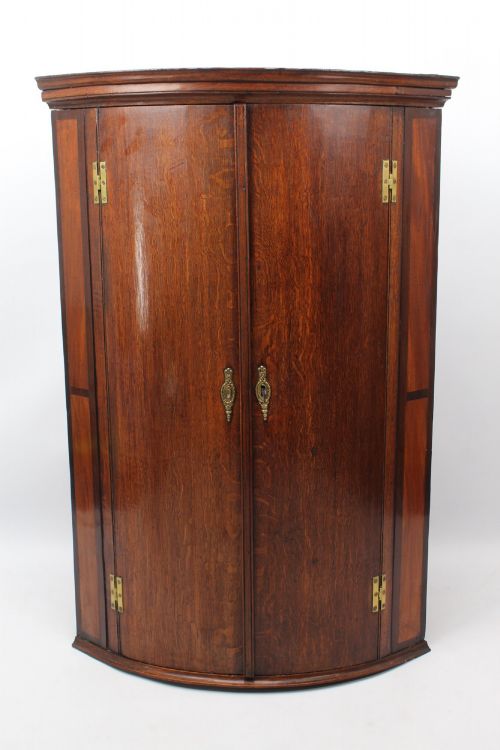
- A convex curved cabinet front that projects outward, commonly seen on Georgian corner cupboards to soften room angles.
- Pediment
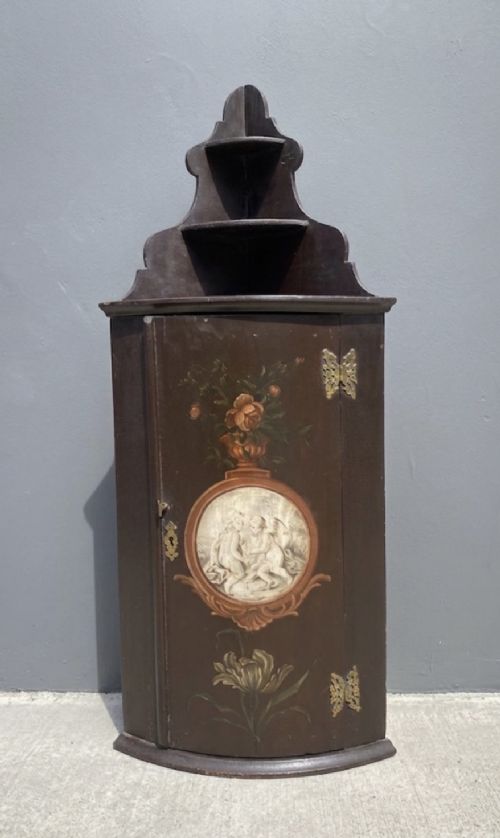
- The decorative architectural crown above the top cornice, occasionally taking a broken arch form on formal pieces.
- Escutcheon
- A protective metal plate surrounding the keyhole, typically cast in brass to complement the dark wood tones.
- Pigeon holes
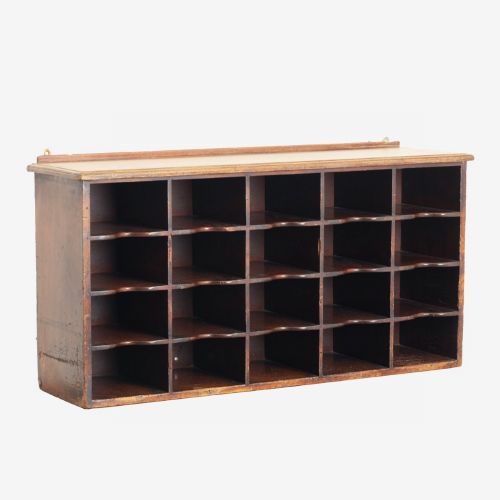
- Small open compartments arranged within a desk organiser or wall unit for sorting letters and papers.
- Glazing bars
- The wooden strips that hold individual panes of glass within a display door.
Dark Wood Hanging Cabinet: Frequently Asked Questions
How do I hang a heavy wooden cabinet securely?
Wall-mounted cabinets require fixing directly into solid masonry or locating the timber studs behind plasterboard walls. Strong steel brackets or heavy-duty internal screw fixings distribute the weight safely.
Ensure the hanging fixings attached to the back of the carcase are sound before loading the shelves with heavy contents like books or ceramics.
Where were corner cupboards typically placed in a home?
These cabinets found practical placement in dining rooms, parlours, and kitchens to store glassware, provisions, and household documents. Their angled backs allowed them to fit snugly into unused room corners.
By occupying wall space rather than floor space, they kept pathways clear in smaller domestic quarters.
How do I tell an 18th-century cabinet from a Victorian copy?
Early pieces from the Georgian period often feature hand-sawn timbers, pegged joints, and secondary woods like pine or oak inside the carcase. The grain patterns and patination develop a deep lustre over centuries of wax polishing.
Later Victorian and Edwardian revivals employ more uniform machine-sawn components and different internal construction methods.
What is the difference between a wall cabinet and a corner cupboard?
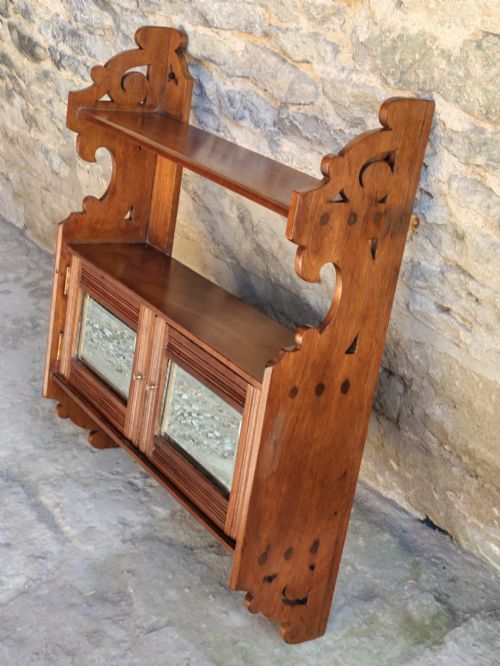
Wall cabinets feature flat backs designed to sit flush against a single straight wall surface, sometimes incorporating open display shelves underneath. Corner cupboards possess an angled triangular footprint built specifically to fit room junctions.
Both types share the primary function of off-floor storage but serve entirely different spatial layouts.