
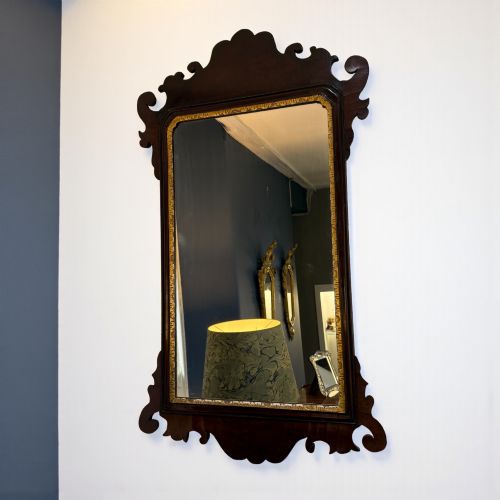
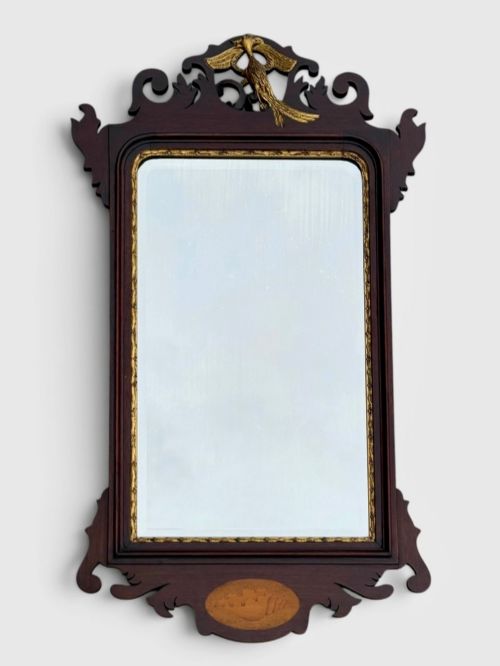
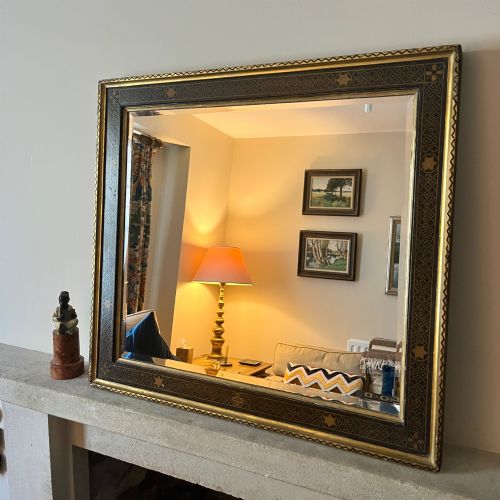
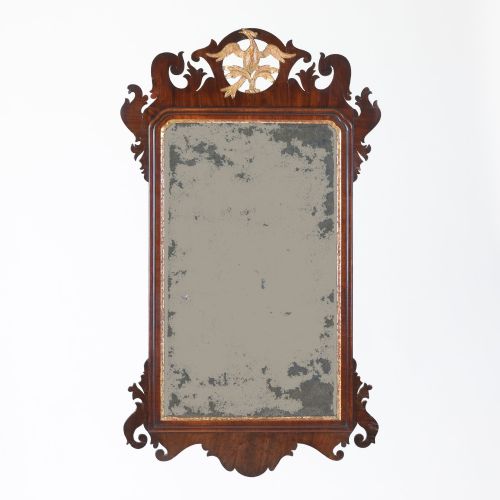
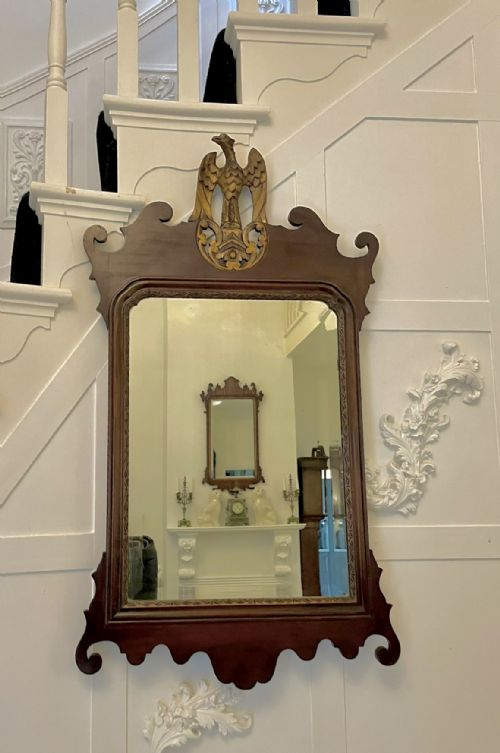


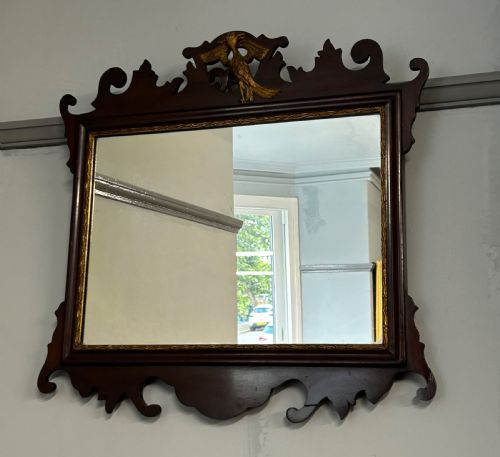
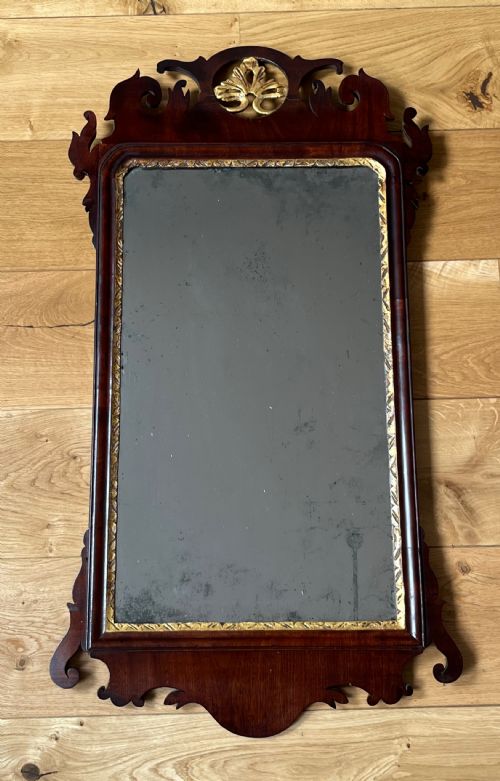


Dark Wood Gilded Mirror
A dark wood gilded mirror brings warmth and reflective depth to a room through rich timber frames highlighted with gold leaf.
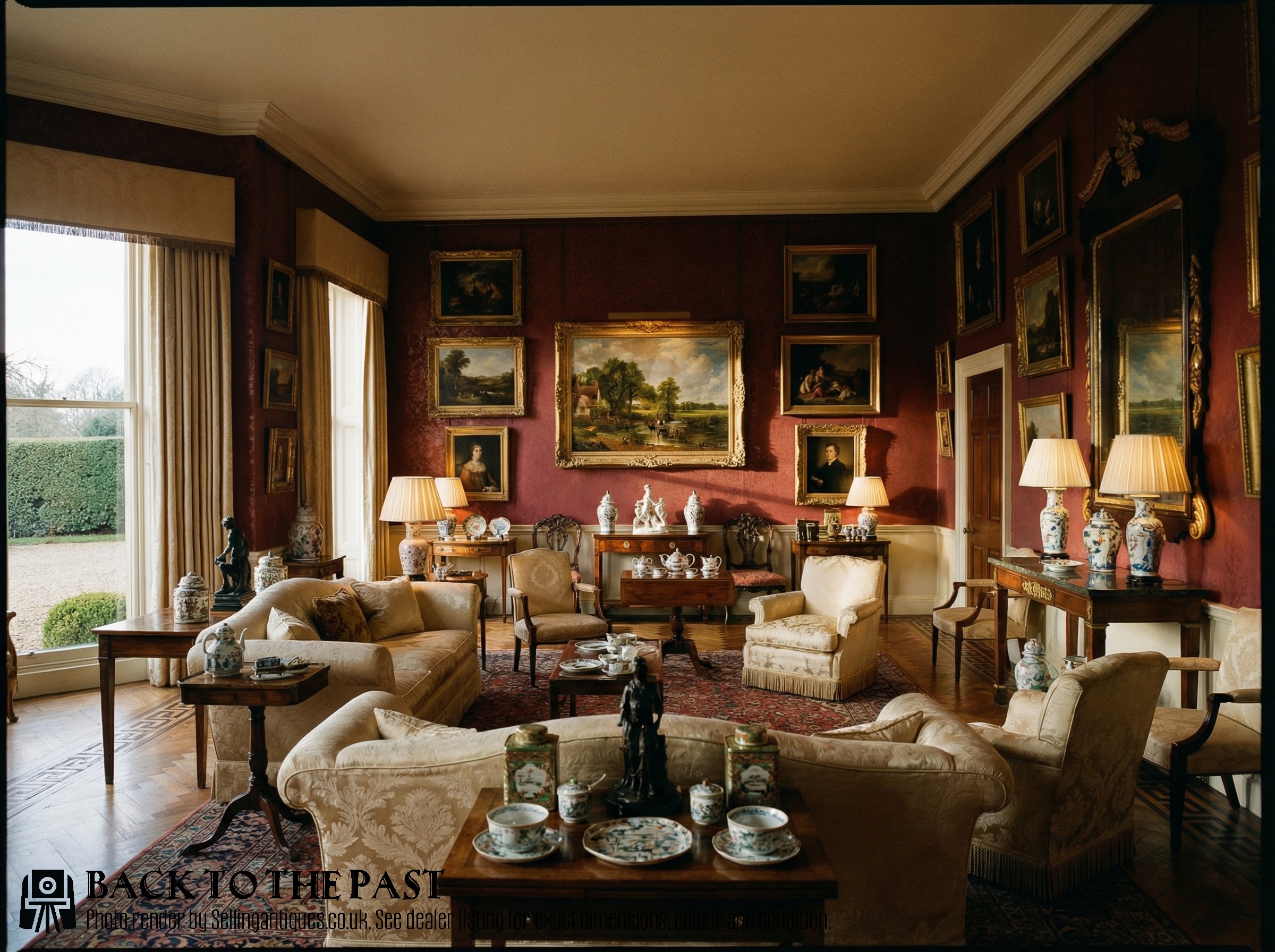
Dark Wood Gilded Mirror
A dark wood gilded mirror combines deep mahogany or walnut frames with gleaming gold leaf or parcel-gilt highlights. Buyers seeking a dark wood gilded mirror want an atmospheric wall or floor piece that anchors a room with historic presence.
The selections available here range from eighteenth-century originals to later revival pieces, including fret-cut wall mirrors, cheval mirrors, and convex hall mirrors. Examples frequently feature carved wooden elements, scrolling outlines, and traditional glass plates.
Georgian and Victorian interpretations dominate the selection, showing how makers combined dark polished timber with gilded details across successive centuries. Pieces span compact wall hangings designed for piers to large floor-standing cheval mirrors.
How they were made
Craftsmen built these frames primarily using solid mahogany or walnut, shaping the timber with saws and chisels to form fretwork or architectural profiles. Gesso was frequently applied beneath gold leaf to create raised decorative details that caught the light.
Makers applied thin sheets of gold leaf or parcel-gilt to selected carved areas, contrasting the bright metallic finish against the dark grain of the polished wood. Bevelled glass and traditional Vauxhall plates were set securely into the timber rebates.
Listings feature mahogany, walnut, and giltwood constructed across the 18th, 19th, and early 20th centuries.
What varies in quality
The crispness of the hand-carved fretwork and the depth of the timber grain determine the visual weight of the frame. Finer examples display precise scrollwork and balanced proportions that maintain their structural integrity over centuries.
The application of the gold leaf and the preservation of the original glass plate distinguish standard production from exceptional craftsmanship. Subtle parcel-gilt accents that interact harmoniously with the dark wood indicate a considered design.
The Dark Wood Gilded Mirror Glossary
- Parcel-gilt
- Partially gilded, where gold leaf is applied only to specific carved details or mouldings while the surrounding dark wood remains exposed. This technique creates a striking contrast between the warm timber and the bright metallic finish.
- Fretwork
- Openwork patterns cut into thin boards of wood using a fretsaw, commonly seen along the outer frames of eighteenth-century and revival mirrors. It adds delicate decorative silhouettes without adding excessive weight.
- Gesso
- A plaster-like mixture applied to wood surfaces as a smooth base for gilding or painting. It allowed craftsmen to mould sharp, detailed relief ornaments before laying the gold leaf.
- Cheval mirror
- A full-length freestanding mirror mounted on a pivoted frame between two vertical pillars, allowing the glass to tilt. These large pieces were designed for dressing rooms and bedrooms.
- Convex mirror
- A round mirror with a curved glass plate that reflects a wide, distorted panoramic view of the interior. They often feature gilded ball ornaments around the outer frame rim.
Dark Wood Gilded Mirror: Frequently Asked Questions
Where should I hang a dark wood gilded mirror?
Position these mirrors above a mantelpiece, sideboard, or console table where they can reflect natural light and anchor the surrounding furniture.
Ensure the wall fixings are strong enough to support the weight of solid timber and glass frames.
How do I clean the wooden frame?
Dust the timber gently with a dry, soft cloth to remove surface particles without disturbing the finish.
Avoid using harsh chemical polishes or water on gilded areas, as moisture can lift the delicate gold leaf.
How do I date a wooden mirror?
Examine the timber species, construction methods, and the style of the fretwork or carving against known historical periods.
Old mirror glass often displays subtle imperfections, wave lines, or foxing that indicate age.