


Dark Wood Full Length Mirror
A dark wood full length mirror brings presence to a room, offering a functional glass framed in rich timber.
Dark Wood Full Length Mirror
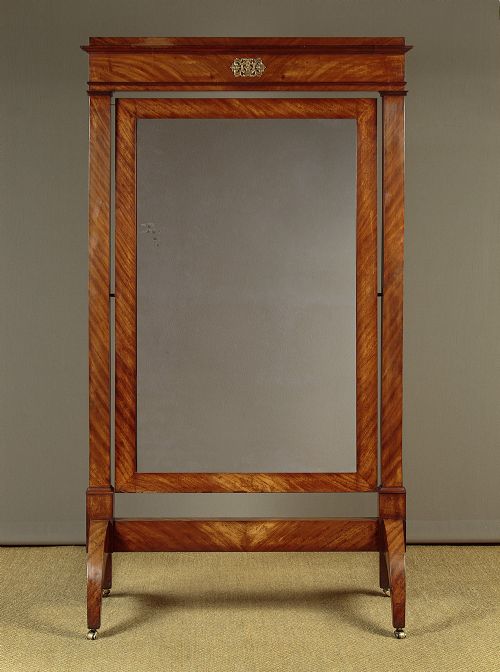
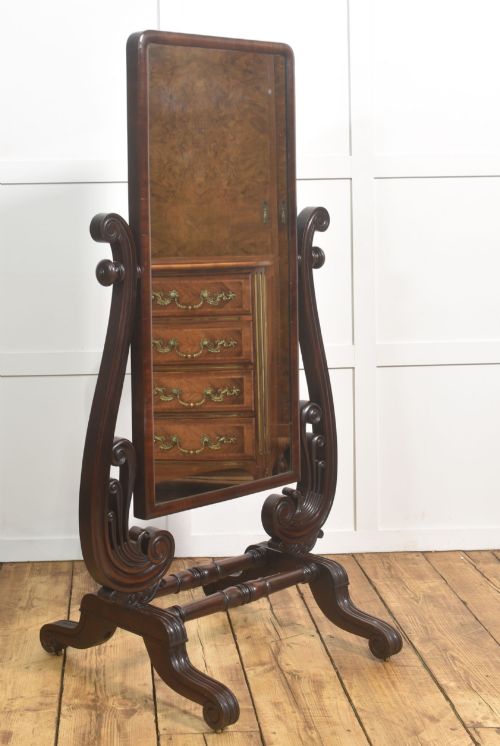
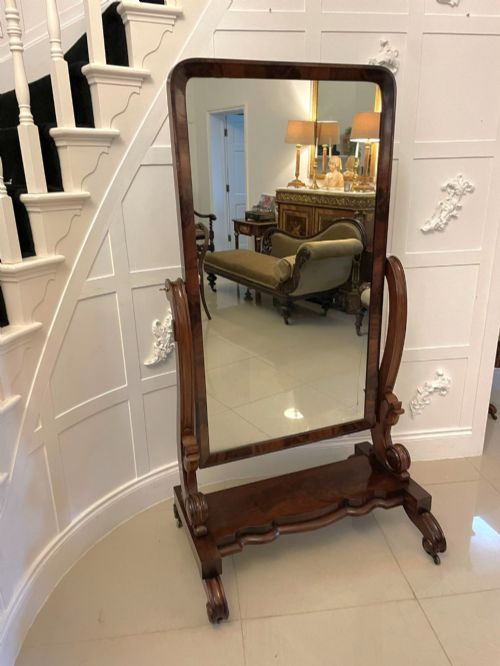
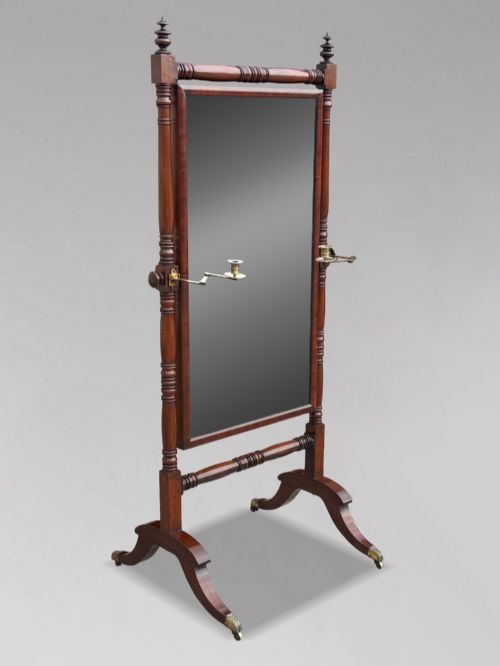
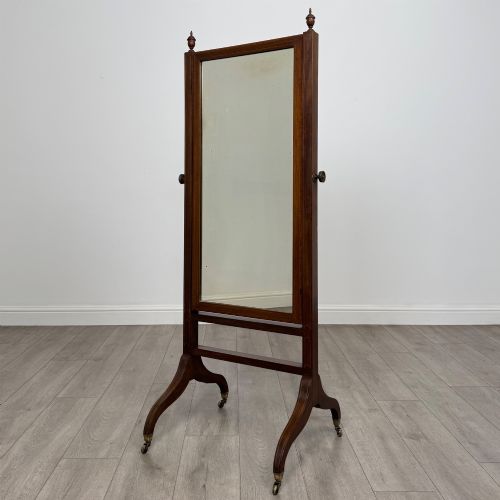
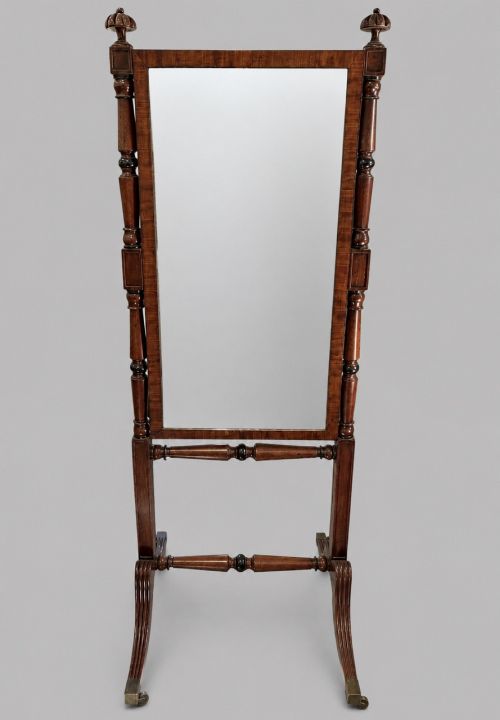
A dark wood full length mirror primarily takes the form of a cheval mirror, standing upright on a frame with a pivoting glass plate. These pieces emerge predominantly in mahogany, walnut, and oak from periods spanning the Regency era through the Victorian years and into the Edwardian epoch.
Buyers encounter floor standing dressing mirrors designed to tilt on vertical supports, alongside occasional wall hanging examples. The selection draws heavily on nineteenth century craftsmanship, featuring tall proportions suited to full view dressing.
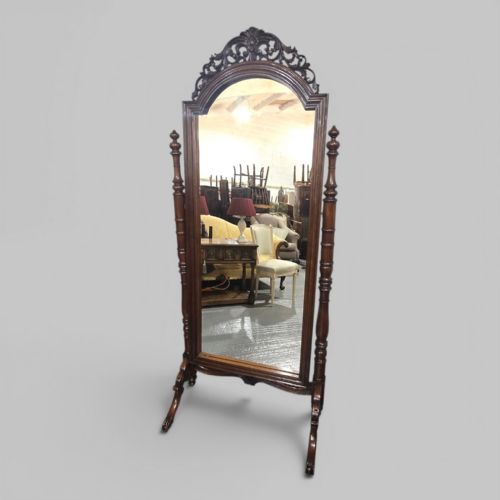
The prevailing style relies on timber frames with swing mechanisms, ranging from neat Regency proportions to larger Victorian and Edwardian interpretations. French chateau influences and Art Deco variants also appear among the timber constructions.
Materials and construction
Makers utilised solid timbers including mahogany, walnut, oak, and rosewood to build the structural uprights and bases. Glass plates provide the reflective surface, supported by brass pivots, brackets, and occasional candle arms.
Joinery techniques involve traditional framing to house heavy mirror glass securely within pivoting wooden frames. Carved crests, paint finishes, and brass hardware complete the construction of these substantial floor standing and wall mounted objects.
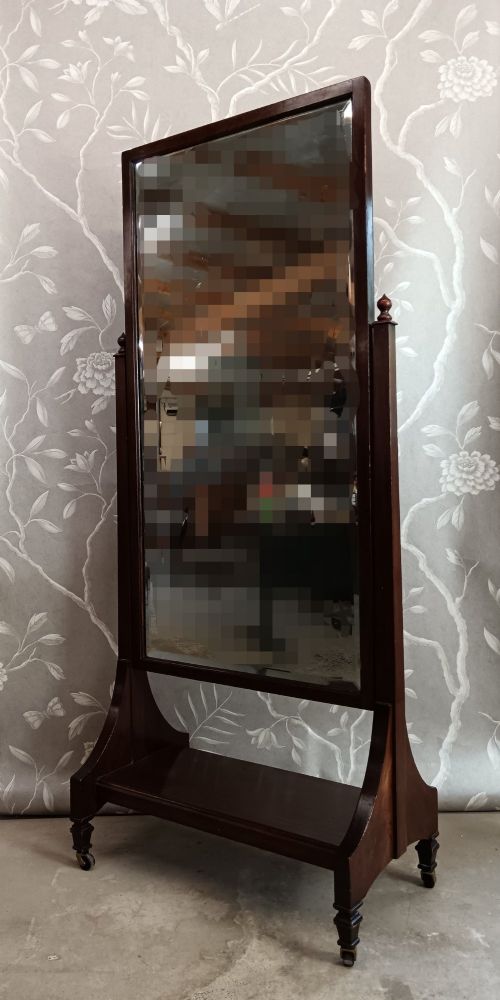
A nineteenth century glass fairground distortion mirror offers reflection of an entirely different character.
Judging quality
Quality rests upon the selection of timber, where dense, well figured mahogany or walnut dictates a higher grade of piece. The weight and stability of the supporting frame, alongside the crispness of any carved cresting, separate standard workshop output from finer productions.
The integrity of the mirror glass and the robustness of the brass pivot mechanisms influence desirability. Original mirror plates showing appropriate age sit differently against later replacements, while proportion and balance in the stand dictate overall success.
Waring and Gillow·Versace
The Dark Wood Full Length Mirror Glossary
- Cheval mirror
- A freestanding full length dressing mirror supported by a frame with vertical posts and pivots allowing the glass to swing. This form dominates the available selection.
- Tilt dressing glass
- A smaller mirror plate mounted on pivots between uprights, designed to angle the reflection. These often sit upon a base or stand.
- Mahogany
- A durable tropical hardwood prized for its deep reddish brown colour and fine grain. It forms the primary timber across the listed period pieces.
- Regency period
- An era of British design spanning the early nineteenth century noted for classical restraint and clean lines. Pieces from this time show distinct architectural influence.
- Pier mirror
- A tall mirror designed to hang on the wall between windows, frequently paired with a console table. Examples in rosewood appear within the selection.
Dark Wood Full Length Mirror: Frequently Asked Questions
How do I use a cheval mirror?
A cheval mirror stands independently on the floor, allowing you to view your entire outfit from head to toe. The pivoting frame adjusts the angle of the glass to suit different heights.
Position the piece near natural light for the clearest reflection, ensuring the floor beneath provides a stable surface for the heavy wooden frame.
Are these mirrors heavy to move?
These floor standing pieces combine dense timbers like mahogany or oak with thick glass plates, making them substantial objects. Most require two people to reposition safely across a room.
Take care to secure or remove the pivoting glass plate if transporting the frame significant distances to prevent accidental damage to the brass fittings.
How do I date a timber frame?
Dating relies on observing the timber species, joinery methods, and hardware style characteristic of periods like the Regency or Victorian eras. Hand cut joints and original brass pivots offer strong clues to age.
Compare the secondary woods at the back of the frame and the characteristics of the mirror plate itself to confirm the period of manufacture.
Can I mount a cheval mirror to the wall?
Cheval mirrors are engineered as freestanding floor pieces with supporting legs and floor brackets, meaning they do not hang on walls. Attempting wall attachment compromises the pivoting mechanism.
If you prefer wall hanging formats, look specifically for wall mirrors within the selection rather than altering a floor standing cheval frame.