


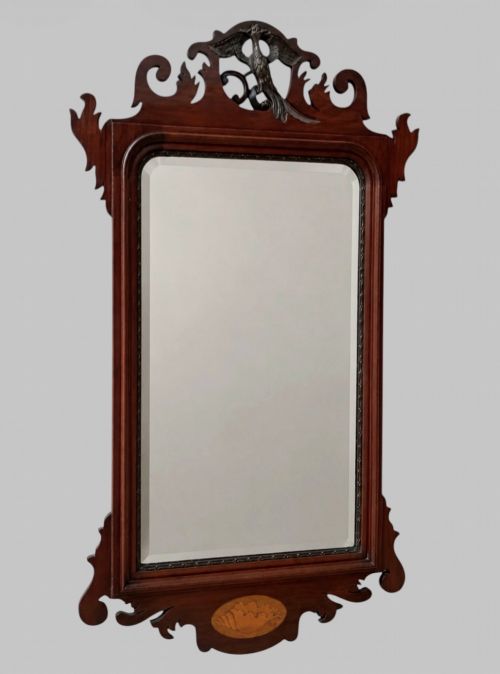


Dark Wood Fretwork Mirror
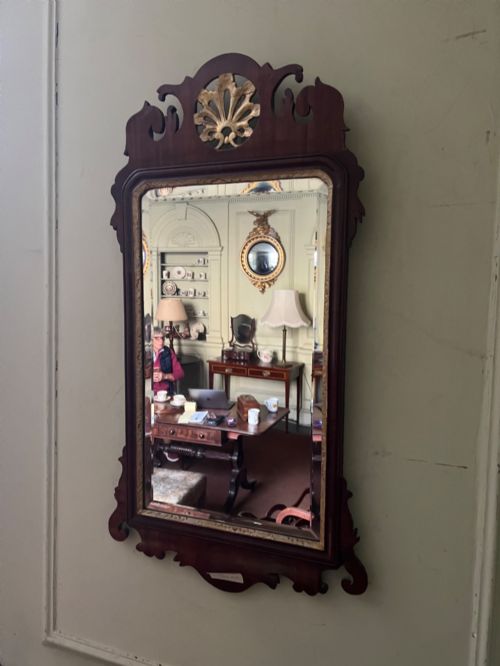
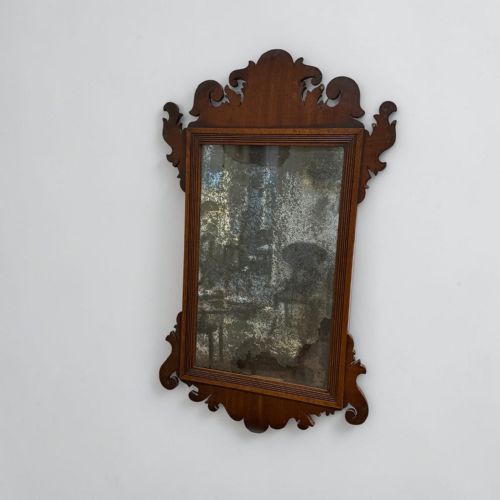
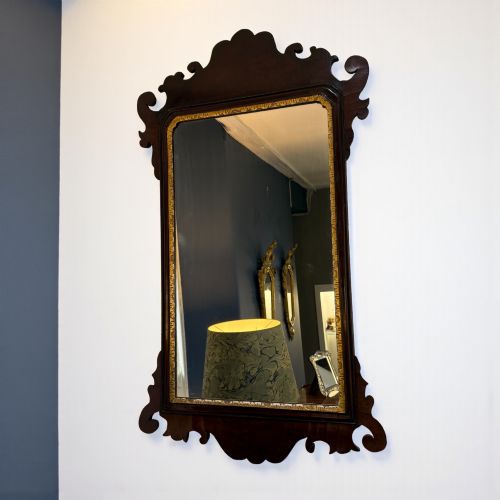
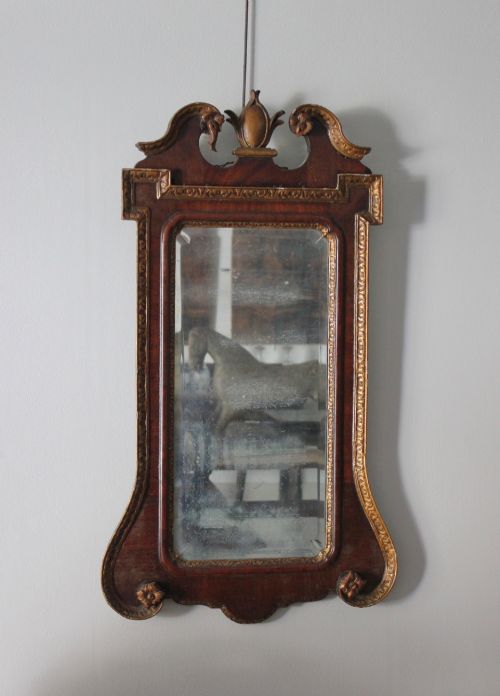
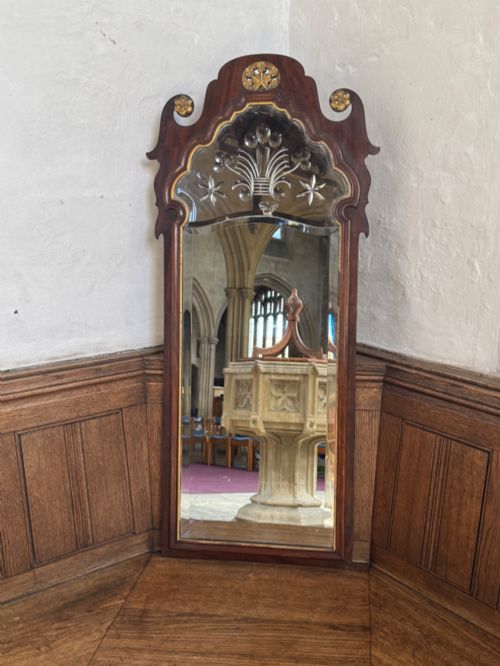
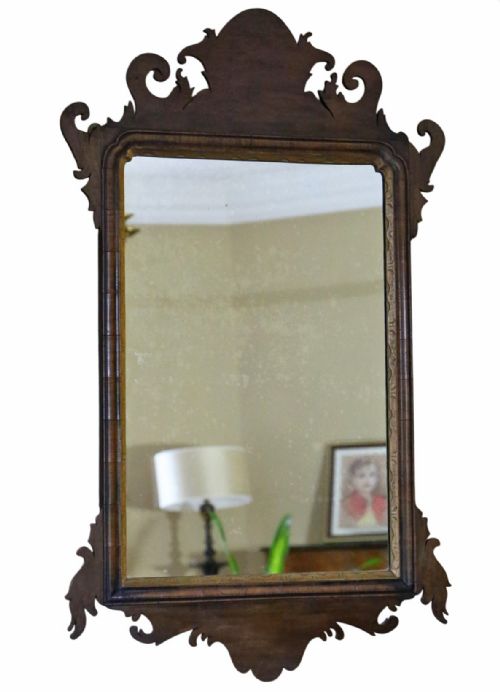
A dark wood fretwork mirror brings warmth and intricate scrollwork to a room, drawing the eye with its pierced silhouette.
Dark Wood Fretwork Mirror
When you search for a dark wood fretwork mirror, you look for a hanging glass panel framed by pierced timber outlines. These objects trace their origins back to the eighteenth century, though many examples on this page date from later revival periods.
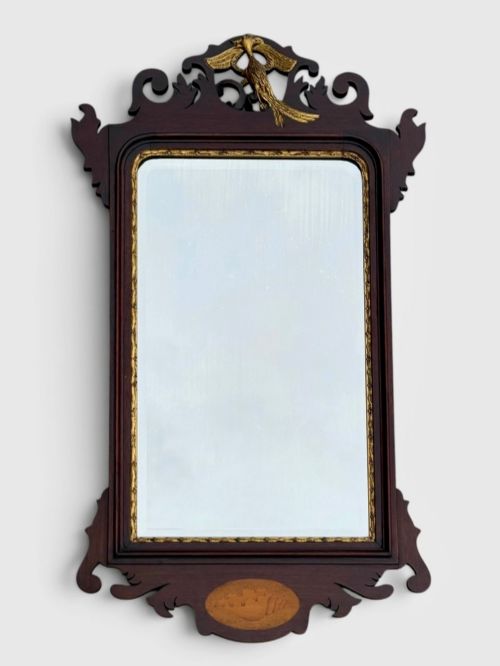
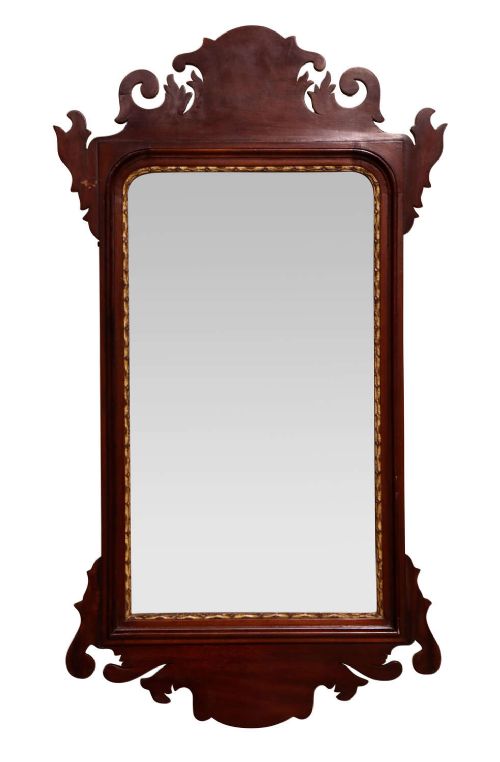
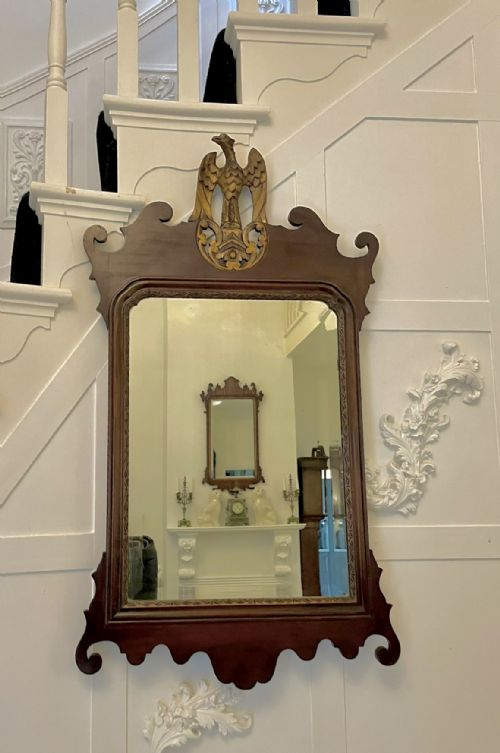
The most common version encountered here is the mahogany wall mirror styled after Thomas Chippendale, often featuring symmetrical scroll-cut edges and classical motifs. Walnut and rosewood frames also appear alongside these mahogany pieces.
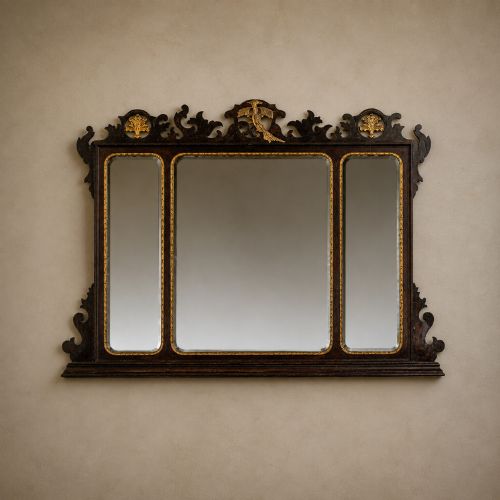
Beyond standard wall mirrors, the selection includes larger overmantel formats and variants with gilded accents or carved crests. Each piece uses openwork framing to soften the heavy appearance of timber on a wall.
How they were made
Craftsmen built these frames using dense hardwoods like mahogany and walnut, which held sharp edges during intricate cutting. Timber boards were sawn into shape along traced templates to achieve the open fretwork patterns.
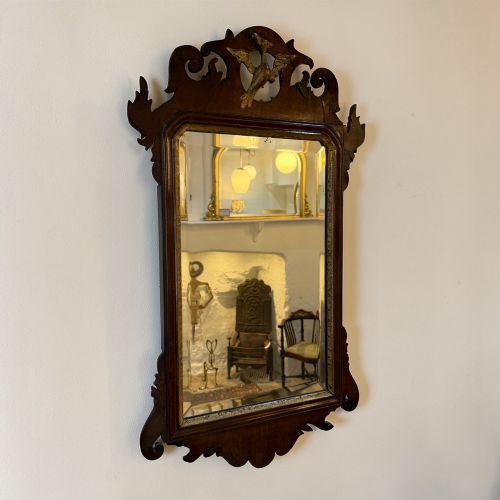
Makers applied parcel-gilt details or gold leaf highlights to accentuate carved elements such as leaves and birds. Silvered glass plates, sometimes bevelled or reverse-cut, were then fitted into the rebate behind the timber scrollwork.
Dark Wood Fretwork Mirror Retail Price Guide 2026
Typical asking prices for dark wood fretwork mirror among the pieces listed under this phrase on Sellingantiques today, from the lower quarter to the upper quarter. They describe what is for sale here now, not the wider market.
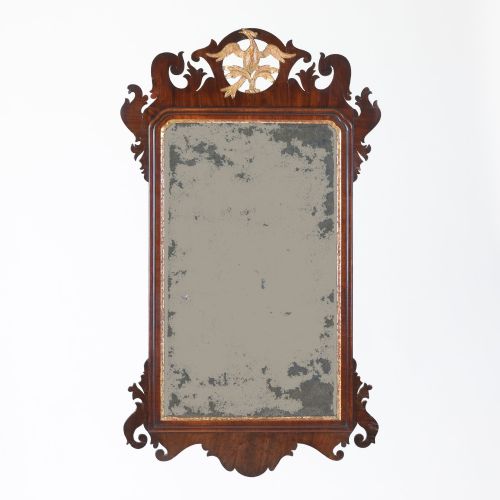
Several mirrors feature vigilant Ho-Ho birds perched atop the crests, keeping a watchful eye over the room.
What varies in quality
The precision of the fret-cut piercing defines the standard of the carving, distinguishing sharp internal angles from softer, rounded profiles. Finer items exhibit balanced symmetry and crisp detailing along every scroll and leaf.
The survival of original surfaces and early glass plates elevates a piece above those with replaced components. Subtle touches like parcel-gilt enrichment or carved crests indicate higher ambition in the workshop.
The Dark Wood Fretwork Mirror Glossary
- Fretwork
- Openwork ornamentation carved or pierced from a flat board of timber. This technique creates intricate geometric or scroll patterns that lighten the visual weight of the frame.
- Parcel-gilt
- Partially gilded woodwork where gold leaf highlights specific carved details against a dark wood background. It adds reflective contrast to the primary timber.
- Ho-Ho Bird
- A stylized Chinese phoenix frequently carved onto the crests of mid-eighteenth-century mirrors. This motif reflects the period fascination with chinoiserie design.
- Overmantel mirror
- A wide looking-glass designed to hang directly above a fireplace mantel. These pieces often feature triptych glass plates and extended proportions.
- Vauxhall plate
- A mirror glass plate characterised by a bevelled edge produced using early polishing techniques. Such plates carry historical authenticity in eighteenth-century frames.
Dark Wood Fretwork Mirror: Frequently Asked Questions
Where should I hang these mirrors?
These mirrors suit principal reception rooms, hallways, or above bedroom mantelpieces where reflected light can brighten the space. Their pierced frames function well against plain or patterned wallpaper.
Ensure the wall fixings match the weight of the hardwood frame to support the piece securely. Positioning them at eye level maximises their decorative impact.
Are original mirror plates common?
Original glass plates survive in older examples, though many eighteenth-century frames received replacement glass during their history. Silvering degrades over centuries, prompting owners to update the reflective surface.
Original plates often show minor foxing, distortion, or bevelled edges consistent with period manufacturing methods. Replacements usually present a clearer, more uniform reflection.
What is Chippendale style?
Chippendale style refers to eighteenth-century designs popularized by cabinetmaker Thomas Chippendale, featuring asymmetrical scrolls, rococo curves, and fret-cut silhouettes. This aesthetic drew inspiration from Gothic, French, and Chinese ornamentation.
Revival versions from the nineteenth and twentieth centuries reinterpreted these forms with heavier timbers and distinct construction methods. Both original and revival pieces share the characteristic pierced outer frame.