




Dark Wood Footstool Frame
These dark wood footstool frame options offer solid structural foundations in mahogany, rosewood, and oak for traditional upholstery projects.
Dark Wood Footstool Frame
A dark wood footstool frame provides the skeletal support for low seating furniture, designed specifically to be upholstered or reupholstered in fabric, velvet, or woven material. When searching for a dark wood footstool frame, buyers encounter pieces spanning multiple eras from Georgian and Victorian periods up to the early twentieth century.
Most examples originate from the nineteenth century, utilising dense timbers like mahogany and rosewood. Buyers frequently find paired items alongside single stools, all ready for textile restoration.
How they were made
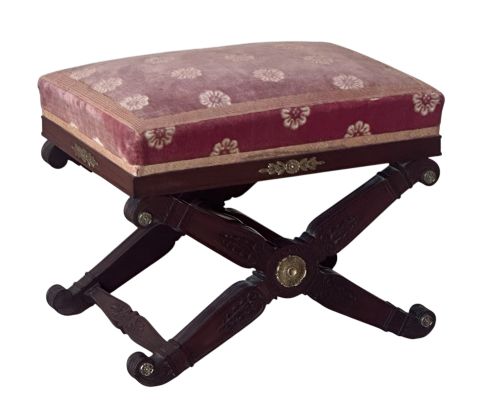
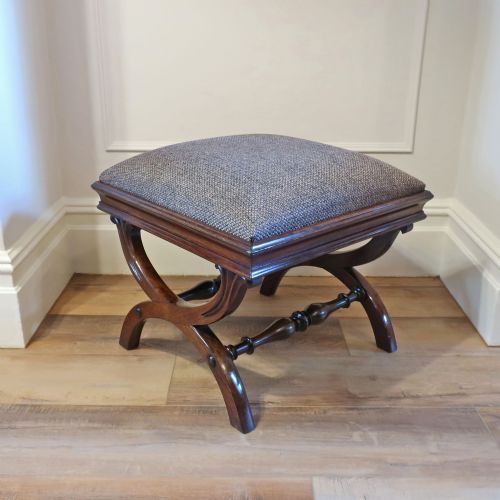
Cabinetmakers constructed these frames using dense hardwoods including mahogany, rosewood, and oak, ensuring durable structural integrity for weight bearing. Timbers were shaped through careful carving, seen in decorative frame details and X frame crossing members.
Metal components like brass and gilt bronze occasionally appear as structural or decorative fixings on French Empire and Victorian examples. The joinery supports subsequent layers of webbing, stuffing, and top covers such as velvet and woven fabric.
Dark Wood Footstool Frame Retail Price Guide 2026
Typical asking prices for dark wood footstool frame among the pieces listed under this phrase on Sellingantiques today, from the lower quarter to the upper quarter. They describe what is for sale here now, not the wider market.
Many nineteenth century footstools spent decades hiding beneath heavy carpets before finally emerging naked and proud on the marketplace.
What varies in quality
The refinement of the timber carving separates standard utility frames from more ambitious pieces like Irish or French Empire examples. Crisp detailing on mahogany and rosewood surfaces indicates superior workshop execution.
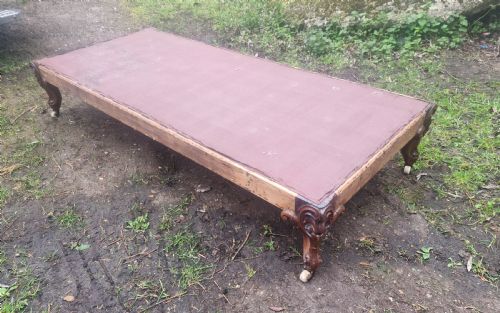
Proportion and structural geometry dictate the visual balance of an X frame or long stool frame. Heavier, denser hardwoods provide better longevity than simpler utility timbers.
The Dark Wood Footstool Frame Glossary
- X Frame
- A cross-leg furniture base forming an X shape from intersecting timbers. This ancient design provides robust structural support and appears frequently in French Empire and nineteenth century seating.
- Centre Stool
- A freestanding stool designed to sit in the middle of a room rather than against a wall. These pieces typically feature finished wooden frames on all four sides.
- Rosewood
- A heavy, dense tropical timber prized for its dark grain and polished finish. It was frequently utilised for high quality Victorian footstool frames.
- Mahogany
- A durable reddish brown hardwood standard in Georgian and Victorian cabinet making. Its stability made it ideal for carved footstool frames.
Dark Wood Footstool Frame: Frequently Asked Questions
What is a dark wood footstool frame?
A dark wood footstool frame is an exposed wooden skeletal base made from timbers like mahogany, rosewood, or oak. These frames provide the structural foundation for low seating and require upholstery before use.
Buyers find various historical forms, including X frame stools, long footstools, and dressing stools, originating primarily from the Georgian and Victorian eras.
How do I choose the right frame?
Consider the specific form and timber that suits your interior scheme, such as a carved rosewood Victorian frame or an X frame design. Check the proportions and the complexity of the woodwork to match your aesthetic requirements.
Ensure the timber dimensions align with your intended placement, whether you need a long footstool or a compact dressing stool.
Are these frames ready for fabric?
Most of these pieces are offered specifically for reupholstering, meaning they retain their exposed wooden frames while lacking modern top covers. This allows you to select custom velvet, woven fabric, or traditional textiles to finish the piece.
Restoration projects often involve webbing and stuffing the interior before applying the final exterior fabric.
How do I date a footstool frame?
Dating relies upon stylistic markers, timber choice, and construction methods characteristic of specific periods like the Georgian era or the nineteenth century. Rosewood and heavy mahogany point towards Victorian craftsmanship, whilst specific X frame silhouettes reference French Empire or Regency influences.
Examining the carving style and joinery helps determine whether a piece originates from the mid eighteenth century or later Victorian decades.