
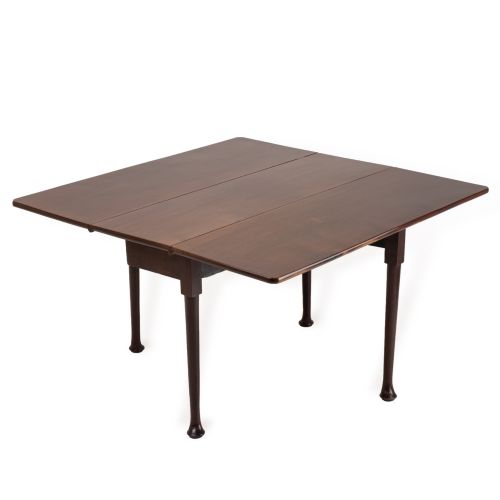

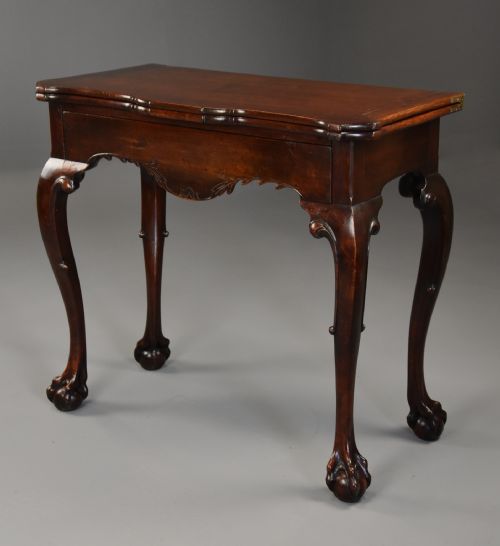


Dark Wood Flap Table
A dark wood flap table offers folding leaves to save space, and you are looking at solid timbers built for folding utility.
Dark Wood Flap Table
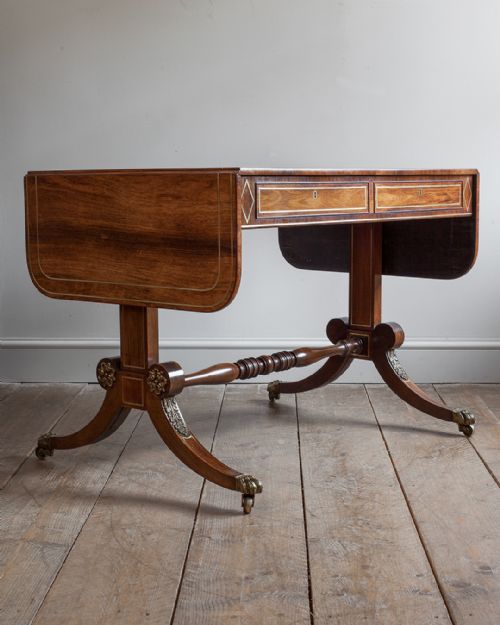
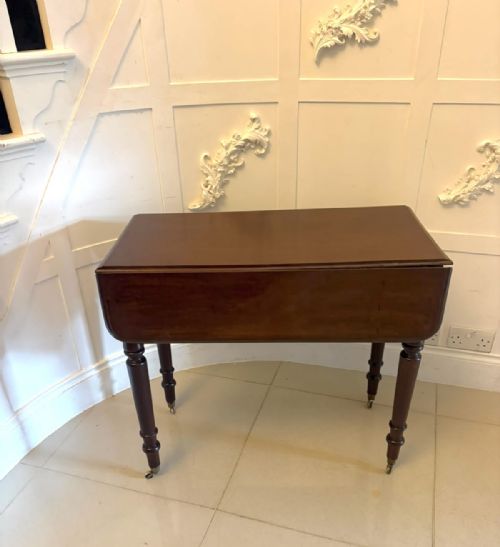
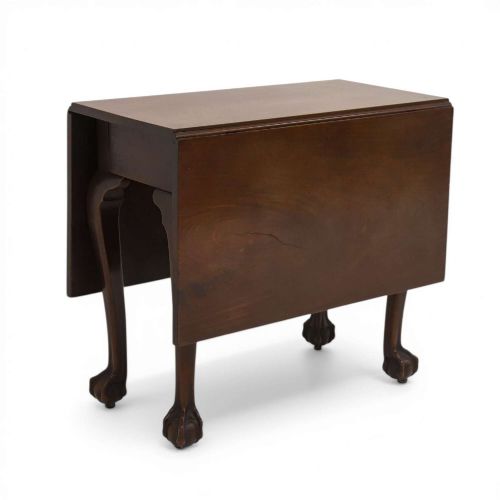
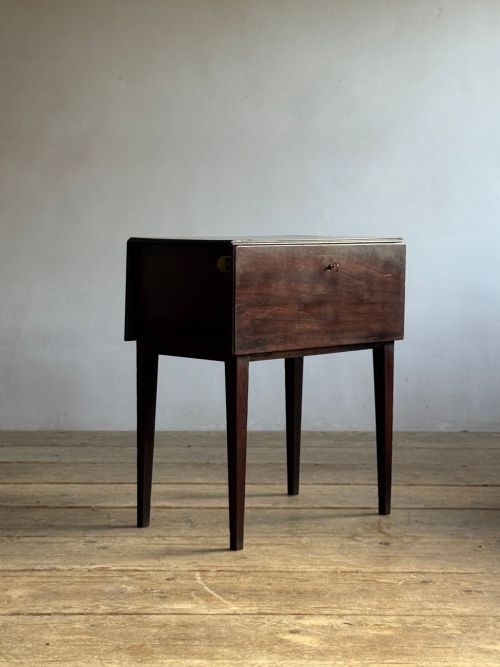
When you search for a dark wood flap table, you encounter a variety of forms designed to extend for dining or tea and drop down when floor space is at a premium. The pieces appearing here span centuries of British cabinet making, encompassing dining tables, sofa tables, tea tables, Pembroke tables, and gateleg tables.
The version you are most likely to meet on this page is constructed from mahogany, rosewood, oak, or walnut, dating from the Georgian, Regency, or Victorian eras. These tables utilise hinged leaves supported by swing legs, fly brackets, or gatelegs to transform a compact console into a surface capable of seating several people.
How they were made
Cabinet makers constructed these tables using dense hardwoods such as Cuban mahogany, rosewood, walnut, and oak, often framing the tops with solid timber flaps attached via sturdy wooden or brass hinges. Underframes incorporated turned, cabriole, or barley twist legs, frequently fitted with brass castors on larger sofa and dining forms to aid movement.
Joinery techniques relied on traditional mortise and tenon frames, allowing the hinged support gates or rule joints to bear weight smoothly when the leaves were raised. Timber selection prioritised rich grain figures, which workers polished to a deep lustre.
Some nineteenth-century work tables managed to conceal hidden sewing wells beneath their folding flaps.
What varies in quality
The distinction between standard utility items and finer examples rests upon the selection of timber figures and the precision of the joinery in the rule joints and folding mechanisms. Tables boasting dense Cuban mahogany, figured rosewood veneers, or carved details such as claw-and-ball feet occupy the upper tier of craftsmanship.
Proportion and structural integrity also dictate worth, as superior pieces maintain a steady stance when fully extended, with leaves that align flush to the main top without sagging at the edges.
Gillow·Hepplewhite
The Dark Wood Flap Table Glossary
- Pembroke table
- A small occasional table featuring two hinged drop leaves on opposing sides, frequently containing one or more small drawers.
- Gateleg table
- A table with folding leaves supported by legs that swing outward on a hinged gate framework like a swinging door.
- Sofa table
- A rectangular occasional table designed to stand in front of a sofa, typically featuring drop leaves and pedestal or end-pillar supports.
- Rule joint
- A moulded joint connecting a table top to its drop leaf, leaving no visible gap when the leaf is raised.
- Sutherland table
- A narrow table with exceptionally slender drop leaves that fold down almost vertically on either side of a central frame.
Dark Wood Flap Table: Frequently Asked Questions
How do I use a drop leaf table in a small room?
Keep both flaps lowered against the wall to use the piece as a narrow console or side table when floor space is limited.
Raise one or both leaves and swing out the supporting legs whenever you require an expanded surface for dining or writing.
How can I tell a Georgian table from a Victorian one?
Georgian tables, dating from the eighteenth and early nineteenth centuries, often display restrained classical lines, Cuban mahogany timbers, and sophisticated carved details like cabriole legs.
Victorian pieces from the later nineteenth century frequently utilise dense rosewood or walnut with heavier proportions, richer ornamental turnings, and occasional games table interiors.
Can I use a antique flap table for daily dining?
Solid hardwood construction makes these tables robust enough for regular daily use, provided you protect the polished surfaces from excessive moisture and heat.
Ensure you operate the folding leaf supports with care to preserve the original hinges and rule joints over time.