

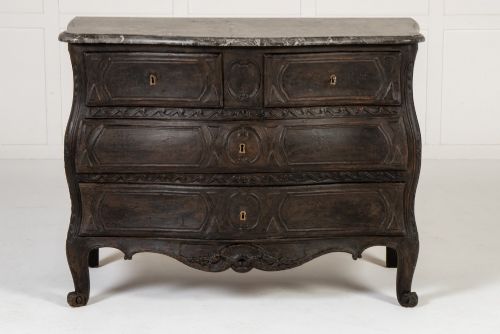
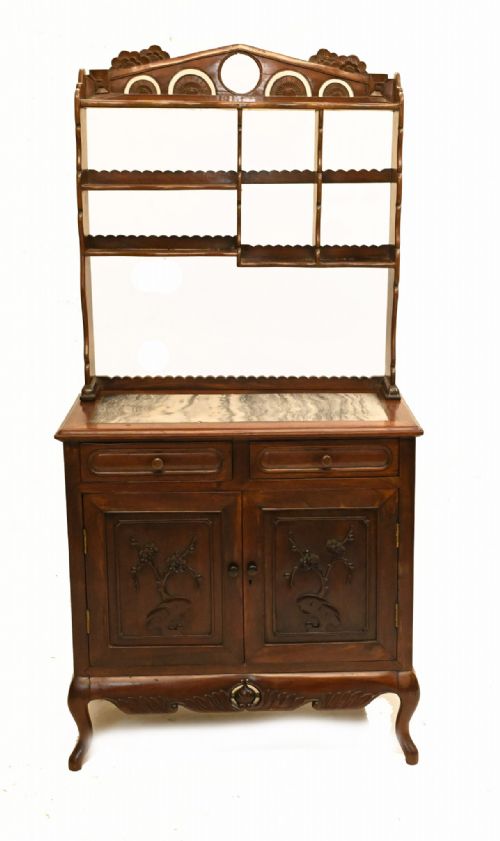


Dark Wood Dresser Top
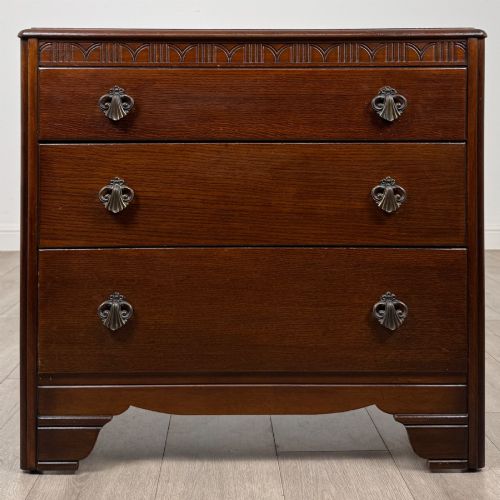
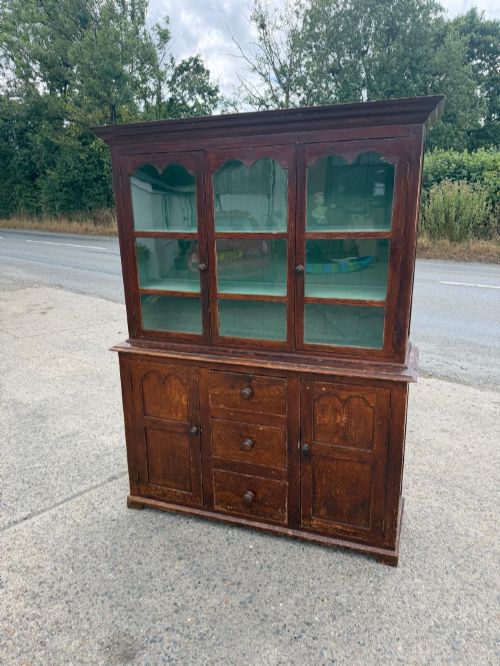
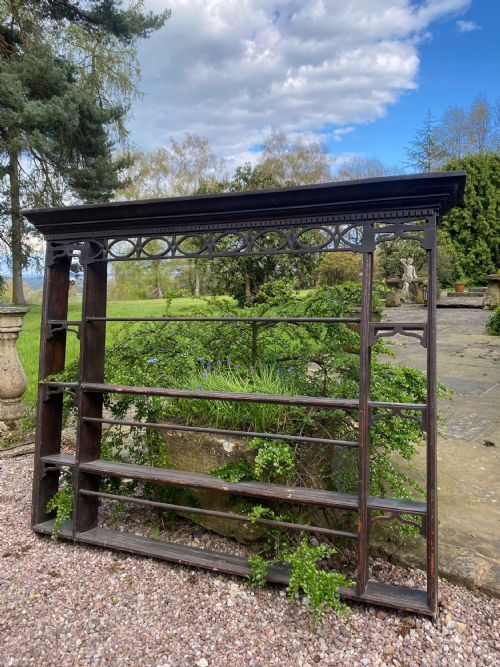
These dark wood dresser top pieces are upper storage sections and plate racks in oak and mahogany, designed to sit upon a base or hang against a wall.
Dark Wood Dresser Top
A dark wood dresser top brings upper storage and display into a room, typically taking the form of a plate rack, wall shelves, or a glazed cabinet superstructure. When you search for dark wood dresser top examples, you encounter formats designed to sit upon a sideboard, chest, or lower dresser base, as well as units intended for direct wall hanging.
The pieces appearing here span the Georgian, Victorian, and Edwardian periods, alongside French and Chinese regional interpretations. Oak and mahogany dominate the structural timber, while formats range from open delft racks with shaped friezes to enclosed cabinets featuring glass doors or mirrorbacks.
How they were made
Makers utilised solid timbers such as oak and mahogany, constructing the main frames with traditional joinery like dovetails and mortise and tenon joints. Backboards generally consist of vertically aligned timber planks secured with nails or tongue and groove methods.
Surfaces received finishes suited to the timber, ranging from waxed polish on English oak to ebonised treatments and French polish on continental mahogany. Glazing bars in display sections were hand-cut to hold individual panes of glass securely within the frame.
Dark Wood Dresser Top Retail Price Guide 2026
Typical asking prices for dark wood dresser top among the pieces listed under this phrase on Sellingantiques today, from the lower quarter to the upper quarter. They describe what is for sale here now, not the wider market.
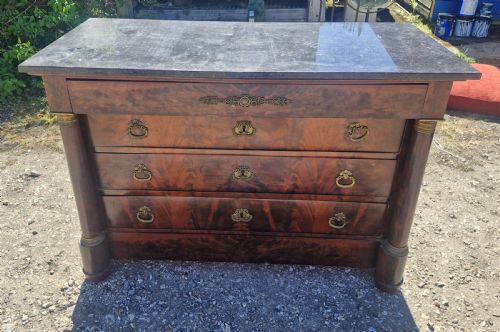
Some nineteenth-century French commodes feature lift tops that conceal hidden mirror compartments for morning correspondence.
What varies in quality
Quality reveals itself in the selection of the timber and the crispness of any carved detailing, such as shaped friezes or panel mouldings. Superior examples display thoughtful grain matching and proportional harmony between the shelving tiers and structural uprights.
The integrity of the original hanging brackets or the stability of the seating surface where it meets a base unit indicates the care taken during construction. Lesser pieces often rely on later modifications or utilitarian secondary woods hidden away in the backboards.
The Dark Wood Dresser Top Glossary
- Delft rack
- An open wall-mounted shelving unit featuring narrow grooves or plate rails designed to display ceramic plates upright. These fixtures originated in domestic kitchens and dining rooms.
- Plate rack
- A set of open shelves incorporating wooden bars or retaining ledges to keep crockery secure against the wall. They form the upper section of traditional Welsh dressers.
- Ebonised
- Wood treated with a chemical stain or black finish to imitate ebony. This technique was popular in nineteenth-century cabinet making.
- Glazed top
- The upper section of a storage cabinet fitted with glass doors to protect books or porcelain from dust while keeping them visible.
- Mirrorback
- A wooden superstructure incorporating a mirror plate into the back panel, frequently seen on Edwardian sideboards and cabinets to reflect light.
Dark Wood Dresser Top: Frequently Asked Questions
How do I mount a wall hanging shelf securely?
Wall hanging shelves require sturdy fixings screwed directly into structural wall studs or masonry rather than just plasterboard. The weight of the timber and displayed ceramics demands reliable support to prevent pulling away from the wall.
Check the stability of the original hanging points on the back frame before installation. Consulting a professional carpenter ensures the chosen fixings match the specific wall type in your home.
Can I place a dresser top on any sideboard?
Placing a dresser top onto a sideboard requires careful measurement of the top surface depth and weight capacity. The lower piece must possess sufficient structural substance to support the vertical load without tipping.
Ensure the visual proportions complement one another in terms of timber tone and style period. Many top sections were manufactured specifically for matching bases rather than interchangeable use.
How should I clean antique oak and mahogany?
Clean antique timber using a soft, lint-free cloth to remove dust accumulation without scratching the surface polish. Avoid harsh chemical sprays or silicone-based polishes that build up residue over time.
Apply a traditional beeswax sparingly to nourish the wood and maintain a natural sheen. Buff gently after application to protect the patina developed over generations of use.
What is the difference between an 18th and 19th century rack?
Eighteenth-century racks frequently feature hand- cleft oak boards with pegged construction and simpler, robust proportions. The timber often exhibits deep patination and tool marks from manual processing.
Nineteenth-century examples tend to incorporate machine-sawn components, more standardised mouldings, and a wider variety of secondary woods. Styles from this later period also reflect revival movements such as Gothic or French influences.