
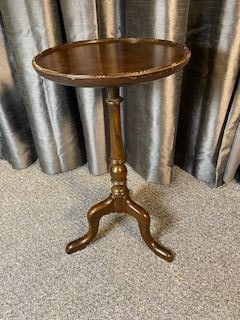
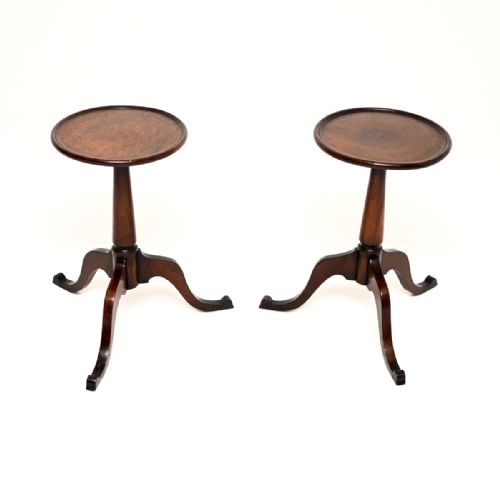
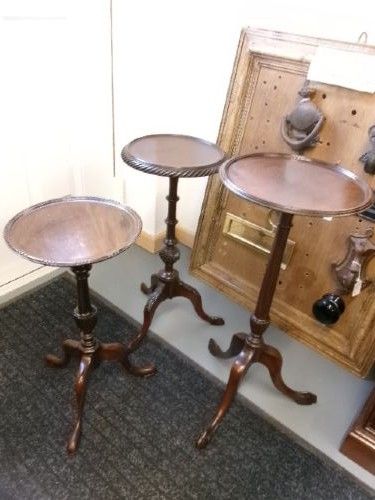
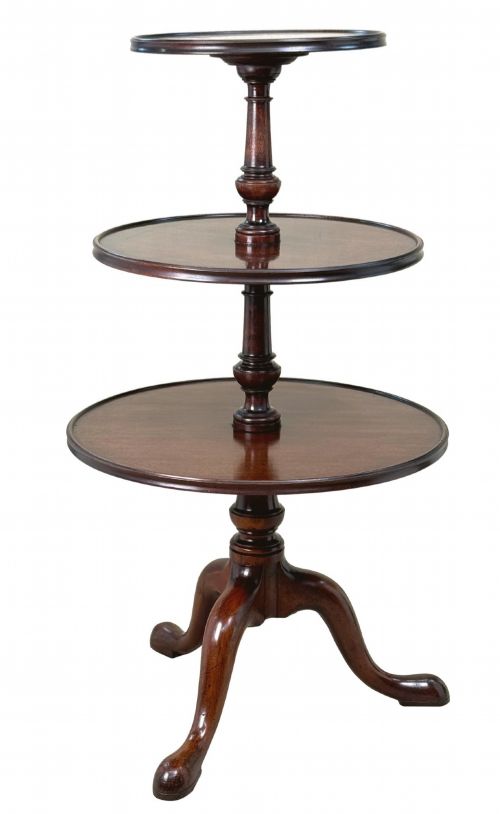
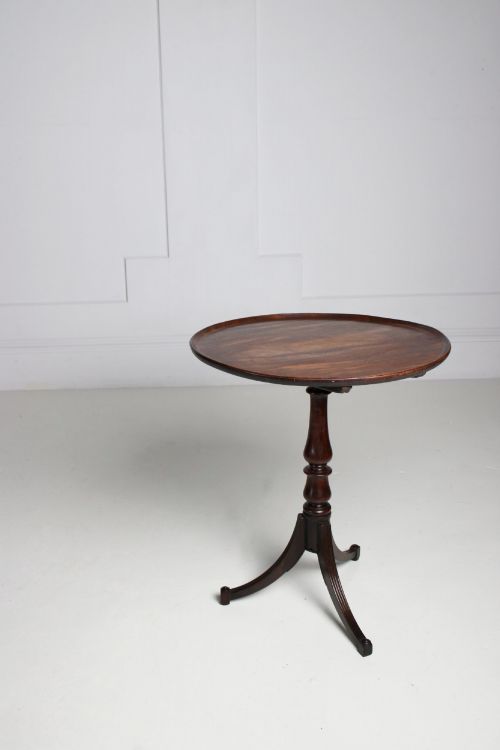
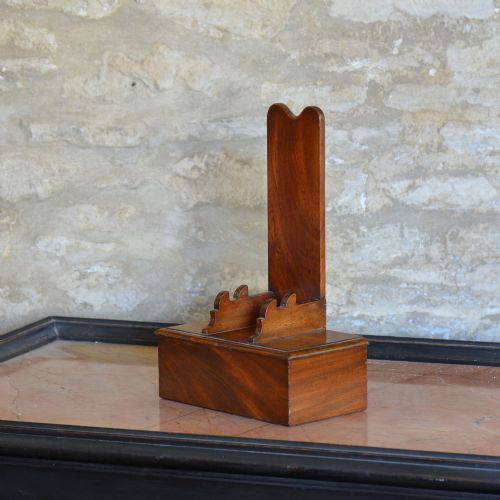
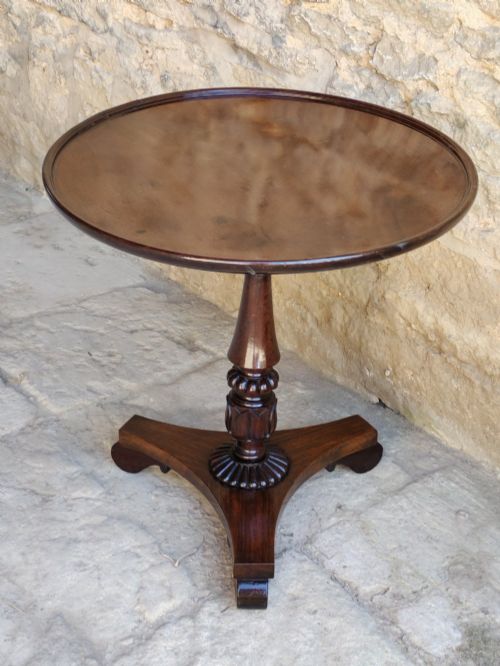


Dark Wood Dish Stand
A dark wood dish stand holds your vessels and plates off the surface with steady balance and traditional craft.
Dark Wood Dish Stand
When you search for a dark wood dish stand, you encounter a specialised selection of traditional supports designed to elevate plates, bowls, and serving vessels. These pieces range from compact tabletop trivets to sturdy pedestal tables and tiered dumbwaiters intended for dining rooms and parlours.
The objects here draw primarily from Georgian, Regency, and Victorian periods, alongside Edwardian and Art Deco examples. You find forms such as wine tables, supper tables, lazy susans, candle stands, and carved hardwood stools.
Mahogany predominates among the surviving pieces, accompanied by oak, fruitwood, rosewood, and huali wood. Most examples rely on solid timbers or carefully selected hardwood veneers shaped into circular dishtops, tripod bases, and turned shafts.
What varies in quality
Structural integrity also defines value, particularly in the fit of the tilt-top mechanisms, the stability of the central spider or tripod base, and the depth of the dished top. Examples retaining their original patination and uncompromised joinery represent the highest standard of execution.
The listings here span the 18th, 19th, and early 20th centuries, featuring materials such as mahogany, rosewood, oak, fruitwood, and huali wood.
The Dark Wood Dish Stand Glossary
- Dish-top
- A tabletop with a raised, concave rim carved directly from the solid wood to keep plates and vessels from sliding. This feature requires a thick blank of timber and skilled lathe work.
- Tripod base
- A support structure featuring three legs radiating from a central pillar. It remains stable on uneven historic floors.
- Dumbwaiter
- A multi-tiered freestanding piece of furniture used to hold dishes and food during meals without servant intervention. They often feature rotating circular trays on a central column.
- Tilt-top
- A mechanism allowing the tabletop to pivot into a vertical position when not in use. This saved floor space in smaller historic rooms.
- Treen
- Small handmade wooden household objects created by turners and joiners. Bowls, stands, and decorative items fall into this broad category.
Dark Wood Dish Stand: Frequently Asked Questions
What is a dish stand used for?
A dish stand elevates plates, bowls, and serving vessels to save table space and display food or decorative items securely. Historically, they served dining rooms, parlours, and sideboards during formal meals.
Today, these stands function as versatile accent tables, plant pedestals, or functional surface risers in traditional and modern interiors alike.
How do I identify a Georgian stand?
Georgian stands typically feature dense mahogany timber, hand-turned pedestals, and tripod bases with pad or snake feet. Look for traditional joinery methods and patination that shows age.
Parks of this era often incorporate dished tops carved from a single piece of wood rather than assembled boards.
Are tilt-top tables stable?
Tilt-top tables rely on a wooden catch or pivot block beneath the top to lock the surface in place horizontally. When the mechanism is well-maintained, they provide a stable surface for everyday use.
Over centuries of use, the pivot mechanism can develop wear, so check that the top rests flat and secure against the central pillar block.
How should I care for dark wood?
Protect dark wood surfaces by keeping them away from direct sunlight and maintaining stable room humidity to prevent timber splitting. Dust regularly with a soft, dry cloth.
Apply occasional applications of traditional wax polish to nourish the grain and preserve the historic finish without building up heavy residues.