


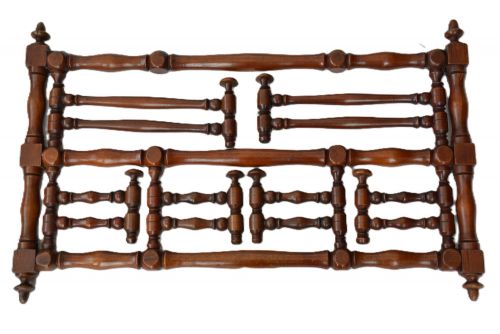


Dark Wood Coat Hooks
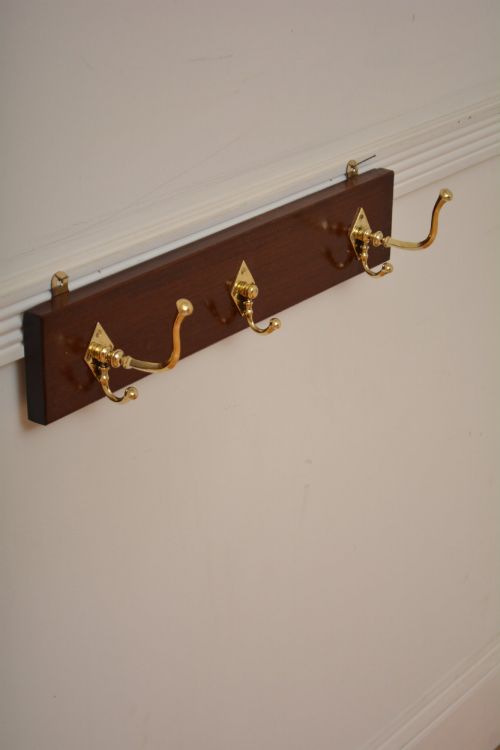
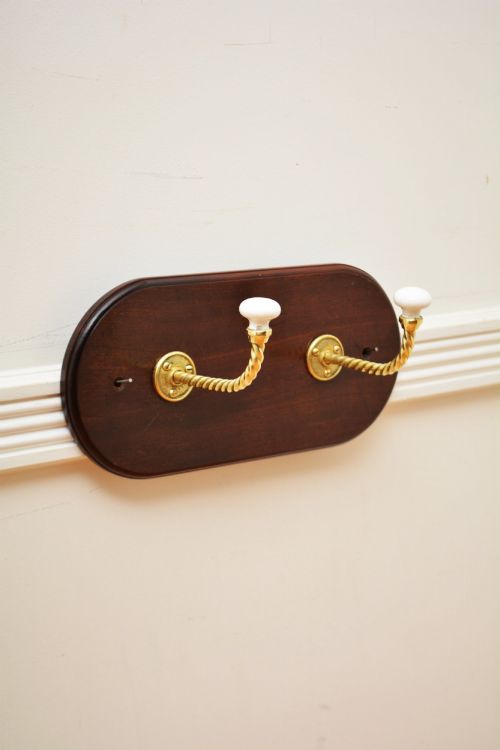
Dark wood coat hooks organise entranceways with practical timber mounts and sturdy metal hardware.
Dark Wood Coat Hooks
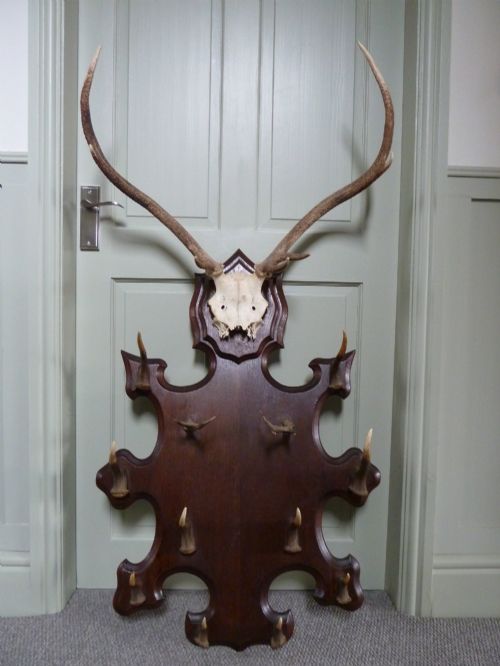
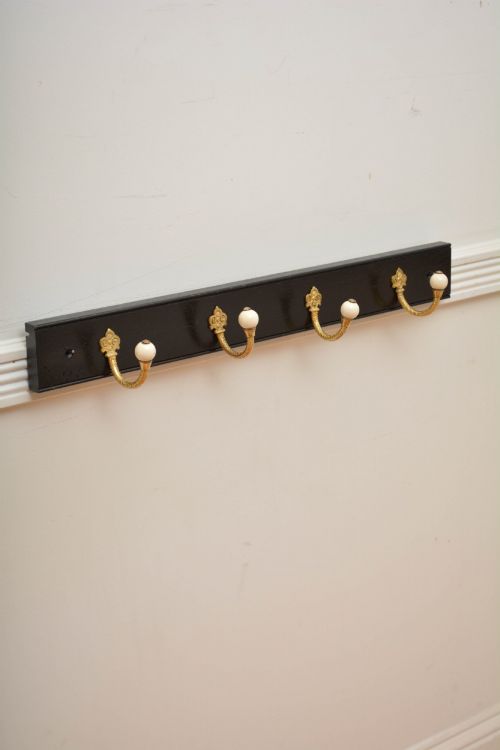
The selection ranges from simple rows of pegs on wooden boards to elaborate Black Forest carvings featuring animal antlers and carved wildlife. Walnut, mahogany and oak dominate the forms, frequently paired with contrasting brass or ceramic hardware.
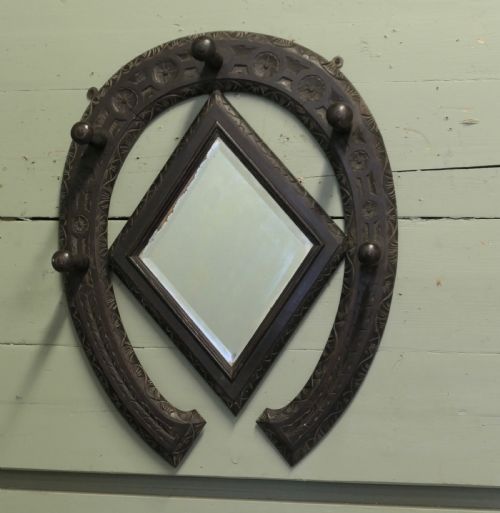
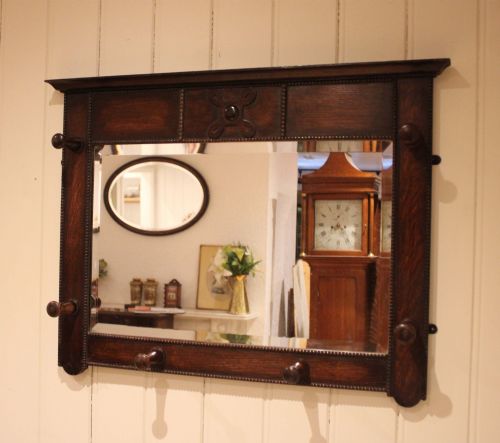
Many examples combine functional utility with decorative mirror plates or umbrella stands suited for period hallways. Simpler wall racks provide straightforward hanging space for cloakrooms and reception areas.
Materials and construction
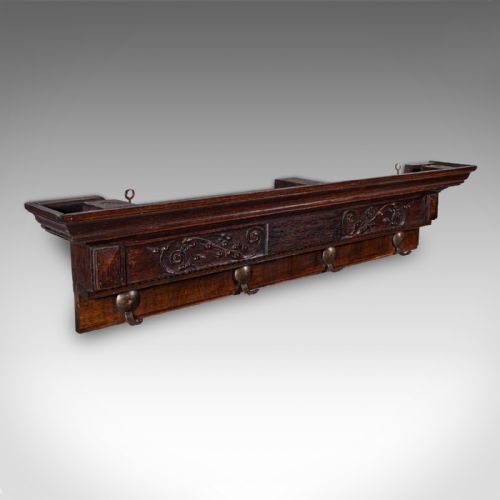
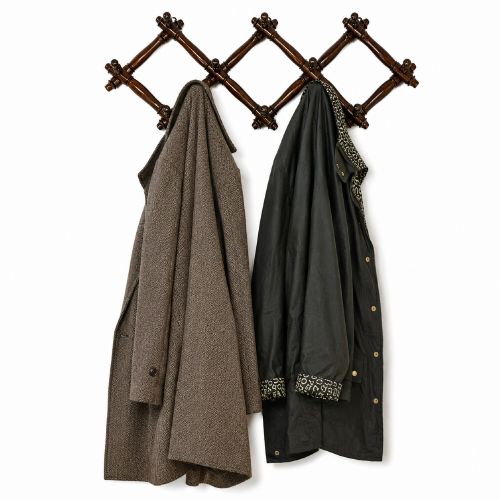
Cabinet makers utilised dense hardwoods including mahogany, walnut and oak as the structural backplates for these hanging fixtures. Wood was often carved by hand, particularly in Black Forest workshops, or steam-bent into curved profiles such as bentwood rails.
Metal components, predominantly brass, were cast and fixed securely to the timber backing to support the weight of heavy coats and hats. Additional elements like glass, ceramic, horn and antler appear as decorative accents or structural prongs.
Dark Wood Coat Hooks Retail Price Guide 2026
Typical asking prices for dark wood coat hooks among the pieces listed under this phrase on Sellingantiques today, from the lower quarter to the upper quarter. They describe what is for sale here now, not the wider market.
Current listings span the eighteenth, nineteenth and early twentieth centuries, featuring oak, mahogany, walnut, horn and brass.
Evaluating quality
The distinction between standard utility items and superior examples lies in the depth and precision of the carving and the quality of the timber selection. Finer pieces display crisp hand-carved details, particularly in animal motifs and foliate designs, alongside well-figured grain.
Hardware integration also determines standard, where original cast brass hooks secured with appropriate screws demonstrate superior craftsmanship compared to later replacements. The structural integrity of the backplate and the retention of original mounting points influence the overall character.
Jas. Shoolbred·Thonet
The Dark Wood Coat Hooks Glossary
- Black Forest
- A style of ornate wood carving originating from the Swiss and German border regions, known for realistic animal and nature motifs. Pieces from this tradition often feature deer heads, chamois and bears.
- Bentwood
- Wood softened by steam and bent into curved shapes, commonly utilised in nineteenth-century coat rails. This technique allows for continuous flowing lines without traditional joints.
- Hall stand
- A large furniture piece combining a mirror, coat hooks, glove box and umbrella stands for entrance halls. These multifunctional items served as central cloakroom stations in Victorian homes.
- Portmanteau
- A wall-mounted rack incorporating multiple brackets and shelves for hats and coats. French examples frequently showcase decorative metalwork alongside timber framing.
- Aesthetic Movement
- A late nineteenth-century design style emphasising visual beauty over narrative function in decorative arts. Pieces from this movement often combine dark polished woods with polished brass fittings.
Dark Wood Coat Hooks: Frequently Asked Questions
How do I mount a heavy coat rack safely?
Heavy wooden racks require secure fixing into wall studs or appropriate masonry anchors to support the weight of garments.
Ensure the mounting points align with the structural framing of your wall before installation.
Were these racks meant for hallways or bedrooms?
Most examples were designed for entrance halls, reception areas and cloakrooms to hold outdoor wear.
Larger versions with integrated mirrors and umbrella stands served as primary hallway furniture.
How do I identify a Black Forest piece?
Black Forest pieces are characterised by deep, naturalistic hand-carvings of animals, foliage, horns and antlers.
Swiss and German workshops produced these distinctive wall stands and hook racks during the nineteenth century.
What woods were commonly used?
Cabinet makers predominantly utilised dark hardwoods such as mahogany, walnut and oak for durability and rich colour.
Linden wood was also frequently employed for detailed figural carvings.