


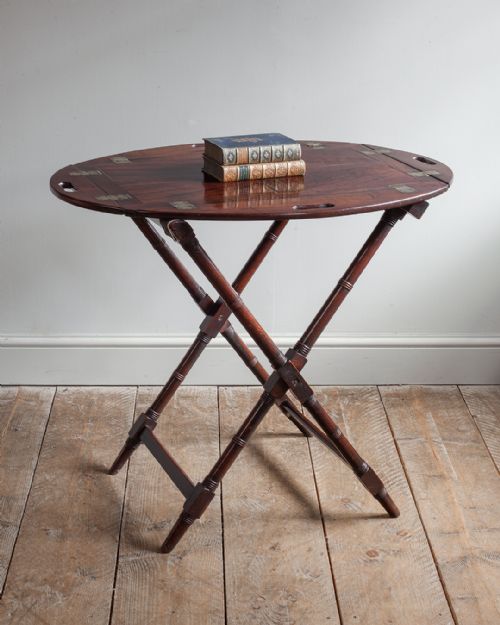


Dark Wood Butler Tray
A dark wood butler tray is a portable serving surface paired with a folding stand, offering versatile table space for modern living.
Dark Wood Butler Tray
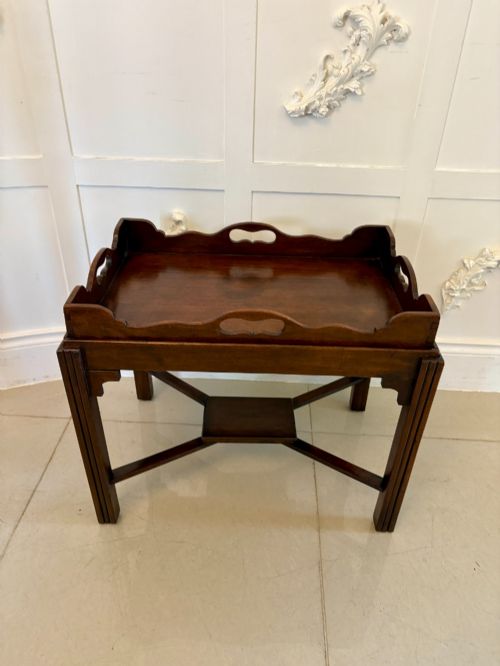
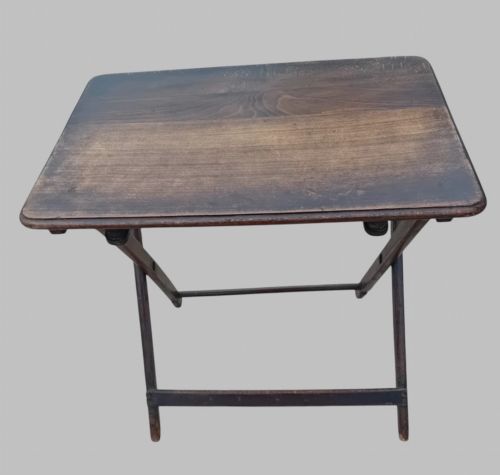
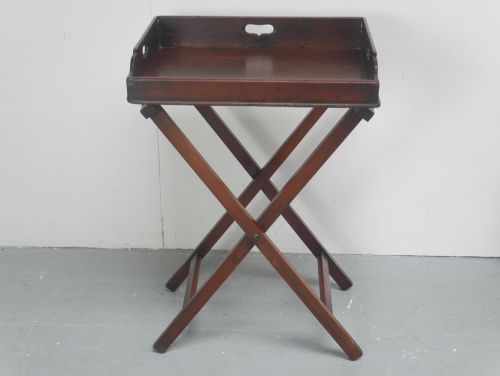
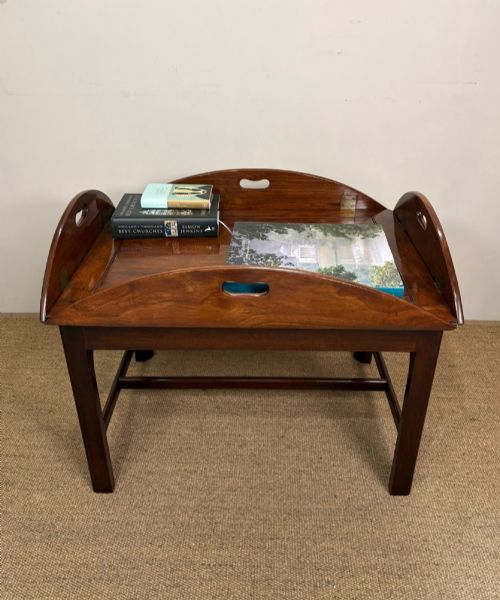
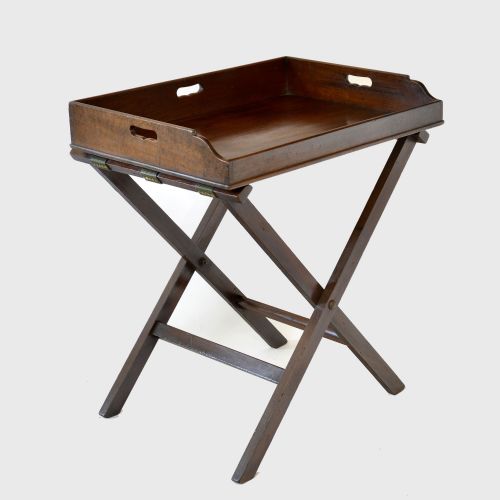
When searching for a dark wood butler tray, you encounter a practical serving platter traditionally lifted from its collapsible base for portable use. The forms range from portable trays with shaped or galleried rims to complete combinations set upon folding wooden stands.
The most common version on this page is the nineteenth-century mahogany tray paired with a matching stand, alongside twentieth-century adaptations serving as low coffee tables. These pieces span the Georgian, Victorian, and Edwardian periods, appearing in mahogany, oak, and rosewood.
Origins include English workshops, Anglo-Indian production, and continental European pieces, reflecting both formal dining utility and campaign-style travel requirements. Side tables, occasional tables, and low coffee tables also populate the selection.
How they were made
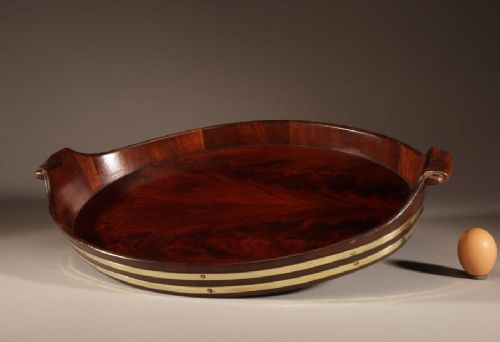
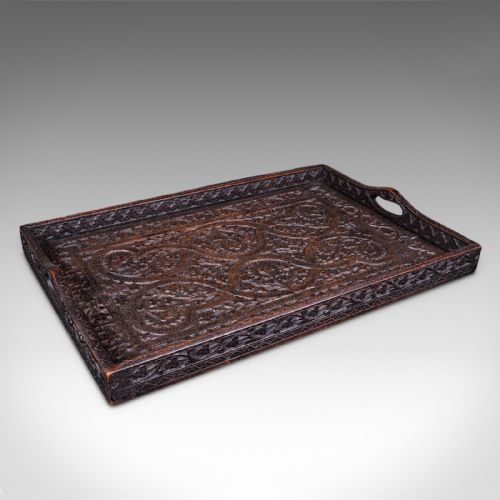
Construction relies heavily on dense hardwoods, principally mahogany, oak, and beech, selected for durability and finished to highlight deep natural grains. Coopered joints, scalloped edges, and hand-carved details appear on oval and rectangular serving platters.
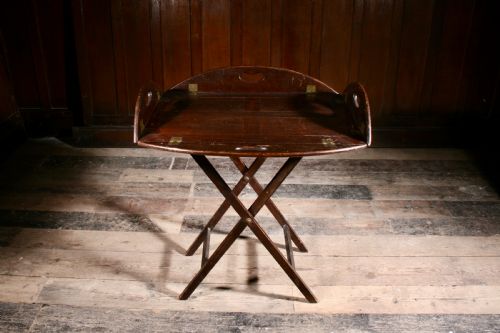
Brass hinges, corners, and handles provide structural reinforcement and folding mechanisms for campaign-style tables. Inlaid borders and silver mounts occasional supplement the dark timber surfaces on formal afternoon tea trays.
Dark Wood Butler Tray Retail Price Guide 2026
Typical asking prices for dark wood butler tray among the pieces listed under this phrase on Sellingantiques today, from the lower quarter to the upper quarter. They describe what is for sale here now, not the wider market.
Listings feature mahogany, oak, and rosewood across Georgian, Victorian, and Edwardian periods.
What varies in quality
The distinction between standard utility items and finer examples rests on the selection of timber and the precision of the joinery. Figured mahogany with rich patination sits at the upper end, alongside pieces bearing maker stamps or specialist coopered construction.
Proportion and the retention of the original matching stand dictate overall desirability. Trays that retain their authentic folding bases demonstrate superior integrity compared to married pieces assembled at later dates.
Gillows
The Dark Wood Butler Tray Glossary
- Butler tray
- A portable wooden serving tray, often featuring folding or hinged sides, designed to lift off its supporting stand.
- Campaign style
- Portable furniture engineered to fold or dismantle easily for military travel and field use.
- Coopered
- Wood staves joined edge to edge and bound with hoops, forming curved shapes such as oval serving trays.
- Galleries
- Raised wooden rims fitted around the perimeter of a tray to prevent items from sliding off during transit.
- Hongmu
- A category of dense, dark Chinese hardwoods utilised for traditional furniture and folding tray tables.
Dark Wood Butler Tray: Frequently Asked Questions
What is a butler tray?
A butler tray is a portable wooden serving platter designed to be lifted off a collapsible or stationary stand for serving food and drink.
Historically used in large households to transport items between rooms, these pieces combine a flat tabletop surface with handles or raised edges.
Are trays and stands original pairs?
Many surviving examples retain their original matching stands, particularly nineteenth-century campaign and folding iterations.
Some pieces represent later combinations where a period tray has been matched with a contemporary or associated stand of similar wood.
How do I use a butler tray today?
These pieces function effectively as coffee tables, side tables, or mobile serving surfaces in modern living spaces.
Removing the tray from its stand allows it to serve guests directly, while the folding base stores compactly when not in use.
How do I identify the period?
Dating relies upon timber selection, construction techniques, and stylistic markers such as Georgian scalloped edges or Victorian brass mounts.
Earlier eighteenth-century pieces display simpler, robust construction, whereas Victorian and Edwardian examples often incorporate elaborate inlays or turned supports.