
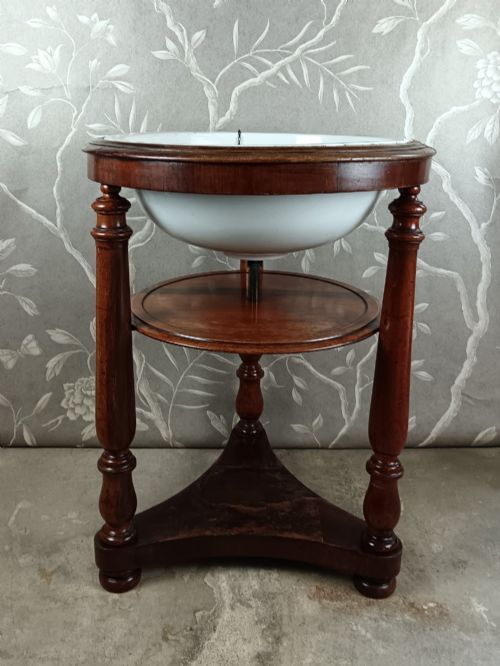


Dark Wood Bowl Stand
These dark wood bowl stand pieces offer practical elegance, providing sturdy support for treasured vessels.
Dark Wood Bowl Stand
When you search for a dark wood bowl stand, you are looking at items designed to hold basins, vases, and tazzas securely off the floor or table. The examples listed on this page span several centuries, including pieces from the Georgian, Edwardian, and nineteenth-century periods.
The forms vary considerably across the selection, ranging from functional washstands and basin stands to decorative vase stands and treen bowl stands. You are most likely to encounter nineteenth-century mahogany or hardwood examples alongside traditional Chinese carved pieces and Welsh vernacular turnery.
Many of these objects serve multiple purposes, functioning as corner tables, tea poys, or shaving stands depending on their original domestic context. Their dark wood construction provides a uniform aesthetic that complements traditional interiors.
How they were made
Makers utilised dense timbers such as mahogany, rosewood, fruitwood, and general hardwood, often shaping the wood through traditional turning techniques. Some items incorporate secondary materials like brass, ceramic, and mother-of-pearl inlay to accent the primary dark wood structures.
Construction methods range from vernacular turned woodwork to sophisticated joinery found in campaign items and period washstands. Carved Chinese hardwood stands demonstrate intricate detailing, contrasting with the simpler turned forms of Welsh treen and European washstands.
Object types on this site include washstands, tea poys, tazzas on stands, and traditional Chinese carved hardwood vase supports.
What varies in quality
The standard of a dark wood bowl stand depends heavily on the precision of the turning and the selection of the timber. Dense, well-figured mahogany or rosewood demonstrates superior material choice compared to general hardwood or beech.
Refinement in carving and inlay work separates standard utility items from finer decorative pieces, such as those featuring mother-of-pearl or gold lip shell. Structural integrity and the harmony of proportions between the stand and its intended vessel dictate the overall success of the piece.
The Dark Wood Bowl Stand Glossary
- Treen
- Small wooden domestic objects made by turning or carving. These items often display the distinct grain of fruitwood or hardwood.
- Tazza
- A shallow bowl or saucer raised on a stem and foot, frequently displayed on stands. They serve a primarily decorative or serving function.
- Washstand
- A piece of furniture designed to hold a basin and jug for personal washing. Many examples from the Georgian and Victorian eras feature dedicated cut-outs for bowls.
- Tea poy
- A small box or stand used for storing tea, often mounted on a central pillar with tripod legs. They reflect the high status of tea in historical households.
- Campaign
- Furniture made in sections for easy transport by military officers. These pieces often feature brass corners and collapsible elements.
Dark Wood Bowl Stand: Frequently Asked Questions
What is a dark wood bowl stand?
A dark wood bowl stand is a piece of furniture or treen designed to support basins, vases, or tazzas securely. They appear in various forms, from utilitarian washstands to decorative carved supports.
These items utilise timbers like mahogany, rosewood, and fruitwood. Their primary function is elevating vessels for display or daily use within the home.
How were these stands used historically?
Historically, these stands served practical domestic roles in bedrooms, parlours, and dressing rooms. Washstands held basins for morning ablutions, while vase and bowl stands displayed precious ceramics.
Some variations, such as tea poys, kept valuable tea leaves secure under lock. Others functioned as portable campaign equipment for officers on the move.
How do I date a wooden bowl stand?
Dating relies on observing the timber species, construction techniques, and stylistic markers associated with specific periods like the Georgian or Edwardian eras. Turned details and joinery methods often indicate the century of manufacture.
Comparative analysis with documented washstands and vase stands helps narrow down the timeframe. Regional styles, such as Welsh vernacular turning, also provide chronological clues.
How should I care for dark wood stands?
Maintenance involves keeping the timber away from direct heat sources and excessive moisture to prevent warping or splitting. Gentle dusting with a dry cloth preserves the polished surface.
Applying appropriate wood waxes periodically helps nourish dense hardwoods like mahogany and rosewood. Avoid harsh chemical cleaners that might strip the historic finish.