


Dark Walnut Accent Chairs
These dark walnut accent chairs combine rich timber with upholstery, needlepoint, or cane, offering functional seating with substantial period presence.
Dark Walnut Accent Chairs
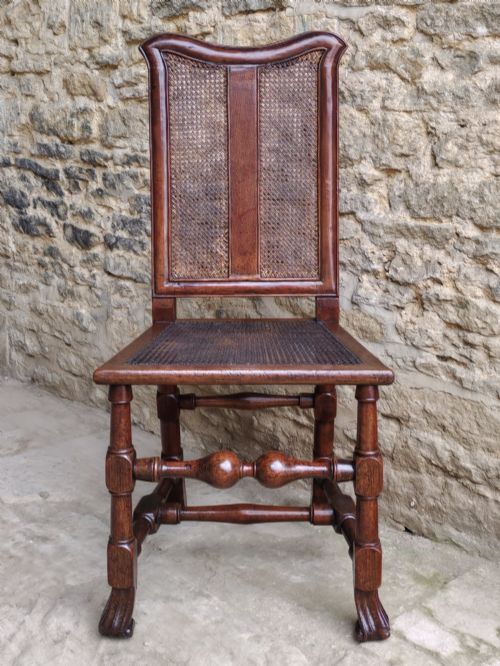
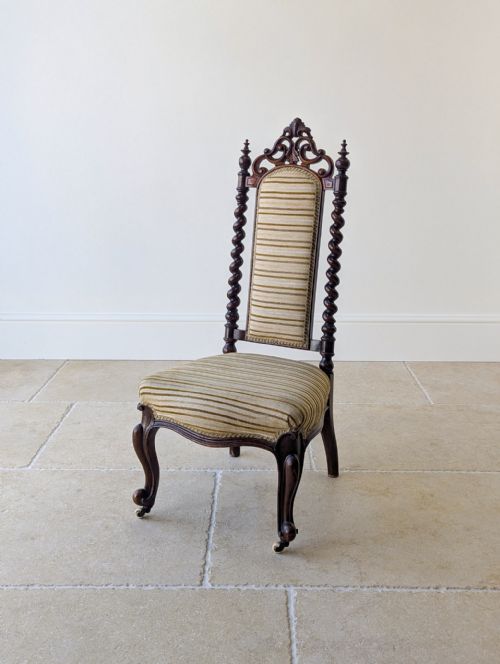
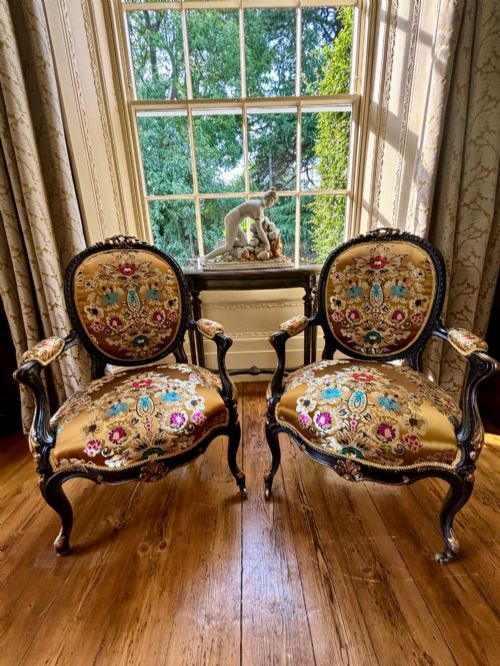
Dark walnut accent chairs span several centuries of craftsmanship, appearing as armchairs, side chairs, hall chairs, and corner chairs across this selection. Buyers find pieces ranging from late seventeenth-century English and Italian Baroque designs to Georgian, Victorian, and later nineteenth-century interpretations.
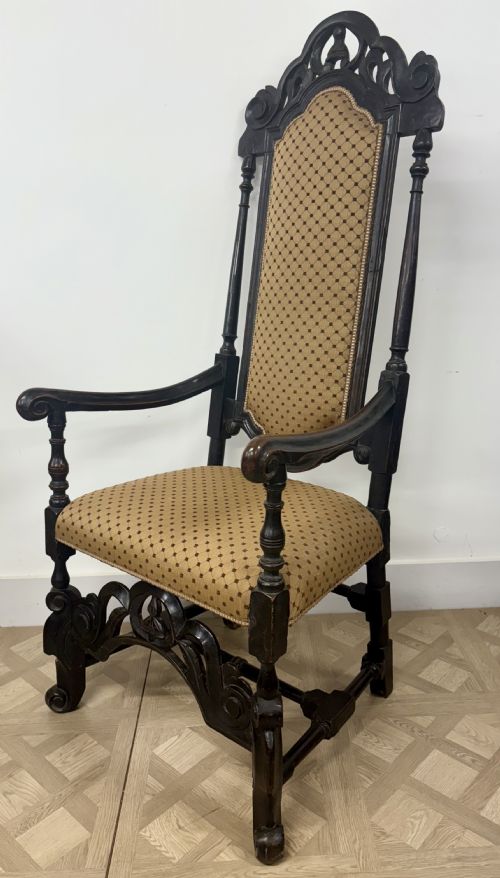
Most examples rely on the deep, dark tones of walnut timber, often paired with textile, leather, velvet, tapestry, or cane seating. These varied forms serve as decorative yet usable focal points in a room, drawing on historical styles like Carolean and Louis XV.
Materials and Construction
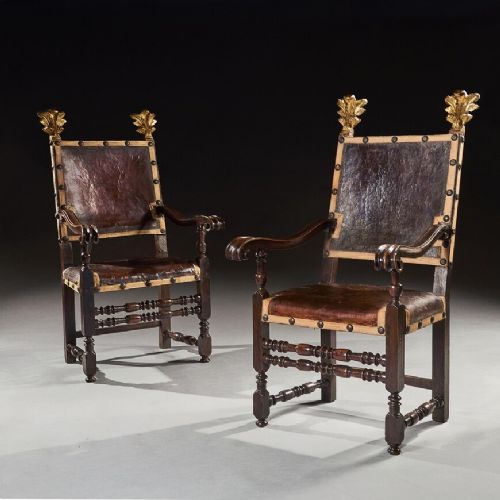
Makers utilised solid walnut for the structural frames, often selecting dense timber that permitted deep carving, crisp turning, and parcel-gilding. Bobbin turning, panel carving, and marquetry inlay required precise hand woodworking techniques across both English and continental workshops.
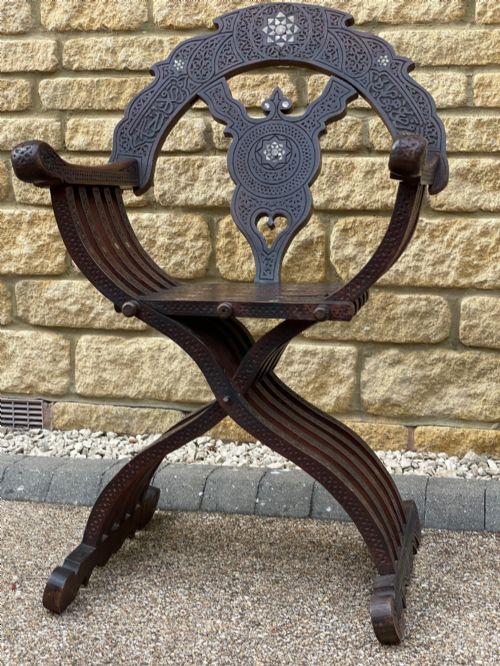
Upholstery and decorative elements combined walnut frames with fabric, leather, velvet, and needlepoint tapestry panels. Details such as brass mounts, mother-of-pearl inlay, and bone inlay added textural contrast to the dark wood surfaces.
Caning provided a lightweight alternative to solid upholstery on seats and backs, particularly in French and English side chairs. Polychrome paint and parcel-gilding further modified the appearance of the raw walnut on specific Baroque and Carolean-taste pieces.
Cock-fighting stools provide low, specialised perches where gentlemen once sat backward to watch sporting events.
Factors of Quality
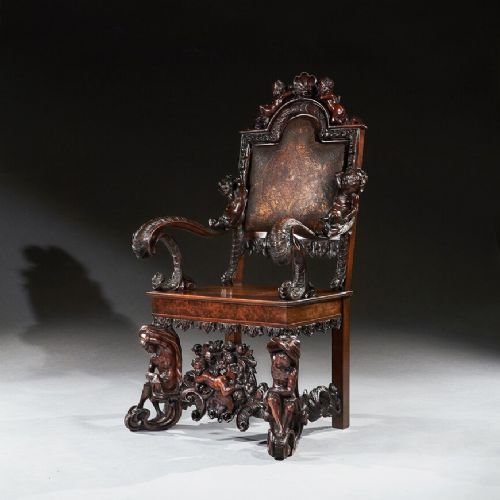
The depth, precision, and crispness of the hand-carved detail dictate the distinction between standard production and exceptional workmanship. Figural carvings and elaborate ornamentation reflect the skill of individual carvers rather than routine workshop output.
The integrity of the original walnut timber and the retention of period elements, such as early upholstery or authentic bone and mother-of-pearl inlays, elevate the standing of a piece. Replacement components or alterations to the structural frame alter the historical cohesion of the chair.
James Shoolbred
The Dark Walnut Accent Chairs Glossary
- Caquetoire
- A sixteenth or seventeenth-century conversation chair featuring a high, narrow back and a trapezoidal seat designed to accommodate bulky Tudor garments.
- Marquetry
- The art of applying decorative pieces of veneer to a structure to form intricate patterns, often utilising contrasting woods and materials.
- Needlepoint
- A type of canvas work embroidery executed with a yarn threaded through a grid mesh, frequently found on period chair seats and backs.
- Parcel-gilding
- The practice of applying a thin layer of gold leaf to specific highlighted portions of a carved wooden object rather than the entire surface.
- Bobbin turning
- A woodwork technique that shapes the timber into a series of rounded, spool-like spheres resembling bobbins used in lace making.
Dark Walnut Accent Chairs: Frequently Asked Questions
How do I identify a 17th-century walnut armchair?
Seventeenth-century chairs typically display robust turned members, such as bobbin or spiral legs, combined with heavy framework and pegged joints. The timber patination shows deep oxidation accumulated over centuries.
Decoration often includes geometric panel carving or high-relief motifs characteristic of Baroque and Carolean styles, sometimes paired with original leather or caning.
What is a prayer chair?
A prayer chair, or prie-dieu, is a low-seated Victorian or earlier devotional chair featuring an elevated, padded top rail designed for kneeling or resting arms during prayer.
These pieces usually incorporate turned walnut supports and upholstered needlepoint or velvet panels suited to domestic devotional spaces.
Can I use these antique chairs daily?
Most period chairs are structurally sound for everyday seating, provided the joints remain tight and the weight capacity respects the historic construction. Walnut is a durable hardwood that withstands regular use when maintained properly.
Delicate exhibition pieces or heavily inlaid items benefit from more cautious placement to protect fragile veneers and historic textiles.
How do I clean walnut chair frames?
Maintenance requires a soft, dry cloth to remove dust without disturbing the historic wax or polish on the walnut surface. Avoid modern silicone sprays or harsh chemical cleaners that strip the aged patina.
Period timber thrives on occasional microcrystalline wax applications to nourish the grain and protect against moisture.