






Dark Teak Pedestal Table
A dark teak pedestal table brings rich colonial craftsmanship and intricate hand-carved detail into a modern interior.
Dark Teak Pedestal Table
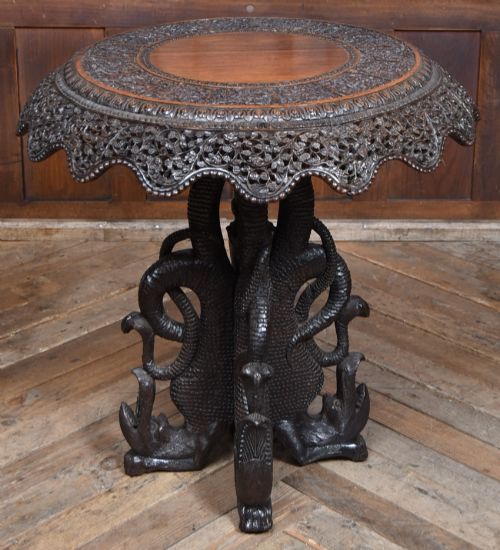
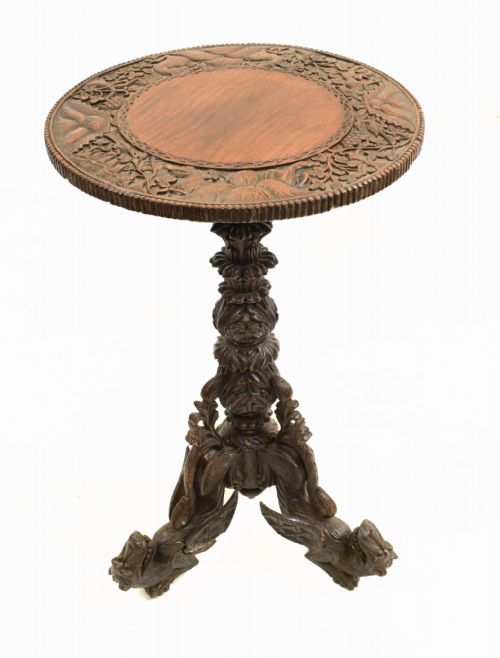
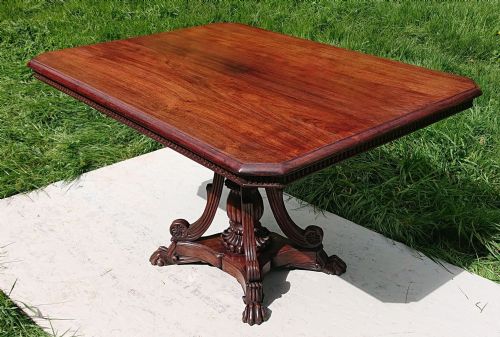
A dark teak pedestal table groups together heavily carved occasional, side, centre, and tilt-top tables originating mainly from nineteenth-century British colonial trade. These pieces reflect distinct regional aesthetics, including Anglo-Indian, Anglo-Burmese, and Chinese Export traditions.
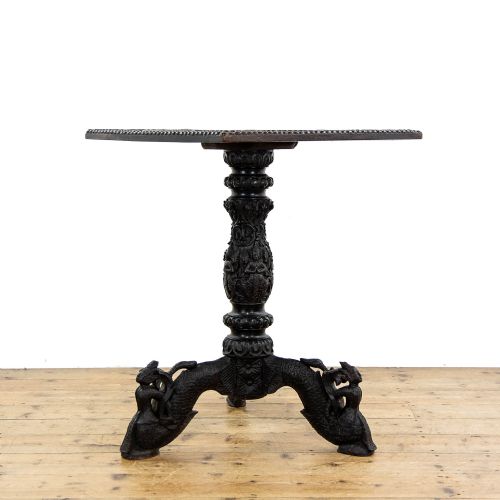
The most common examples on this page are compact Burmese side tables and Indian occasional tables supported by central pillars, tripod bases, or figural supports like elephants and camels. They function well as lamp stands, coffee tables, or display pieces.
Dated pieces span the Victorian era, specifically the decades between eighteen-twenty and nineteen-twenty, utilising dense tropical hardwoods rather than lighter European timbers.
Materials and construction methods
Makers utilised dense tropical timbers such as teak, padouk, and rosewood, which tolerate intricate carving without splitting and take a dark, lustrous polish. Some variations incorporate contrasting inlays of bone or feature inset marble tops.
Construction relies on traditional joinery combined with deep relief carving by hand. Artisans utilised chisels and gouges to pattern surfaces with dense foliage, figures, and geometric borders.
Assessing craftsmanship and design
Quality rests upon the depth, crispness, and complexity of the hand carving across the top and pedestal. Finer examples display deep undercut foliage and well-defined figural elements rather than shallow, mechanical stamping.
Structural stability and the selection of timber grain also separate standard production from superior pieces. Heavier, well-figured teak and padouk timbers provide better weight distribution and durability on tilt-top and centre table mechanisms.
The Dark Teak Pedestal Table Glossary
- Tilt top table
- A table with a mechanism that allows the tabletop to pivot to a vertical position when not in use. This design originally saved space in domestic interiors.
- Padouk
- A heavy, durable tropical hardwood with a reddish-brown hue that darkens with age. It is frequently found in mid-nineteenth-century colonial furniture.
- Anglo-Indian
- A descriptive term for furniture made in India during the British colonial period, often combining European forms with local carving traditions.
- Pedestal table
- A table supported by a single central pillar rising from a base or feet. This configuration maximises legroom around the perimeter.
- Centre table
- A freestanding table finished on all sides, designed to stand in the middle of a room rather than against a wall.
Dark Teak Pedestal Table: Frequently Asked Questions
How do I style a dark teak pedestal table?
Pair the dark timber with neutral walls and simpler modern furnishings to let the intricate carving stand out without overwhelming the room.
These tables work well as central display surfaces for lamps or plants in hallways and living spaces.
What is the difference between Burmese and Indian tables?
Burmese pieces often feature extremely dense, deep relief carving depicting foliage and figures across the entire surface. Indian regional pieces frequently incorporate specific figural supports such as elephants or camels alongside geometric or floral motifs.
Both styles utilise dark tropical hardwoods and date predominantly from the nineteenth century.
Are tilt top tables stable?
Tilt top tables rely on a catch mechanism beneath the top to secure the surface in a horizontal position during daily use. When properly adjusted, the central pillar and tripod base provide steady support for lamps and decorative items.
The pivot mechanism should be handled with care when moving or cleaning the furniture.
How do I care for antique teak furniture?
Dust the carved surfaces regularly with a soft, dry cloth to prevent dirt from settling in the deep recesses of the wood. Avoid placing the timber in direct sunlight or near heat sources to prevent drying and splitting.
Occasional application of appropriate natural wax helps maintain the dark lustre of the grain.