
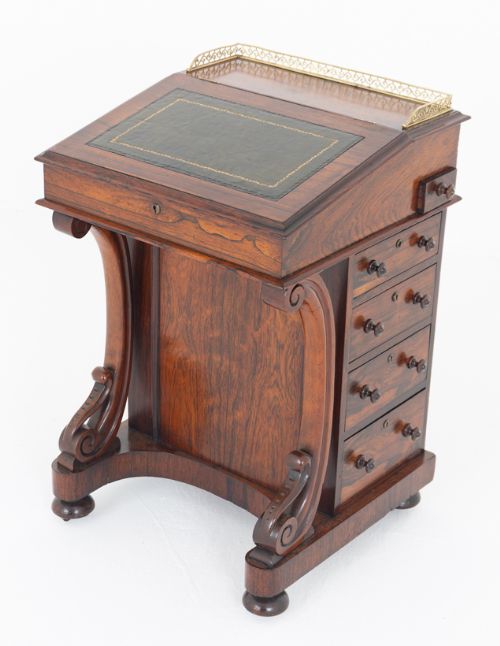


Dark Rosewood Writing Slope
A dark rosewood writing slope offers a portable and beautifully figured desk surface, prized by collectors for its rich timber and clever internal compartments.
Dark Rosewood Writing Slope
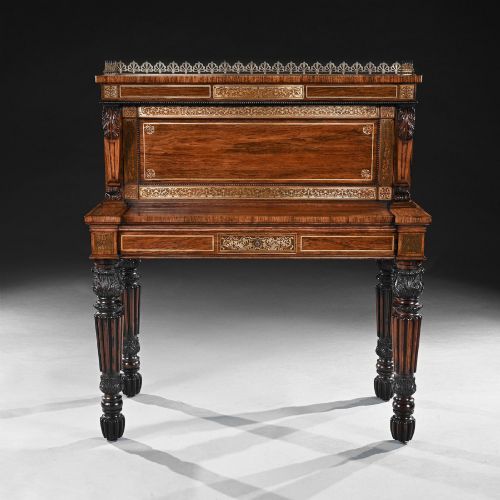
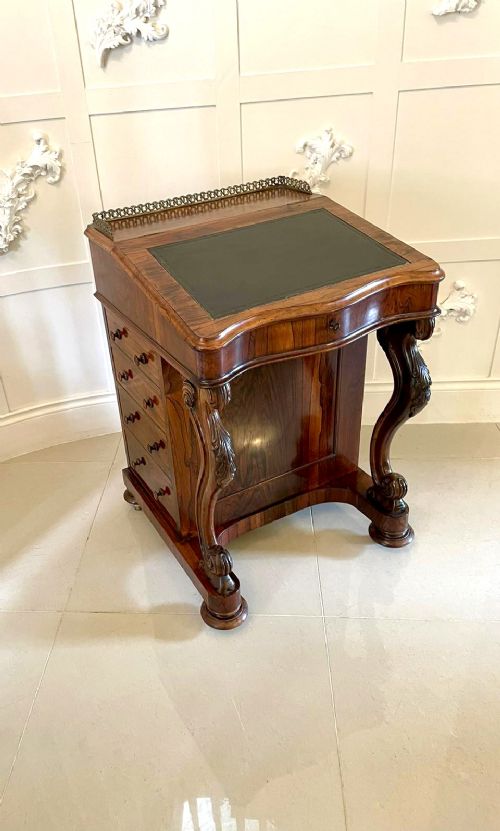
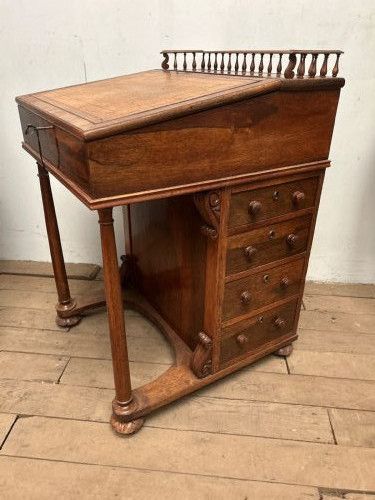
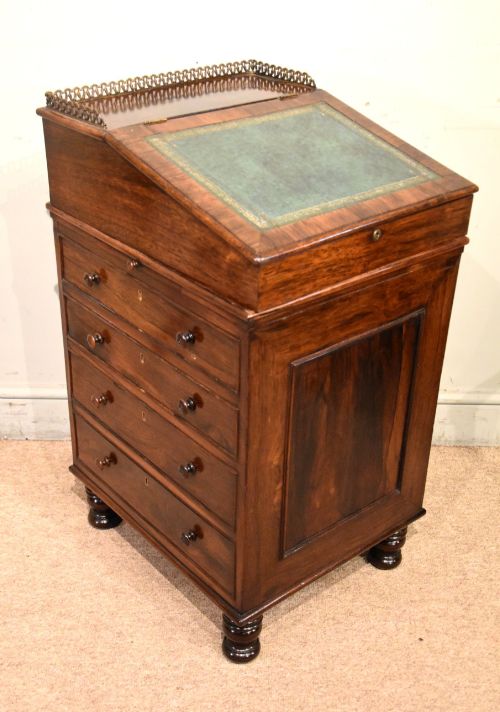
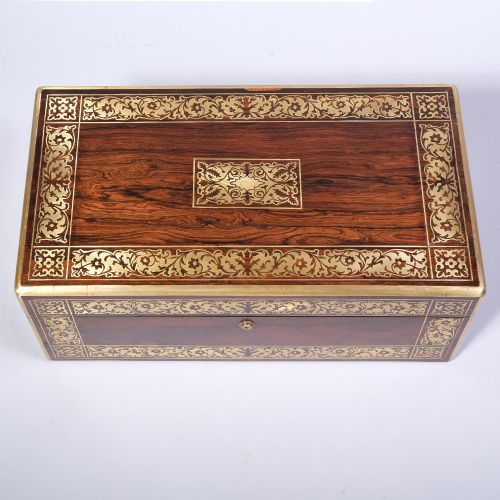
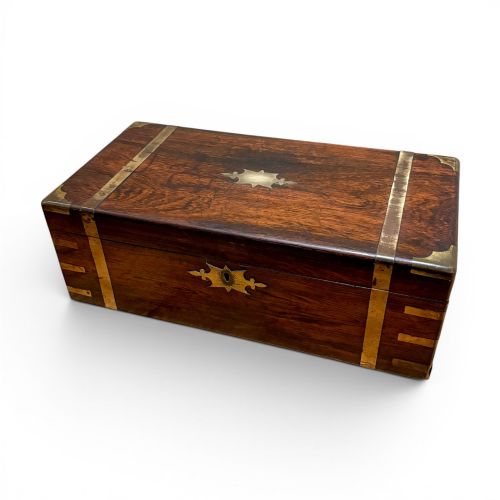
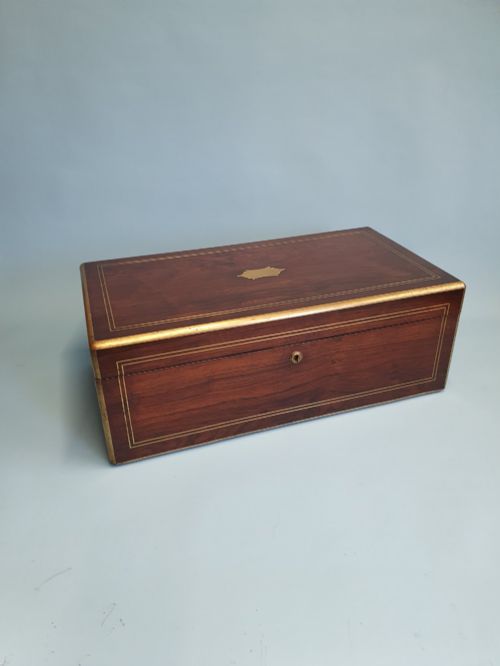
A dark rosewood writing slope is a portable writing desk designed to fold open and reveal a sloping surface lined for correspondence. The pieces appearing here span the Georgian, Regency, William IV, and Victorian periods, often taking the form of campaign boxes or freestanding davenports.
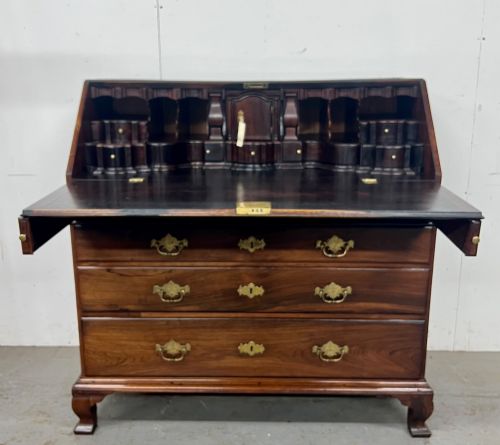
Makers shaped these boxes to serve travellers and writers alike, incorporating secret drawers, inkwells, and storage compartments beneath the hinged writing plane. The selection relies heavily on nineteenth-century examples alongside occasional eighteenth-century Iberian bureaux.
Buyers encounter everything from compact table-top boxes bound in brass to substantial Davenport desks with sliding tops. Each variation reflects the evolving domestic and travel habits of past centuries, united by the use of dense, dark timber.
Materials and construction methods
Cabinet makers utilised dense rosewood veneers over firmer secondary woods, frequently selecting Brazilian rosewood for its deep colour and dramatic grain patterns. Solid timber construction appears on select regional pieces, such as eighteenth-century bureaux.
Brass featured heavily in the construction, serving both structural and decorative purposes through corner mounts, inlay strips, and protective binding designed to withstand travel. Interiors combined leather writing surfaces with mahogany or cedar secondary woods for drawers.
Detailing often included mother-of-pearl accents, boxwood inlay, and tortoiseshell highlights, requiring precise hand-cutting to embed decorative motifs directly into the dark wood surface.
Brass binding and inlay appear frequently across nineteenth-century examples, contrasting sharply with the deep brown and purple hues of the rosewood grain.
Distinctions in craftsmanship
Quality rests upon the crispness of the brass inlay and the precision with which internal secret compartments operate. Superior examples display symmetrical grain matching across the exterior panels.
The integration of original working locks, keys, and fitted leather surfaces elevates a piece above standard utility boxes. Finer pieces demonstrate robust structural joinery that prevents timber shrinkage or warping over generations of use.
Gillows Oxford Street Workshop
The Dark Rosewood Writing Slope Glossary
- Writing slope
- A portable box with a hinged sloping lid that opens to reveal a flat or angled surface for writing. These boxes often include compartments for pens, ink, and stationery.
- Davenport
- A small pedestal desk featuring a sloped writing surface above a bank of drawers. The form gained popularity during the Regency and Victorian eras.
- Campaign box
- A sturdy box or desk built for military or travel use, typically reinforced with brass corners and flush carrying handles to withstand rough transit.
- Secret drawers
- Concealed compartments hidden behind false panels or accessed via clever spring mechanisms within the interior of a desk or slope.
- Boxwood inlay
- The technique of embedding contrasting pale boxwood strips into the dark rosewood surface to form geometric or floral patterns.
Dark Rosewood Writing Slope: Frequently Asked Questions
How do I use a writing slope today?
A dark rosewood writing slope functions well on a modern desk as a storage chest for letters, fountain pens, and small notebooks. The hinged lid can still be propped open to display documents or hold a tablet.
Opening the slope reveals compartments that accommodate modern stationery items just as effectively as nineteenth-century quills and inkwells. They bring historical character and practical organisation into a contemporary study.
Were these slopes made for travel?
Many examples were constructed specifically for travel, featuring robust brass bindings and flush handles known as campaign mounts. These reinforced edges protected the dense rosewood body from the bumps of carriage and ship journeys.
Other versions remained stationary on drawing room tables or large desks, lacking the heavy brass mounts of true campaign pieces. Checking for inset brass handles helps distinguish travel boxes from home writing desks.
How do I tell Regency from Victorian pieces?
Regency slopes, dating from the early nineteenth century, frequently showcase bold brass inlay and clean architectural lines. The rosewood selected during this era often displays high-contrast figuring and rich dark tones.
Victorian pieces tend to introduce mother-of-pearl ornamentation, more complex internal stationery arrangements, and heavier proportions. Davenport desks also proliferated during the Victorian period with varied drawer configurations.