


Dark Rosewood Plant Stand
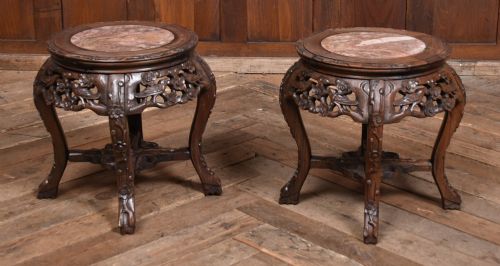
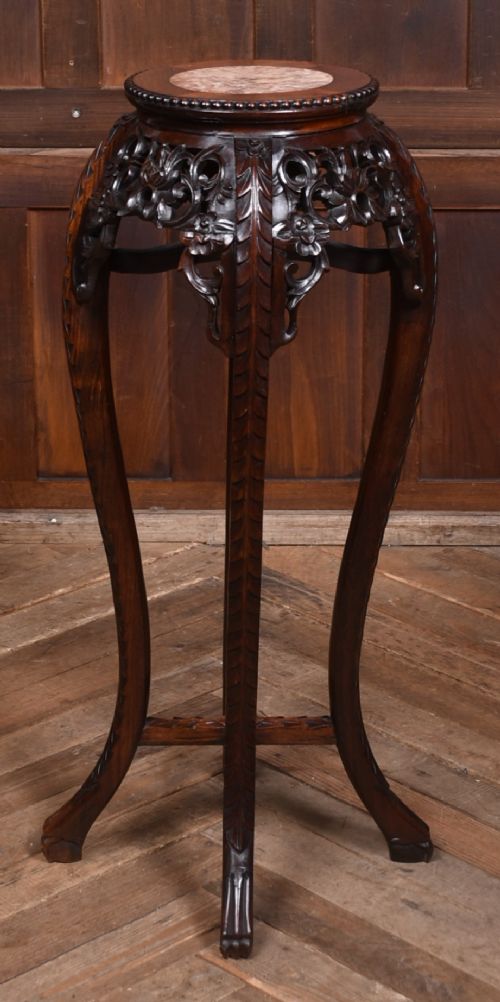
A dark rosewood plant stand elevates heavy pottery and sculpture using dense timbers and carved detailing.
Dark Rosewood Plant Stand
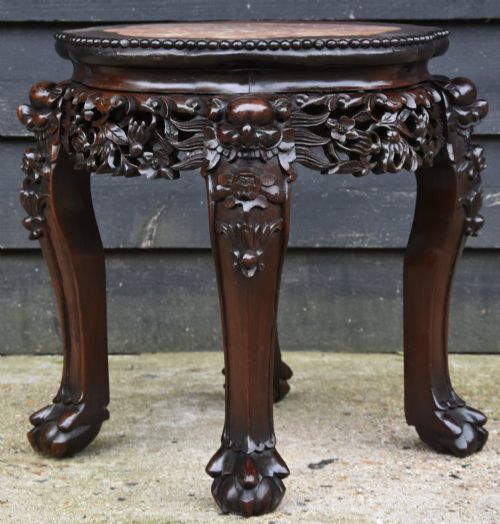
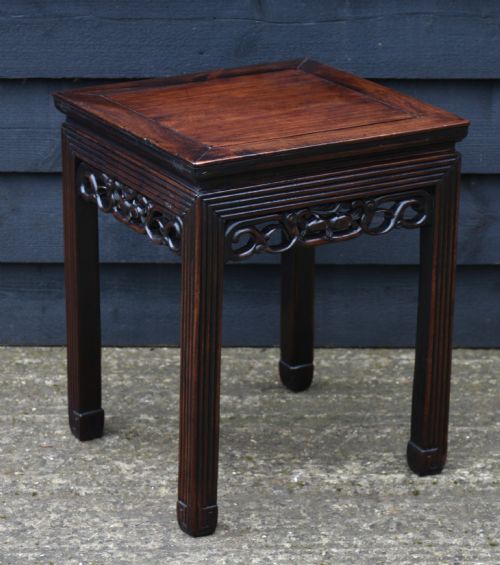
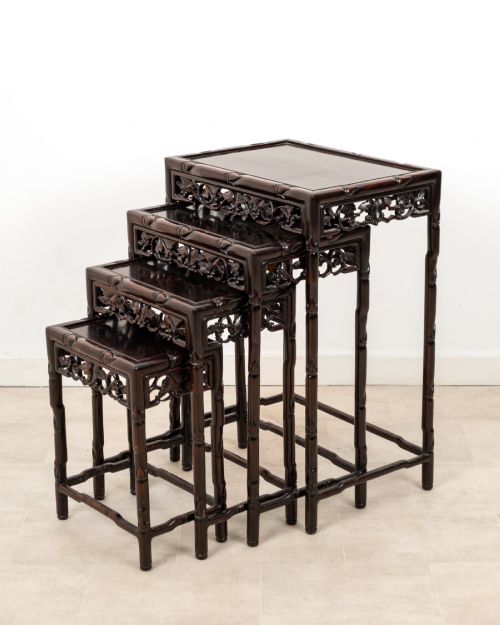
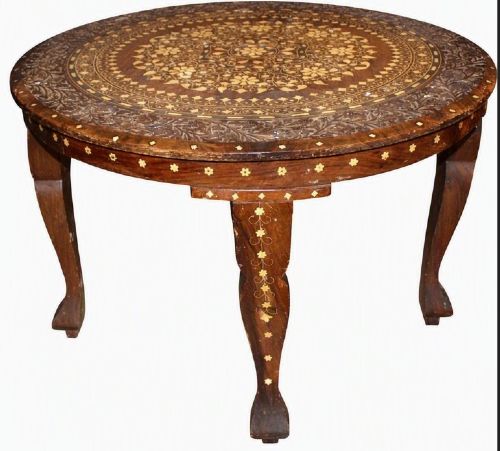
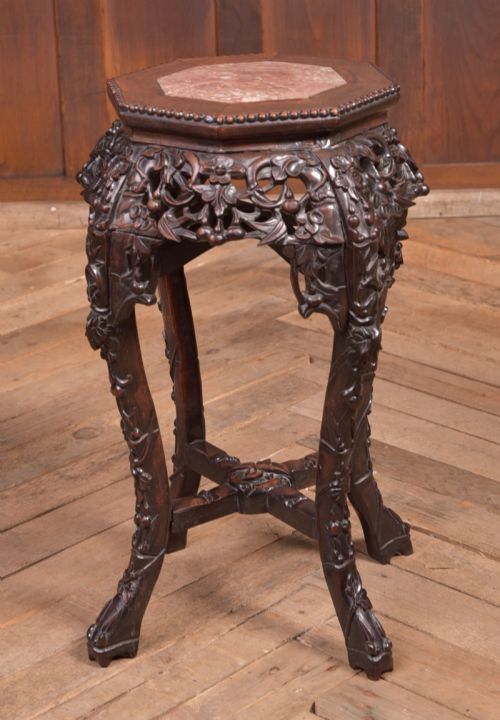
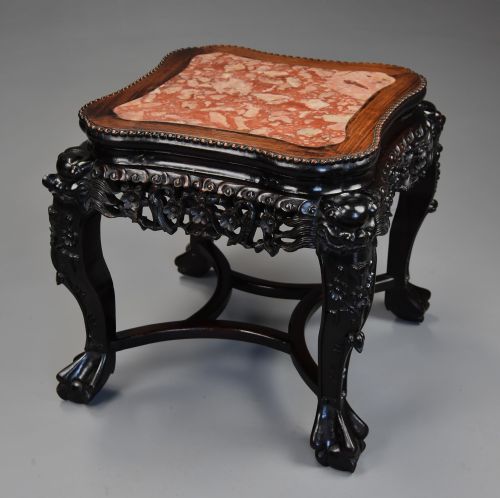
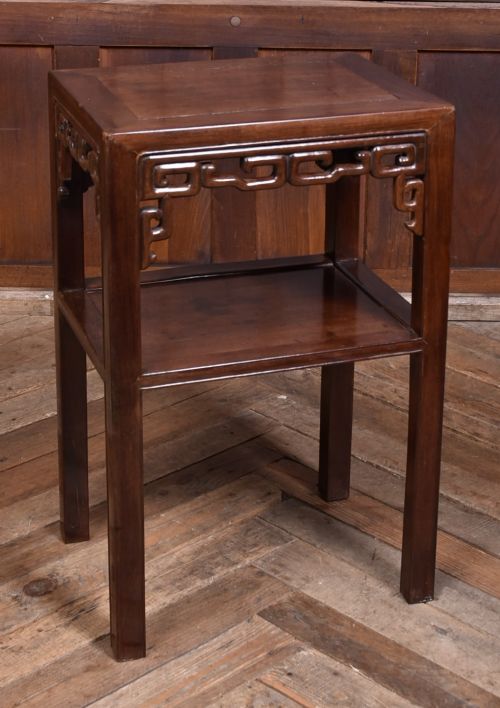
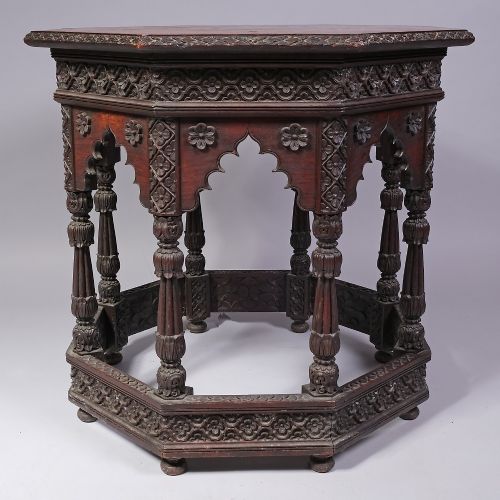
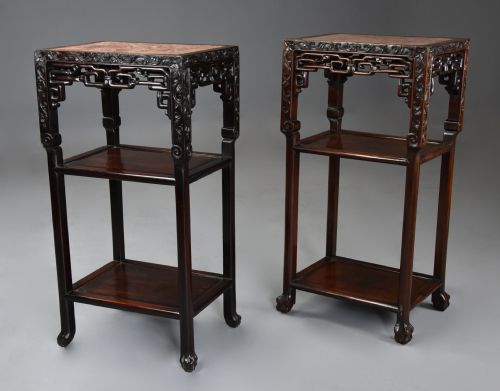
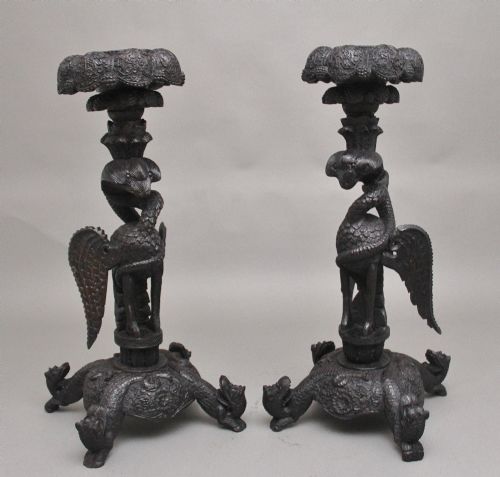
A dark rosewood plant stand takes several forms across the inventory, appearing most frequently as a circular or square pot stand, torchere, or low pedestal table. These pieces emerge primarily from 19th-century Chinese workshops and Anglo-Indian makers, alongside occasional Victorian and Regency British examples.
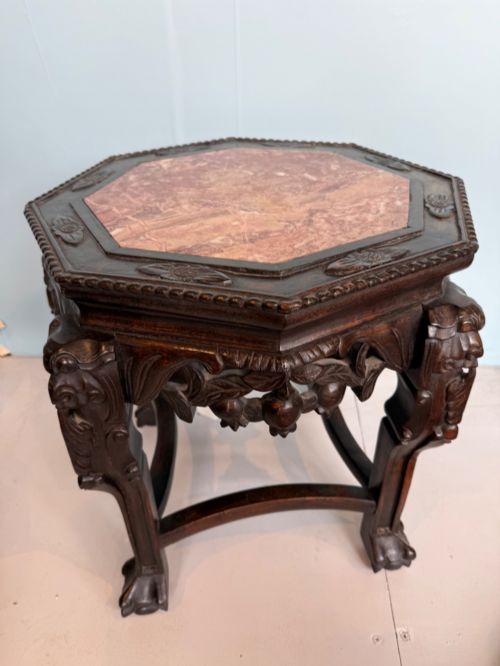
Makers designed these items to support heavy ceramic jardinieres, vases, and interior foliage within formal rooms. The selection includes square low tables, octagonal side tables, and tall pedestal stands with distinct oriental carving.
The dominant material signature combines heavy rosewood, hardwood, and hongmu with inset rouge marble tops. Buyers encounter single stands and matched pairs intended to anchor corners or frame fireplace hearths.
Materials and construction methods
Craftsmen built these items using dense imported timbers including rosewood, padouk, and hardwood, selected for their structural strength under heavy pottery. Frames often incorporate inset marble panels or solid wood tops designed to resist moisture from plant pots.
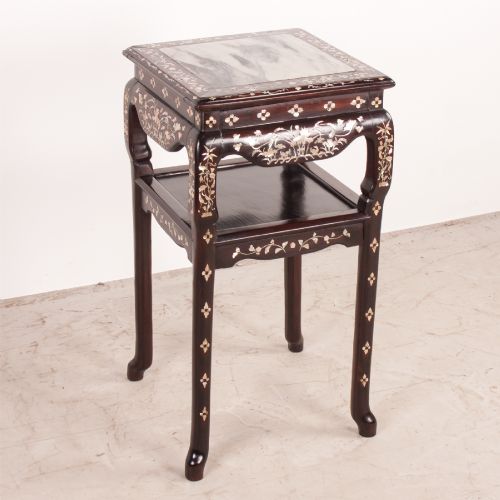
Decoration relies on intricate hand carving and specialised surface ornamentation. Workshops integrated bone inlay, mother of pearl detailing, and brass wire work into the timber frames.
Joinery techniques accommodated the dense properties of hardwood, utilising precise mortise and tenon joints without relying on modern fasteners.
The inventory combines 19th-century Chinese carved hardwood stands with Anglo-Indian bone-inlaid tables and Victorian rosewood pedestals.
Distinguishing quality in stands
Quality rests upon the crispness of the hand carving and the selection of the timber. Dense rosewood and heavy hongmu with deep, undercut floral or dragon motifs represent the highest standard of execution.
The integration of secondary materials dictates overall refinement. Fine examples feature flawless fitted marble inset tops without hairline fractures, alongside precise mother of pearl, bone, or brass inlay work that sits flush with the polished wood surface.
Gillows·Liberty & Co
The Dark Rosewood Plant Stand Glossary
- Jardiniere stand
- A tall or low table specifically built to support a ceramic flower pot or plant container. These pieces typically feature water-resistant marble or tiled tops.
- Torchere
- A tall standing pedestal designed to hold a light source or decorative vase. The form originates in earlier lighting stands but adapted to display sculpture and large floral arrangements.
- Hongmu
- A traditional Chinese term translating to red wood, denoting dense tropical hardwoods used in fine furniture. It provides the heavy weight and dark tone seen in many antique plant stands.
- Marble inset
- A stone slab fitted directly into the wooden top of a table. This prevents water damage from potted plants and creates a cool, decorative surface.
Dark Rosewood Plant Stand: Frequently Asked Questions
What is a dark rosewood plant stand used for?
These tables support heavy ceramic pots, bronze urns, and decorative porcelain inside the home. The elevated surface protects flooring while displaying plants at a comfortable viewing height.
Historically, makers constructed them specifically to bear the weight of large interior foliage and ornamental jardiniere bowls.
How do I care for marble and rosewood?
Clean the timber surfaces using a soft cloth and avoid commercial silicone polishes that build up over time. Natural wax maintains the deep grain of the dense hardwood.
Protect the inset marble from acidic liquids and moisture by wiping spills immediately. Use protective felt pads beneath heavy ceramic containers.
How do I date a Chinese plant stand?
Nineteenth-century examples display dense tropical hardwoods like hongmu and padouk joined with traditional woodworking methods. Carving depth and tool marks indicate the period of manufacture.
Later 20th-century reproductions often utilise lighter secondary timbers and machine-cut joinery lacking the weight and hand-finished detail of antique pieces.
Are these stands strong enough for heavy pots?
The dense rosewood and hardwood construction provides exceptional structural stability for heavy stone and ceramic vessels. Solid joinery ensures the frames support downward weight without loosening.
Check that the marble insert sits evenly within its wooden rebate to distribute the weight across the entire frame.