
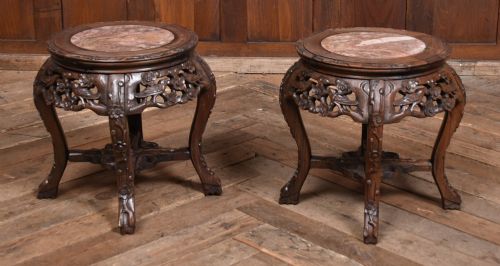
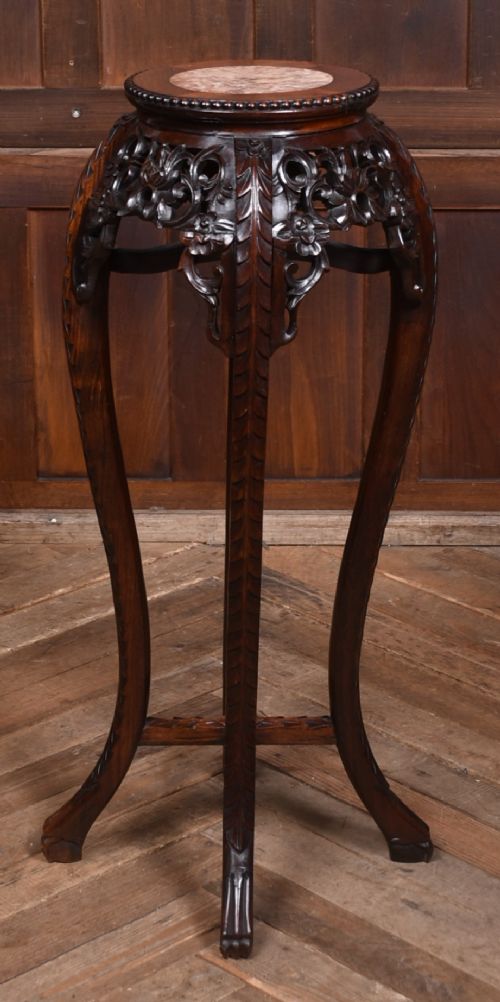

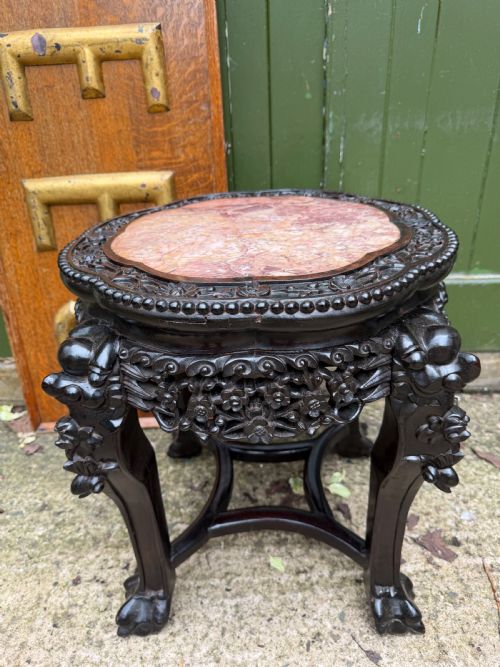


Oriental Jardiniere Table
An oriental jardiniere table brings a carved wooden frame and a cool stone inset into a room to elevate a heavy planter.
Oriental Jardiniere Table
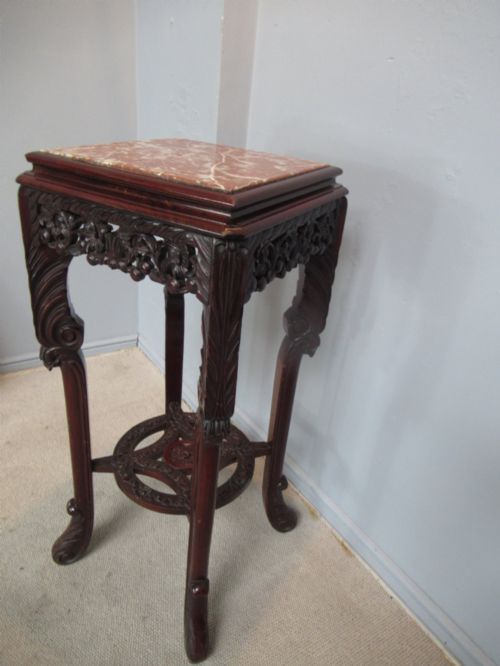
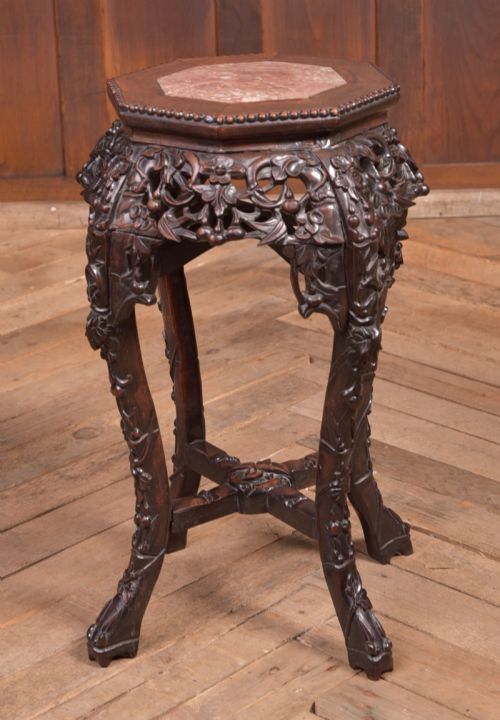
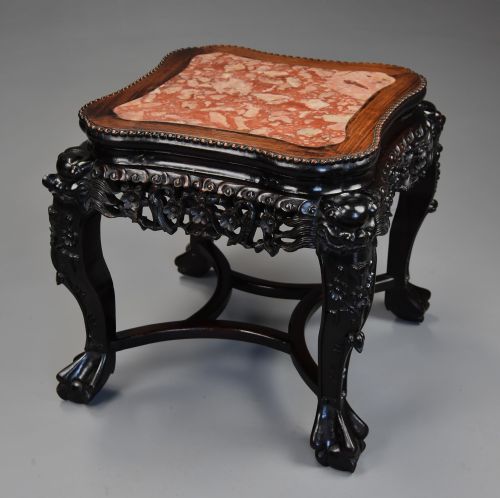
An oriental jardiniere table is a low stand or pedestal designed to hold a plant pot, vase, or urn, frequently found with an inset marble top. These pieces appear across nineteenth-century and early twentieth-century dates, spanning Chinese export and Meiji period Japanese workshops.
The form functions primarily as a plant stand, low occasional table, or vase pedestal, often constructed with a circular or shaped top to match the vessel it supports. Most examples rely on heavy tropical woods and detailed carving to bear the weight of stone and ceramic pots.
Materials and construction
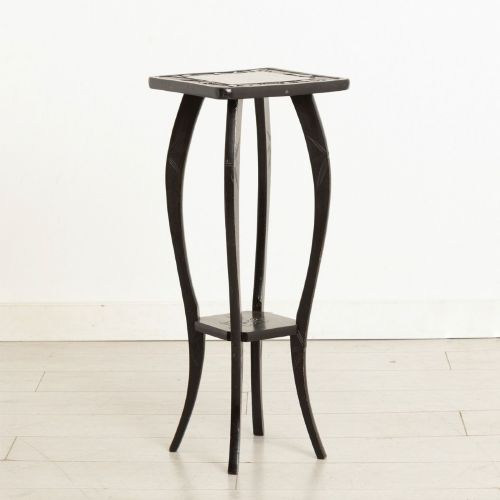
Cabinetmakers utilised dense timbers such as hardwood, rosewood, padouk, and ebonised wood, carving the aprons and legs deeply with floral or scrolling motifs. These rigid woods provided the structural strength required to support heavy inset stone panels without warping.
Varying types of marble, including variegated rouge stone, were cut and polished to fit snugly into carved wooden recesses at the centre of the top. Frames were joined using traditional carpentry methods that locked the heavy legs and low stretchers securely together.
Judging quality
Quality rests in the depth and crispness of the hand carving, where sharper undercut foliage distinguishes superior workshops from simpler production pieces. The selection and fit of the marble top also dictate grade, with well-figured stone sitting flush against the surrounding timber frame.
Weight and density of the timber indicate the grade of the piece, as heavier rosewood and padouk command greater utility than softer secondary woods. The structural tightness of the joints and the balance of the cabriole or straight legs determine overall stability under load.
Liberty of London
The Oriental Jardiniere Table Glossary
- Jardiniere stand
- A tall or low table specifically built to support a decorative ceramic plant container or flower pot. These stands elevate heavy foliage off the floor.
- Hongmu
- A traditional Chinese term describing dense, dark hardwoods used for fine furniture and decorative objects. This category includes dense species like rosewood and padouk.
- Padouk
- A heavy, durable tropical timber valued for its reddish hue and strength in carved furnishings. It resists splitting under the weight of stone insets.
- Meiji period
- The era in Japanese history spanning from 1868 to 1912, known for fine export crafts and decorative arts. Works from this period often display meticulous woodworking.
- Ebonised wood
- Timber treated with a dark finish to imitate the appearance of solid ebony. This technique was popular in nineteenth-century decorative stands.
Oriental Jardiniere Table: Frequently Asked Questions
What was an oriental jardiniere table used for?
These tables served primarily as sturdy pedestals for heavy ceramic plant pots, urns, and flower containers inside nineteenth-century homes.
They also functioned as small occasional tables or lamp stands when plant display was not required.
How do I care for marble top tables?
Clean the stone surface with a damp cloth and mild soap, avoiding acidic liquids that can etch polished marble.
Treat the surrounding hardwood frame periodically with suitable wax to preserve the finish.
Are these stands suitable for modern lamps?
The flat stone or wooden surfaces provide a stable platform for small table lamps and decorative objects.
Their compact footprints allow them to fit easily beside seating or in corners.
How can I tell Chinese and Japanese pieces apart?
Chinese examples often feature deep, ornate carvings in dense hardwoods like padouk and rosewood with rouge marble inserts.
Japanese pieces from the Meiji period frequently utilise ebonised finishes or distinct aesthetic movement decorative motifs.