


Dark Rosewood Mantel Clock
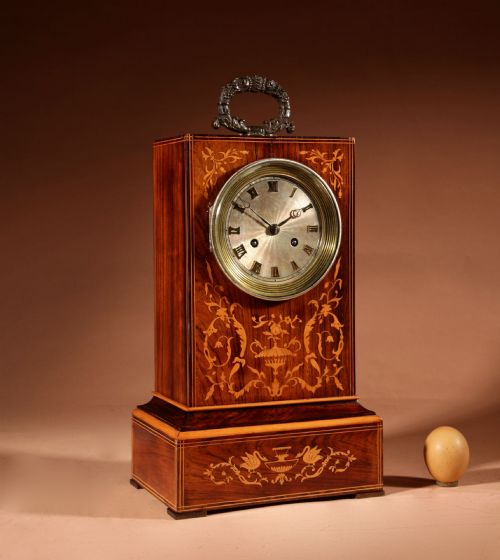
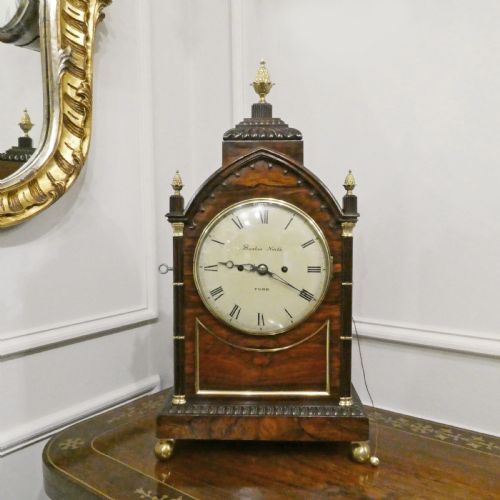
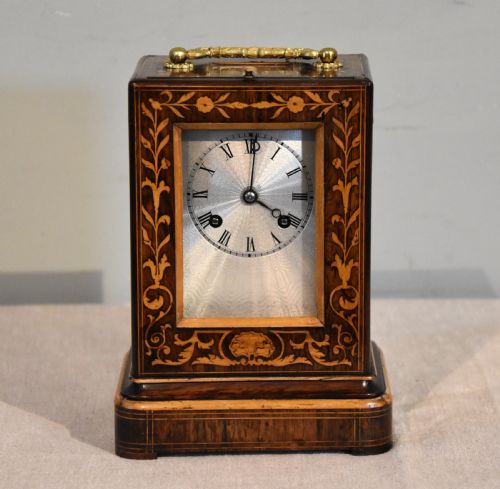
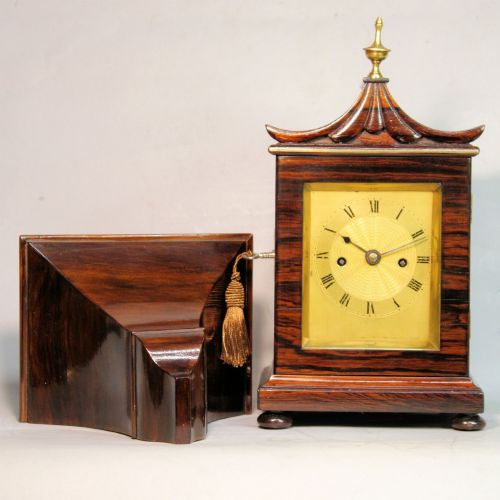
A dark rosewood mantel clock brings dense grain and architectural presence to a room, drawing the eye with rich timber tones.
Dark Rosewood Mantel Clock
A dark rosewood mantel clock unites heavy timber cases with intricate dial work, appearing primarily in nineteenth century designs across English, French, and American workshops. These domestic timepieces sit upon tables, brackets, and mantelpieces, housing mechanical movements that range from simple timepieces to striking eight day mechanisms.
The pieces on this page span several distinct periods including Regency, Victorian, Edwardian, and William IV styles. Buyers encounter bracket clocks, portico clocks, library clocks, and traditional mantel variants fashioned in dark rosewood, often enhanced with brass inlay, satinwood, or marquetry.
Regional variations emerge clearly in the construction, distinguishing English fusee movements from French bell striking examples and American domestic clocks. Each origin brings specific aesthetic choices to the dark rosewood case, dictating how the timber integrates with the dial and bezel.
Materials and Construction
Craftsmen built these cases using solid rosewood or applied rosewood veneers over secondary timbers, often selecting dark cuts that showed deep figuring. They integrated brass stringing, mother-of-pearl, and satinwood marquetry into the wooden surfaces to create contrasting geometric or floral patterns.
The mechanical interiors rely on brass gear trains, steel pivots, and spring or fusee power arrangements that regulate the time. Enamel and silvered metal dials display the hours, protected behind heavy glass bezels held within cast brass or bronze frames.
Materials appearing across the current selection include rosewood, satinwood, brass, mother-of-pearl, and silvered metal.
Markers of Quality
The refinement of the rosewood case and the complexity of the internal movement dictate the standing of a dark rosewood mantel clock. Superior examples display crisp brass inlay, finely cut marquetry, and well-balanced proportions that respect the natural figure of the timber.
Movement sophistication separates standard pieces from exceptional ones, particularly the presence of fusee mechanisms, quarter striking capabilities, and signed movements from known makers. The integration of matching wall brackets and the original condition of the dial further elevate the piece.
Barber and North·Paul Garnier·Henry Marc·Plumbly and Tupman·L. Donne
The Dark Rosewood Mantel Clock Glossary
- Fusee
- A conical pulley used in clock movements to maintain an even pull as the mainspring unwinds. This device ensures more accurate timekeeping throughout the running period.
- Bracket clock
- A portable spring driven clock designed originally to sit on a wall bracket or a table. Many examples include a carrying handle on top of the wooden case.
- Portico clock
- A architectural clock style featuring columns supporting a central housing. These French pieces often combine rosewood and satinwood veneers.
- Marquetry
- The art of applying pieces of veneer to a structure to form decorative patterns. Makers used contrasting woods like satinwood against dark rosewood.
- Silvered metal
- A brass dial plate treated with a silver solution to create a matte metallic finish for the numerals. It provides high legibility behind the glass bezel.
Dark Rosewood Mantel Clock: Frequently Asked Questions
How do I wind a fusee clock?
Use the appropriate key inserted into the dial arbor, turning it steadily clockwise until the movement reaches its stop. Take care not to overwind the mechanism.
Ensure you support the case and avoid sudden movements during the winding process to protect the internal gear train.
What is the difference between a bracket clock and a mantel clock?
Bracket clocks historically required a matching wall bracket for support and usually feature arched wooden cases with carrying handles. Mantel clocks sit directly on flat surfaces without needing hanging support.
Both forms utilise similar spring driven movements enclosed within decorative rosewood housings.
Where should I place a rosewood clock?
Position the clock on a stable, level mantelpiece, sideboard, or dedicated wall bracket away from direct sunlight and heat sources. Stable placement prevents vibrations that can interfere with the pendulum or balance wheel.
Keep the piece clear of exterior doors and damp walls to protect the delicate rosewood veneer and internal metalwork.
How do I identify a French movement?
French movements often feature distinct bell striking arrangements and makers' stamps on the backplate. The layout typically differs from traditional English fusee configurations.
Examining the escapement and the striking train reveals the workshop origin and the period of manufacture.