


Dark Rosewood Circular Table
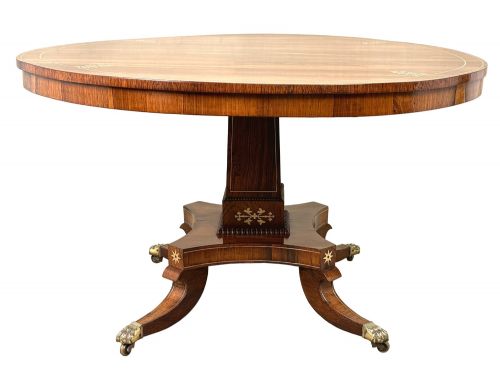
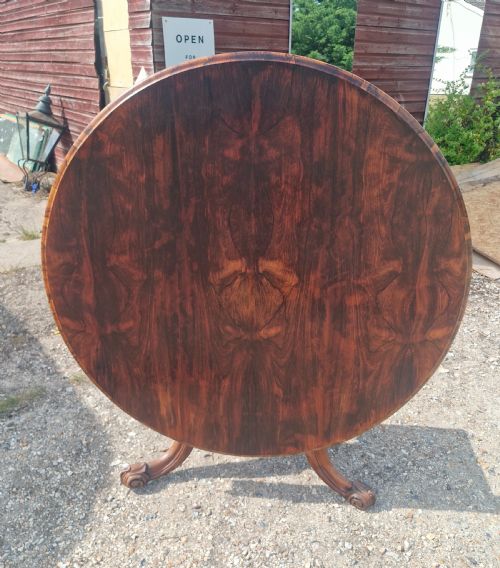
A dark rosewood circular table brings heavy timber warmth and a centered presence to a room, spanning Regency, William IV, and Victorian periods.
Dark Rosewood Circular Table
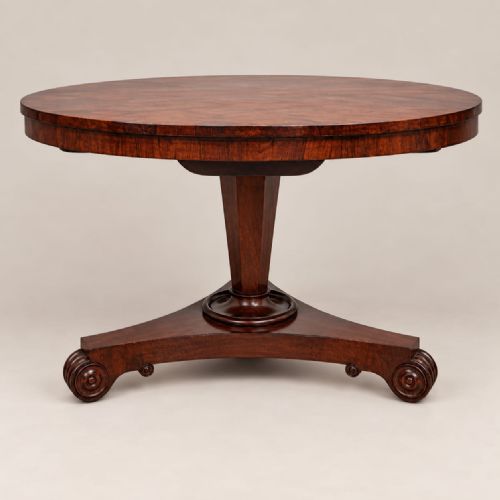
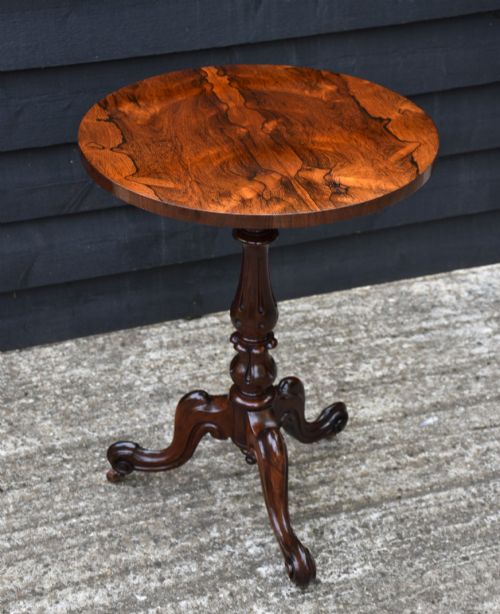
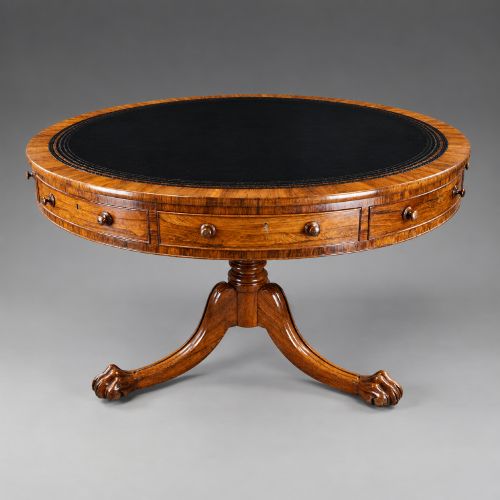
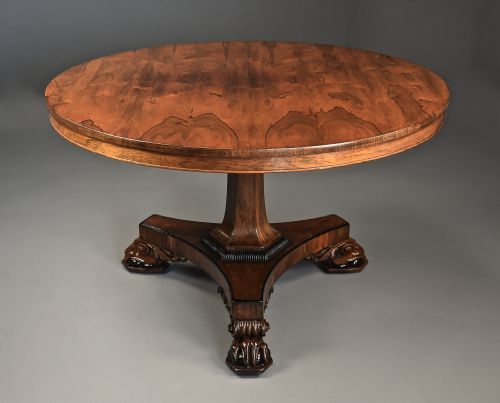
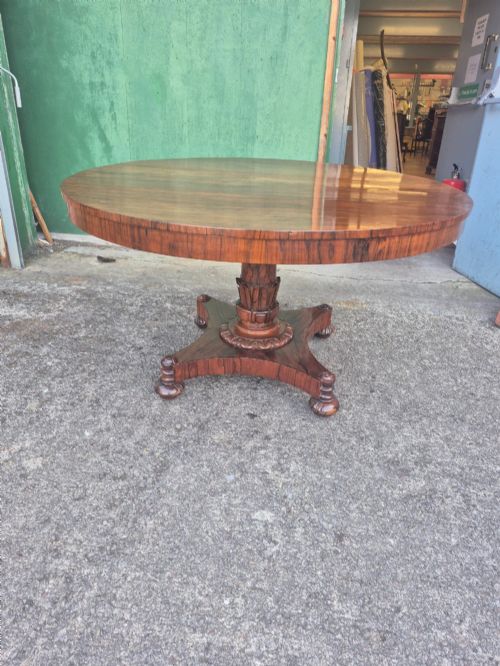
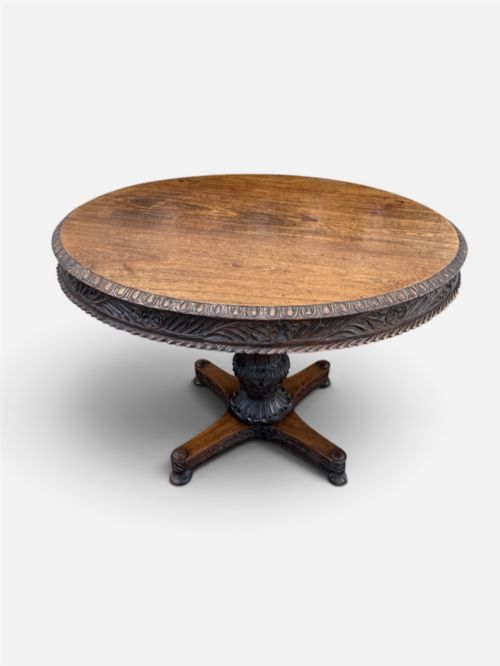
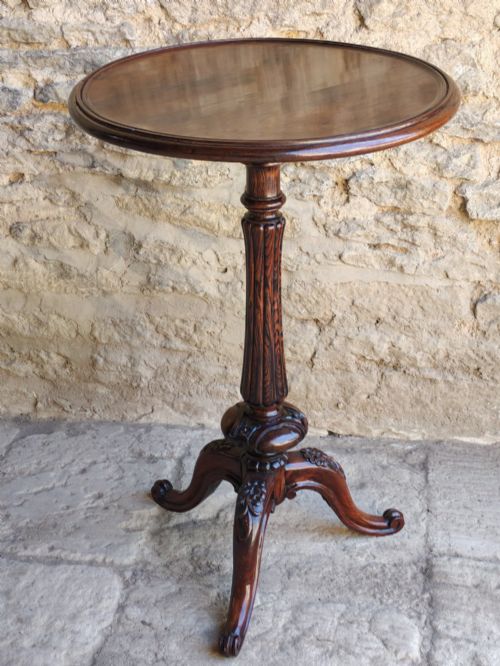
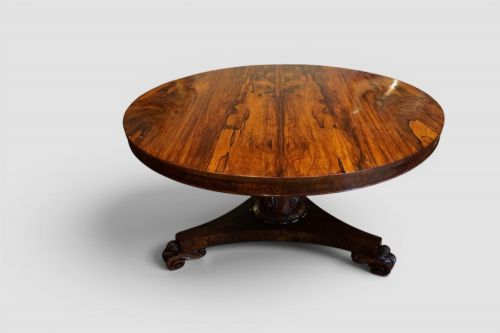
A dark rosewood circular table appears most frequently in forms designed for dining, breakfast, or central display, spanning the Regency, William IV, and Victorian eras. These pieces range from grand pedestal dining designs with heavy triform bases to smaller occasional, lamp, and wine tables intended for specific domestic corners.
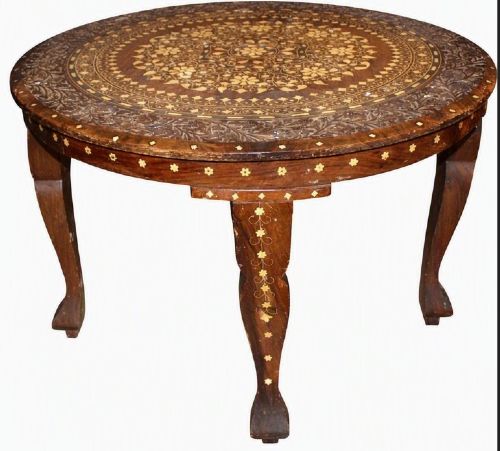
The selection includes specific regional and stylistic variants such as Anglo-Indian, Scottish, and Irish pieces, alongside traditional Chinese and Vietnamese items featuring bone or mother-of-pearl inlay. Buyers encounter tilting tops, snap-top mechanisms, and drum configurations designed to anchor a room.
Originating predominantly from the nineteenth century, these tables showcase the deep, rich grain characteristic of mature rosewood timber. They serve both practical functions as everyday surfaces and decorative roles as focal points within traditional and eclectic interiors.
What varies in quality
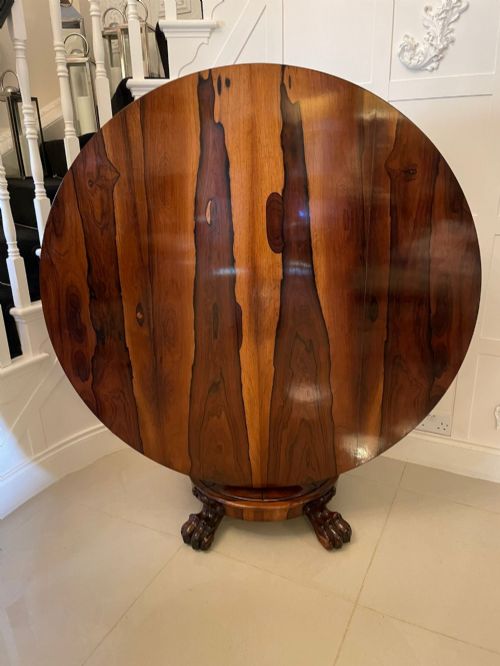
The standard of timber selection dictates visual success, with highly figured grain and book-matched veneer surfaces commanding greater appreciation than plain or uniform boards. The crispness of hand-carved mouldings and the precision of brass or bone inlay reveal the underlying skill of the workshop.
Structural stability in the central pillar and the triform or platform base separates superior examples from lesser pieces that suffer from wobble or improper weight distribution. Original mechanisms for tilt-top or snap-top functions operate smoothly without excessive play in the joints.
The listings show pieces spanning the Regency, William IV, and Victorian periods, constructed from rosewood, hardwood, and brass.
Liberty & Co
The Dark Rosewood Circular Table Glossary
- Centre table
- A freestanding piece designed to be viewed from all sides rather than pushed against a wall. These anchor the middle of large reception rooms.
- Tilt-top table
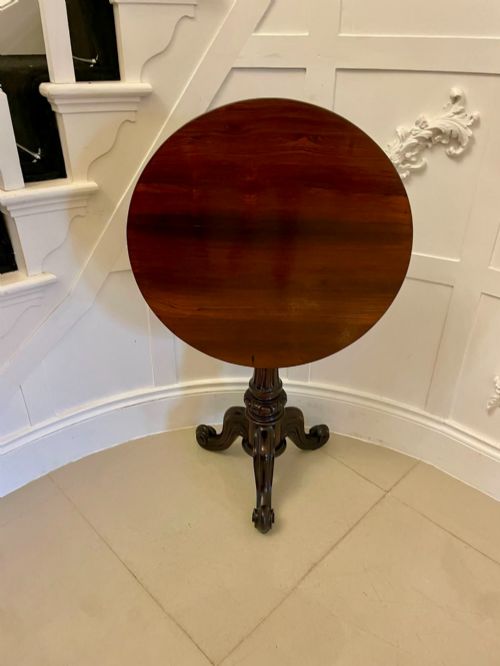
- A table featuring a hinged mechanism that allows the circular top to pivot into a vertical position. This saved valuable floor space when the room was not in use.
- Triform base
- A three-sided pedestal support beneath the central column, often resting on scroll feet or castors. It provides stability for heavy timber tops.
- Drum table
- A circular library or occasional table with a deep frieze containing drawers, resembling the silhouette of a drum. They often feature inset leather writing surfaces.
- Figured rosewood
- Timber exhibiting natural, highly decorative grain patterns and varied colouration. Cabinet makers prized these boards for prominent top surfaces.
Dark Rosewood Circular Table: Frequently Asked Questions
How were dark rosewood circular tables used?
These tables served multiple domestic functions depending on their scale and height. Smaller versions acted as lamp, wine, or occasional surfaces in sitting rooms.
Larger variations functioned as breakfast, dining, or centre tables where families gathered or guests were received.
How do I tell a Regency table from a Victorian one?
Regency and early pieces from the George IV or William IV periods often display classical restraint, architectural columns, and precise brass inlay.
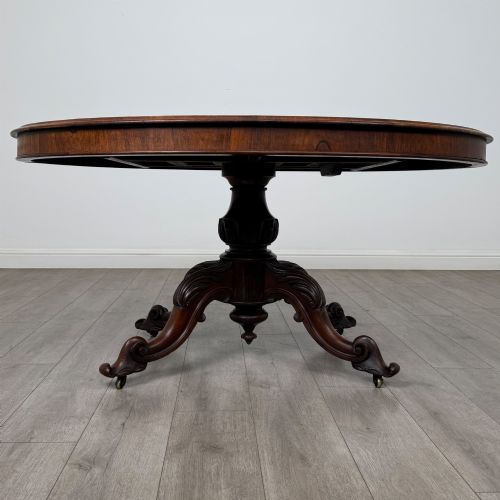
Victorian examples frequently introduce heavier proportions, barley twist turning, and more exuberant floral carving along the pedestal and base.
What is a tilt-top mechanism used for?
The tilting mechanism allowed the heavy circular top to lock into a vertical position when not in use. This practical design enabled large tables to be stored flat against a wall to clear floor space.
In modern homes, it remains a clever feature for rooms where flexibility is required.
How do I care for a rosewood surface?
Rosewood benefits from gentle dusting with a soft, dry cloth to prevent micro-scratching on the polished finish. Avoid placing timber tables in direct sunlight or near heat sources to prevent the wood or veneer from drying.
Applying quality wax occasionally helps nourish the grain and preserve the historic sheen.