





Dark Oak Weather Station
A dark oak weather station brings practical Victorian and Edwardian meteorology indoors through rich, grained timber cases.
Dark Oak Weather Station
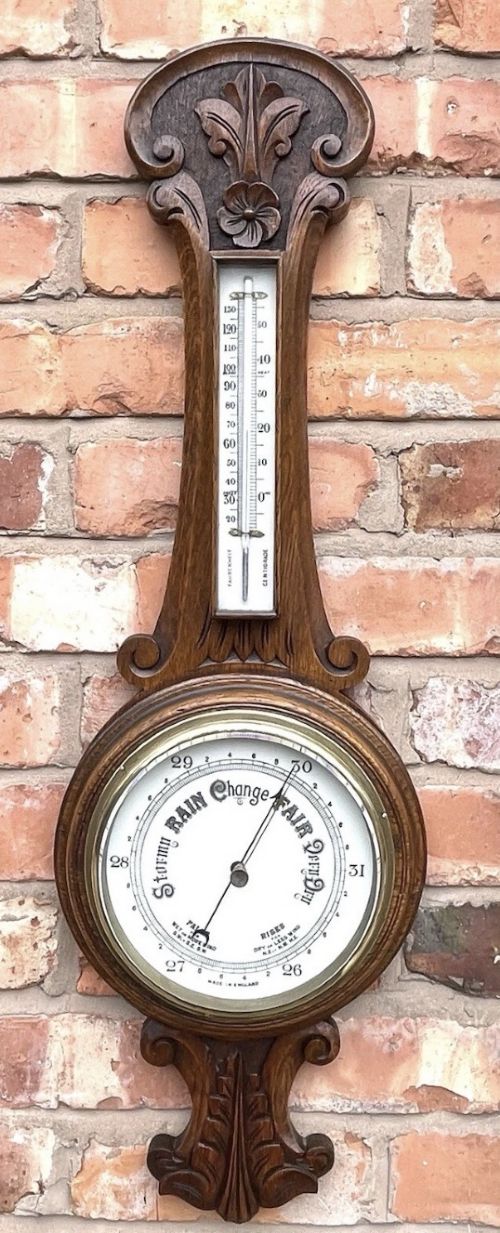
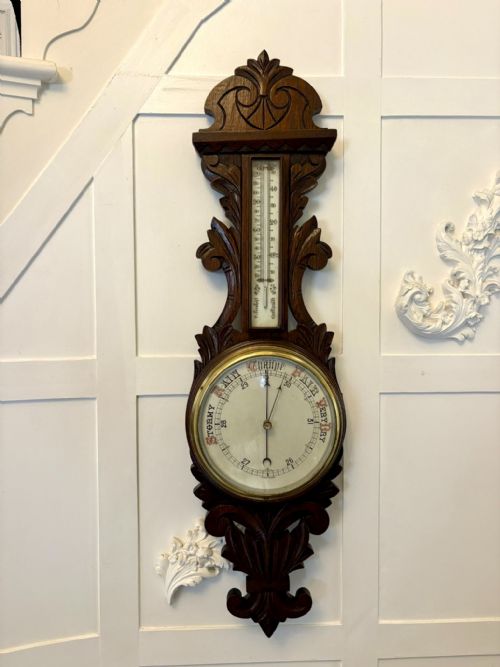
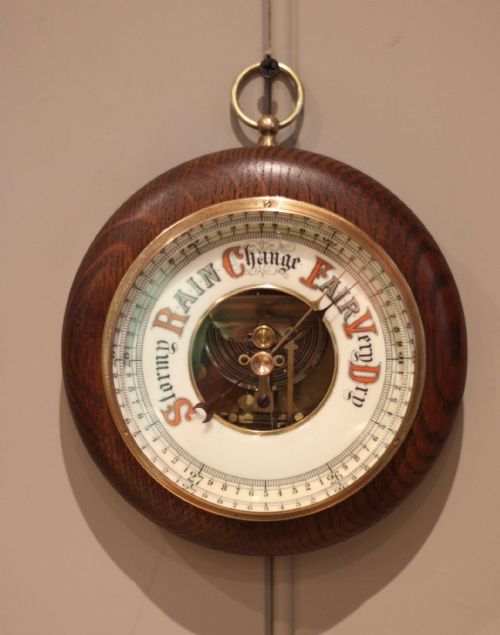
When you search for a dark oak weather station, you are looking at domestic forecasting instruments housed in sturdy timber enclosures spanning the Victorian and Edwardian eras. These domestic pieces range from banjo barometers with built-in thermometers to wall clocks, barographs, and circular desk or wall instruments.
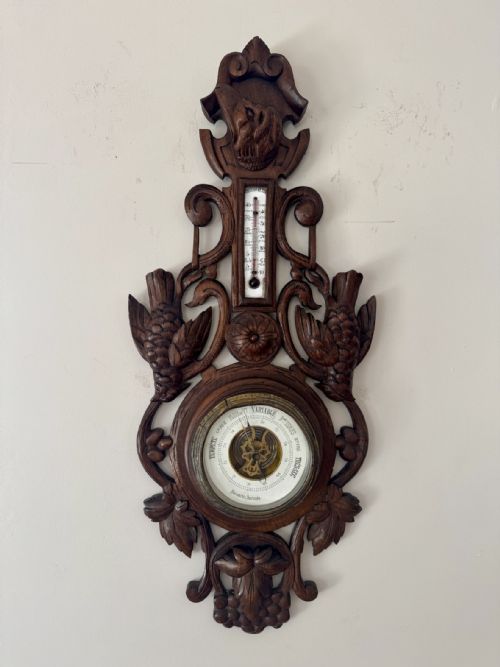
You are most likely to meet carved Victorian examples and simpler Edwardian wall barometers on this page, often featuring aneroid dials alongside Fahrenheit and Celsius temperature scales. The timber ranges from plain dark oak to deeply carved Black Forest interpretations.
Originating largely from British workshops and makers such as James Pitkin London, these instruments combined brass bezels, glass dials, and occasionally ceramic or porcelain details into functional wall furniture. They served as vital household fixtures before electronic forecasting existed.
Materials and construction
The cases of a dark oak weather station were typically shaped from solid timber, utilising the deep grain and dark tones characteristic of Victorian and Edwardian joinery. Carved wood details, particularly in Black Forest styles, required skilled hand-chiselling to produce foliage, scrolls, and animal motifs directly into the oak carcass.
Internal aneroid movements relied on precision brass components and delicate metal linkages to measure atmospheric pressure without liquid mercury. Glass face covers protected the enamel or paper dials, while brass bezels and mercury or spirit thermometers completed the mechanical assembly.
Listings feature oak, glass, brass, and porcelain across Victorian and Edwardian periods.
Distinctions in quality
Quality in these weather instruments rests primarily upon the crispness of the timber carving and the architectural ambition of the case. Deeply undercut foliage and well-proportioned banjo or circular layouts distinguish superior pieces from utilitarian wall boxes.
The presence of named makers, high-grade brass bezels, and combination instruments such as integrated clock faces or barographs elevate a piece above standard domestic barometers of the period.
James Pitkin London·Negretti and Zambra
The Dark Oak Weather Station Glossary
- Aneroid barometer
- An instrument that measures atmospheric pressure using a flexible metal box called an aneroid cell, without employing liquid mercury. This design allowed barometers to be manufactured in smaller, wall-hanging formats.
- Banjo barometer
- A wall barometer shaped vaguely like a banjo, featuring a circular dial at the top and a long trunk holding a thermometer or hygrometer below. This silhouette dominated Victorian and Edwardian domestic instrument design.
- Barograph
- A self-recording aneroid barometer that charts atmospheric pressure over a week onto a rotating drum of graph paper. These mechanical devices represent the more complex end of domestic weather recording.
- Black Forest style
- A carving tradition originating in central Europe, known for deeply naturalistic depictions of leaves, animals, and rustic scenes applied to oak furniture and instrument cases. Pieces in this style often display dramatic relief work.
Dark Oak Weather Station: Frequently Asked Questions
What is an aneroid barometer?
An aneroid barometer measures changes in air pressure using an internal sealed metal capsule that expands or contracts as pressure shifts. This mechanical movement translates directly to the pointer on the dial.
Unlike traditional mercury barometers, aneroid versions are entirely sealed and safe to hang on any interior wall without risk of fluid spills.
How do I date a dark oak weather station?
Dating relies heavily on the overall case style, the treatment of the oak, and the typography on the dial face. Victorian pieces often display heavier relief carving, while Edwardian models tend toward simpler circular or banjo outlines.
Maker signatures and patent marks stamped onto the brass dial or movement backplate provide the most precise chronological markers.
Where should I hang a wall barometer?
Wall barometers belong on interior walls away from direct sunlight, heating vents, and dampness to protect the wooden case and internal brass linkages. Stable indoor temperatures ensure the aneroid mechanism registers true barometric pressure changes rather than room heat.
Secure mounting is essential because solid oak and glass instruments carry significant weight.
Do these antique barometers still work?
Many surviving aneroid barometers remain operational, though internal mechanical linkages can drift over decades of static hanging. They can often be calibrated against modern local forecasts using the small adjustment screw typically located at the back or beneath the glass bezel.
Even when the forecasting mechanism requires professional adjustment, the carved oak cases serve as striking historic wall art.