
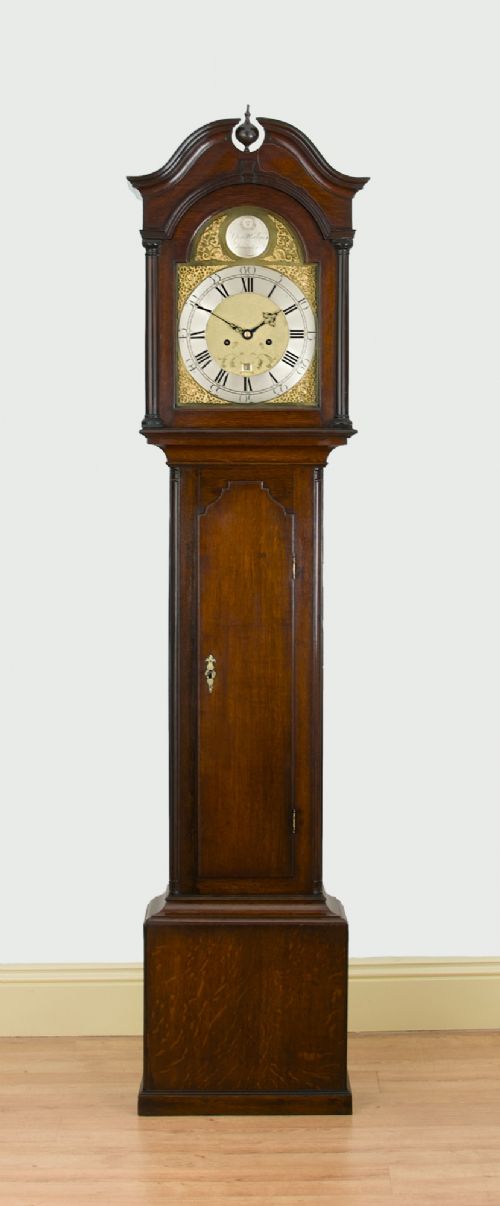


Dark Oak Tall Case Clock
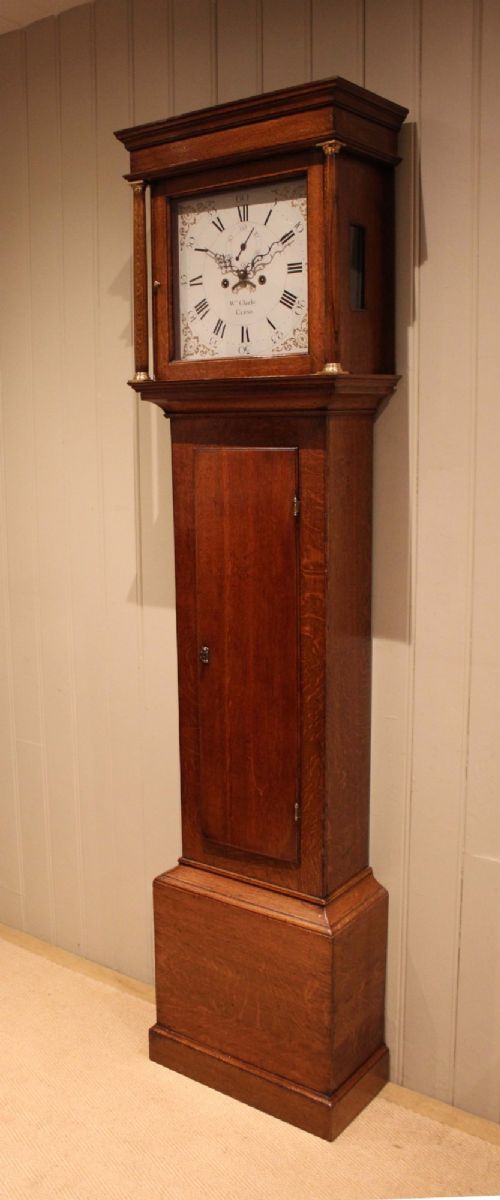
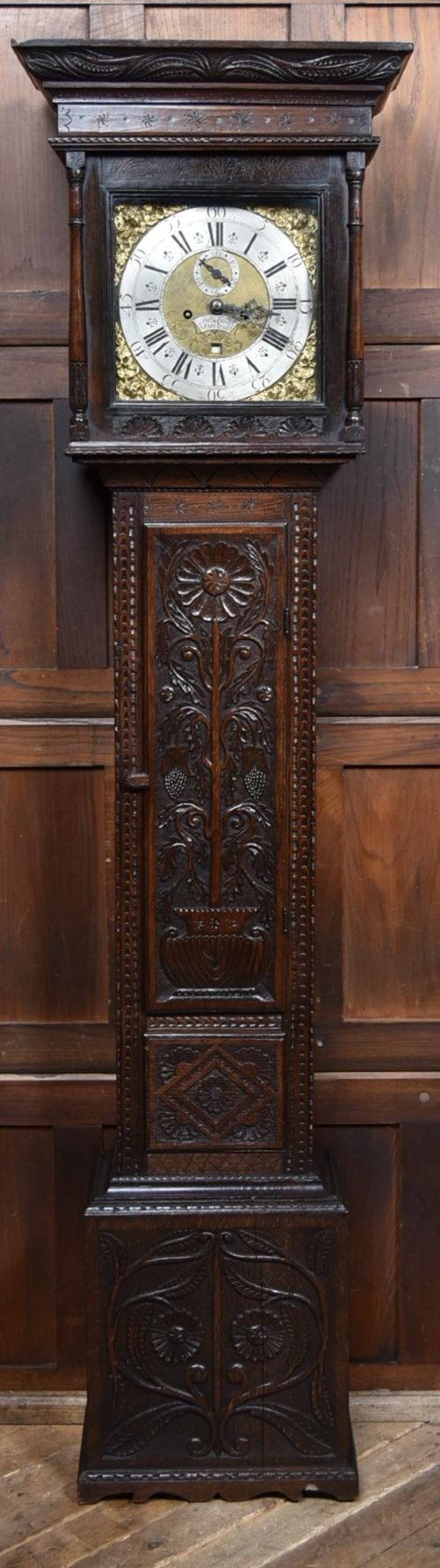
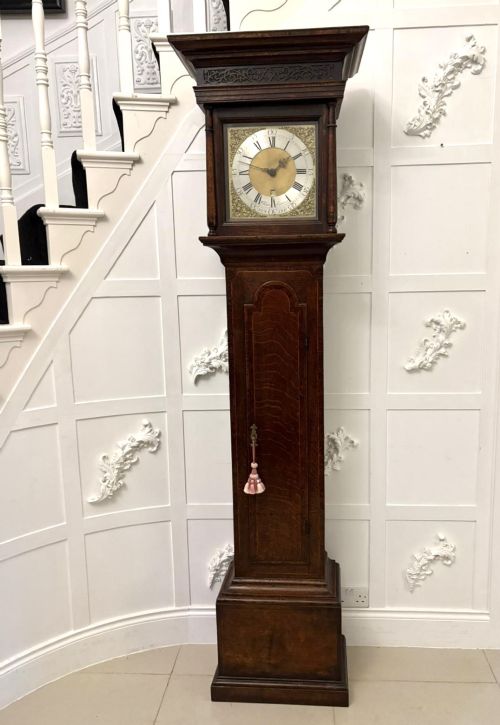
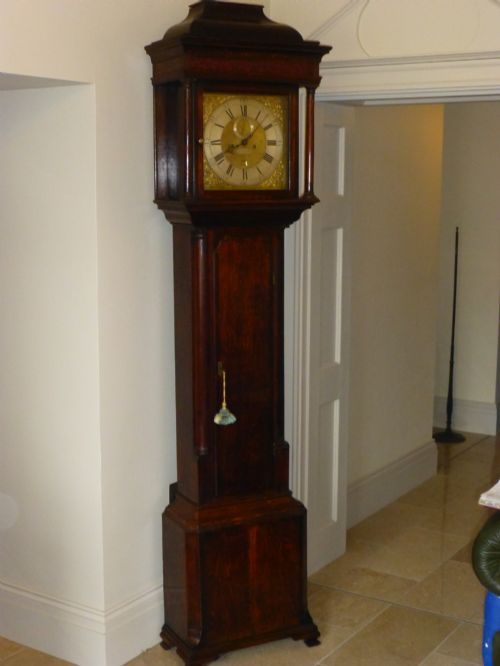
A dark oak tall case clock anchors a hallway with deep timber grain and measured gravity, drawing the eye upwards through decades of vernacular English craftsmanship.
Dark Oak Tall Case Clock
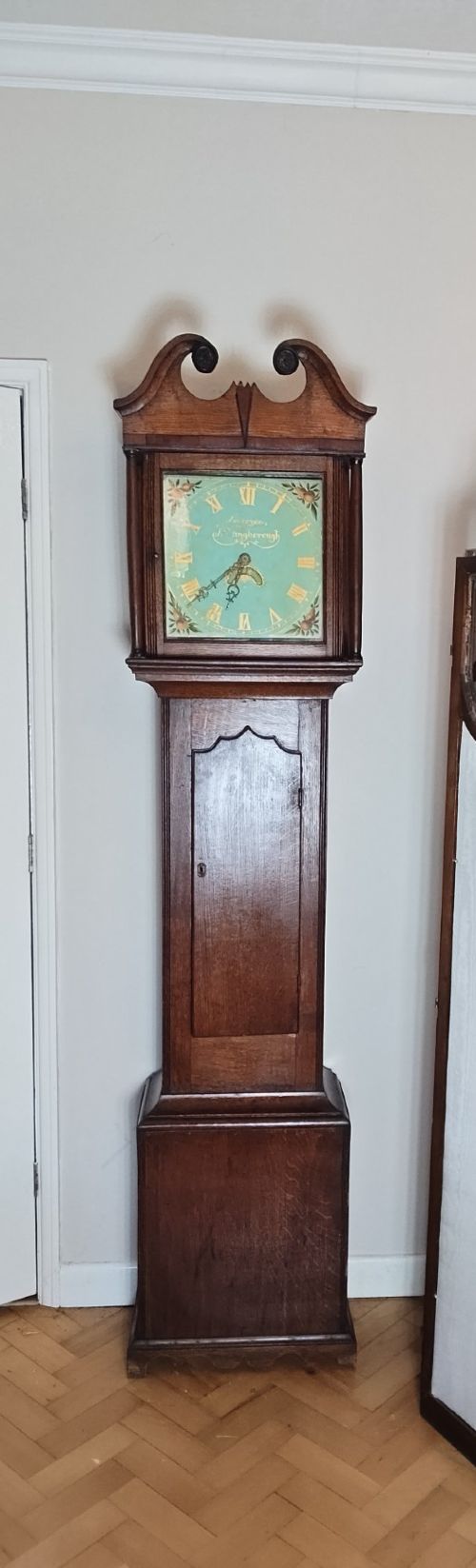
A dark oak tall case clock is an upright timekeeper housing a swinging pendulum and weights within a tall wooden trunk, designed to stand directly on the floor. These pieces emerge most frequently from eighteenth-century workshops, alongside Georgian and later Edwardian interpretations.
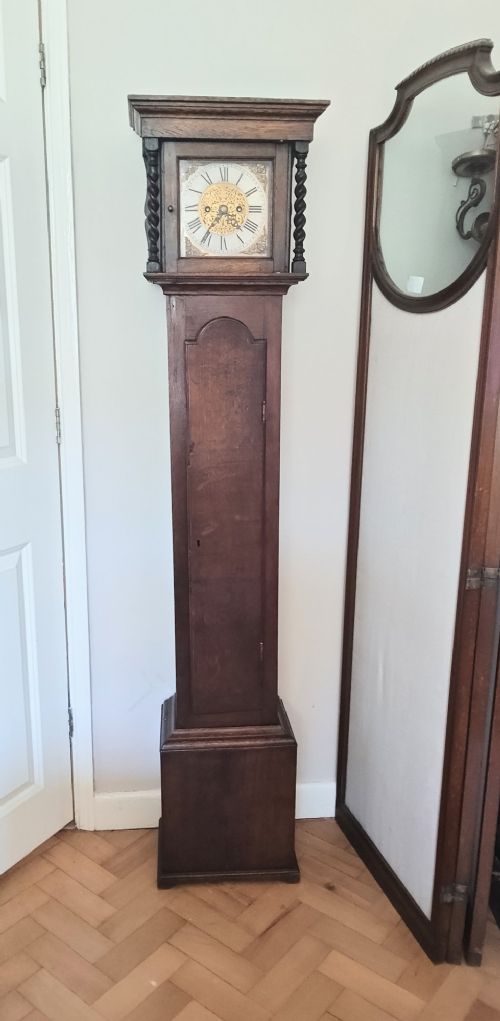
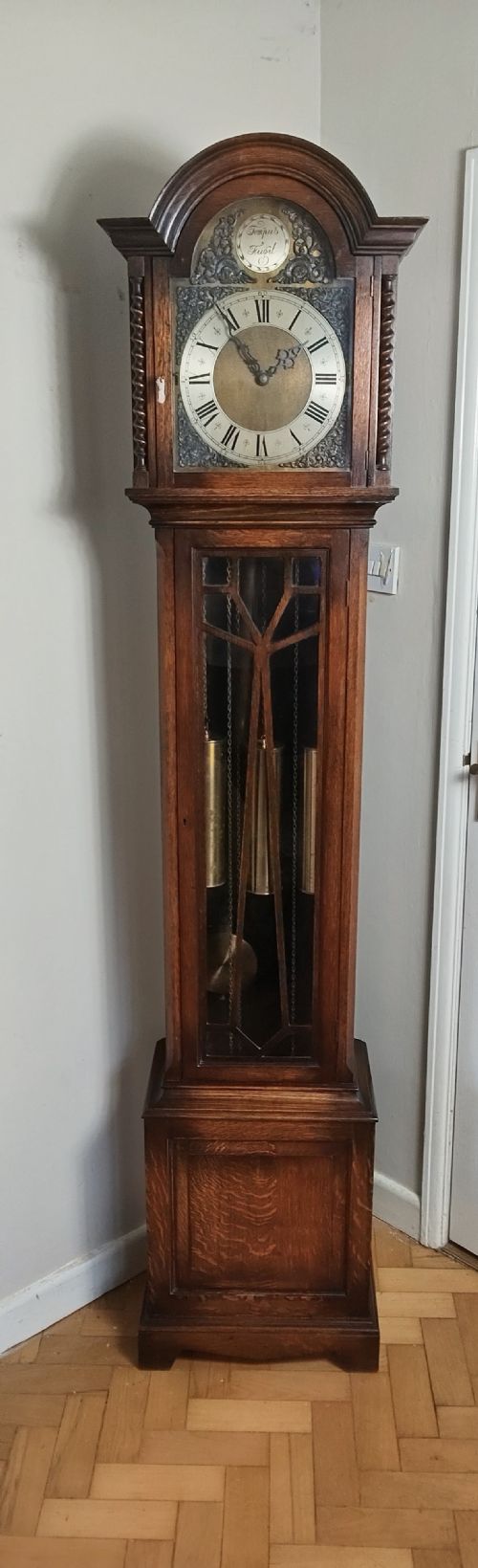
Buyers encounter a variety of forms under this description, ranging from full-sized George III floor clocks with brass dials to smaller nineteenth-century grandmother clocks. The timber frequently displays the rich, deep brown patination characteristic of aged oak, sometimes accented with walnut or mahogany elements.
Regional English makers signed many of these upright clocks on brass or painted dials, recording provincial trade from market towns across the country. Alongside traditional eight-day and thirty-hour movements, listings reveal musical chiming variations and regulator mechanisms spanning into the twentieth century.
How they were made
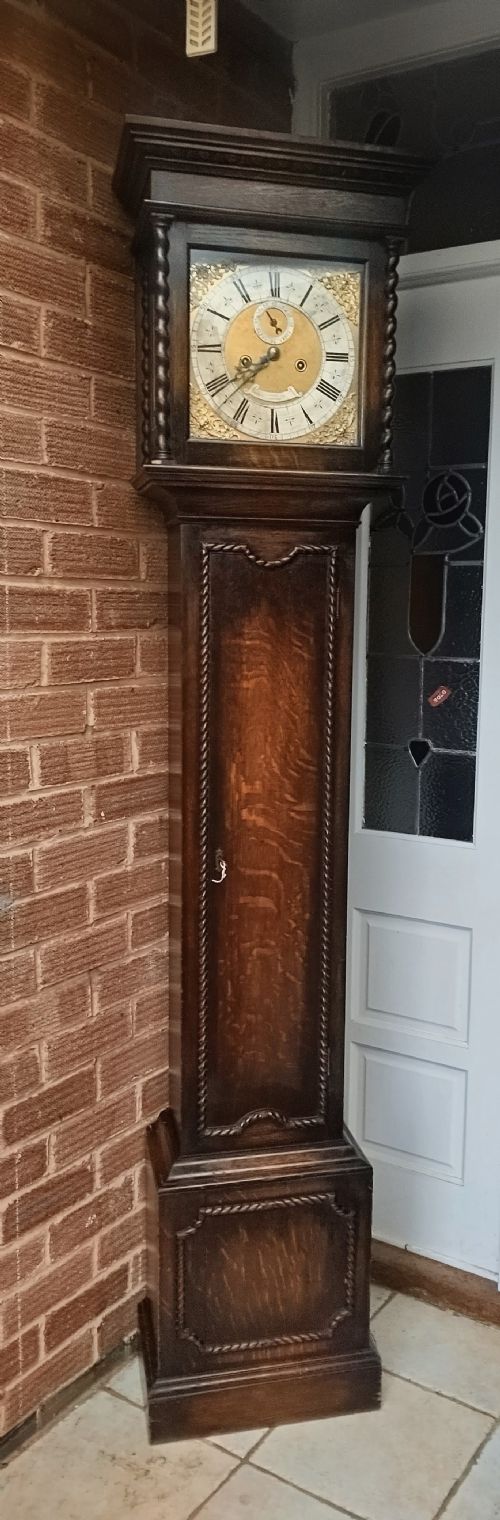
Cabinetmakers constructed the tall cases using solid oak boards, frequently employing frame-and-panel techniques to accommodate the natural seasonal movement of the timber. Secondary woods and decorative veneers like walnut or mahogany appear on selected mouldings and trunk doors.
Dial construction combined hammered and engraved brass plates with applied cast brass spandrels, later joined by painted iron or aluminium faces. Iron and brass internal gear trains were hand-finished by regional horologists, powering time, calendar, and chiming functions via lead or iron weights.
Materials recorded across the inventory include solid oak, burr oak, walnut, mahogany, maple, brass, iron, and glass.
What varies in quality
The architectural proportion of the case determines much of the visual success, distinguishing slender, balanced proportions from heavier, altered housings. Crispness in the carving of hood capitals and trunk details separates standard provincial work from ambitious urban commissions.
Movement integration reveals the hand of the maker, where clean layout and original motion work indicate a higher grade of horological production. The legibility and engraving depth of the dial face further define the standard of the piece.
Jn Smith Macclesfd·Richard Corless of Stockport·George Hallifax Of Doncaster·Bravingtons·Edward White Birmingham·Thomas May Of Witney·Mappin & Webb London·Thomas Utting of Yarmouth·John Wylde Nottingham·John Salmon Nantwich·Samuel Young Nantwich·Nicholas of Birmingham
The Dark Oak Tall Case Clock Glossary
- Longcase clock
- An upright weight-driven timekeeper enclosed in a tall wooden case, commonly known as a grandfather clock. These pieces rely on a pendulum hanging within the trunk to regulate the escapement.
- Dial
- The visible face of the clock upon which the hours and minutes are marked by hands. In earlier examples, these are made of brass with engraved numerals, while later versions utilise painted iron.
- Spandrel
- The decorative metal corner piece placed outside the chapter ring on a square or arched clock dial. They evolved from cast brass baroque motifs in the eighteenth century to simpler patterns later on.
- Grandmother clock
- A smaller, more slender version of the traditional longcase clock, typically produced during the twentieth century. These shorter cases suit more compact domestic spaces while retaining weight-driven movements.
- Quarter chiming
- A mechanical capability that strikes the bells or gongs at each quarter hour before sounding the full hour. Such movements often utilise multiple weights and musical barrels to play specific tunes.
Dark Oak Tall Case Clock: Frequently Asked Questions
What is the difference between a grandfather and a grandmother clock?
A grandfather clock refers to the traditional full-height floor clock, usually measuring over six feet tall and built to accommodate long pendulums and heavy weights.
A grandmother clock is a smaller, scaled-down version that stands significantly lower to the ground, appearing frequently in Edwardian and later twentieth-century listings.
How do eight-day movements differ from thirty-hour ones?
An eight-day movement requires winding via the dial holes roughly once a week, utilising dual or triple weights suspended on lines or chains.
Thirty-hour movements require daily winding and often operate with a single weight or simpler gear train, common in earlier and more vernacular country clocks.
Where were these clocks typically placed in a home?
These tall timekeepers stood in hallways, stairwells, or principal living rooms where their striking bells could be heard throughout the household.
Their upright proportions allowed them to occupy minimal floor space while providing a commanding architectural presence against interior walls.
How can I tell an eighteenth-century dial from a later one?
Eighteenth-century dials are predominantly made of brass with separately applied silvered chapter rings and cast brass spandrels in the corners.
Nineteenth and twentieth-century versions more often feature painted iron or composite metal faces decorated with floral spandrels or moon phases.