
Dark Oak Sideboard Server
A dark oak sideboard server provides a solid surface and generous storage, bringing centuries of craftsmanship and utility into a dining room or hall.
Dark Oak Sideboard Server
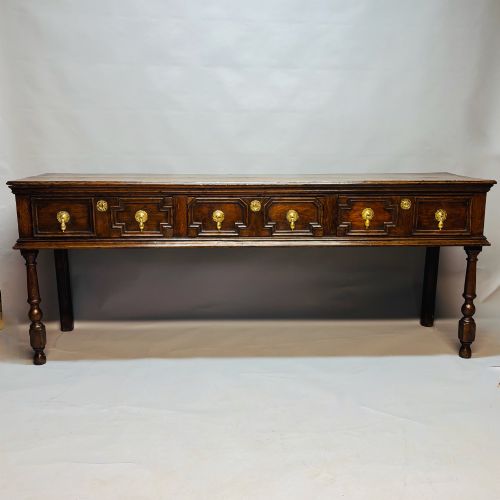
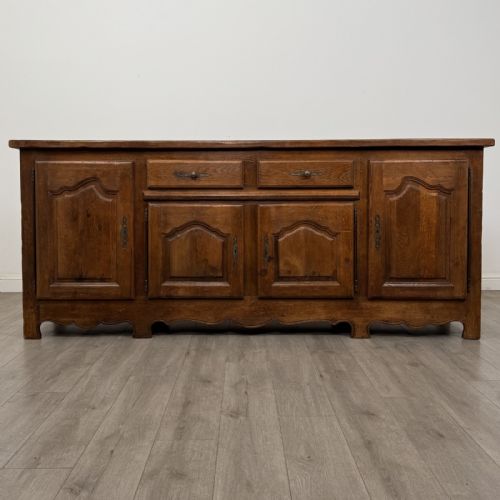
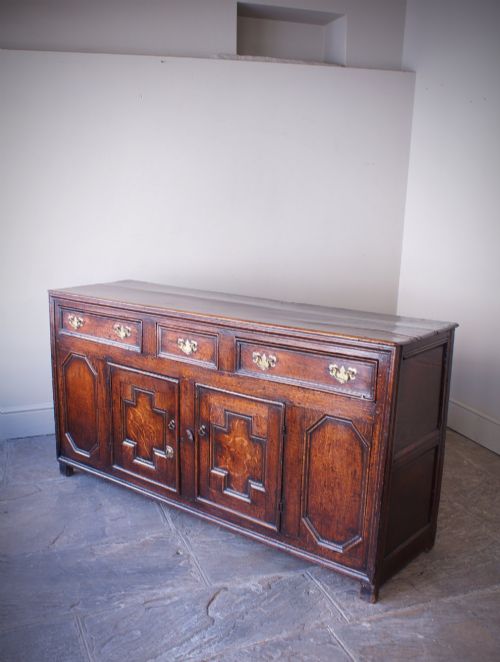
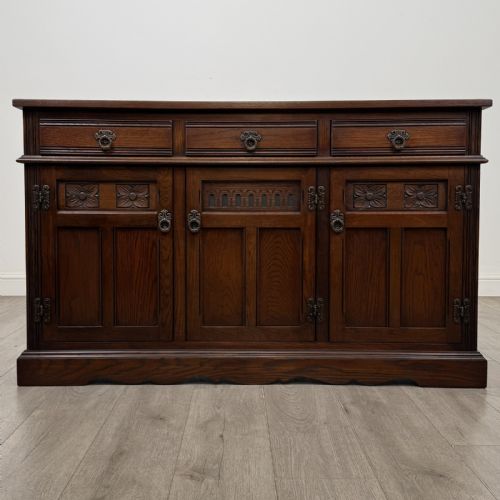
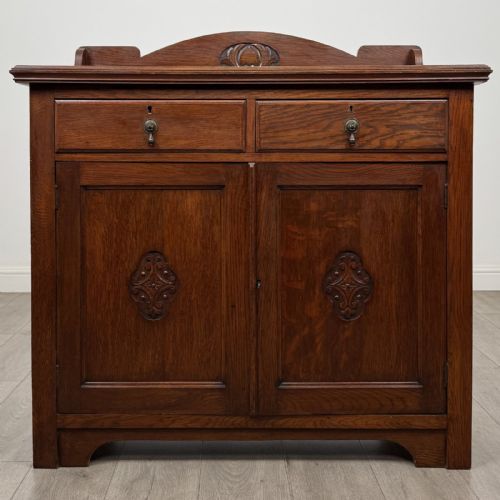
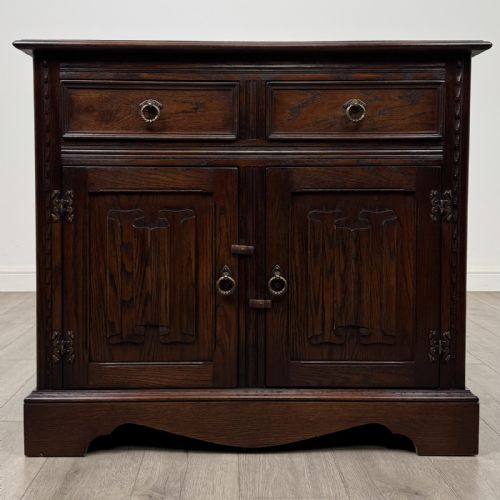
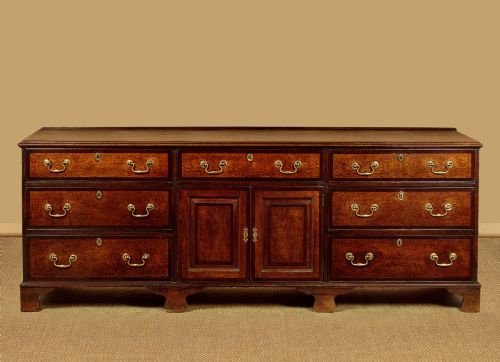
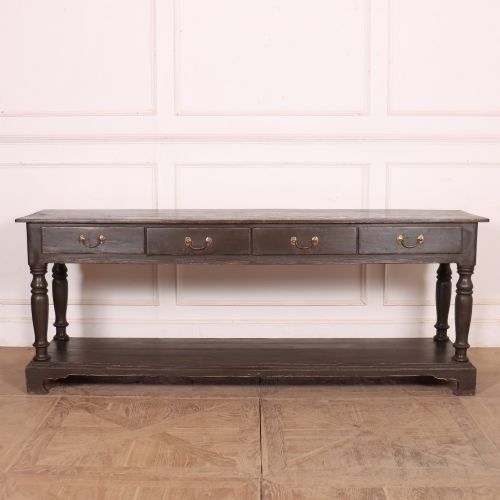
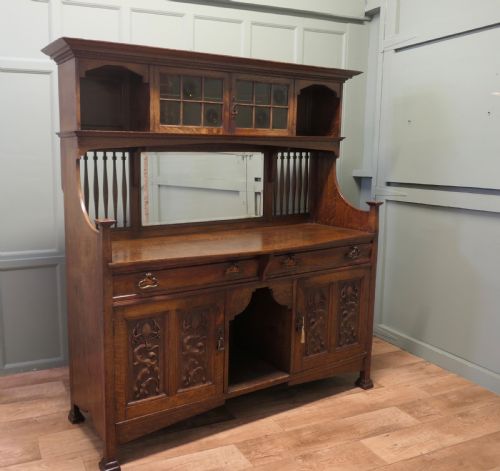
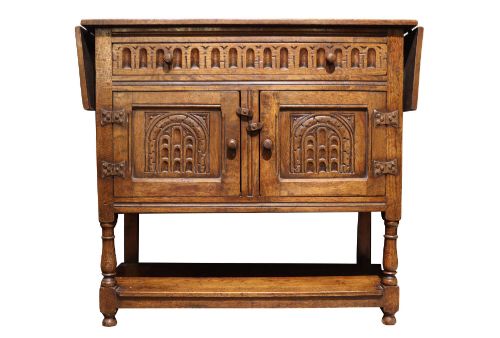
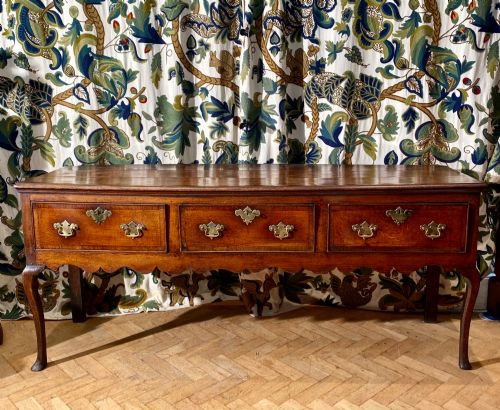
When searching for a dark oak sideboard server, buyers encounter a range of forms spanning from eighteenth-century provincial dresser bases to revival pieces from the Victorian and Edwardian eras. These items served traditionally to store and serve food, combining drawers, cupboards and open potboards beneath a sturdy top surface.
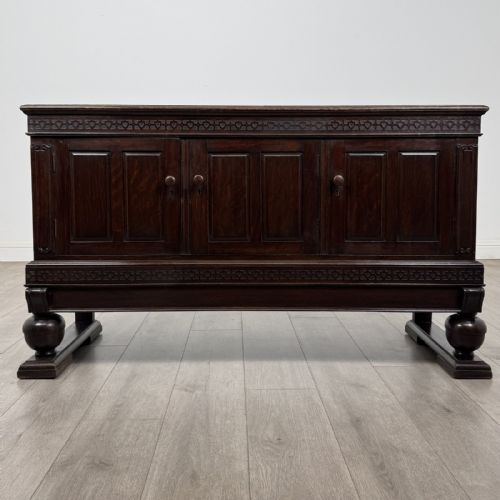
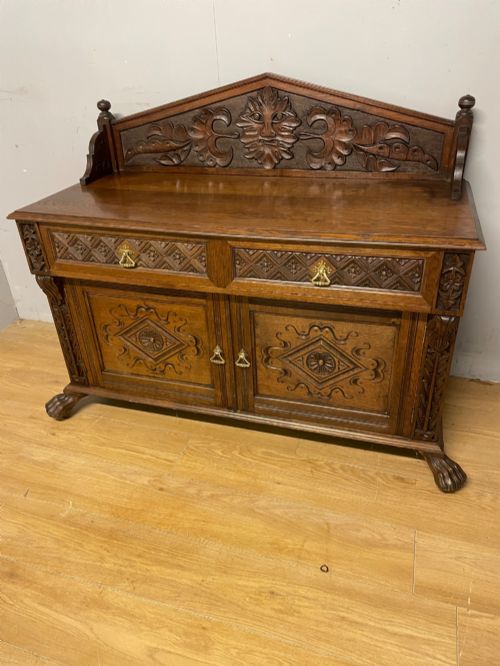
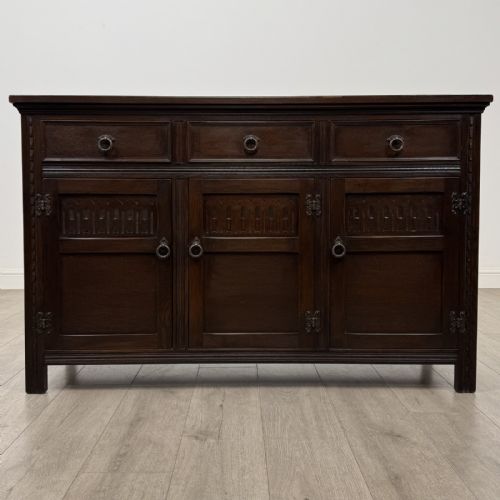
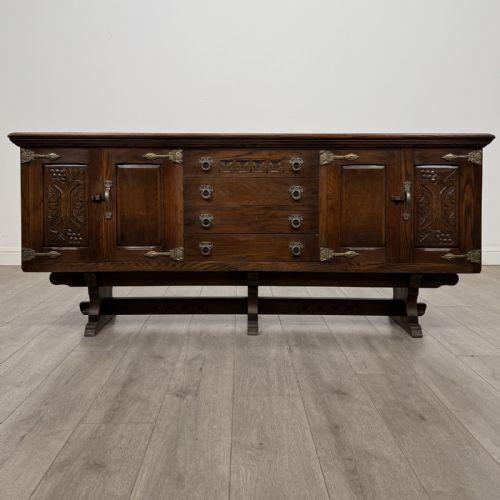
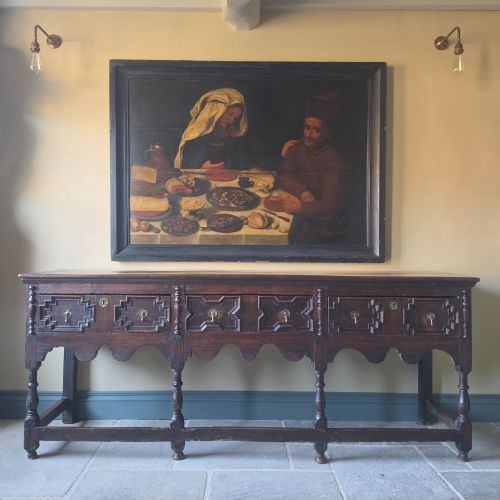
The most common examples on this page are sturdy dresser bases and heavy sideboards executed in dark timber, drawing upon Georgian, Jacobean and Gothic styles. Pieces range from provincial country furniture with simple lines to heavily carved revival servers carrying elaborate motifs.
Origins stretch across English regional workshops, Scottish makers, and French serving tables, showing how different local traditions shaped the height, depth and storage layout of each server.
Distinguishing quality across periods
Quality rests in the crispness of the hand carving, the structural integrity of the timber framing, and the preservation of original surfaces. Earlier pieces show the gentle wear of centuries of domestic use, whereas revival pieces depend on the depth and accuracy of their historical detailing.
The choice of proportions and timber selection dictates visual success, with superior examples featuring well-figured oak boards and balanced drawer arrangements. Less successful pieces may combine discordant revival styles or present heavy-handed later alterations to original bases.
The listings span eight distinct periods, led by the 18th Century and Edwardian eras alongside Victorian and Georgian examples.
The Dark Oak Sideboard Server Glossary
- Dresser base
- A low wooden storage unit featuring drawers above cupboards or an open shelf, serving as a precursor to the modern sideboard. These form the backbone of early vernacular dining room furniture.
- Potboard
- An open slatted lower shelf fitted beneath a dresser base or server. It provided ventilation for pots and heavy dishes in domestic kitchens.
- Jacobean style
- A heavy, geometric aesthetic popular in seventeenth-century English furniture and revived during the nineteenth and twentieth centuries. It is characterised by panelled doors, turned legs and strapwork carving.
- Linenfold
- A style of carved wooden panelling resembling folded fabric or linen. This decorative motif appears frequently on cupboard doors from revival periods.
- Escutcheon
- A protective plate surrounding a keyhole, usually fashioned from brass or iron. They secure the surrounding wood and provide a decorative focal point on cabinet doors.
Dark Oak Sideboard Server: Frequently Asked Questions
What is the difference between a dresser base and a sideboard?
A dresser base originates from earlier domestic traditions featuring lower storage and open potboards, whereas sideboards evolved specifically for formal dining rooms in later centuries.
Both serve similar functions in modern interiors, though dresser bases often display more rustic country proportions while sideboards lean towards formal revival styles.
How do I care for dark oak furniture?
Protect the aged timber by avoiding direct sunlight and maintaining steady indoor humidity to prevent the wood from splitting.
Apply natural beeswax periodically to nourish the grain and preserve the rich patina without sealing the surface.
Are these servers suitable for modern dining rooms?
Their deep proportions and generous surface area make them highly practical for serving food and storing tableware in contemporary homes.
The dark timber tones anchor a room, pairing well with both traditional and minimalist interior schemes.
How can I tell an eighteenth-century piece from a revival piece?
Eighteenth-century examples display hand-cut joinery, pegged framing and natural wear patterns accumulated through centuries of domestic use.
Revival pieces from the Victorian and Edwardian eras often feature machine assistance, highly uniform carving styles, or specific historical revival motifs.