
Dark Oak Sideboard Cabinet
A dark oak sideboard cabinet brings substantial timber and period presence to a room, offering deep storage through centuries of craftsmanship.
Dark Oak Sideboard Cabinet
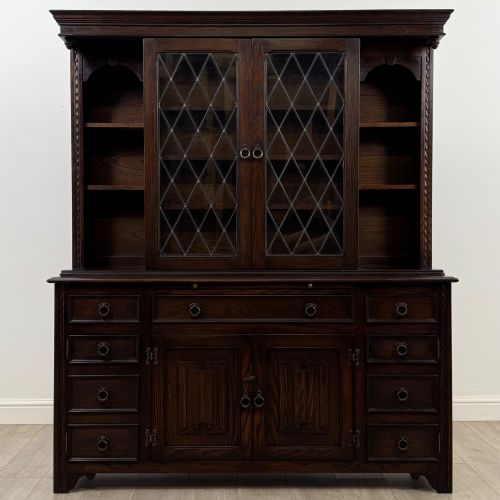
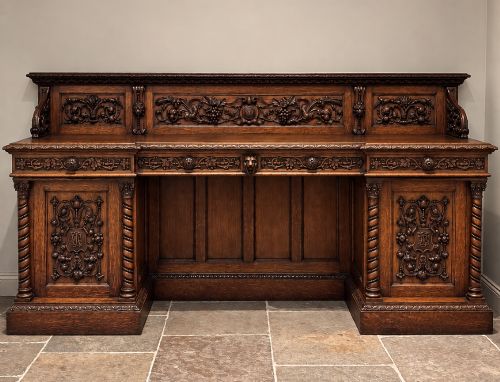
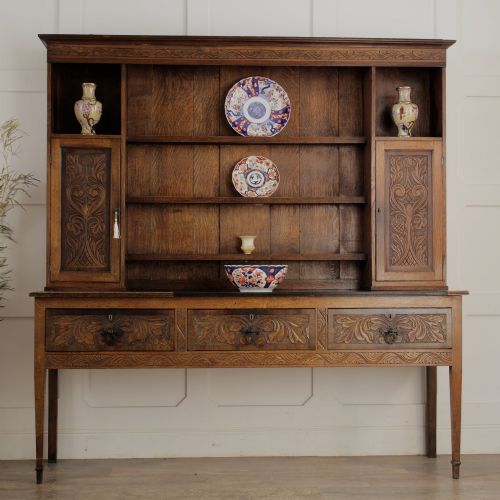
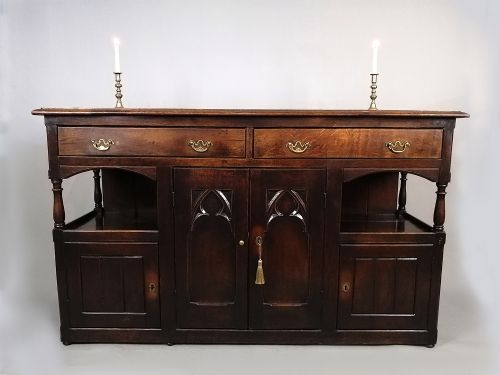
A dark oak sideboard cabinet encompasses a wide variety of storage furniture designed for dining rooms and halls, spanning centuries of British and continental design. You will encounter forms ranging from heavy 17th-century joined cupboards and press cupboards to 18th-century dresser bases and ornate 19th-century Victorian and Edwardian sideboards.
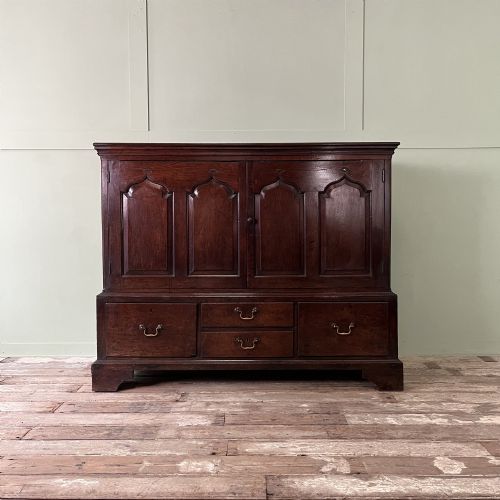
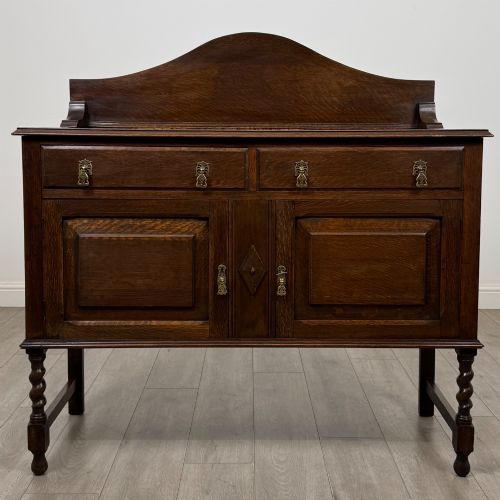
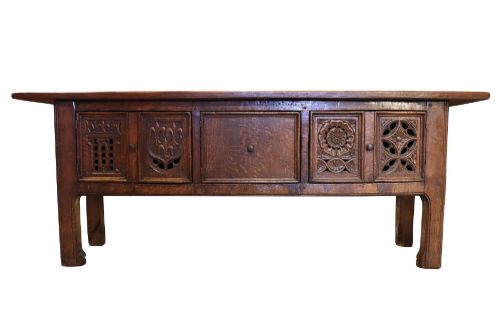
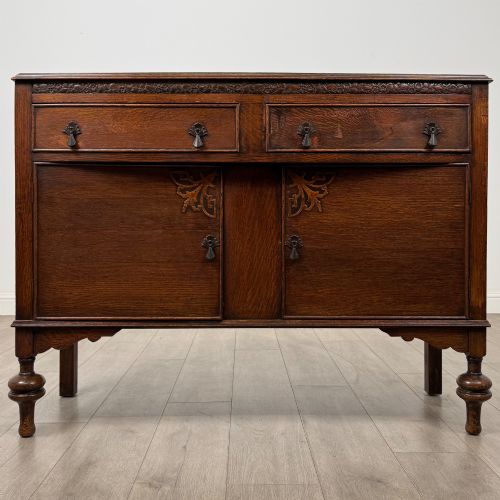
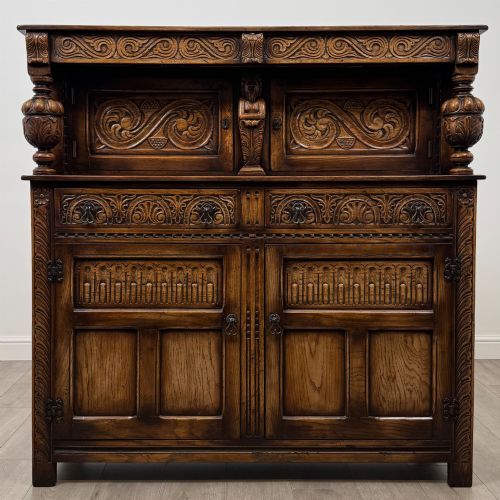
The pieces appearing on this page lean heavily toward Edwardian reproductions and adaptations of earlier aesthetics, alongside genuine Victorian Gothic Revival furniture and earlier Georgian or 17th-century examples. Common formats include low linen press cupboards, court cupboards, mirror-back buffets, and narrow dresser bases constructed primarily in solid oak.
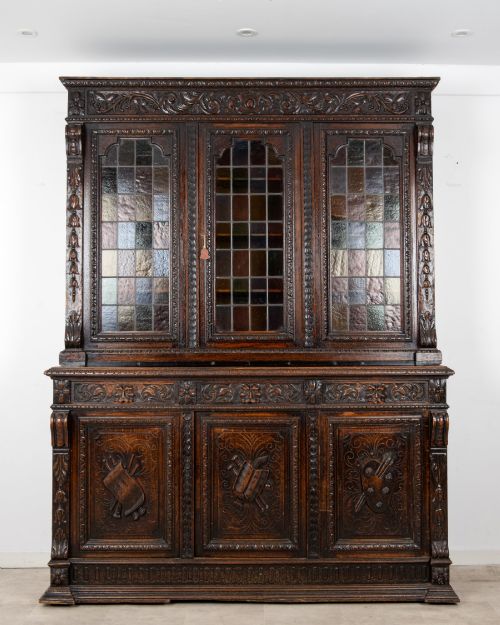
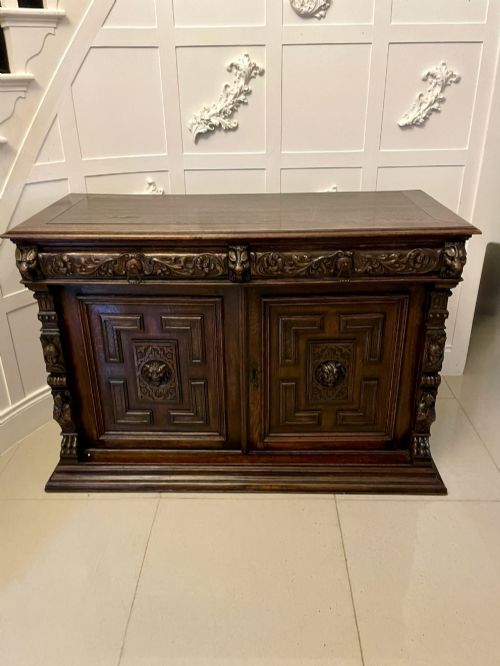
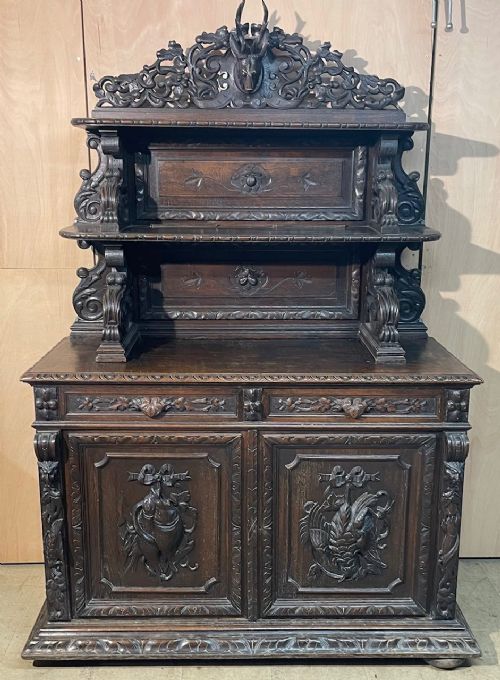
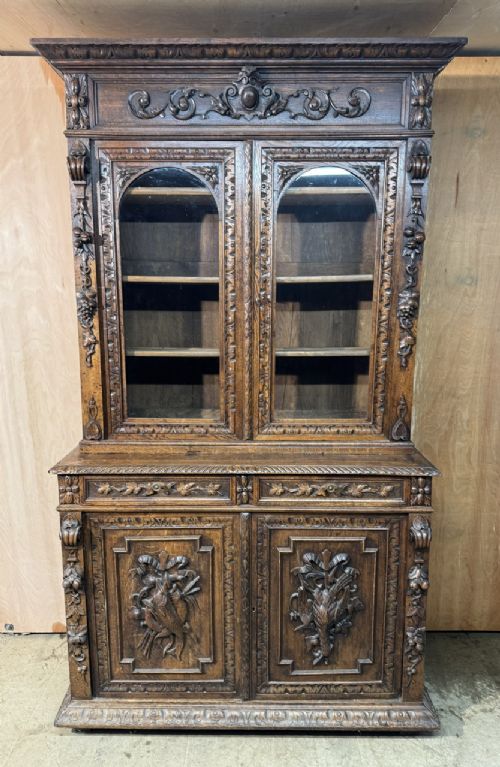
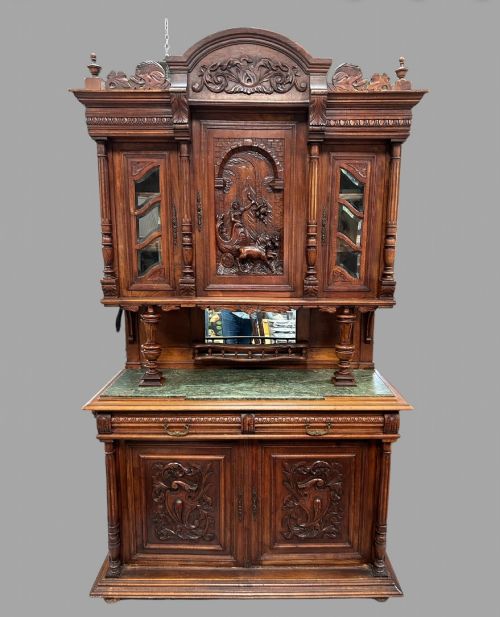
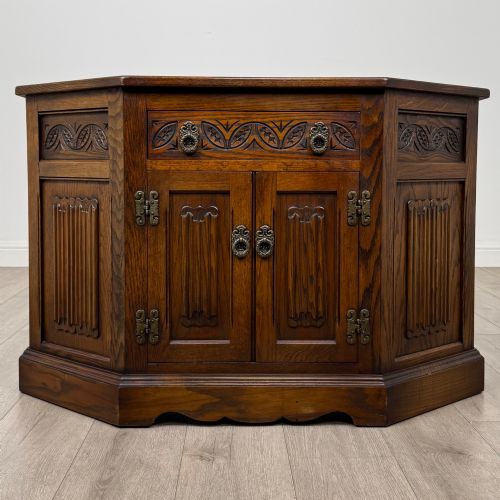
Makers and regional workshops drew upon Tudor, Jacobean, and Gothic vocabularies, meaning many Edwardian and 19th-century pieces display deeply carved panels, barley twist supports, and linenfold motifs. Whether you choose a French hunting sideboard or a Welsh dresser, each object functions as a heavy timber storage unit built to anchor a dining space.
What varies in quality
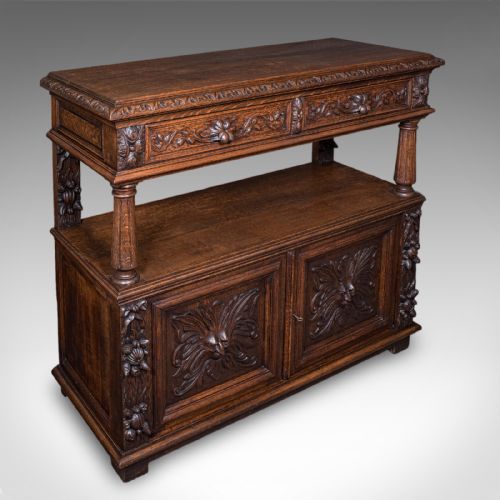
The degree of hand-carving and the crispness of relief work separate standard production furniture from exceptional examples. Pieces featuring deep, well-defined Jacobean or Gothic motifs executed by skilled hands display a sculptural depth absent in mechanical or shallow press-moulded copies.
Timber selection and structural integrity define the upper tier of the range, particularly when original joined construction remains unaltered. Surfaces retaining a deep, untouched historical patina command greater respect than those stripped or overly refinished during later restorations.
French hunting sideboards bring ferocious carved boars and tumbling game directly into the dining room.
Liberty & Co.
The Dark Oak Sideboard Cabinet Glossary
- Court cupboard
- A heavy enclosed storage piece from the 16th or 17th century featuring a recessed upper section supported by pillars. These substantial items served to display plate and store dry goods.
- Linenfold
- A carved wooden panel motif mimicking folded fabric, popular during the Tudor and revived during later periods. It provides a textured, textile-like surface on cabinet doors.
- Barley twist
- A type of furniture leg or column turned in a spiral resembling a stalk of barley. This decorative turning technique gained immense popularity during the 17th century and later revival periods.
- Dresser base
- A low wooden sideboard fitted with drawers and cupboards underneath an open top surface. Originally used in kitchens for food preparation and serving, they evolved into principal dining room furniture.
- Press cupboard
- An enclosed wardrobe or linen storage cabinet featuring internal shelves or hanging space behind heavy panelled doors. These pieces often exhibit robust joined oak construction.
Dark Oak Sideboard Cabinet: Frequently Asked Questions
How do I date an oak sideboard cabinet?
Examine the construction methods, tool marks, and hardware fixed to the carcass. Pegged joints, hand-sawn timber boards, and original brasses often point to earlier centuries, whereas machine-cut elements indicate 19th-century or Edwardian revival manufacture.
Style revivals frequently mimic 17th-century Jacobean or Tudor aesthetics during the Edwardian era. Look closely at the secondary woods and interior linings to confirm the true period of production.
What is the difference between a sideboard and a court cupboard?
A sideboard functions primarily as a low serving surface with drawers and cupboards arranged horizontally. A court cupboard is a taller, multi-tiered structure featuring a recessed upper stage supported by heavy pillars.
Court cupboards originate mostly in the 17th century as status furniture for displaying wealth. Sideboards became more common in dining rooms from the 18th century onward for serving food.
Are these cabinets suitable for modern living rooms?
Their heavy timber presence and dark oak tones make them striking focal points in contemporary interiors. They provide substantial concealed storage for tableware, media equipment, or books.
Consider the depth and height of the piece before placement, as Victorian and Jacobean revival models often feature heavy overhangs and projecting carved elements that require adequate floor space.
How should I care for antique oak furniture?
Maintain a stable indoor humidity level to prevent the solid oak panels from splitting or warping. Avoid placing the cabinet near direct heat sources or in strong sunlight that can fade the finish.
Apply a microcrystalline wax periodically to nourish the wood and protect the surface patina. Buff gently with a soft cloth rather than using silicone-based commercial polishes.