




Dark Oak Hall Mirror
A dark oak hall mirror grounds a busy entrance with rich timber tone and practical reflection.
Dark Oak Hall Mirror
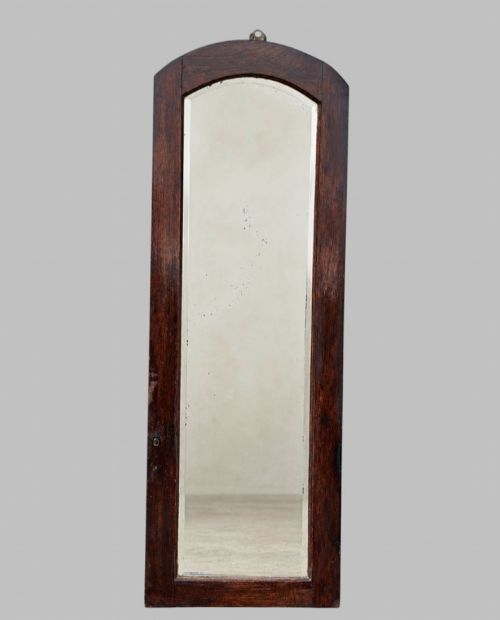
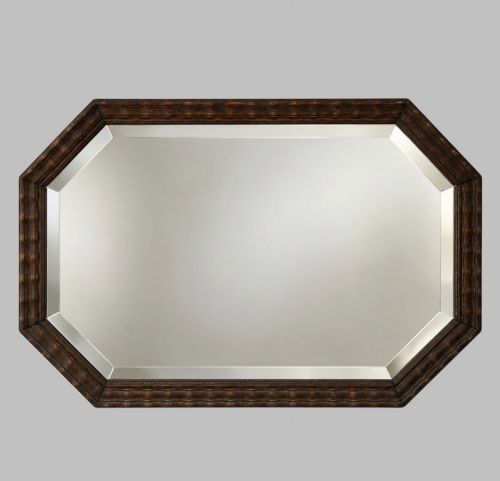
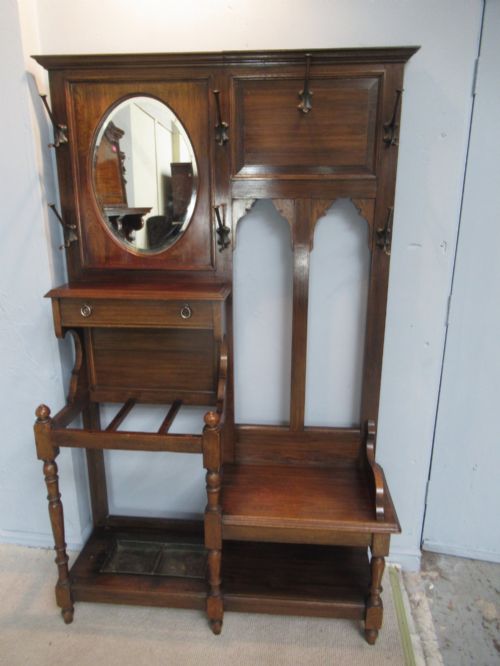
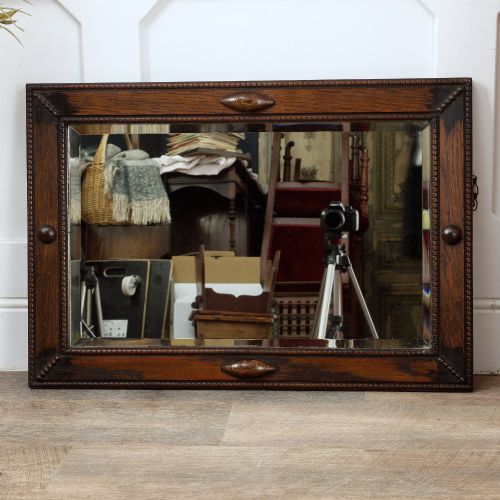
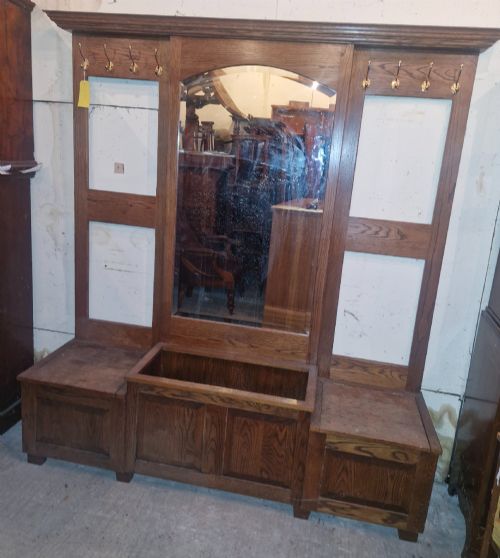
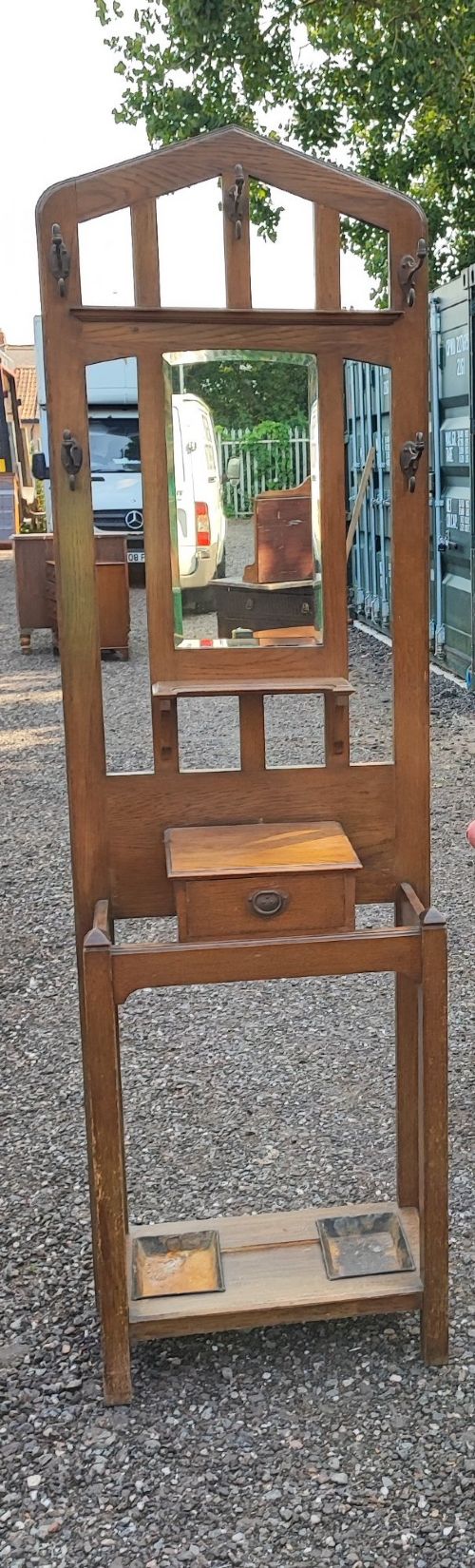
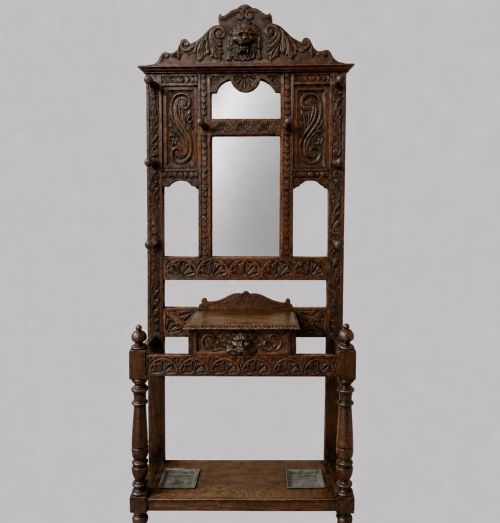
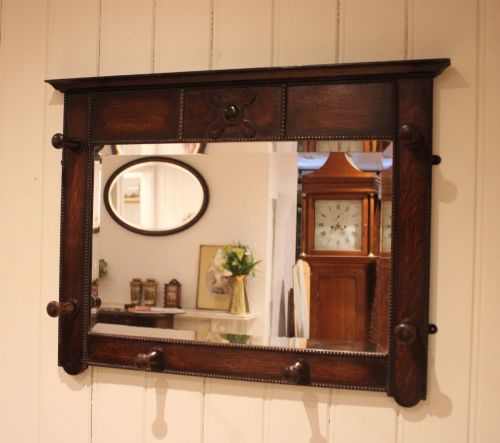
A dark oak hall mirror delivers a functional focal point for an entrance, combining deep timber grain with a reflective surface. When searching for a dark oak hall mirror, buyers encounter everything from simple wall-hanging frames to grand hallstands featuring integrated coat hooks, umbrella wells, and small shelves.
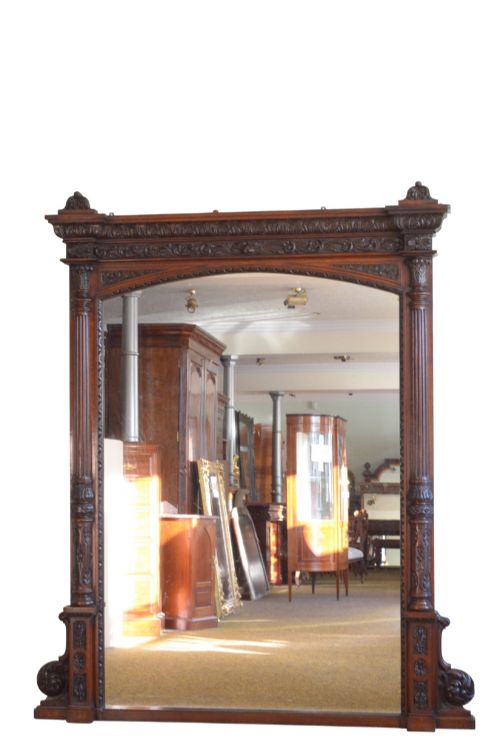
The pieces appearing on this page span several decades and styles, including Victorian, Edwardian, Arts and Crafts, and Gothic Revival. Wall mirrors and multi-functional hall stands represent the primary forms, frequently incorporating carved details, bevelled glass, and brass or iron hardware.
Judging the work
The calibre of a dark oak hall mirror rests upon the crispness of its hand-carved details and the thickness of the timber used in the frame or stand. Pieces featuring deeply undercut foliage, figural carvings, or specialised motifs demonstrate superior craftsmanship compared to simpler, mechanically produced variants.
The quality of the mirror glass itself and the integrity of the integrated hardware, such as solid brass hooks rather than plated base metals, mark the difference between standard utilitarian pieces and finer examples from workshops influenced by designers like Christopher Dresser.
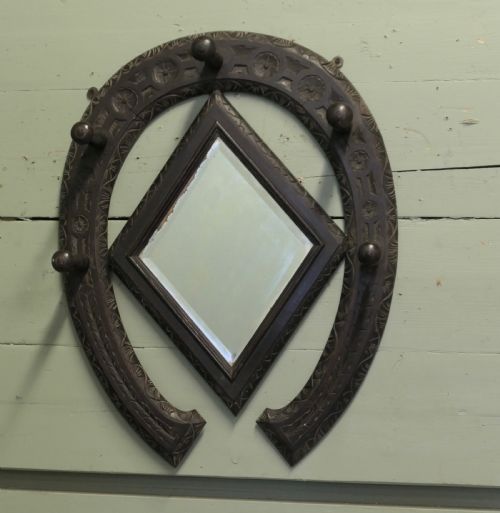
Several pieces feature carved wooden horseshoes and foliage masks, ensuring that woodland spirits and good fortune greet every visitor at the front door.
Waring and Gillow
The Dark Oak Hall Mirror Glossary
- Bevelled glass
- Glass with an angled, polished edge that catches the light. This technique adds depth and a decorative border to wall mirrors.
- Green Man
- A sculptural motif representing a face carved from or entwined with leaves and vines. It appears frequently on Victorian and Edwardian carved oak hallstands.
- Arts and Crafts
- A design movement prioritising traditional craftsmanship and simple forms. Pieces from this style often feature honest construction and understated oak frames.
- Hallstand
- A large piece of hall furniture combining a mirror, coat hooks, a glove drawer, and umbrella stands. Many examples incorporate a narrow bench or seat.
Dark Oak Hall Mirror: Frequently Asked Questions
What is a dark oak hall mirror?
A dark oak hall mirror is a wall-mounted glass panel set within a heavy wooden frame, often incorporating shelves or coat hooks. These items were designed for entranceways to allow a final check of appearance before leaving the house.
Many examples take the form of larger hallstands that combine the mirror with umbrella wells and storage compartments. The dark oak timber matches the heavy interior woodwork typical of Victorian and Edwardian hallways.
How do I date a dark oak hall mirror?
Dating relies on stylistic clues, construction methods, and the type of glass used in the frame. Pieces from the nineteenth century often feature heavier Gothic or Rococo Revival carvings, whilst early twentieth-century examples lean towards simpler Arts and Crafts or Edwardian lines.
Examining the bevel on the glass and the composition of the brass or iron coat hooks also helps establish the period. Hand-cut screws and backboards provide further physical evidence of the manufacturing era.
Where were hall mirrors placed?
These mirrors hung in entrance halls, corridors, and cloakrooms where people gathered before heading outdoors. Their placement near the front door offered practical utility for adjusting hats, coats, and scarves.
In larger homes, they formed part of a grand hallstand positioned directly opposite or beside the main entrance. Smaller wall-hung versions suited narrower passageways and secondary cloakrooms.
How do I care for dark oak?
Maintaining dark oak involves keeping the timber away from direct heat sources and sudden humidity changes to prevent the wood from splitting. Regular dusting with a soft, dry cloth preserves the finish without building up heavy wax residues.
Glass cleaner applied to a cloth rather than sprayed directly avoids damaging the surrounding wooden frame and the mirror backing. Periodic light polishing maintains the deep lustre of the oak.