

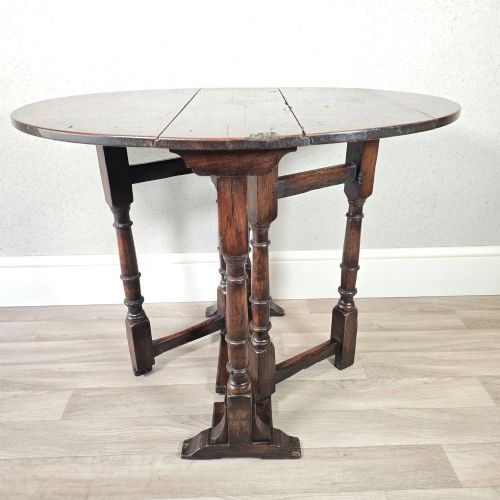
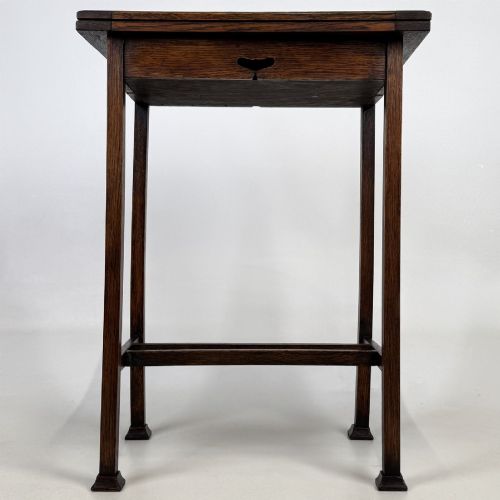
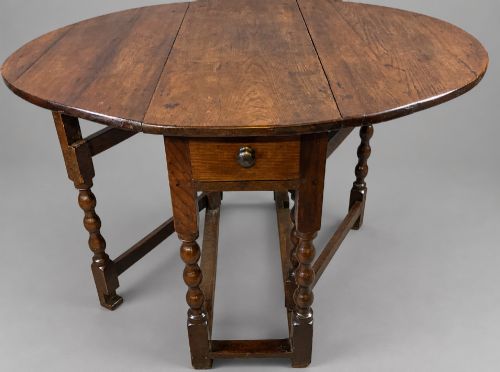
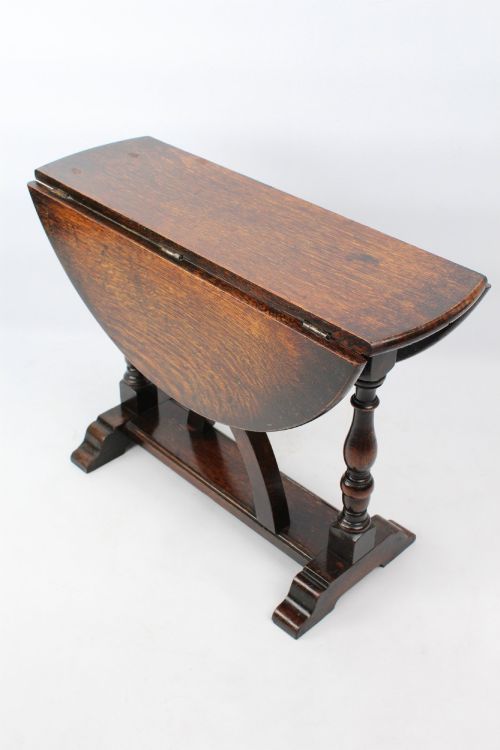
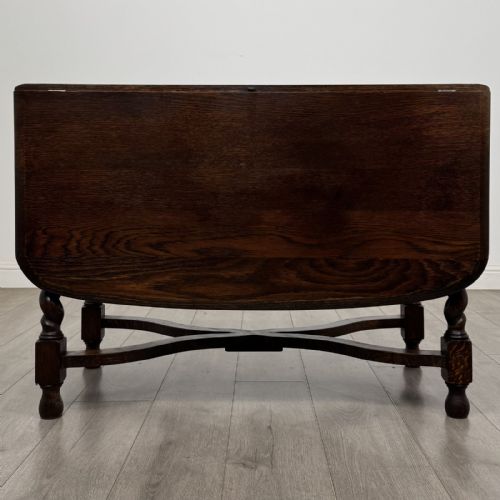
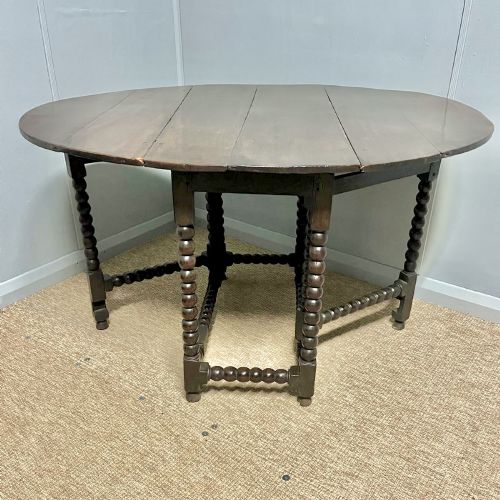
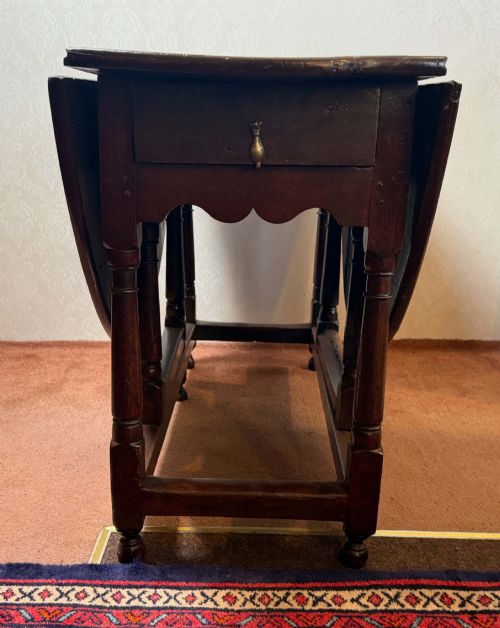
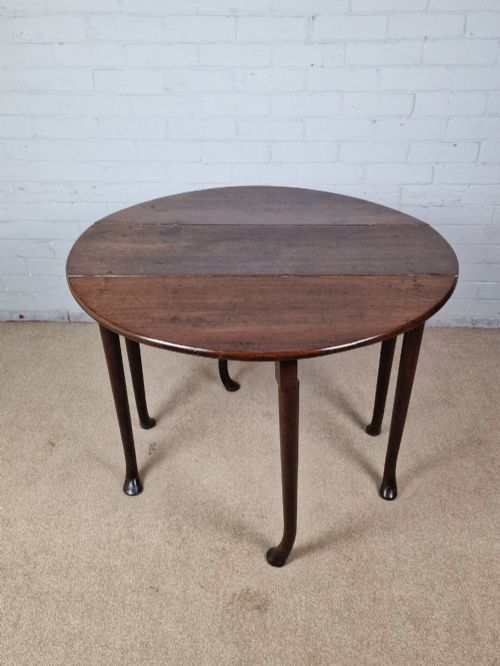
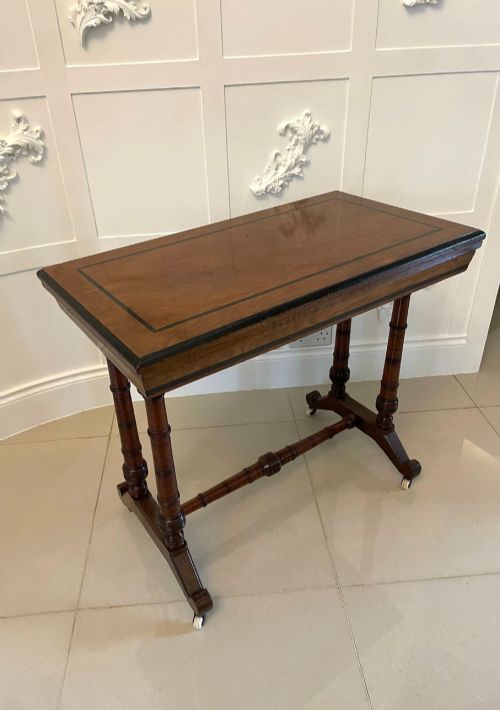
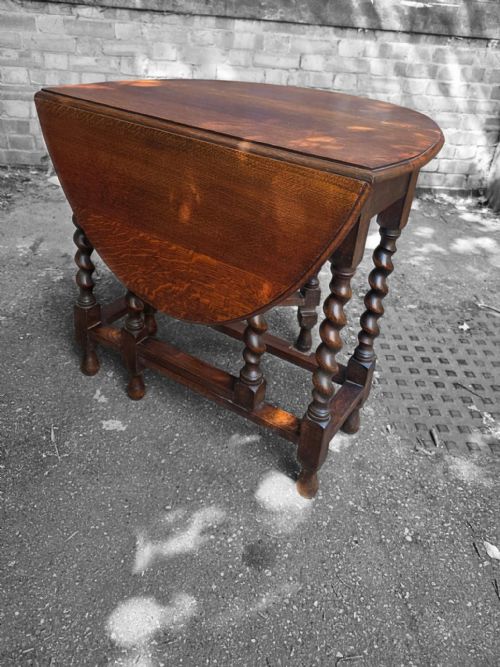

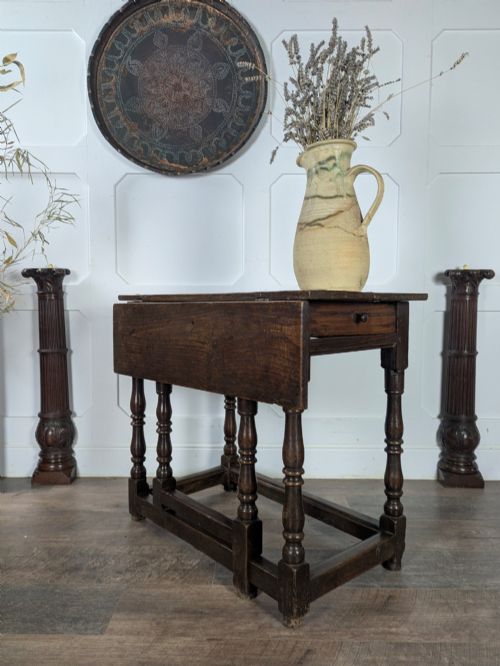

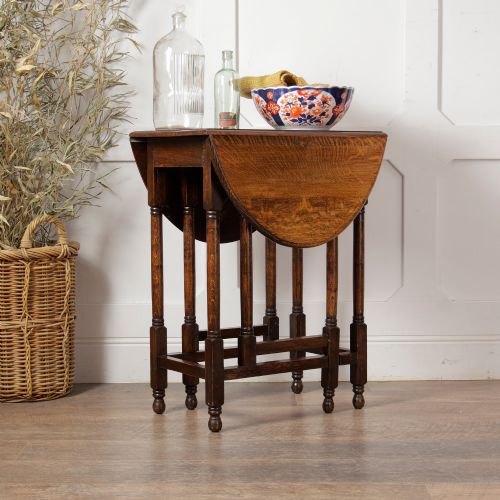
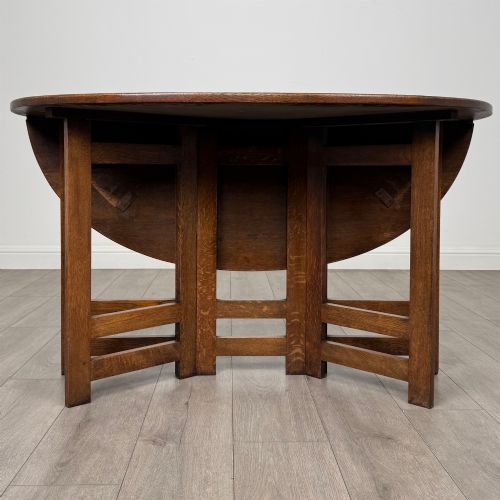
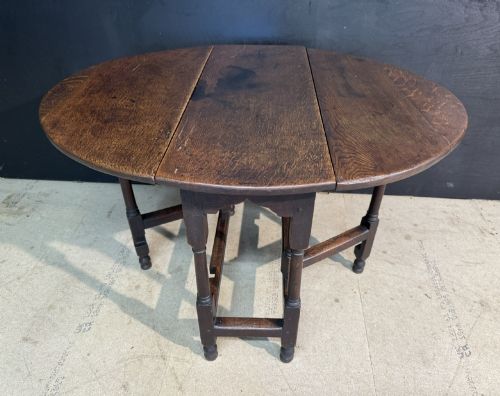
Dark Oak Folding Table
A dark oak folding table offers practical surface space with centuries of timber character, spanning centuries of practical English and continental joinery.
Materials and Construction
Construction relies heavily on solid oak timber, sometimes complemented by walnut sections, jointed to allow leaves to drop or fold smoothly. Joinery techniques such as pegged mortise and tenon joints secure the fixed frames against the weight of moving flaps.
Turned baluster legs, including barley twist configurations, support the swinging gate sections that hold up the extended leaves. Brass or iron hardware frequently joins the moving leaves to the main top, while timber shrinkage over centuries creates distinctive surface patinas.
Evaluating Quality
Quality rests in the integrity of the timber movement and the crispness of the turned legs, distinguishing seventeenth-century originals from later revivals. A superior piece maintains tight joints in the swinging gate mechanism without excessive wobble in the drop leaves.
Surface depth and timber patination separate utilitarian replacements from pieces retaining original finishes and deep colour. The harmony between the original oak boards of the top and the supporting stretchers dictates the architectural integrity.
Dark Oak Folding Table Retail Price Guide 2026
Typical asking prices for dark oak folding table among the pieces listed under this phrase on Sellingantiques today, from the lower quarter to the upper quarter. They describe what is for sale here now, not the wider market.
Listings feature solid oak and walnut across centuries, incorporating brass and iron hardware on gateleg and drop-leaf forms.
The Dark Oak Folding Table Glossary
- Gateleg table
- A table with hinged flaps and swinging legs that pull out to support the extended leaves. This design became popular in the seventeenth century for maximising dining space in smaller rooms.
- Drop leaf
- A hinged table leaf that lowers when not in use. It allows a large surface to collapse into a slim footprint.
- Barley twist
- A spiral-turned wooden leg resembling a twisted rope. This decorative turning style frequently appears on seventeenth-century and Jacobean revival furniture.
- Patina
- The surface sheen and deep coloration developed by aged wood through handling, polishing, and oxidation over centuries. It serves as an indicator of genuine age.
- Credence table
- A folding or semicircular table with a swinging top, historically used in churches or noble households. Seventeenth-century examples feature sophisticated pivoting frames.
Dark Oak Folding Table: Frequently Asked Questions
How do I use a gateleg table daily?
Keep one or both leaves dropped against the base to form a narrow side console against a wall. Pull the swing legs outward and lift the leaves whenever extra dining or workspace is required.
Ensure items placed on the hinges remain balanced across the central join. Regular use of the folding mechanism helps maintain the pivot points without straining the timber joints.
How do I clean a dark oak folding table?
Dust the timber surfaces regularly with a dry, soft cloth to prevent grit accumulation in the grain. Apply a traditional beeswax sparingly to nourish the wood and maintain the natural sheen.
Avoid placing wet glasses or hot dishes directly onto the bare oak surface. Use coasters and placemats to protect the historic polish and prevent water rings from settling into the grain.
Are seventeenth century tables sturdy enough for dining?
Early oak tables were built to endure heavy daily use from households that predated modern dining norms. Their solid construction often remains robust after centuries of service.
Check that the gateleg pivots move freely without forcing the wooden stretchers. Gentle handling of the drop leaves preserves the original hinges and peg joints for continued service.
How do I date an oak folding table?
Examine the plank thickness, tool marks underneath the top, and the style of the turned legs. Seventeenth-century examples often display hand-split boards and pegged joinery, while revival pieces from the twentieth century show machine-cut uniformity.
Look at the hardware used for the hinges and the overall colour of the oak. Dark honey tones and deep patinas typically point towards earlier periods, whereas twentieth-century items often exhibit lighter finishes.