




Dark Oak Figure Carvings
Dark oak figure carvings span centuries of master woodworking, offering collectors profound religious, mythological and historical subjects rendered in solid timber.
Dark Oak Figure Carvings
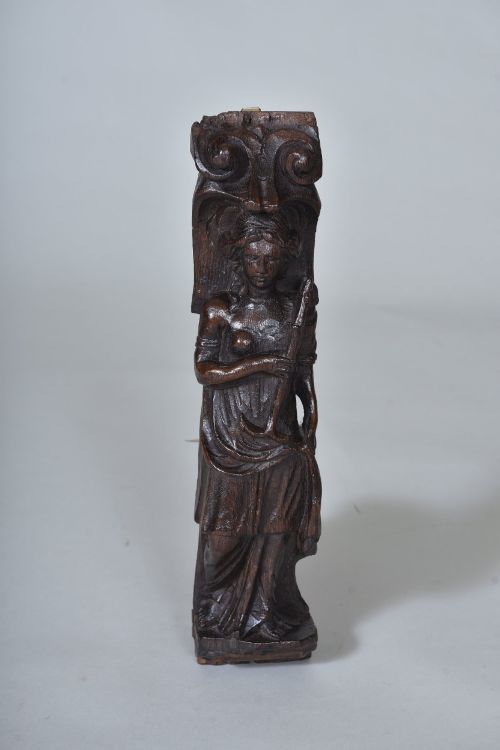
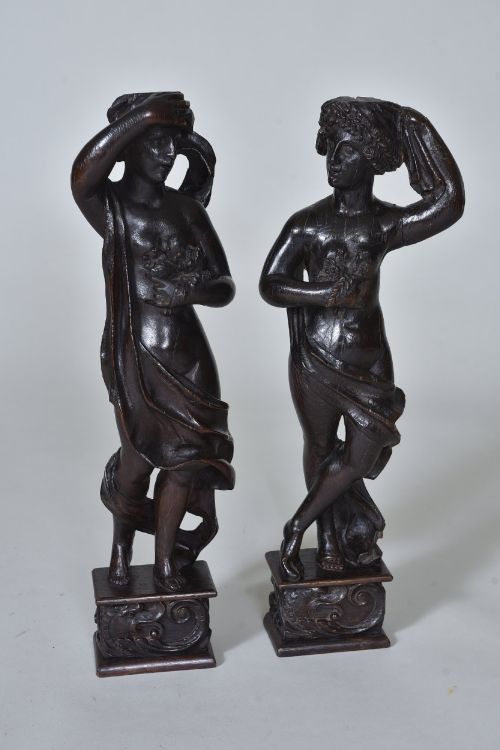
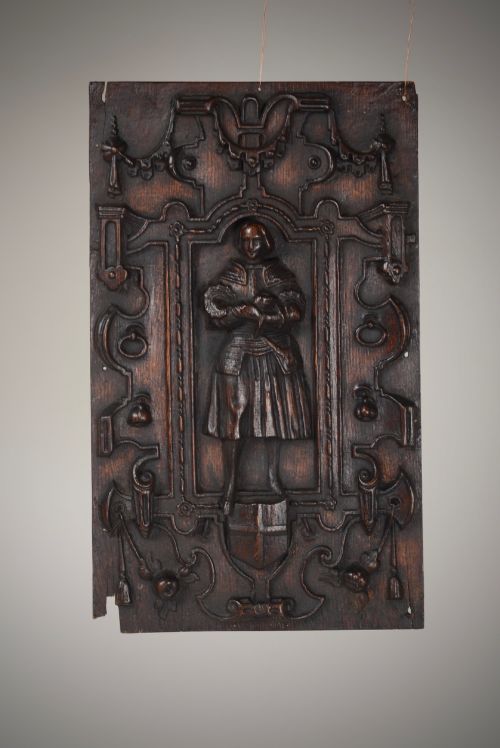
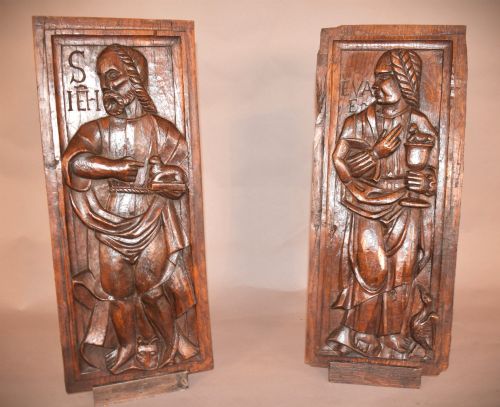
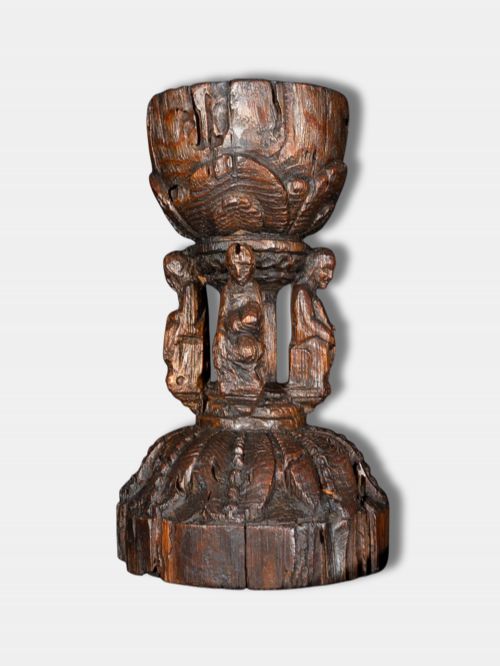
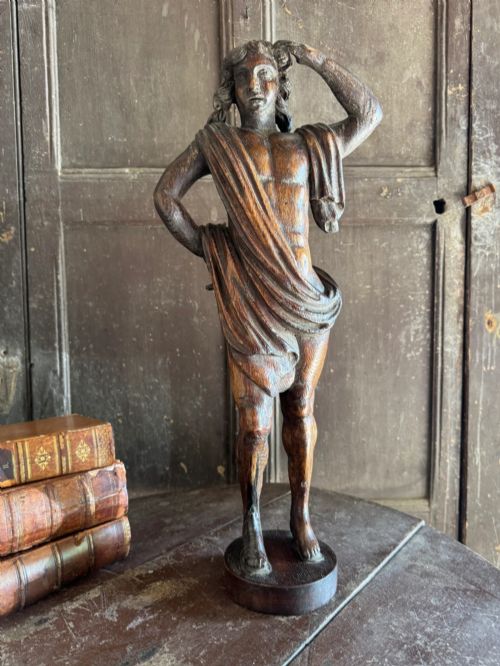
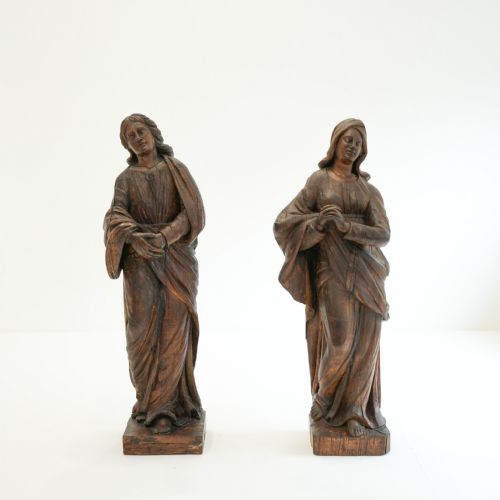
Dark oak figure carvings encompass standalone sculptures, architectural panels, and figural ornaments shaped from dense timber. Buyers encounter ecclesiastical saints, classical figures, animals, and mythological subjects originating from British, continental European, and regional workshops.
The selection ranges from pre-sixteenth century medieval devotional works to nineteenth century Gothic Revival pieces and Black Forest animal studies. Panels, caryatids, and freestanding statues form the bulk of the domestic and architectural items available.
Materials and construction
Carvers utilised dense hardwoods, predominantly oak alongside assorted timber, working directly with hand chisels and gouges to yield deep relief or fully rounded forms. The natural grain of the wood dictates the direction of the cut, allowing intricate drapery and facial expressions to emerge from blocks of solid timber.
Surfaces frequently display historic patination developed through centuries of waxing, handling, and exposure to domestic environments. Metal fixings or secondary woods appear occasionally in structural bases or architectural terminals, though the primary sculptural body remains solid carved wood.
Oak is the predominant material across the selection, accompanied by mixed hardwoods and occasional metal and glass components.
Assessing quality
The integrity of the timber and the preservation of original tool marks distinguish exceptional survival from heavily restored or later replacement carving. Depth of carved relief and the vitality of the subject matter separate standard decorative panels from museum-grade sculpture.
The Dark Oak Figure Carvings Glossary
- Caryatid
- A sculpted female figure serving as an architectural support column or pillar. These architectural elements appear frequently in sixteenth and seventeenth century interiors.
- Pieta
- A subject depicting the Virgin Mary supporting the dead body of Christ. This iconic devotional group occurs in medieval and Renaissance ecclesiastical wood sculpture.
- Gothic Revival
- An architectural and decorative style popular during the nineteenth century mimicking medieval forms. This movement produced substantial religious figures and architectural salvage.
- Black Forest
- A nineteenth century Swiss and German regional style known for naturalistic animal carvings. These decorative items often incorporate functional elements like inkstands.
- Donor figure
- A portrait of the person who commissioned a religious work, shown kneeling or praying. These sculptures frequently date from the late medieval and early Renaissance periods.
Dark Oak Figure Carvings: Frequently Asked Questions
How do I clean an old oak carving?
Dust gently with a soft, dry brush to prevent dirt accumulation in the crevices. Avoid water, modern polishes, or harsh chemical cleaners that strip the historic wax and dry out the timber.
Maintain a stable room humidity to prevent the oak from splitting or warping over time. Professional conservation wax can be applied sparingly if the surface appears excessively dry.
Were these figures originally painted?
Many medieval and early modern religious figures originally retained bright polychrome paint or gilding over gesso grounds. Centuries of cleaning, stripping, or deliberate fashion changes often left the bare wood exposed.
Traces of original pigment sometimes survive in deep folds and protected recesses. Buyers should examine surfaces closely under magnification to spot remnants of historic paint schemes.
How can I tell a sixteenth century carving from a nineteenth century revival piece?
Early carvings display tool marks left by primitive hand gouges and adzes, combined with deep shrinkage cracks appropriate to aged timber. Nineteenth century Gothic Revival works often exhibit machine assistance or uniform tool signatures.
Style, patination, and construction joinery also provide reliable clues to the true age of the piece. Comparative study of period costume and facial proportions helps confirm the date of execution.
Where were these figures displayed originally?
Ecclesiastical figures stood inside churches on rood screens, altarpieces, or flanking shrines as objects of veneration. Secular and architectural carvings adorned wealthy merchant houses, civic halls, and aristocratic libraries.
Panels and caryatids formed permanent fixtures of wall panelling and grand mantelpieces. Today, collectors typically display these items on dedicated stands or mount them securely to interior walls.