


Dark Oak Brackets
Dark oak brackets are architectural supports and carved furnishings shaped from timber, offering both structural strength and period character for interiors.
Dark Oak Brackets
When searching for dark oak brackets, buyers encounter architectural elements and carved supports dating from the 16th century through to later revival periods. These items include large building brackets, corbels, and carved overdoor pediments originating from English and continental workshops.
The selection ranges from early 17th-century carved oak corbels depicting figures to paired 18th-century architectural salvage. Each piece demonstrates the heavy timber construction typical of historic interior joinery.
How they were made
Maker's hands shaped these supports from solid oak using traditional hand-carving techniques, often utilising fruitwood inlay or iron fixings for structural integrity. The wood was selected for dense grain and durability before being worked with gouges and chisels to create deep relief carvings.
Surfaces finished with historic wax polish reveal the natural figure of the timber, developing a deep patination over centuries of exposure.
Dark Oak Brackets Retail Price Guide 2026
Typical asking prices for dark oak brackets among the pieces listed under this phrase on Sellingantiques today, from the lower quarter to the upper quarter. They describe what is for sale here now, not the wider market.
Listings feature oak material across periods spanning from the 16th century through to Edwardian architectural salvage.
What varies in quality
Quality rests in the crispness of the hand-carved detail and the integrity of the original timber rather than mere age. Pieces with deeply undercut figures or architectural moulding show superior craftsmanship compared to simpler utilitarian supports.
The presence of original surfaces without modern chemical stripping separates fine architectural salvage from heavily restored examples.
George Wadham·Winterhalder And Hofmeier
The Dark Oak Brackets Glossary
- Corbel
- A structural member projecting from a wall to support a weight inside or outside a building. These are frequently carved with figurative or foliate designs in solid oak.
- Pediment
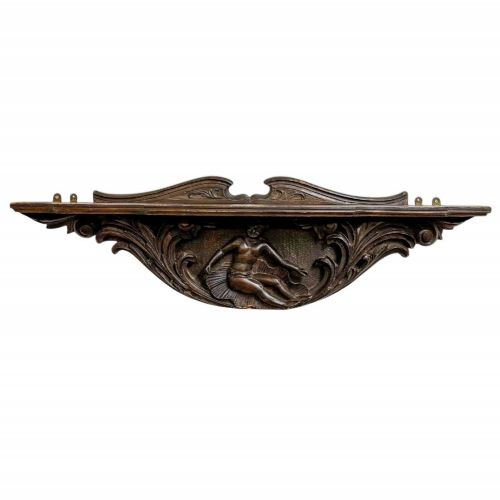
- A triangular or shaped architectural crown placed above doors, windows, or shelving. Examples incorporate carved oak panels and display functional shelving underneath.
- Salvage
- Building materials and architectural elements rescued from older structures for reuse. This category covers architectural fragments removed during historic renovations.
- Caryatid
- A sculpted female figure serving as an architectural support taking the place of a column or a pillar. Such figures appear carved in high relief on timber panels.
Dark Oak Brackets: Frequently Asked Questions
How do I mount historic oak brackets?
These architectural elements require secure fixing into solid masonry or studwork using appropriate steel screws and concealed brackets. The substantial weight of solid timber demands professional installation to ensure stability.
Historic mounting points should be inspected before hanging to preserve the integrity of the surrounding wood without causing splitting.
Where were architectural brackets used originally?
Carpenters fitted these supports beneath projecting roof eaves, heavy mantelpieces, and interior ceiling beams to distribute weight. They also framed doorways and supported overdoor pediments in grand chambers.
Domestic and ecclesiastical interiors relied on these timber pieces for both functional load-bearing and decorative emphasis.
How should I clean antique oak timber?
Maintain the surface using a soft dry cloth and apply occasional coats of natural beeswax to nourish the dry wood. Avoid modern liquid polishes that build up artificial layers and dull the historic patination.
Keep carved pieces away from direct heat sources and strong sunlight to prevent the timber from splitting or warping over time.
Can I date oak brackets by their carving?
Stylistic markers such as strapwork, geometric mouldings, and specific figurative motifs help place carved work within centuries like the 16th or 17th. Tool marks left by gouges and chisels further indicate hand-working methods typical of early periods.
Revival pieces from later centuries often imitate these earlier styles, requiring careful examination of timber shrinkage and joint construction.