

Dark Oak Box Bench
A dark oak box bench brings centuries of practical storage and solid timber seating together in the hallway or living space.
Dark Oak Box Bench
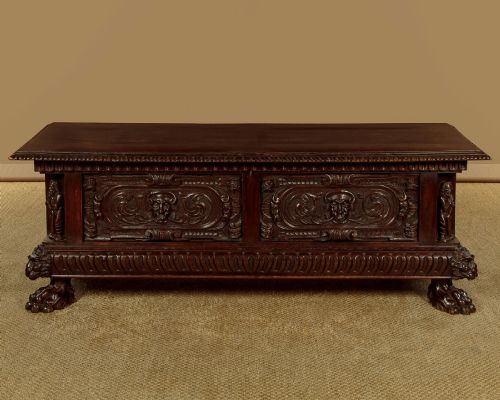
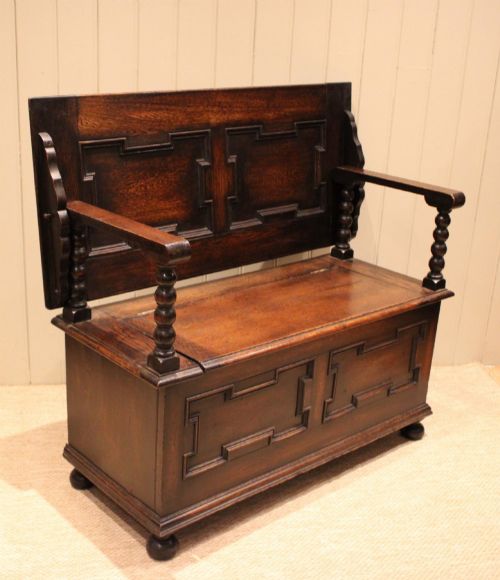
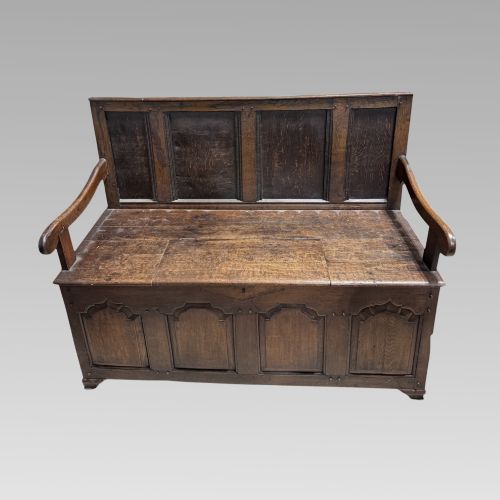
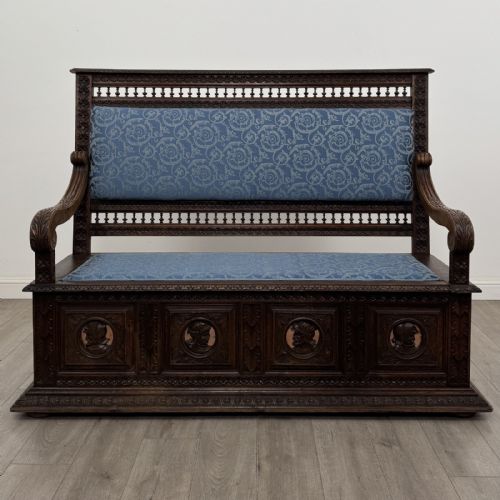
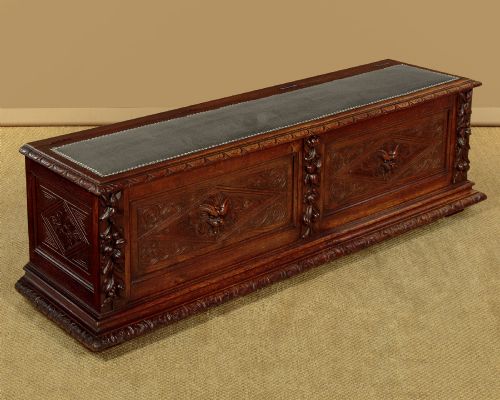
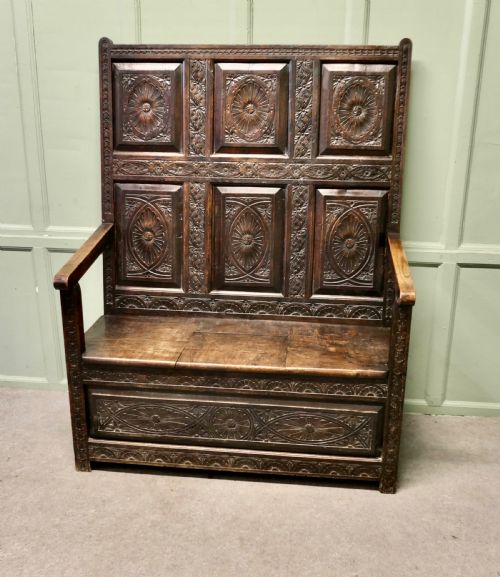
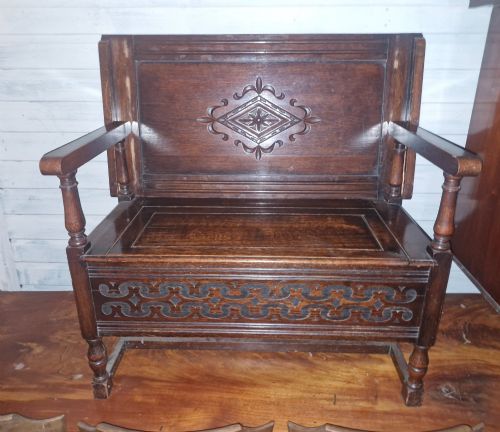
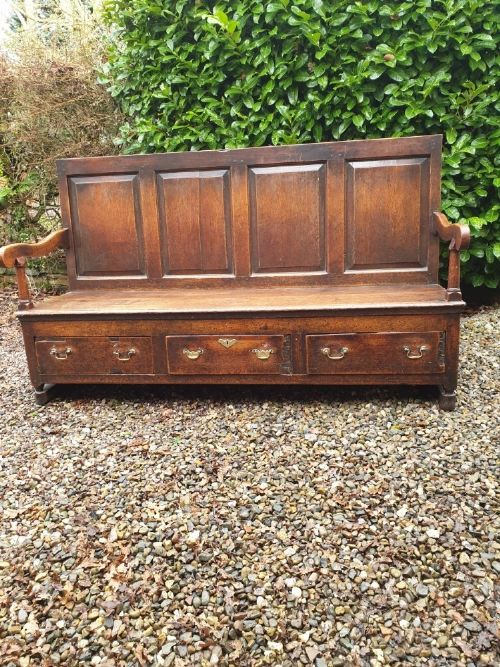
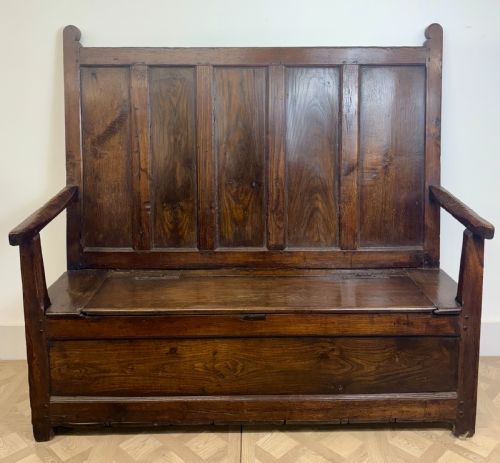
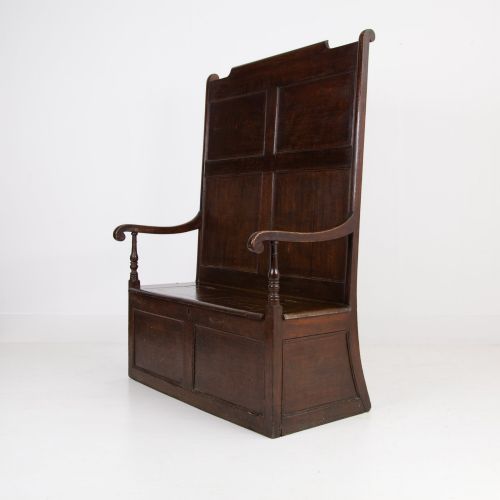
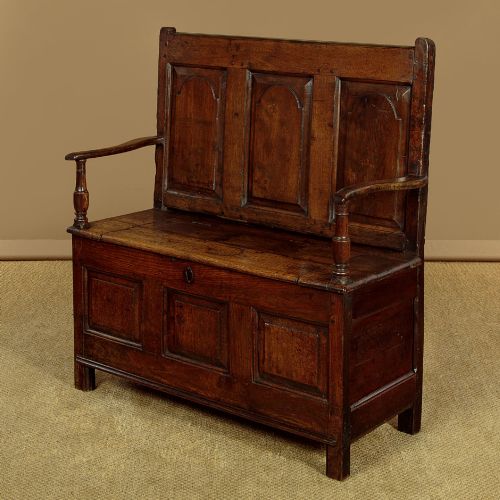
A dark oak box bench serves as both a sturdy seat and a capacious storage container, often taking the form of a settle, hall bench, or mule chest with a hinged lid. These pieces emerge across several periods, including the seventeenth, eighteenth, and nineteenth centuries, alongside revival styles like Jacobean and Victorian.
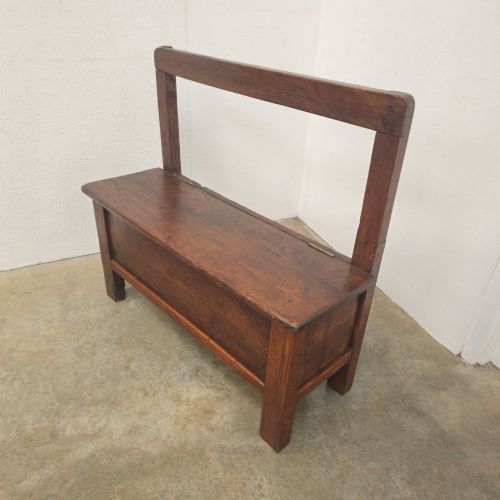
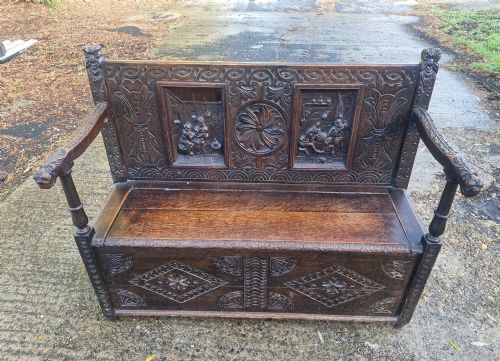
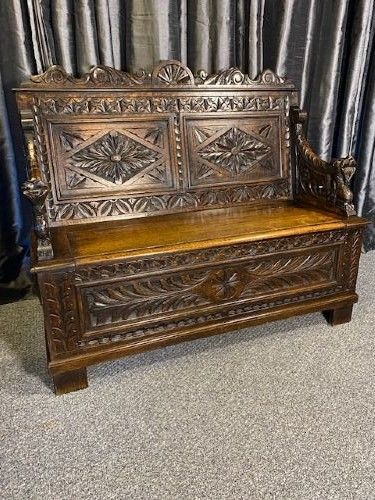
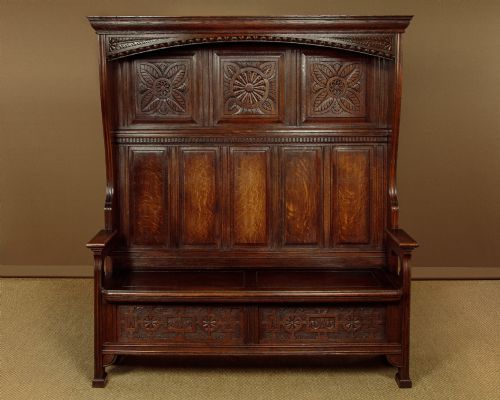
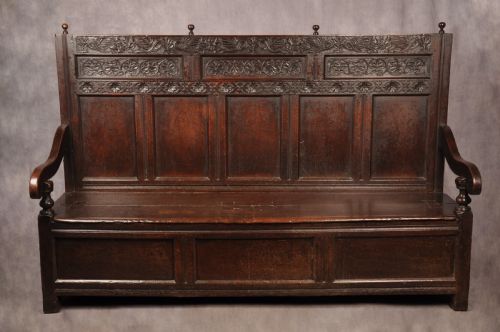
The version most commonly encountered on this page is the high-back or panel-backed wooden settle featuring a lift-up seat compartment. Regional variations such as Welsh or North Country pieces appear frequently, alongside later Edwardian and 1920s adaptations designed for hallway use.
How they were made
Cabinet makers utilised solid timber construction, predominantly oak joined with pegged mortise and tenon joints, occasionally incorporating secondary woods such as ash, elm, or walnut. Iron and brass hinges, locks, and handles secure the lift-up lids and storage compartments.
Surface ornamentation relies on hand-carved panels, geometric mouldings, and panel-back construction rather than applied veneer. Early examples utilise simple plank construction and board chests, while later Victorian and Edwardian iterations feature heavier relief carving.
Dark Oak Box Bench Retail Price Guide 2026
Typical asking prices for dark oak box bench among the pieces listed under this phrase on Sellingantiques today, from the lower quarter to the upper quarter. They describe what is for sale here now, not the wider market.
Some early box settles feature sneaky high backs specifically proportioned to trap hearth heat around the lucky person sitting closest to the fire.
What varies in quality
The integrity of the timber framing and the originality of the structural components dictate the standing of an individual piece. Retaining the original hinges, boards, and undivided base interior marks out a superior example.
Depth of carving and proportion separate utilitarian workshop output from accomplished vernacular cabinet work. Pieces that maintain their deep original patina without excessive later alteration command greater appreciation.
The Dark Oak Box Bench Glossary
- Box settle
- A wooden bench featuring a high back and a enclosed compartment beneath the seat for storage. This form kept draughts away from the sitter while doubling as a household chest.
- Mule chest
- A traditional storage chest featuring one or more drawers beneath the main lift-up compartment. These hybrid pieces bridge the gap between simple coffers and full drawer chests.
- Panelling
- Framework constructed with vertical stiles and horizontal rails holding fitted wooden panels in place. This technique accommodates the natural expansion and contraction of solid timber without splitting.
- Vernacular
- Furniture built by local country craftsmen following regional traditions rather than metropolitan academic designs. These pieces often employ native timbers like elm and ash alongside primary oak.
- Jacobean Revival
- A nineteenth-century stylistic movement copying the dark wood, heavy proportions, and geometric carving of the seventeenth century. Pieces from this era often emulate much older furniture.
Dark Oak Box Bench: Frequently Asked Questions
Where should I put a dark oak box bench?
These pieces suit entrance halls, boot rooms, or large living spaces where the internal storage compartment can hold bulky items like blankets or shoes. Their solid backs also function well as room dividers in open-plan areas.
Ensure the space allows adequate clearance for the hinged seat to lift fully without striking walls or surrounding furniture. Placing the timber away from direct heat sources prevents the oak from drying out and splitting over time.
How do I tell an 18th-century settle from a Victorian revival?
Look closely at the construction methods, tool marks on the interior boards, and the nature of the timber ageing. Earlier pieces show hand-riven surfaces and pegged joinery, whereas later revival items often display machine-sawn timber and different interior wear patterns.
The style of the carving also offers clues, as seventeenth and eighteenth-century work tends to be deeper and crisper than the softer, more mechanical relief work found on Victorian copies.
How do I care for antique oak furniture?
Maintain the timber by applying traditional beeswax sparingly and buffing with a soft cloth to nourish the grain. Avoid modern liquid polishes containing silicone, which can build up and degrade the antique wax finish.
Keep the piece out of direct sunlight and maintain stable indoor humidity levels to protect the wood from warping or cracking. Regular gentle dusting keeps the carved recesses free from grime.