



Dark Oak Bedside Cabinet
A dark oak bedside cabinet brings grounded warmth and robust utility to a bedroom, holding evening essentials within solid timber.
Dark Oak Bedside Cabinet
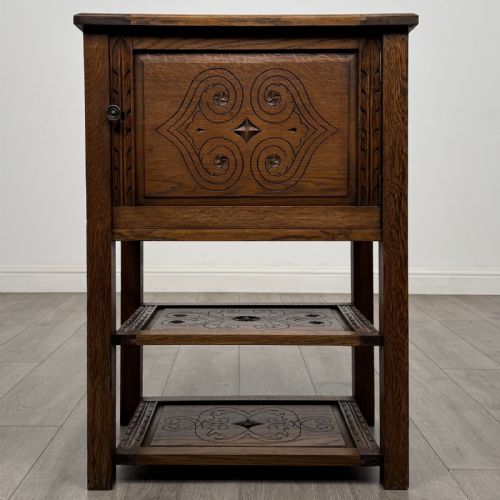
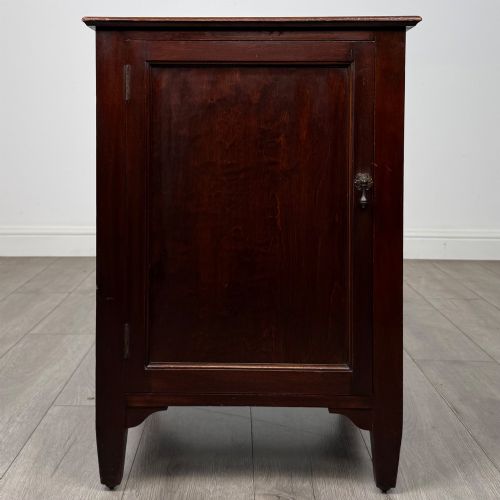
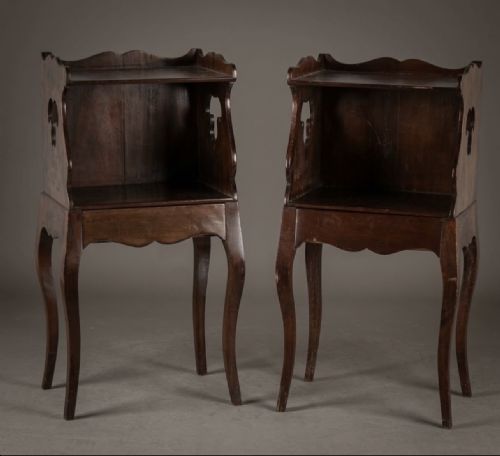
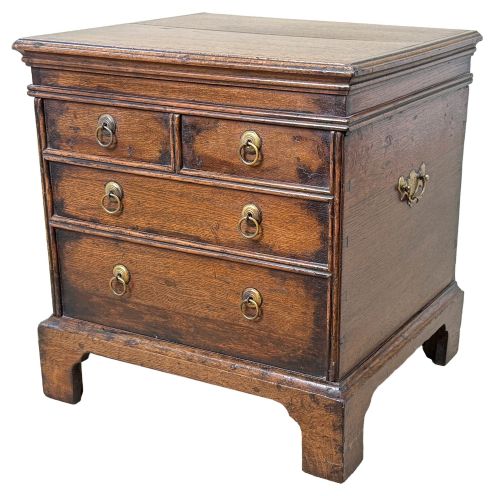
A dark oak bedside cabinet is a compact storage piece designed to sit beside a bed, holding small personal items within a cupboard or drawer. When you search for a dark oak bedside cabinet, you encounter forms ranging from Edwardian and 1920s cupboards to Georgian close stools and French provincial tables.
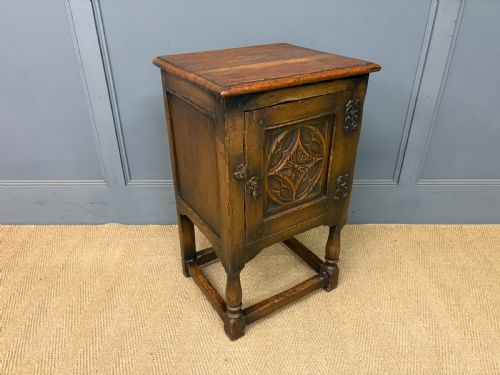
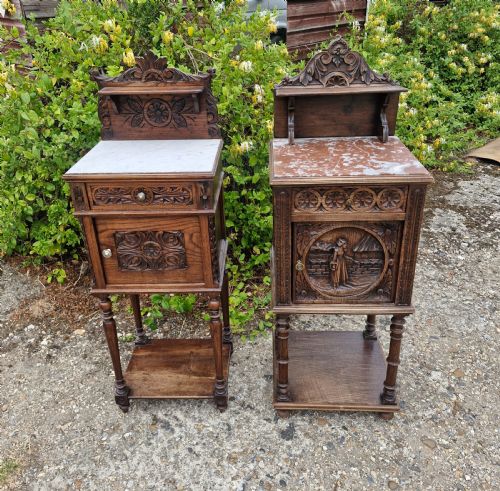
The version most frequently met on this page is the early twentieth-century or Edwardian single-door cabinet, often finished with carved details or standing on short legs. These practical pieces reflect decades of domestic use, utilising dense timber that holds its grain and rich colour over generations.
How they were made
Makers built these cabinets using solid oak panels joined with traditional methods, often incorporating brass handles, iron hinges or marble tops for durability. Stained wood finishes deepened the natural tone of the timber, matching the heavy character favoured in period interiors.
Carved friezes, panelled doors and turned supports required skilled hand woodworking, shaping sturdy storage items meant to endure daily bedroom routines.
Dark Oak Bedside Cabinet Retail Price Guide 2026
Typical asking prices for dark oak bedside cabinet among the pieces listed under this phrase on Sellingantiques today, from the lower quarter to the upper quarter. They describe what is for sale here now, not the wider market.
Several listings trace their lineage directly back to Georgian close stools, proving that antique bathroom habits make surprisingly charming bedside tables.
What varies in quality
The distinction between standard utility items and finer examples lies in the depth of timber selection, the crispness of carved details, and the integrity of original joinery. Better pieces display balanced proportions and cleanly fitted doors that close flush without modern hardware replacements.
Subtle differences in the hardware, such as cast brass drop handles or heavy iron hinges, signal whether a cabinet was built as a bespoke item or produced for everyday household demand.
The Dark Oak Bedside Cabinet Glossary
- Close stool
- A box-form piece of furniture designed with a seat and internal compartment, frequently adapted or repurposed as a bedside chest in earlier centuries.
- Frieze
- The decorative horizontal band near the top of a cabinet, often carved with geometric or floral motifs in Edwardian and 1920s pieces.
- Jacobean Revival
- A decorative style popular in later periods that mimics seventeenth-century English design through heavy proportions, dark finishes, and panelled geometry.
- French Provincial
- A regional style characterised by simpler rustic forms, curved cabriole lines, and lighter decorative carving than formal Parisian furniture.
- Standing cupboard
- A small vertical storage unit raised on legs or a plinth, offering enclosed shelving behind a single panelled door.
Dark Oak Bedside Cabinet: Frequently Asked Questions
What is a dark oak bedside cabinet used for?
These cabinets provide enclosed bedside storage for books, lamps, and personal items, keeping surfaces tidy while adding traditional character to a bedroom.
Their compact footprints suit tight spaces beside a bed, offering a practical surface and a concealed compartment below.
How do I date a dark oak bedside cabinet?
Dating relies on examining construction methods, hardware types, and stylistic indicators such as Edwardian carved friezes or 1920s proportions.
Earlier eighteenth-century pieces, including close stools, show hand-pegged joinery and distinct patination compared to later mass-produced examples.
Are these cabinets made of solid oak?
The majority of pieces utilise solid oak timber for the main structure, doors, and tops, sometimes paired with secondary woods like pine on internal elements.
Examining the grain patterns on the interior panels confirms whether the construction relies on solid boards throughout.
How do I clean a dark oak surface?
Maintain the finish by dusting with a dry cloth and occasionally applying natural beeswax to nourish the dry timber without building up heavy residues.
Avoid harsh chemical cleaners that strip the historic polish and alter the deep brown colour of the oak.