



Dark Military Oil Painting
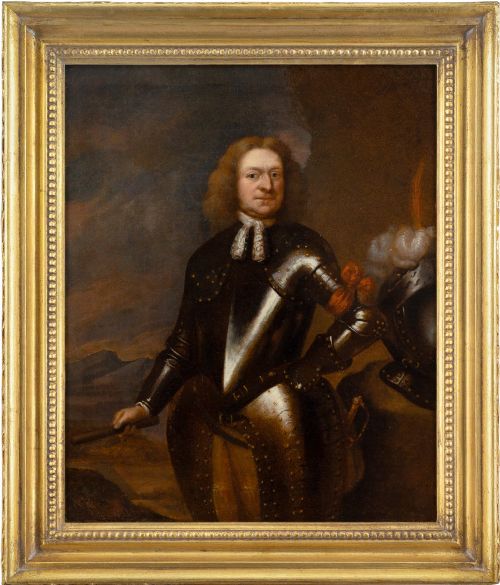
When choosing a dark military oil painting, you select a historical portrait that captures officers, commanders, and monarchs in uniform or armour.
Dark Military Oil Painting
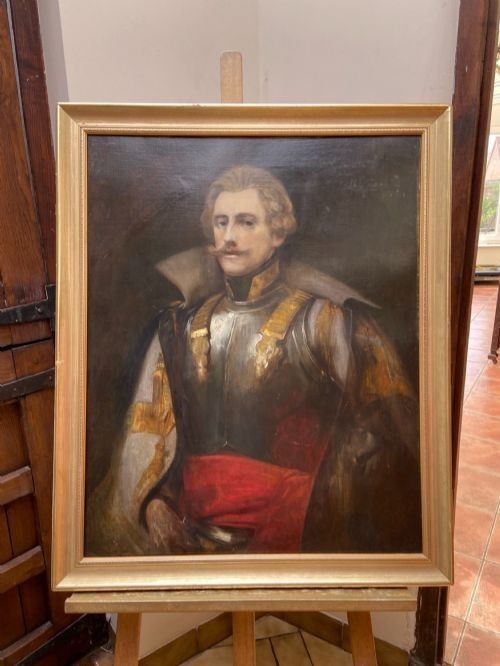
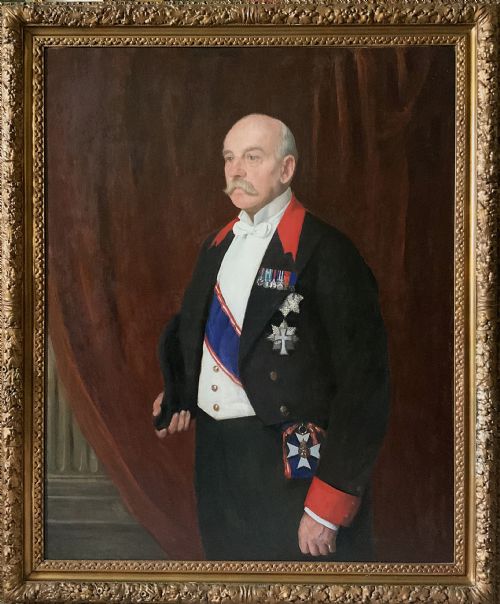
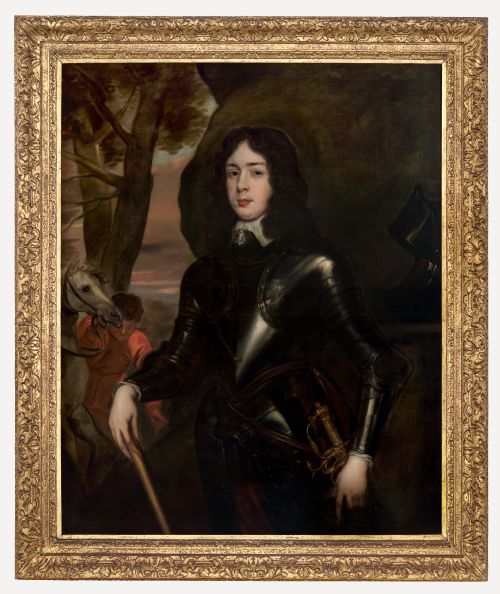
A dark military oil painting depicts officers, generals, and naval commanders through centuries of portraiture. These artworks range from seventeenth-century figures in full plate armour to nineteenth-century commanders and twentieth-century leaders in service dress.
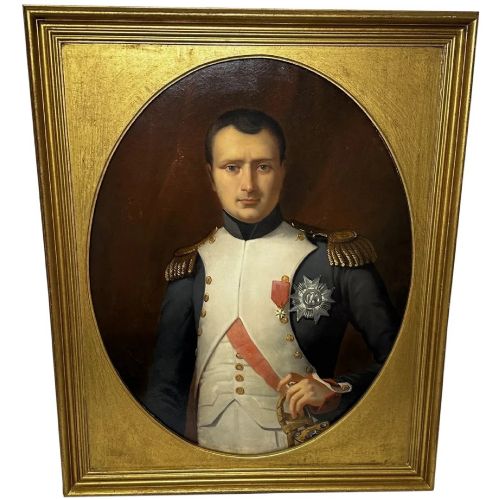
The assortment on this page includes seventeenth-century British and continental European school works alongside Victorian oils and mid-twentieth-century portraits. Canvases portray specific historical figures such as the Duke of Wellington, Napoleon Bonaparte, and various admirals and generals.
Formats vary from large-scale oil paintings on canvas framed in giltwood to intimate miniature paintings. Subjects appear either half-length in armour or mounted on chargers within structured portrait compositions.
Materials and construction
These works utilise oil paint applied to woven canvas supports stretched over wooden frames, occasionally appearing on wood panels or oil on board. Pigments build deep, shadowed backgrounds that accentuate the metallic gleam of steel armour and scarlet sashes.
Frames frequently employ gilded wood or giltwood construction, reflecting period framing traditions from the baroque through the Victorian era. Canvas preparation involved traditional sizing and priming before artists laid down dark grounds.
Listings span from sixteenth-century canvases to 1950s portraits, executed primarily in oil on canvas with giltwood framing.
Assessing quality
Quality rests in the precision of facial rendering, the accurate depiction of military insignia, and the handling of light upon armour and fabric. Superior examples capture individual likeness and psychological depth rather than relying on generic studio formulas.
The execution of the subject's hands, the detailing of lace or gold leaf elements, and the preservation of the original canvas and ground layer distinguish prime academic works from standard decorative workshop copies.
Sir Godfrey Kneller·Sir Anthony van Dyck·David Scougall·Samuel Cooper·John Closterman
The Dark Military Oil Painting Glossary
- Oil on Canvas
- A painting medium where pigments suspended in drying oils are applied to a woven fabric support. This technique allows for rich tonal depth and subtle blending, essential for moody, shadowed military portraits.
- Giltwood
- Wood that has been treated and coated with a thin layer of gold leaf or gold paint. Frames constructed in this manner enhance the visual weight of antique oil paintings.
- Armour
- Protective steel or iron body covering worn by soldiers and officers in portraits dating from the sixteenth through the eighteenth centuries. Painters used its reflective surfaces to demonstrate skill in rendering highlights and shadows.
- Miniature Painting
- A small-scale portrait executed with fine detail. These compact works preserve military likenesses on a scale distinct from large salon canvases.
- School
- A classification used to group artists working in a particular region, period, or under the direct influence of a master. Examples include the Flemish School and the English School.
Dark Military Oil Painting: Frequently Asked Questions
What periods do these portraits cover?
The works span from the sixteenth century through the mid-twentieth century, encompassing seventeenth-century baroque pieces, Georgian and Regency subjects, and Victorian commissions.
Earlier examples focus heavily on commanders in plate armour, while later pieces record naval and military uniforms up to the twentieth century.
Who are the subjects in these paintings?
Subjects include named historical figures such as kings, generals, admirals, and military officers of various European nations. Many depict prominent commanders like the Duke of Wellington or Napoleon Bonaparte.
Other canvases portray members of aristocratic families and lesser-known officers documented during their military service.
How should I display a canvas painting?
Display these works away from direct sunlight and fluctuating humidity to protect the oil paint and canvas substrate. Proper wall placement preserves the integrity of the original giltwood frame.
Adequate lighting accentuates the dark, atmospheric backgrounds typical of these military portraits without risking heat damage to the surface.
How do I distinguish studio copies from primary works?
Studio works and pieces created by followers often replicate known compositions by master painters of the period. Close inspection of brushwork spontaneity and anatomical accuracy helps reveal the hand of the primary artist versus workshop assistants.