



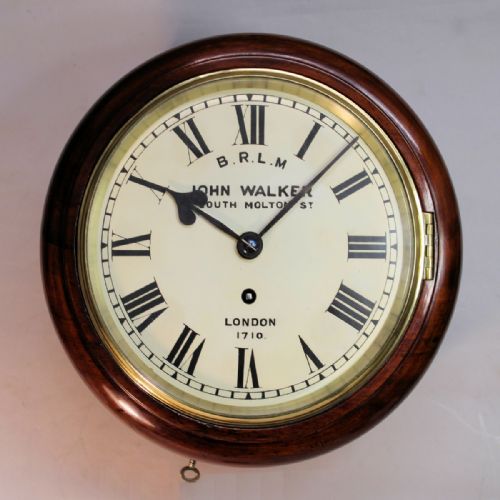
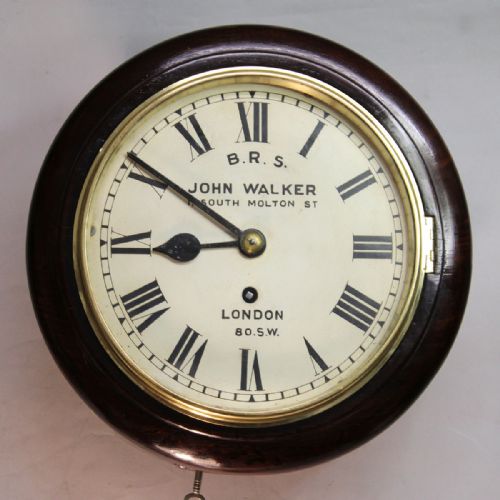

Dark Mahogany Fusee Clock
A dark mahogany fusee clock brings precision timekeeping into any room through smooth timber cases and reliable chain-driven movements.
Dark Mahogany Fusee Clock
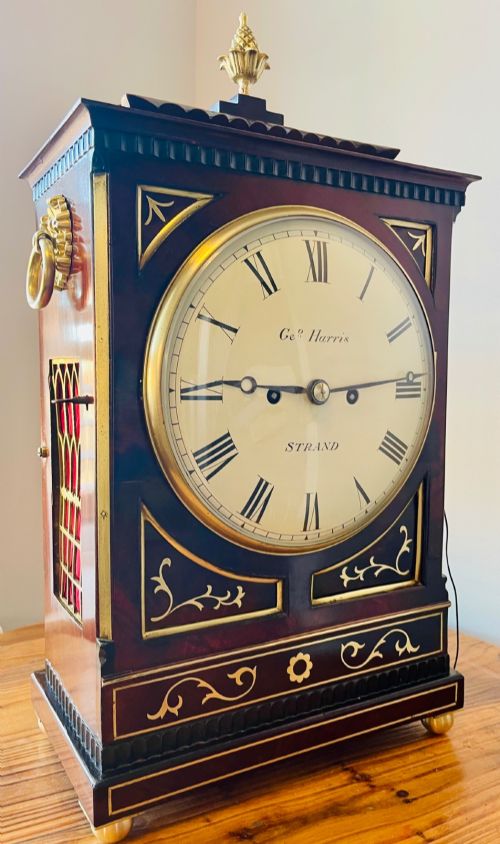
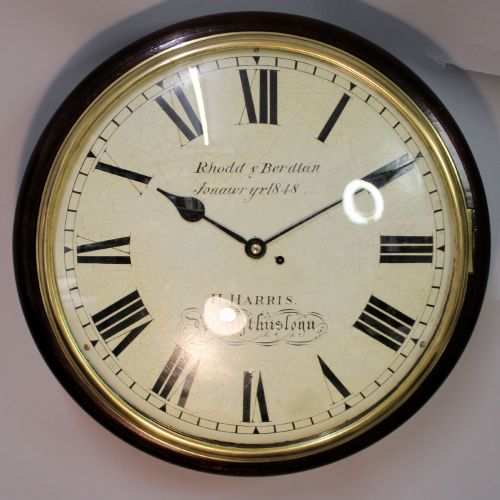
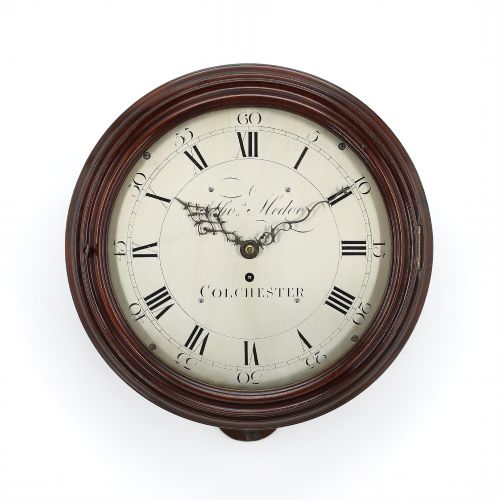
A dark mahogany fusee clock is a timepiece housed in rich timber, appearing most frequently as a wall-mounted dial clock or a portable bracket clock. These pieces span Georgian, Regency, and Victorian periods, often originating from London workshops or provincial makers.
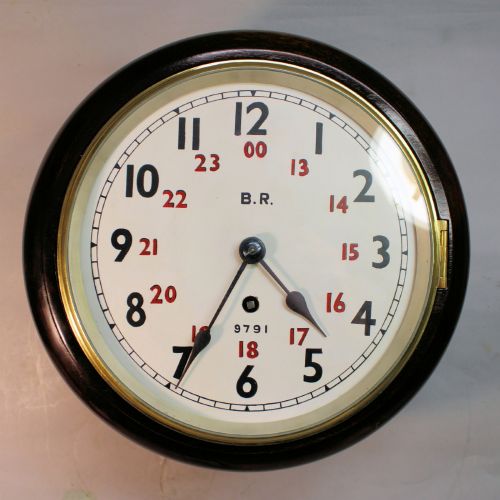
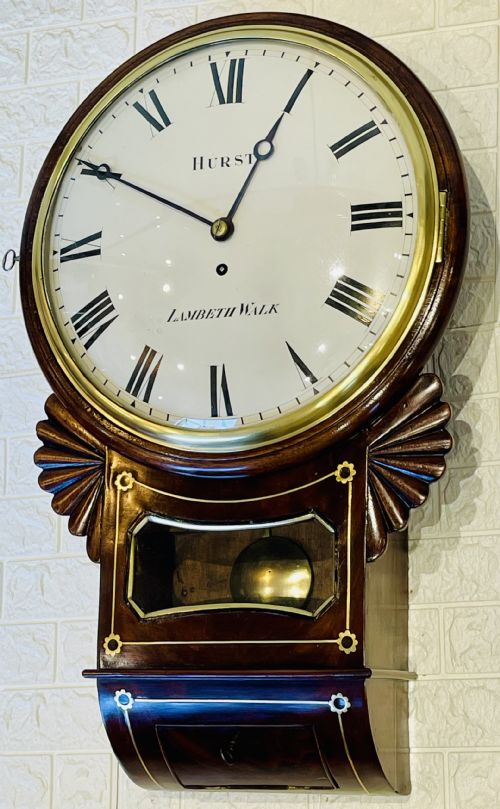
The selection ranges from railway station dials and drop-dial wall clocks to table clocks and library pieces. Buyers encounter both utilitarian railway timepieces and decorative bracket clocks featuring brass inlays or carved cases.
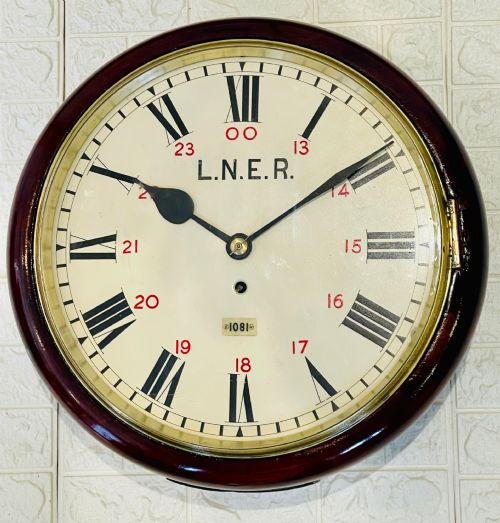
Many examples trace their service to specific networks like the Great Western Railway or the London and North Eastern Railway. Domestic variations showcase refined cabinetwork intended for parlours and libraries.
Materials and Technique
Cases combine solid and veneered mahogany with brass bezels, glass covers, and painted metal or wooden dials. Movements rely on iron and steel components driven by a fusee mechanism that equalises the declining power of the mainspring.
Dials feature hand-painted numerals protected by hinged brass bezels and curved glass. Bracket and table formats incorporate intricate wooden frames, sometimes with silk-backed sound frets or brass inlay work.
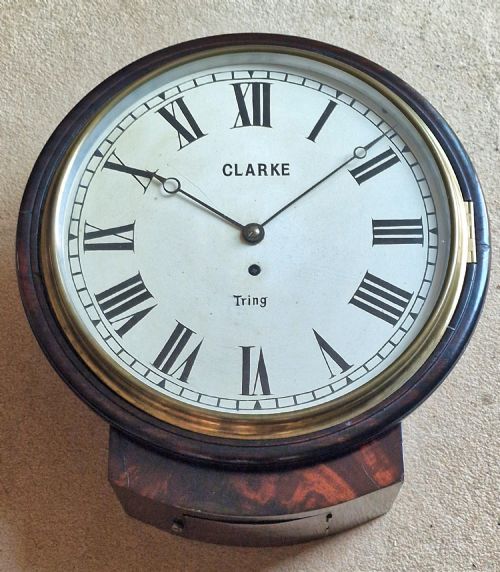
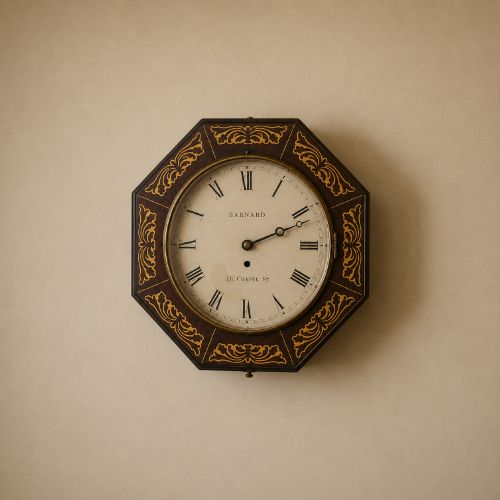
Octagonal wall clocks and drop-dial railway timepieces appear alongside tabletop bracket clocks.
Judging Quality
Quality rests in the crispness of the mahogany cabinetwork and the precision of the engraved movement. Maker signatures on the dial or movement backplate elevate a piece significantly.
Proportions dictate visual success, where octagonal frames or drop-dial cases balance weight with elegance. Original components, from the pendulum to the brass bezels, distinguish superior examples from heavily restored alternatives.
George Clarke Tring·Henry Harris Monythusloyn·Thomas Hedge Colchester·Mappin and Webb·John Walker London·Thomas Connold Alysham·Joseph Jump London·John Wilson London·Dent of London
The Dark Mahogany Fusee Clock Glossary
- Fusee
- A conical pulley used in a clock movement to maintain even power as the mainspring unwinds. This device ensures consistent timekeeping throughout the eight-day run.
- Drop Dial
- A wall clock featuring a circular dial above an extended wooden box that houses the pendulum. This format gained widespread favour in railway stations and offices.
- Bracket Clock
- A portable clock designed to sit on a table, shelf, or specialised wall bracket. Early versions typically incorporated striking or repeating mechanisms.
- Verge
- An early type of escapement controlling the release of power in a clock movement. It relies on a crown wheel and two pallets to regulate the beat.
Dark Mahogany Fusee Clock: Frequently Asked Questions
Where were dial clocks displayed?
These timepieces hung in railway stations, post offices, public houses, and domestic hallways where legibility mattered most. Their clear dials and robust cases suited high-traffic environments.
Later Victorian examples transitioned easily into domestic settings, offering dependable timekeeping for studies and formal rooms.
How do I date a mahogany clock?
Examine the construction methods of the mahogany case, the shape of the dial, and any signature lettering on the painted face. Georgian and Regency pieces often display finer cabinet proportions.
Railway markings and specific maker records help narrow the decade of production for Victorian examples.
Are these clocks suitable for daily use?
Most fusee movements maintain reliable time when properly serviced and kept in a stable environment away from drafts. Their eight-day duration requires weekly attention to the winding square.
Positioning wall clocks securely on solid masonry rather than hollow partitions protects the pendulum suspension and keeps the beat even.