

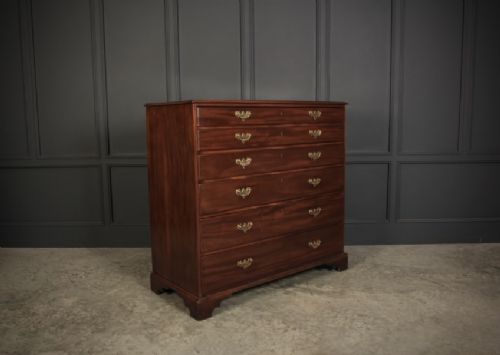


Dark Mahogany Coffer
A dark mahogany coffer brings dense grain and deep tone to a room, offering robust storage built to last centuries.
Dark Mahogany Coffer
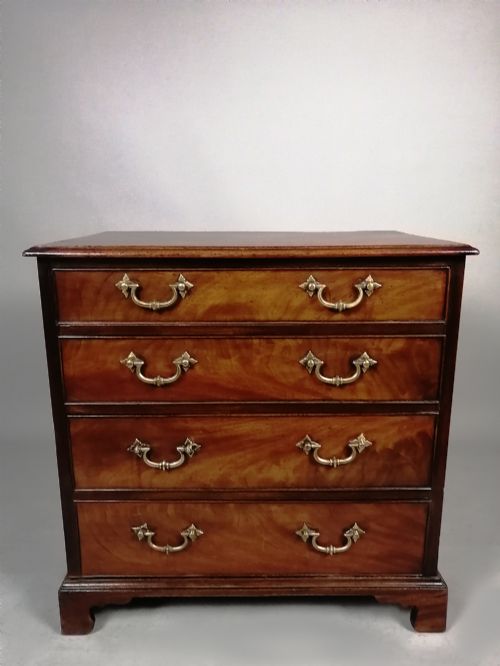
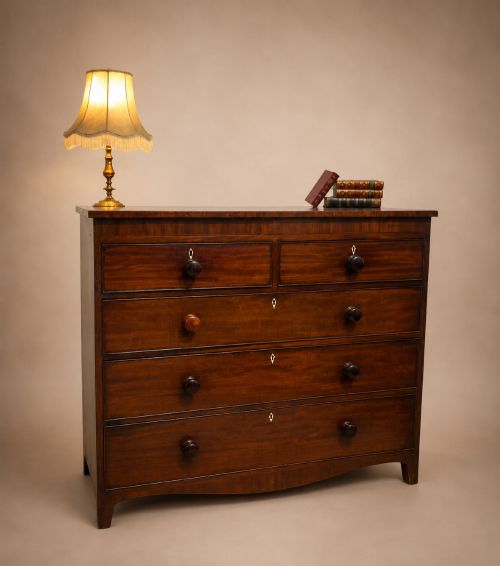
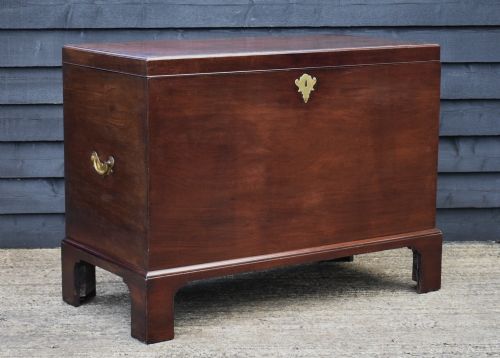
A dark mahogany coffer or chest serves as a practical storage piece, often appearing as a chest of drawers, blanket box, or cellarette. These items emerge from various periods, including Georgian, Regency, and Victorian eras, alongside 19th-century interpretations.
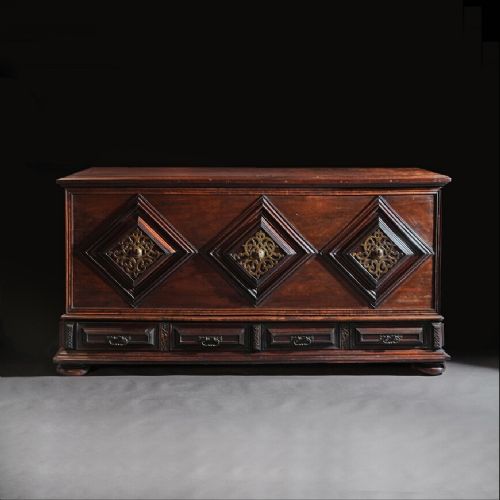
The pieces on this page span forms such as mule chests, low linen presses, wine coolers, and box settles. Mahogany and flame mahogany veneer dominate the materials, frequently paired with brass hardware or pine secondary woods.
Evaluating craftsmanship and condition
Quality separates pieces through the selection of timber, such as highly figured flame veneer or dense Cuban mahogany, matched with precise joinery. The crispness of hand-carved details and the retention of original brass hardware elevate certain examples above standard utilitarian boxes.
Proportion and structural integrity dictate the standing of a coffer, with clean lines and undisturbed timber surfaces representing superior workshop output from periods like the Georgian and Regency eras.
Listings feature items built from Cuban mahogany, Brazilian mahogany, and stinkwood, incorporating brass and bone details across 18th and 19th-century periods.
The Dark Mahogany Coffer Glossary
- Coffer
- A large box or chest traditionally used for storing valuables, linens, or documents. These pieces often feature hinged lids or deep internal compartments.
- Cellarette
- A lockable container designed for holding bottles of wine or spirits, frequently shaped as a sarcophagus or fitted with interior divisions.
- Mule chest
- A storage chest featuring one or more drawers in the base beneath a primary lift-top compartment. This form bridges the traditional coffer and the chest of drawers.
- Flame mahogany veneer
- A thin slice of wood cut from the fork of a mahogany tree to produce a flickering, flame-like grain pattern. Cabinet makers applied this to primary display surfaces.
- Dovetail
- A joint formed by interlocking wedge-shaped fingers, securing drawer corners and carcass frames together without modern adhesives.
Dark Mahogany Coffer: Frequently Asked Questions
How do I date a mahogany coffer?
Dating relies on examining construction techniques, timber choice, and hardware styles. Hand-cut dovetails and secondary woods like pine often point to 18th or 19th-century origins.
Specific stylistic cues, such as Regency curves or Georgian bracket feet, help narrow the decade of manufacture when combined with overall wear patterns.
What is the difference between a coffer and a cellarette?
A coffer functions primarily as a general storage chest for blankets, clothes, or documents with a lift-top lid. A cellarette is specifically built to store wine bottles.
Cellarettes often include fitted interior compartments and lead-lined interiors, typically appearing near dining spaces or cellars.
How should I care for dark mahogany timber?
Maintaining mahogany involves keeping the wood away from direct heat sources and sudden humidity shifts to prevent veneer cracking. Regular dusting with a soft cloth preserves the polished surface.
Occasional application of appropriate wax feeds the grain without building up a heavy, cloudy residue over time.
Where were these chests made?
The pieces originate from various workshops across Britain, alongside colonial and international centres influenced by European cabinet-making traditions. Materials like Brazilian and Cuban mahogany travelled from distant regions to European ports.
Regional variations appear in secondary timbers and specific joinery methods used by local tradesmen.