
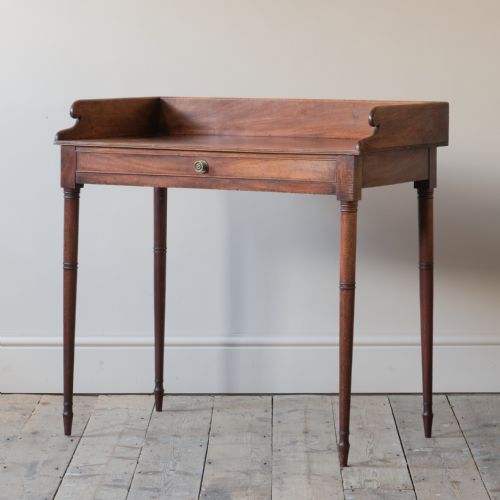
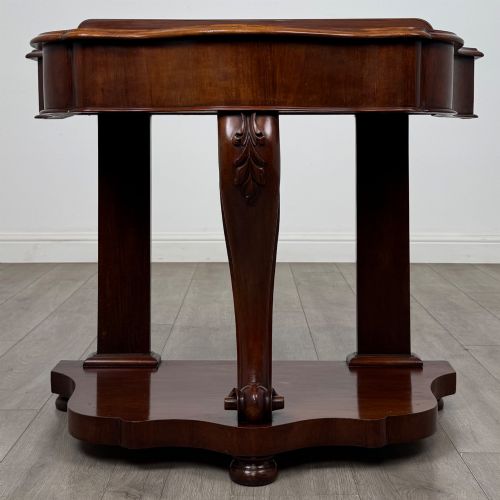
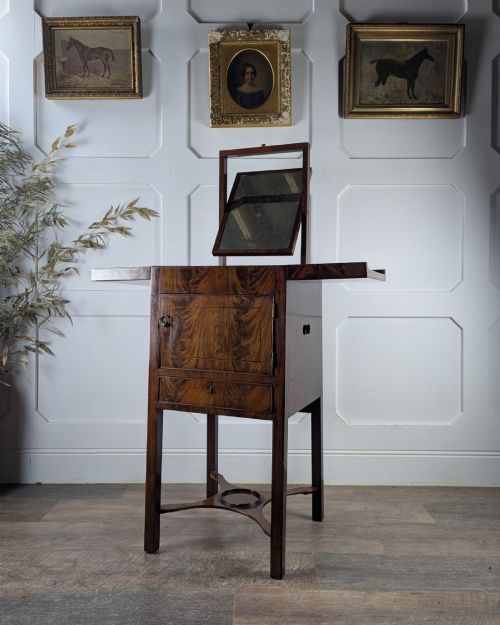

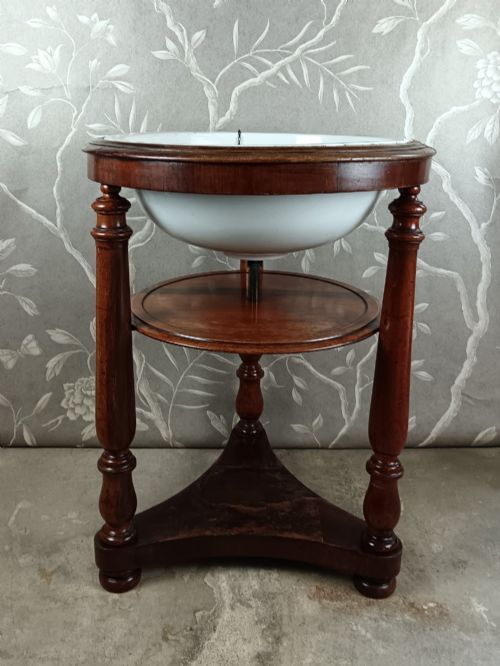


Dark Mahogany Basin Stand
These dark mahogany basin stand pieces are robust timber wash furniture designed for personal grooming, offering timeless elegance and practical daily utility.
Dark Mahogany Basin Stand
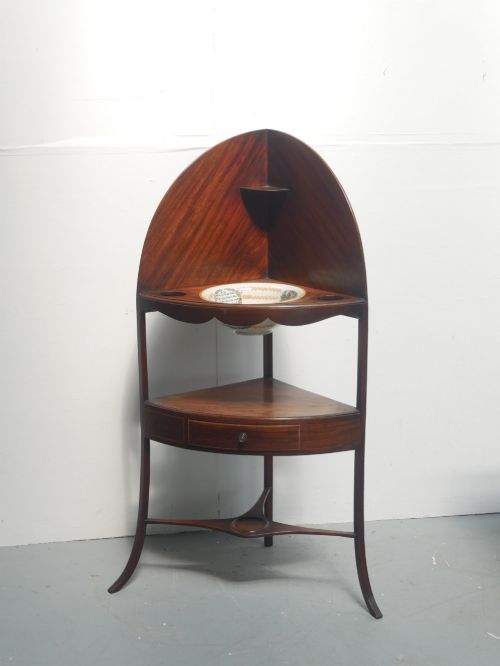
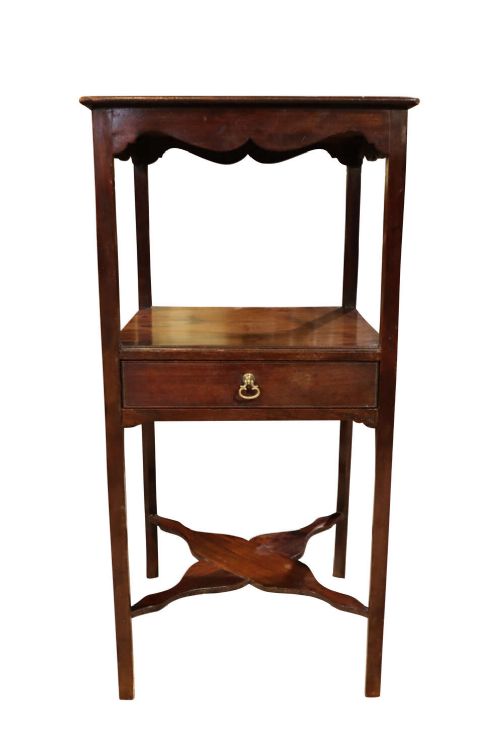
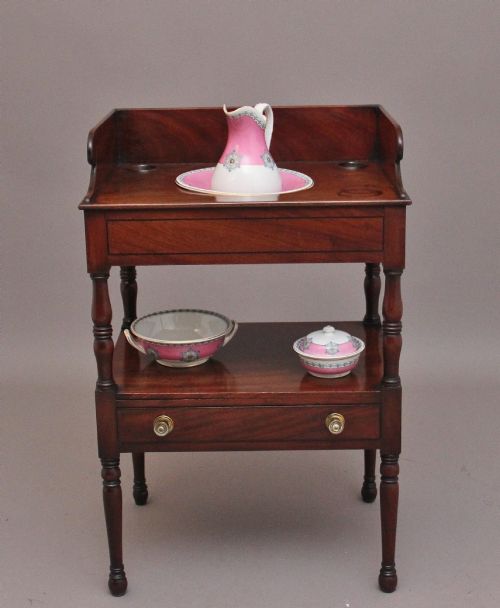
A dark mahogany basin stand is a piece of antique furniture built to hold a wash bowl, pitcher, and grooming accessories for the bedroom or dressing room. The listings here span several periods, most notably the Georgian, Regency, and Victorian eras, alongside specialised campaign designs.
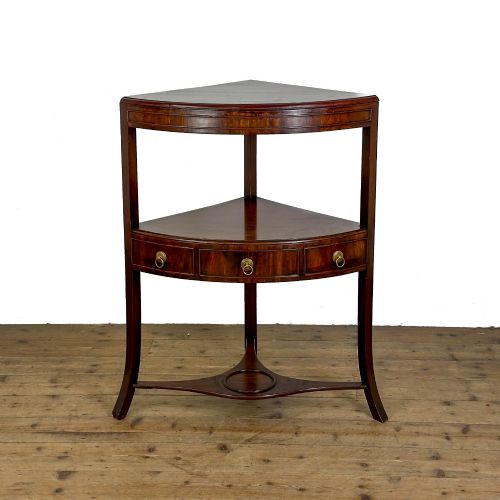
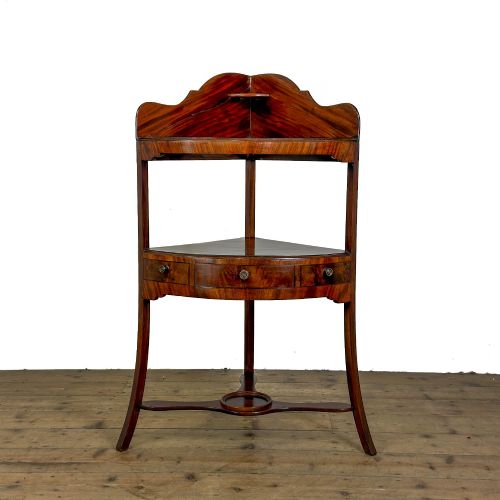
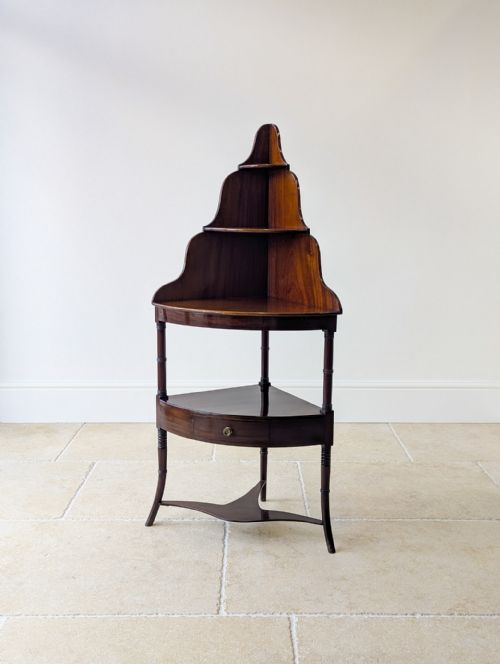
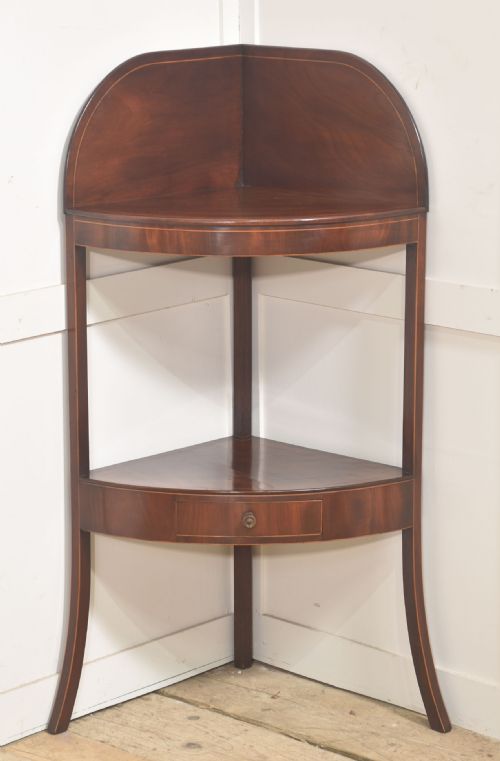
You will encounter various configurations on this page, including traditional square models, corner washstands shaped to fit a room's angle, and tiered stands with integral spaces for water jugs. Some examples incorporate boxwood inlay or delicate brass fittings, reflecting the decorative preferences of their original makers.
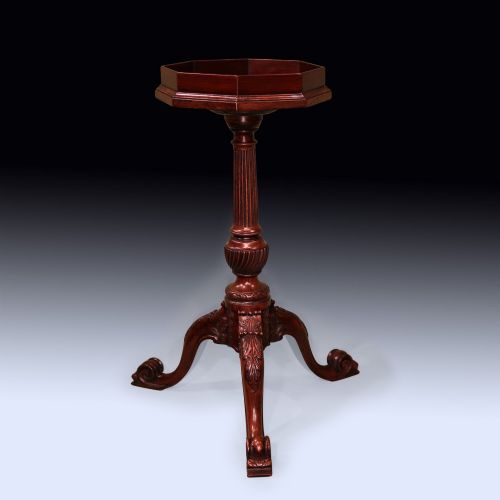
Alongside standard washstands, related forms such as wig stands, shaving stands, and occasional bedside tables appear within the inventory. These variations highlight how personal hygiene and grooming habits shaped domestic interior design across the eighteenth and nineteenth centuries.
Materials and construction methods
Makers relied heavily on mahogany, including dense Cuban mahogany, valued for its rich grain, deep natural colour, and structural stability. Workshops frequently integrated secondary woods alongside boxwood inlay to create subtle geometric borders and contrasting details.
Metal and ceramic elements complemented the woodwork, with brass used for handles, hinges, and campaign mounts, while marble and ceramic occasionally provided durable, water-resistant surfaces for the basin area. Joinery techniques ensured these functional pieces could support heavy basins and water filled vessels safely during daily use.
Distinguishing quality across the range
The distinction between standard utility items and superior examples lies in the selection of timber and the refinement of the joinery. Premium pieces often feature figured Cuban mahogany, precise boxwood stringing, and well-executed carved details such as those associated with Chippendale or George II styles.
Proportion and structural integrity also dictate the standing of a piece, with finer stands exhibiting harmonious tier spacing and carefully turned legs. The retention of original brass hardware, glass elements, and matching ceramic basins further elevates the desirability and character of an individual stand.
The Dark Mahogany Basin Stand Glossary
- Mahogany
- A durable tropical hardwood known for its reddish-brown colour and fine grain. It became the favoured timber for quality cabinet making throughout the eighteenth and nineteenth centuries.
- Campaign washstand
- A portable piece of furniture designed for travel or military use, typically featuring folding frames and brass mounts for easy dismantling.
- Boxwood inlay
- A decorative technique where thin strips of pale boxwood are inserted into recesses within the darker mahogany surface to form contrasting geometric patterns.
- Wig stand
- A specialised small pedestal stand designed to hold a powdered wig when not in use, featuring a small circular basin or platform at the top.
- Corner washstand
- A space-saving triangular furniture form specifically constructed to fit neatly into the corner of a bedroom or dressing room.
Dark Mahogany Basin Stand: Frequently Asked Questions
What is a dark mahogany basin stand?
A dark mahogany basin stand is an antique piece of furniture created to hold a wash basin and grooming equipment before indoor plumbing became standard in bedrooms.
These stands were essential items in Georgian and Victorian households, serving daily hygiene needs in private chambers.
How do I use a washstand today?
Many people utilise these stands as decorative plant holders, hallway telephone tables, or striking corner display units in modern homes.
Their compact footprints and built-in tiers make them practical surfaces for lamps, books, and small decorative objects.
Are corner washstands hard to place?
Corner washstands are specifically engineered to utilise neglected room angles, making them remarkably easy to position in smaller spaces.
Their triangular shape allows them to anchor empty room corners without obstructing walkways or standard furniture layouts.
How can I tell a Georgian stand from a Victorian one?
Georgian stands generally exhibit lighter framing, refined proportions, and simpler classic lines, whereas Victorian examples can be heavier with more pronounced turnings and drawer configurations.
Examining the construction methods, secondary timbers, and decorative inlay styles helps clarify the likely period of manufacture.