
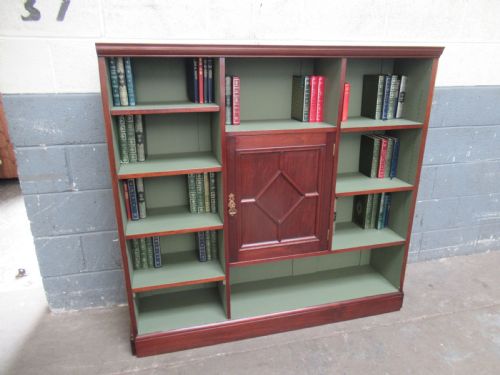


Dark Interior Bookcase
These dark interior bookcase pieces are substantial timber cabinets offering enclosed shelving and fitted writing compartments, built to organise libraries across multiple centuries.
Dark Interior Bookcase
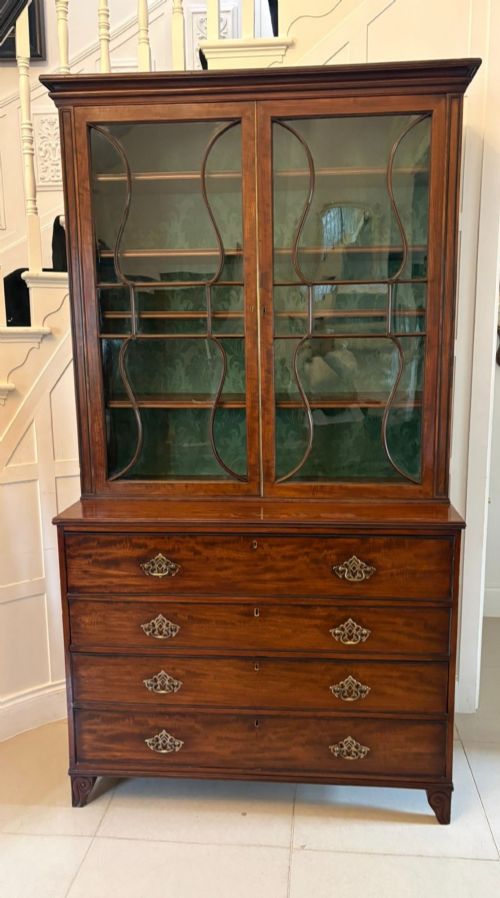
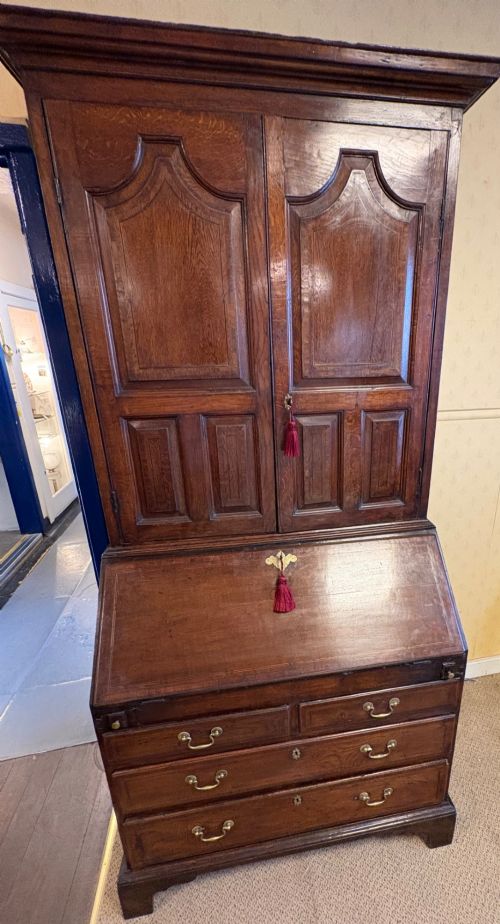
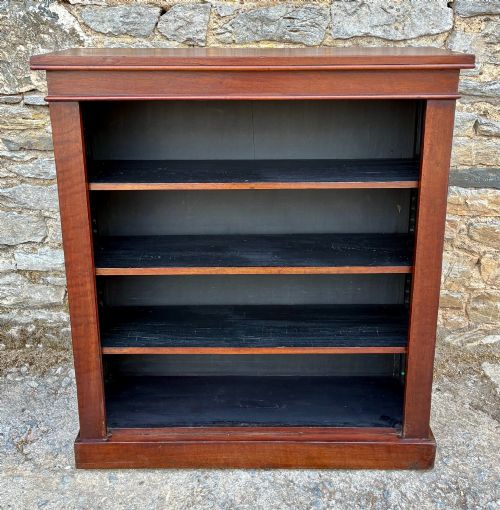
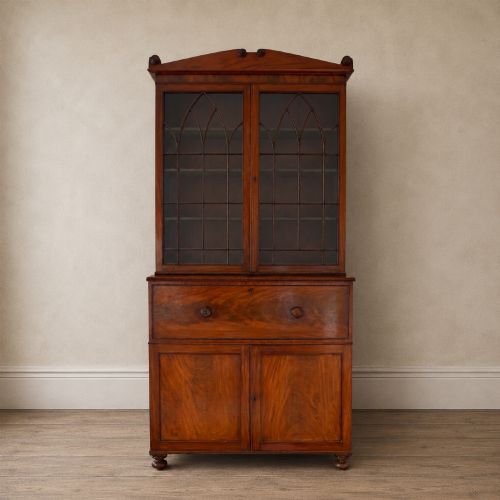
A dark interior bookcase brings together centuries of cabinet-making, spanning the 18th century, Georgian and Regency periods, through to the Edwardian era and Arts and Crafts movement. These items manifest as bureau bookcases, secretaire cabinets, and open bookcases designed to house volumes.
The most common formats on this page are mahogany and oak bureau bookcases alongside Regency secretaire examples, featuring glazed doors and fitted compartments. Buyers encounter styles ranging from early Georgian and George III to Irish country vernacular and Victorian work.
Materials and construction
Construction relies heavily on figured mahogany and oak, often paired with glass for upper doors and brass hardware. Secondary timbers such as softwood appear in internal framing.
Makers integrated fitted interiors with pigeonholes and small drawers behind drop-front writing surfaces, alongside glazed upper sections to protect volumes from dust.
Listings span the 18th century, Georgian, Regency, Victorian, and Edwardian periods, utilising mahogany, oak, walnut, and paint.
Judging quality in these cabinets
Superior examples display carefully selected figured mahogany veneers and dense oak timbers, showing skilled timber selection by the cabinet-maker. The crispness of internal joinery within the fitted bureau sections sets finer pieces apart.
Proportion and architectural balance dictate the upper tier of these pieces, where original glass panes and balanced glazing bars elevate the cabinet's visual weight.
The Dark Interior Bookcase Glossary
- Bureau bookcase
- A writing desk with a hinged sloping flap combined with a bookcase superstructure above. This dual-purpose form allows both correspondence and library storage.
- Secretaire bookcase
- A cabinet featuring a pull-out drawer with a drop-front writing surface concealing a fitted interior, topped by shelving. It offers a formal drawer appearance while providing a desk.
- Glazed doors
- Doors fitted with transparent glass panels to view and protect the contents of the upper shelves. These are frequently divided into panes by wooden glazing bars.
- Fitted interior
- The arrangement of small drawers, pigeonholes, and compartments housed within a bureau or secretaire section. This internal architecture organises stationery and papers.
- Waterfall bookcase
- A set of open shelves where each successive shelf steps back from the one below it, creating a profile resembling falling water. This style emerged in later periods.
Dark Interior Bookcase: Frequently Asked Questions
What is a bureau bookcase?
A bureau bookcase combines a lower writing desk featuring a sloping flap or pull-out drawer with an upper shelving section for books. This dual-purpose furniture form gained popularity in the eighteenth century for domestic libraries.
Cabinet-makers integrated pigeonholes and small compartments inside the writing section, allowing owners to store correspondence securely beneath the main book storage.
How do I date an oak bookcase?
Dating relies on examining construction methods, timber grain, and stylistic details such as panel thickness and interior layout. Eighteenth-century examples often feature solid oak construction with stepped internal compartments.
Later Victorian and Edwardian pieces incorporate machine-sawn elements and differing proportions, while maintaining traditional cabinet-making joins in the main carcass.
What is a secretaire cabinet?
A secretaire cabinet is a storage piece containing a dedicated writing drawer that drops open to reveal a fitted interior. This design maintains the clean exterior look of a chest of drawers or bookcase base.
The drop-front mechanism provides a stable writing surface without requiring a sloping lid, concealing letter slots and miniature drawers when closed.
Where should I place a large bookcase?
These tall timber cabinets require stable wall placement away from direct heat sources and strong sunlight to protect the wood and veneer. Rooms with consistent humidity levels prevent timber movement.
Allowing sufficient clearance for opening glazed doors or pull-out writing drawers ensures functional access to the internal shelving and fitted compartments.