






Dark Horn Taxidermy
Dark horn taxidermy brings the stark drama of the nineteenth and early twentieth-century hunting lodge straight into a modern room.
Dark Horn Taxidermy
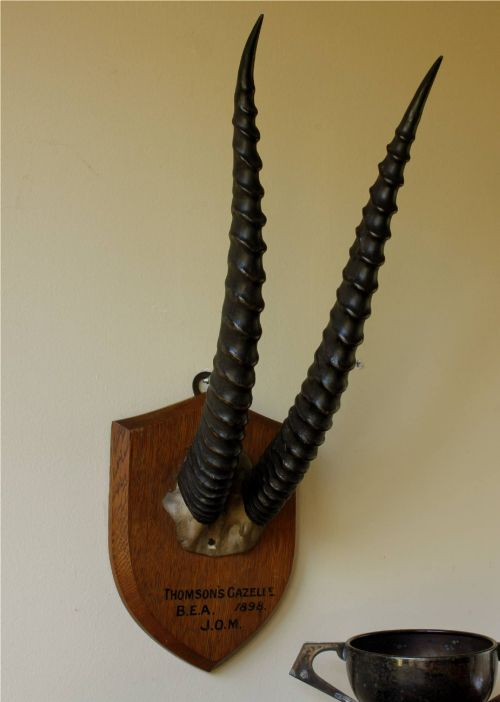
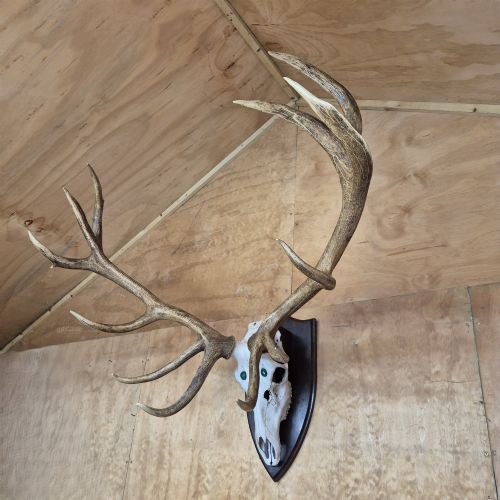
Dark horn taxidermy comprises mounted horns, antlers, skulls, and trophies drawn from Victorian, Edwardian, and nineteenth-century natural history traditions. These pieces include gazelle, red deer, waterbuck, springbok, ram, sable antelope, koodoo, oryx, and buffalo.
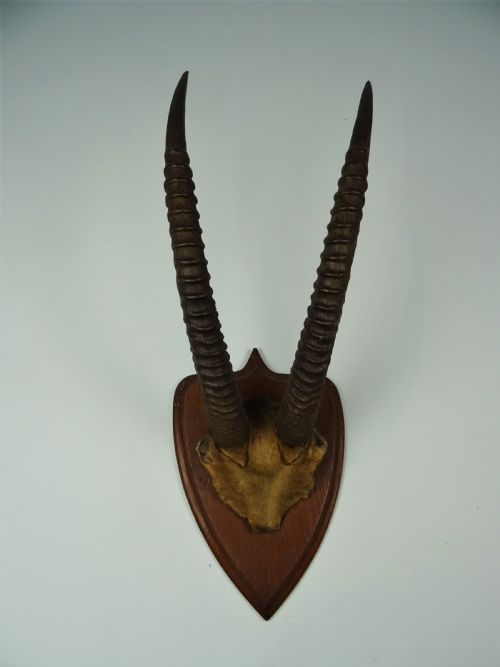
Buyers encounter wall-mounted trophies, horns on carved wooden shields, and sculptures on stands, alongside utilitarian items such as pony hoof inkwells. Most examples date from the Victorian era up through the nineteen-twenties.
The dominant aesthetic reflects Highland traditional and cabinet of curiosities styles, utilising the heavy texture of bone, wood, and fur to create striking interior focal points.
How they were made
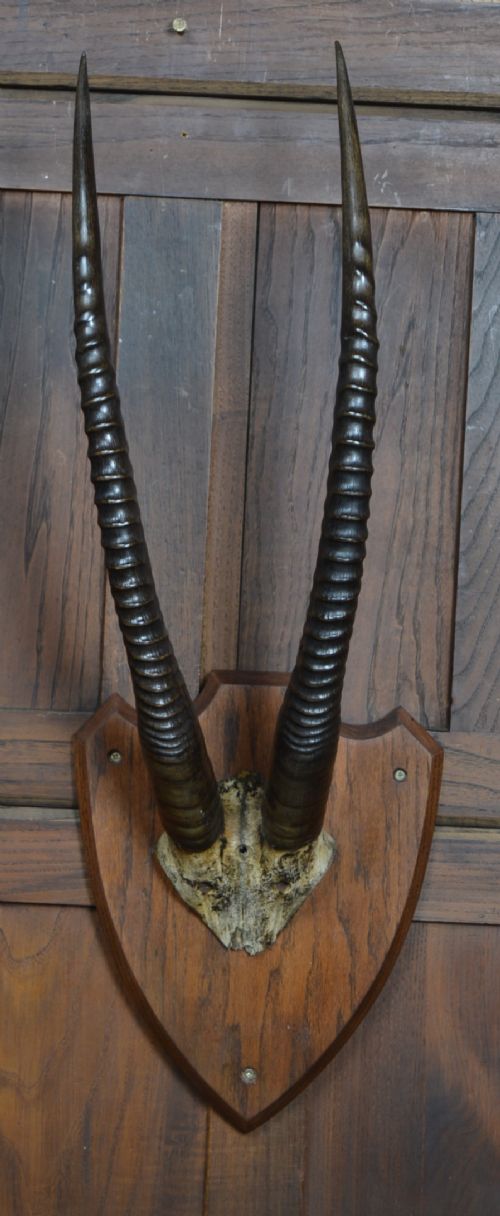
Taxidermists and craftsmen shaped these items using organic materials including natural horn, bone, fur, and glass eyes, mounted onto carved wooden shields or metal supports. Oak and various other woods provide sturdy backing boards for large wall displays.
Horns and antlers were cleaned, treated, and fitted to wooden mounts using metal fixings to ensure secure wall hanging. Skulls and hooves were preserved and occasionally adapted for desk use, combining taxidermy with functional metalwork.
Listings span the nineteenth century, the Victorian era, the Edwardian period, and the nineteen-twenties, incorporating oak, bone, metal, and glass.
What varies in quality
Quality depends on the symmetry and scale of the horns, the crispness of the carving on wooden shields, and the overall preservation of the bone and fur. Fine examples display robust horn structure and secure mounting without excessive restoration.
The sophistication of the taxidermy work and the proportional balance between the animal trophy and its wooden backing determine the visual impact of each piece.
Edward Gerrard & Sons
The Dark Horn Taxidermy Glossary
- Taxidermy
- The art of preparing, stuffing, and mounting the skins or horns of animals for display. This technique preserves biological specimens for study and interior decoration.
- Trophy
- A hunter's prize consisting of the head, horns, or antlers of an animal mounted for display. These objects record nineteenth and twentieth-century sporting pursuits.
- Shield
- A carved wooden plaque used as a wall mount for animal antlers and horns. Oak is frequently utilised for these sturdy architectural supports.
- Cabinet of Curiosities
- An eclectic collection of natural history specimens and artefacts popularised during the Victorian period. Such displays celebrate unusual and exotic items from the natural world.
- Inkwell
- A small pot for holding ink, sometimes fashioned from animal hooves in country house settings. These utilitarian pieces blend taxidermy with everyday desk accessories.
Dark Horn Taxidermy: Frequently Asked Questions
Are these pieces Victorian?
Many examples date from the Victorian and Edwardian periods, stretching from the late nineteenth century into the nineteen-twenties.
Stylistic clues like carved oak shields and traditional taxidermy methods help distinguish these older pieces from modern reproductions.
How do I clean horn taxidermy?
Dust the horns and wooden mounts gently with a dry, soft cloth to remove everyday particle build-up.
Avoid using water or chemical cleaners on bone, fur, and antique wood, as moisture can damage the organic material.
What animals are represented?
The selection includes African and domestic species such as gazelle, red deer, waterbuck, springbok, rams, sable antelope, koodoo, oryx, and buffalo.
Each species offers distinct horn shapes and textures, ranging from spiraled corkscrew horns to massive sweeping antlers.