



Dark Green Wooden Armchair
These dark green wooden armchair pieces offer solid timber construction and period character, bringing rich colour and practical seating to traditional interiors.
Dark Green Wooden Armchair
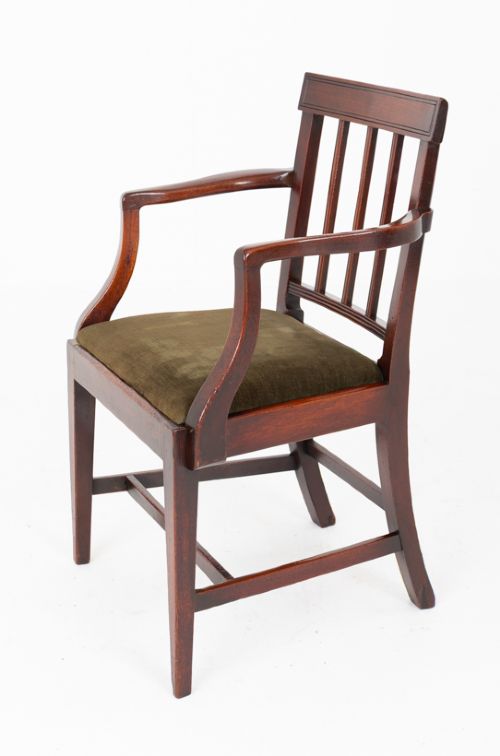
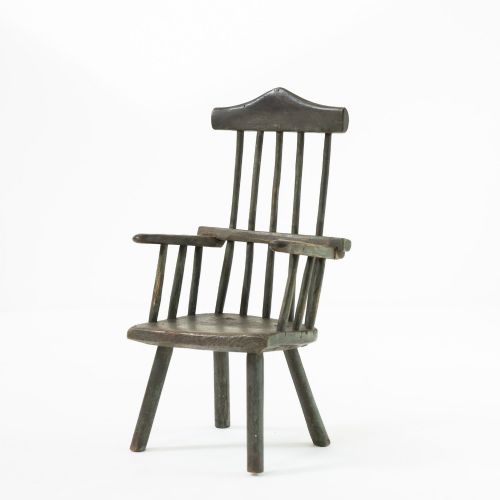
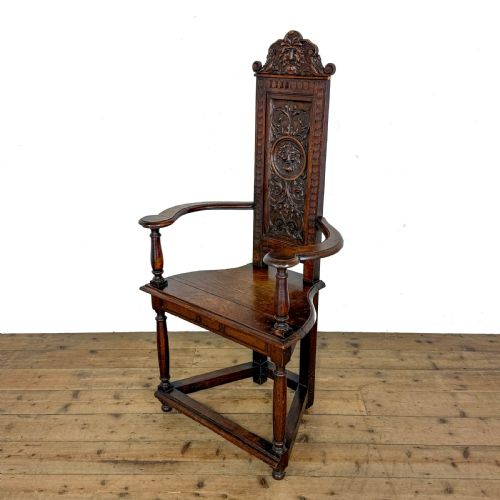
A dark green wooden armchair brings together robust timber framing and painted or upholstered finishes suited to traditional settings. These seats range from country vernacular stick backs to grand carved oak throne chairs and refined mahogany carvers.
The pieces on this page span the Georgian, Regency, and Victorian eras alongside later revivals, offering diverse proportions and regional styles. Buyers will frequently encounter sturdy oak desk chairs, children's armchairs, and expansive armchairs of large proportions.
Origins vary from English country workshops to Irish, Anglo-Indian, and Swedish makers, showing how regional preferences shaped local seating designs. Whether featuring carved green man motifs or simple painted surfaces, each dark green wooden armchair reflects the craftsmanship of its specific period.
Construction and Materials
Makers built these chairs primarily using solid hardwoods such as mahogany, oak, and walnut, ensuring structural durability across centuries of daily use. Timber frames were frequently enhanced with painted finishes or traditional applied paint layers to achieve deep green coloration.
Upholstered examples integrate tactile fabrics like velvet alongside supportive internal stuffing, while other designs rely entirely on carved timber and exposed grain. Brass hardware and detailed hand-carved elements, including foliate details and figural motifs, frequently complete the construction.
Listings feature items built from mahogany, oak, walnut, and hardwood, finished with paint, fabric, or velvet.
Assessing Quality and Character
Superior examples distinguish themselves through crisp, deep hand-carving and well-proportioned frames that balance visual weight with structural integrity. The handling of the dark green paint or the selection of dense, figured mahogany and oak dictates the aesthetic presence of the piece.
Regional quirks and folk art interpretations display varying degrees of artisanal confidence, where fluid lines and balanced joinery elevate simpler country forms. Greater refinement in turned spindles, arm supports, and historical surface patination separates standard utility seating from collector pieces.
Louis Majorelle
The Dark Green Wooden Armchair Glossary
- Carver arm chair
- An armchair designed with arms, traditionally placed at the ends of a dining table or utilised as a substantial bedroom seat.
- Stick back
- A chair construction method where turned wooden spindles are inserted directly through the seat to form the backrest.
- Vernacular
- Everyday furniture made by local regional craftspeople using traditional local materials, often prioritising utility over high-style academic design.
- Proportions
- The harmonious relationship between the height, width, and depth of a chair, determining both its visual balance and physical comfort.
- Patina
- The surface sheen and softening of colour developed on wood and paint over decades of handling, exposure, and age.
Dark Green Wooden Armchair: Frequently Asked Questions
What periods do these armchairs span?
The selection includes pieces originating from the Georgian, Regency, and Victorian eras, alongside late nineteenth-century interpretations and later revival pieces.
Craftsmanship styles range from early nineteenth-century English country designs to folk art primitive creations and intricately carved Anglo-Indian examples.
How do I identify a child's armchair?
Child's armchairs are scaled-down versions of adult seating, maintaining the same structural integrity, joinery techniques, and stylistic details as full-sized pieces.
These smaller chairs were produced across various periods, including nineteenth-century stick back formats and later revival styles.
Are these chairs suitable for daily use?
Solid hardwood frames and sturdy timber construction mean many of these period armchairs remain entirely functional for everyday seating in domestic spaces.
Buyers should consider the seat height and structural proportions in relation to modern tables or desks when selecting a chair for daily use.
What is a primitive folk art chair?
Primitive folk art chairs are vernacular pieces created by local artisans who relied on regional traditions rather than formal academic design rules.
These chairs often feature charming irregularities, simple painted surfaces, and straightforward stick back or Windsor-style construction.