
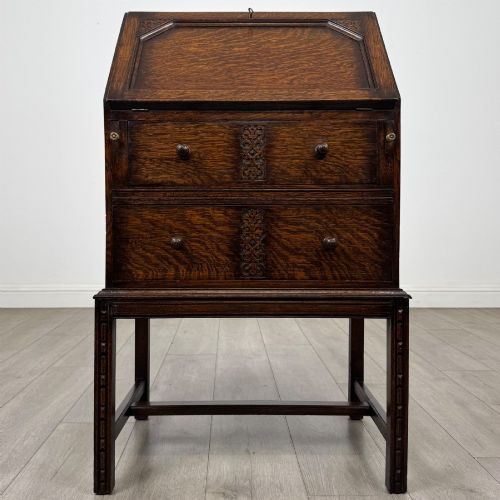
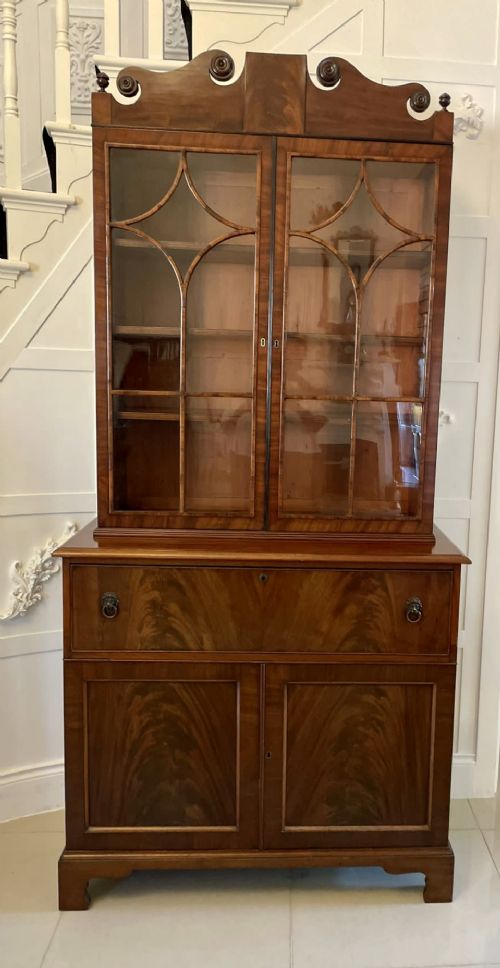
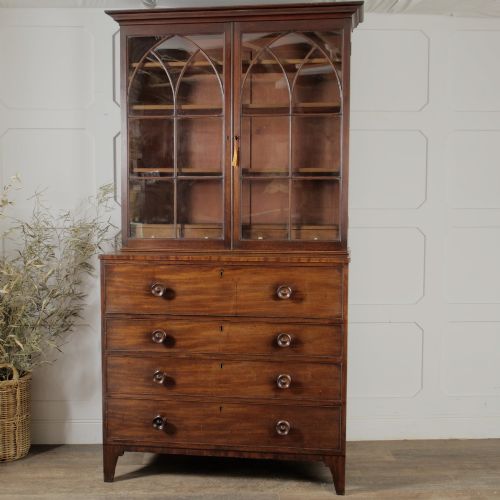
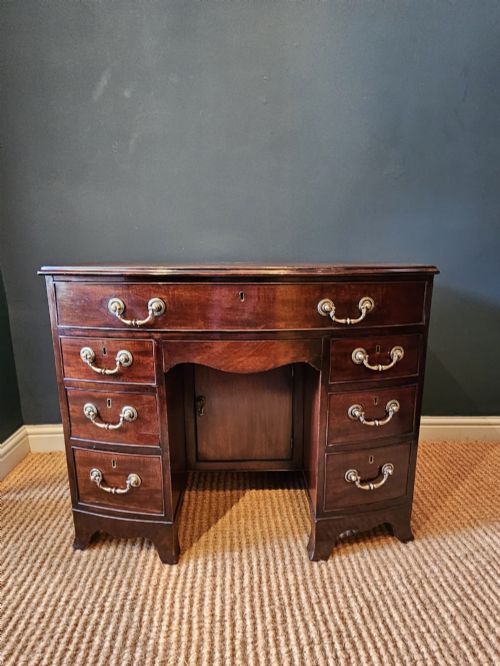

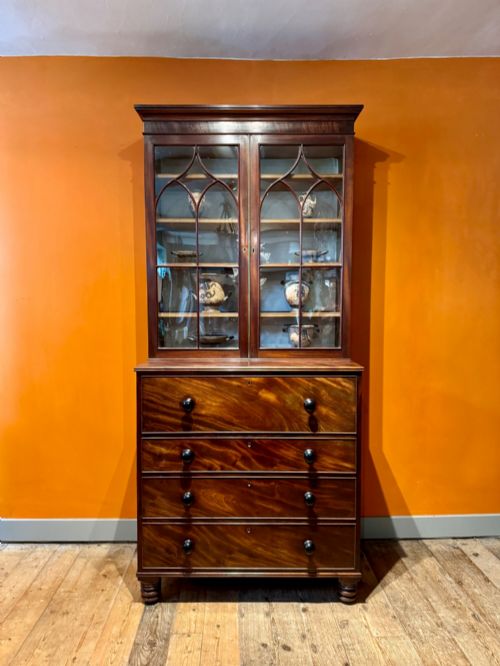


Dark Brown Secretaire
These dark brown secretaire pieces combine practical writing surfaces with generous storage, offering a traditional workspace that suits both modern and period rooms.
Dark Brown Secretaire
When you search for a dark brown secretaire, you are looking at dual-purpose furniture designed for writing and storage, appearing across this page as bookcases, chests of drawers, and cabinets. The pieces listed here span the Georgian, Regency, Edwardian, and Victorian eras, taking the form of upright secretaire bookcases, tallboys, chests on chests, and library writing tables.
You are most likely to meet mahogany variants from the Georgian and Regency periods, alongside Edwardian oak examples and walnut gentleman's bureaus. These items range from compact chests to towering bookcases fitted with glazed upper doors and panelled lower sections.
How they were made
Cabinet makers constructed these pieces primarily using solid mahogany, Cuban mahogany, oak, and walnut, often lining drawers in secondary timbers like oak. Surfaces were frequently enhanced with mahogany veneers and subtle inlay work, showing the grain of the timber to full effect.
Internal fittings incorporated functional details such as brass hardware, Bramah locks, leather or baize writing surfaces, and glazed panels for upper bookcase doors. Drawers utilised traditional dovetail joints, while specialised fall-front mechanisms concealed internal pigeon holes and small compartments.
Some secretaires hide secret compartments behind miniature drawers, designed to outsmart curious houseguests and prying children.
What varies in quality
The distinction between standard and superior pieces rests on the choice of timber, such as figured Cuban mahogany, and the precision of the cabinet work. Finer examples display meticulous attention to internal stationery compartments, original brasses, and specialised mechanisms like Bramah locks.
Proportion and architectural balance also separate workshop outputs, with pieces attributed to noted makers like Gillows demonstrating exceptional execution in secondary linings and carving details.
Thomas Hope·Gillows
The Dark Brown Secretaire Glossary
- Secretaire
- A piece of furniture containing a built-in writing drawer or fall-front desk compartment. This feature allows a chest of drawers or bookcase to function as a writing desk.
- Tallboy
- A tall chest of drawers made in two sections, often stacked with a smaller chest sitting atop a larger base. In these listings, they occasionally incorporate a fitted writing drawer.
- Bramah lock
- A patented high-security lock invented by Joseph Bramah, frequently found on better-quality pieces from the late eighteenth and nineteenth centuries. It uses a cylindrical key mechanism.
- Cuban mahogany
- A dense, dark timber harvested in the West Indies, prized for its rich grain and heavy weight. It appears on late eighteenth-century library furniture.
- Baize
- A coarse woolen material resembling felt, traditionally used to line writing slides and fall-front desks. It provides a flat surface for writing.
Dark Brown Secretaire: Frequently Asked Questions
What is a secretaire?
A secretaire is a cabinet or chest featuring a concealed writing drawer with a drop-front panel. When opened, it reveals small drawers and pigeon holes for correspondence.
This design allows a standard chest of drawers or bookcase to double as a practical desk without taking up extra floor space.
How do I use a secretaire daily?
You pull out or fold down the writing flap to access the internal desk space and stationery compartments. The leather or baize insert provides a stable surface for writing letters or placing a laptop.
When finished, you simply fold the fall-front away to conceal your work and restore a tidy exterior.
How do I identify a Georgian secretaire?
Georgian pieces typically display proportions rooted in classical architecture, utilising solid mahogany or figured veneers with hand-cut dovetail joints. They often feature restrained cockbeading around drawer edges and solid brass handles.
Stylistic cues span bracket feet, ogee moulding, and crisp interior arrangements that reflect eighteenth-century craftsmanship.
Where should I place a secretaire?
These pieces suit home studies, living rooms, or bedrooms where both surface workspace and vertical storage are beneficial. Positioning them away from direct sunlight protects the timber and leather surfaces.
Ensure there is sufficient clearance in front of the piece for the fall-front flap to open fully.