

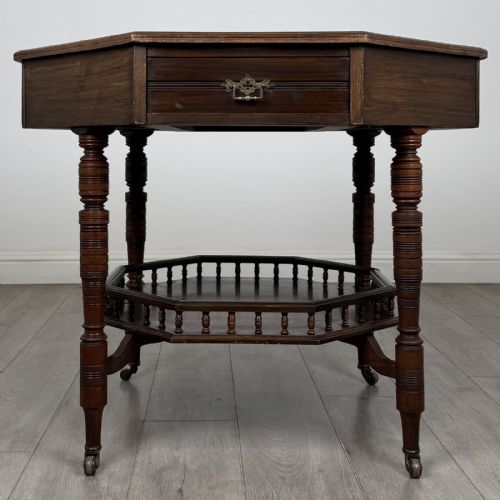
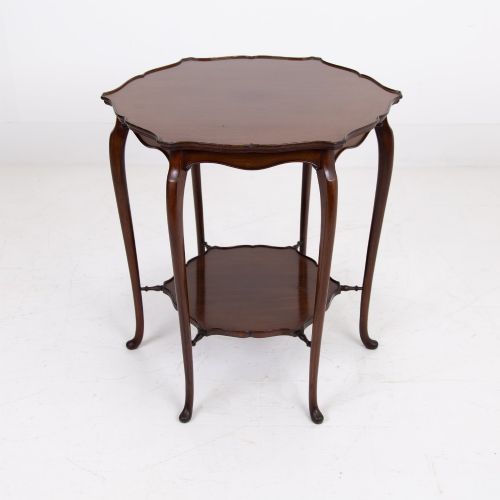


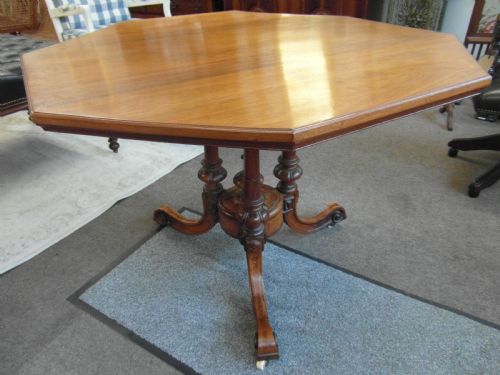


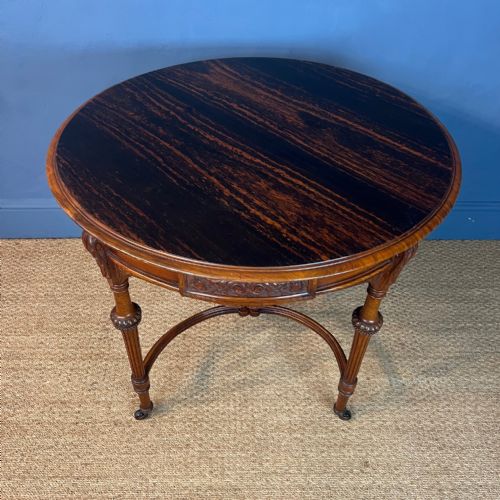
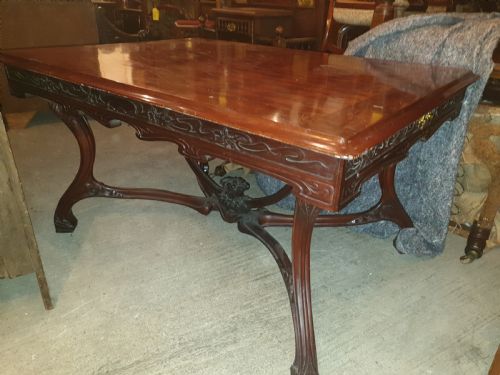
Dark Brown Parlour Table
These dark brown parlour table pieces are solid timber surfaces for the reception room, offering rich tones and period craftsmanship.
Dark Brown Parlour Table
When you search for a dark brown parlour table, you are looking at nineteenth and early twentieth century reception room furniture designed for display and gathering. These pieces range from compact occasional stands to substantial centre tables placed prominently in the room.
The versions you are most likely to meet on this page span the Victorian and Edwardian eras, frequently taking the form of centre tables, side tables, and nests of four. Walnut, mahogany, and oak dominate the selection, offering the dark brown timber appearance characteristic of the period.
Makers produced these tables for various domestic uses, including tarot reading, drinking, and holding decorative objects. Styles stretch from plain country house oak to ornate Aesthetic Movement coromandel and walnut designs.
How they were made
Makers constructed these tables using dense hardwoods such as mahogany, walnut, rosewood, and oak, often highlighting the natural grain with figured veneers. Selected pieces incorporate brass hardware and intricate inlaid wood details to enhance the surface decoration.
Construction techniques include tilt top mechanisms, zodiac carving, and bentwood fabrication seen in Viennese examples. Workshops also produced multi-tiered occasional tables and nests of four tables that fit neatly together.
Dark Brown Parlour Table Retail Price Guide 2026
Typical asking prices for dark brown parlour table among the pieces listed under this phrase on Sellingantiques today, from the lower quarter to the upper quarter. They describe what is for sale here now, not the wider market.
Object types on this page include centre tables, occasional tables, side tables, and nests of four tables.
What varies in quality
Quality in these tables rests on the selection of timber and the precision of decorative work, such as zodiac carvings or inlaid wood patterns. Pieces utilising figured mahogany, coromandel, or rosewood demonstrate a higher grade of material sourcing than standard utility items.
Design complexity also separates standard tables from exceptional examples, distinguishing simple side tables from elaborate Aesthetic Movement centre tables or specialised tarot parlour tables with tilt top mechanisms.
The Dark Brown Parlour Table Glossary
- Centre table
- A freestanding table designed to stand in the middle of a room rather than against a wall. These pieces often feature detailed timber grain and ornamentation visible from all sides.
- Occasional table
- A small, movable table intended for specific, intermittent use in a parlour or sitting room. They appear in single formats, two-tier designs, and nests of tables.
- Tilt top
- A tabletop mounted on a hinge mechanism that allows the surface to pivot to a vertical position when not in use. This feature appears on specific parlour drinking tables.
- Coromandel
- A dense, dark timber imported from Asia and used for high-end Victorian cabinetwork. It provides a heavily figured dark brown surface prized by nineteenth century makers.
- Aesthetic Movement
- A late nineteenth century design style emphasising artistic value over moral or narrative purpose. Pieces from this movement often incorporate contrasting exotic woods and geometric lines.
Dark Brown Parlour Table: Frequently Asked Questions
Where did people put a parlour table?
Parlour tables sat in the principal reception room of a nineteenth century home, positioned either in the centre of the space or against a wall. They held lamps, books, and decorative items for guests to admire during visits.
Centre tables occupied open floor space to display the room's finest furnishings, while smaller occasional and side tables fitted into corners or beside seating.
How do I tell Victorian from Edwardian tables?
Victorian tables typically feature darker, heavier timbers like walnut and rosewood, often with ornate carvings, inlaid wood, or tilt top mechanisms. They date from the mid to late nineteenth century.
Edwardian tables tend to look lighter in form, with Edwardian mahogany occasional tables and two-tier designs reflecting a shift towards simpler domestic interiors around the turn of the twentieth century.
What was a tarot parlour table used for?
A tarot parlour table served as a dedicated surface for card reading and divination games popular in Victorian drawing rooms. These specialised tables often featured specific carvings, such as zodiac motifs.
Owners used them during evening gatherings to entertain guests with fortune telling and conversation around the dark brown timber top.
What is a nest of tables?
A nest of tables consists of a set of graduating occasional tables designed to slide one beneath another to save floor space. Victorian makers constructed these sets in figured mahogany and other dark woods.
They allowed households to pull out extra surfaces only when serving tea or refreshments to visitors in the parlour.