

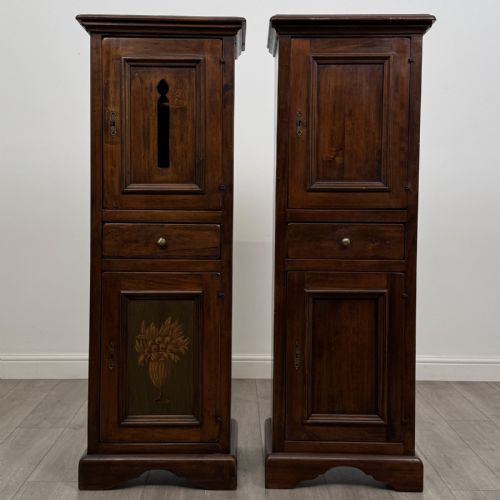
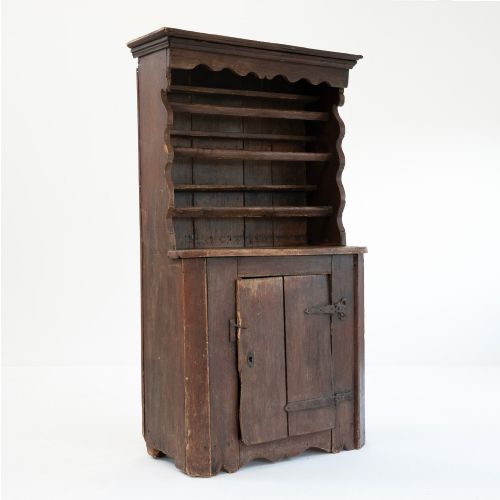
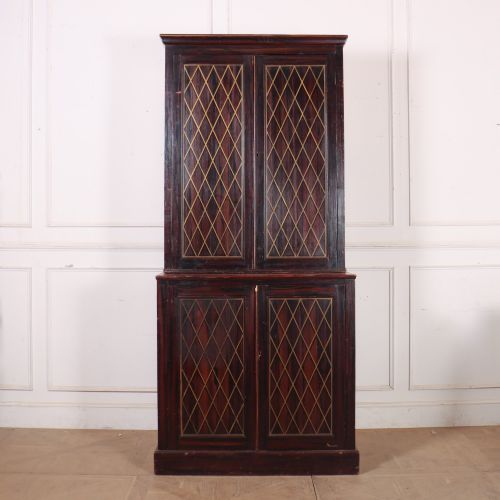
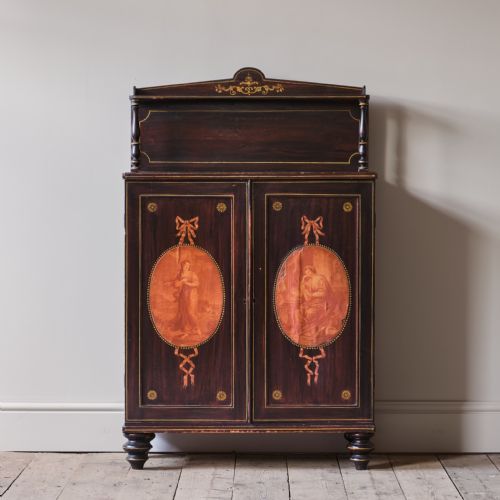
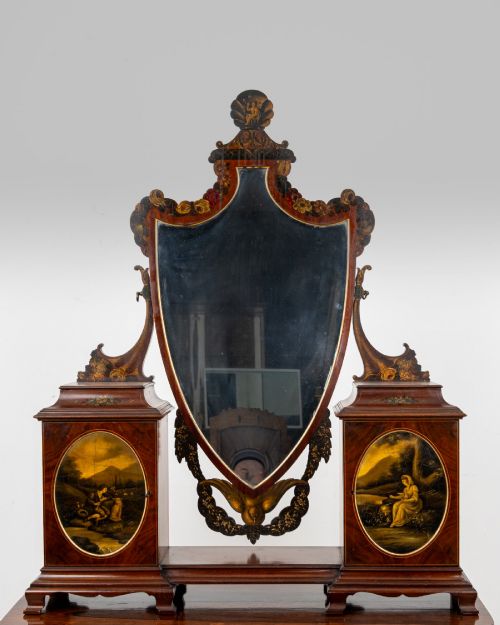
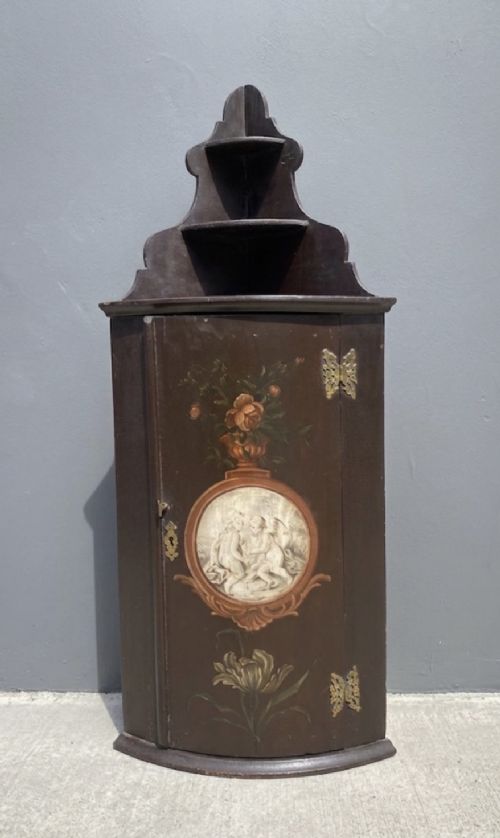


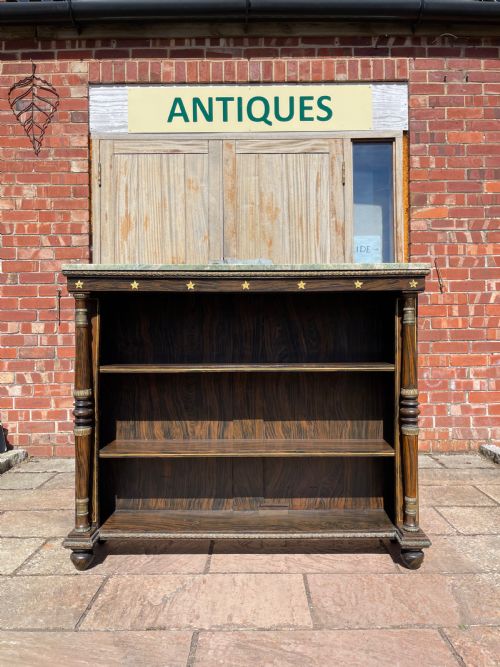


Dark Brown Painted Cabinet
A dark brown painted cabinet brings deep, earthy tone and straightforward utility to a room, ranging from rustic country cupboards to formal Regency and Georgian pieces.
Dark Brown Painted Cabinet
A dark brown painted cabinet encompasses a diverse group of storage furniture spanning the eighteenth and nineteenth centuries, alongside later institutional pieces. Buyers searching for a dark brown painted cabinet typically encounter pine cupboards, corner cabinets, and larger kitchen dressers finished in dark or simulated paint schemes.
The selection ranges from late eighteenth-century Irish dressers and food cupboards to nineteenth-century Scandinavian wall cabinets and school storage. Regional styles such as Irish Country and Rustic Country sit alongside more decorative Georgian Chinoiserie and Regency simulated rosewood designs.
Many examples retain their original dark paint surfaces, whilst others utilise simulated graining to mimic more expensive timbers like rosewood or mahogany. This surface treatment gives each piece a distinct character that sets it apart from standard polished wood furniture.
Materials and construction methods
Pine and mahogany form the primary structural timbers for these cabinets, often joined by brass hardware and glass panels in display sections. Wrought iron fittings appear on functional utility pieces, whilst gilt accents highlight more decorative styles.
Makers applied traditional paint layers directly to the wood, sometimes employing graining techniques to create simulated finishes that replicate exotic hardwoods. Original painted surfaces often display natural wear and patination accumulated over decades of use.
Dark Brown Painted Cabinet Retail Price Guide 2026
Typical asking prices for dark brown painted cabinet among the pieces listed under this phrase on Sellingantiques today, from the lower quarter to the upper quarter. They describe what is for sale here now, not the wider market.
Listings feature pine, mahogany, and wrought iron materials across periods spanning the eighteenth century to the 1930s.
Distinguishing quality in painted cabinets
Quality rests heavily on the integrity of the paint surface, particularly where original layers or simulated graining survive intact without modern overpainting. Superior examples show harmonious ageing of the pigment alongside sound structural joinery in the underlying pine or mahogany.
The sophistication of the form also dictates standing, moving from utilitarian school cupboards and simple food larders up to refined Georgian Chinoiserie corner cabinets and Regency chiffoniers. Proportion, original brass or iron hardware, and untouched interior shelving distinguish the finer pieces.
The Dark Brown Painted Cabinet Glossary
- Simulated paint
- A decorative surface technique where paint is manipulated to imitate the grain and rich tone of expensive timbers like rosewood or mahogany. This method allowed makers to achieve an upscale appearance using more accessible woods.
- Chinoiserie
- A European artistic style reflecting Chinese motifs and decorative patterns, popular in Georgian cabinet making. Pieces in this style often feature painted figurative scenes on dark backgrounds.
- Chiffonier
- A low sideboard or cabinet developed in the Regency period, typically fitted with doors enclosing shelves. They provide compact storage and a display surface for the upper room.
- Food cupboard
- A utilitarian storage piece from the eighteenth century designed for provisions, featuring panelled or ventilated doors to keep contents secure. These pieces rely on sturdy pine construction and simple iron hinges.
- Corner cabinet
- A space-saving storage unit built with an angled footprint to fit neatly into room corners, often featuring upper display shelves. Georgian and eighteenth-century examples frequently combine glazed upper doors with panelled lower sections.
Dark Brown Painted Cabinet: Frequently Asked Questions
What is simulated paint?
Simulated paint is a decorative technique where layers of pigment are brushed or combed to mimic the grain patterns of luxury timbers. Makers used this method to provide the look of rosewood or mahogany on more common woods.
This practice was common in the Regency period and earlier centuries. It creates a rich, dark brown visual depth while utilising accessible materials like pine.
Where should I place a corner cabinet?
A corner cabinet fits naturally into unused room junctions, making efficient use of floor space while adding vertical interest. They work effectively in dining rooms, hallways, or living spaces to display ceramics or store books.
Ensure the wall angles match the cabinet construction before placement. Freestanding versions require secure positioning to maintain stability.
How do I identify original paint?
Original paint typically displays consistent craquelure, subtle fading, and wear patterns that align with the age of the timber beneath. Examination under close light reveals natural accumulation of dust and patination within the paint layers.
Later overpainting often feels distinct or obscures the underlying texture of the wood and early primer. Historic surfaces show integration with the hardware and structure of the cabinet.
Are school cupboards sturdy?
Institutional and school cupboards from the twentieth century were built from durable materials to withstand heavy daily use. Their robust construction makes them practical for modern storage needs.
They offer deep shelving and reliable doors suited for books or household items. Their straightforward utility brings a distinct industrial character to contemporary interiors.